
Reviewed · CYCLING TOURS
7-Day The Way of St James Bike Tour- The Coast Path – Camino to Santiago
Salt air and Santiago on two wheels. This is a Way of St James bike tour that trades hard-to-follow inland routes for coastal villages and a GPS route you can ride at your own pace, from Porto through northern Portugal and into Spain. I like that you get real help with the hard parts, like luggage transfer, airport transfers, and your route support, so your focus stays on pedaling and enjoying each seaside stop. One thing to keep in mind: even though it is easy to moderate, you will still hit some hills, and summer heat can make those feel bigger than they are on paper.
I also like the small scale of the trip, with a maximum of 2 travelers, which keeps the experience feeling personal. Your bike is a Trek mountain bike, plus a helmet, and the route uses bike paths when available, with tarmac and rural roads mixed in.
Food and culture show up in practical ways, not just as sightseeing tick boxes. You are riding through places like Arcade for oysters, and Caldas de Reis for spring-fed comfort food, then rolling into Santiago for the Obradoiro Square and its Baroque cathedral.
In This Review
- Key things to know before you pedal the coast
- Why Porto to Santiago works better than you think
- Day 1 in Porto: briefing, bike readiness, and settling in
- Esposende to Vila do Conde area: fishing towns and Portuguese rivieras
- Viana do Castelo and Caminha: river Minho views and a green reset
- Bayona (Baiona) and the sea breeze: Spain’s old core and Drake-era stories
- Arcade and San Simón Bay: oysters, pilgrim cues, and coastal pace control
- Caldas de Reis: hot springs town energy and pilgrim bread vibes
- Santiago de Compostela arrival: Obradoiro Square and the Baroque cathedral
- Day 8 departure and the Porto return flow
- Price and Logistics: what $2,990.44 buys you in the real world
- Bike setup, roads, and fitness: the stuff that makes or breaks the week
- What the staff support feels like when something goes wrong
- Who should book this coast-to-Camino bike route
- Should you book?
- FAQ
- What language is the tour offered in?
- Where is the meeting point and when do we start?
- What kind of bike do you provide?
- Is the tour fully guided?
- What is included for meals and accommodation?
- How difficult is the cycling?
- Does the tour include luggage transfer and airport transfers?
- Can I change dates or get a refund if plans change?
Key things to know before you pedal the coast
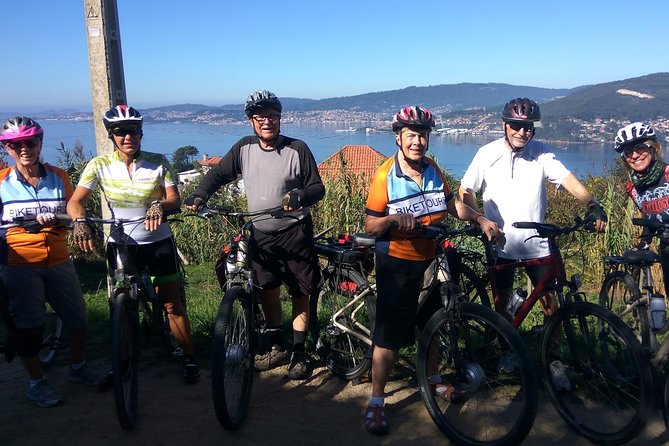
- Self-guided with support: GPS route plus a road book, so you ride your pace without feeling lost
- Real coast towns on the route: Esposende, Viana do Castelo, Caminha, Bayona, Vigo area, Arcade
- Seafood is part of the plan: oysters in Arcade, plus regional specialties along the way
- Logistics are handled: luggage transfer, chosen meals on specific days, and transfers around Porto and Santiago
- Modern Trek mountain bikes: with helmet included, built for mixed road surfaces
- You finish with a pilgrimage big moment: Square of Obradoiro and the cathedral in Santiago de Compostela
Why Porto to Santiago works better than you think
The big idea here is simple. Instead of taking the classic inland pilgrimage vibe, you follow the coast route that links Portugal’s northern shore to northern Spain, then lands you in Santiago de Compostela when you are ready for the finale.
That matters because coastal riding usually gives you more steady variety day to day. You get sea air, frequent towns to reset in, and natural breaks that make the “long ride” feel more like a sequence of connected day trips.
You also get a nice blend of Portugal and Spain. Porto is your start, but the route keeps pulling you north through fishing and maritime towns, then across into Spain’s Galicia region, where pilgrimage culture and sea culture overlap in a way that feels very human, not staged.
Other Porto plans worth comparing
- 3-Hour Porto Highlights on a Electric Bike Guided Tour
★ 5.0 · 4,392 reviews - Porto: City Highlights 3-Hour Guided Electric Bike Tour
★ 4.8 · 3,092 reviews - Porto: 3-Hour Old Town & Riverside Bike Tour – Guided Experience
★ 5.0 · 481 reviews
Day 1 in Porto: briefing, bike readiness, and settling in
Your ride begins with a briefing at Rua João das Regras 62 in Porto, starting at 8:00 am. That early start is useful, even if you are not a “riding-at-sunrise” person, because it gives you time to figure out your bike fit, your route screen, and your water plan before the day gets warm.
Practical note: the tour provides Trek mountain bicycles and a helmet. That is a good setup for mixed surfaces, especially when a route uses bike paths and then switches to tarmac or rural streets.
After you are briefed, you are set up for the self-guided style of the trip. You will still have support through the GPS and road book, but you are not stuck riding in a rigid pack.
Esposende to Vila do Conde area: fishing towns and Portuguese rivieras
Day 2 turns your wheels toward Esposende, a seaside city north of Porto. The route is paced around the feel of the coast, with those “small riviera” stretches where you keep seeing water, boats, and working harbor activity.
A highlight here is Póvoa de Varzim, a fishing area with traditions tied to fish exploration and fishing culture. This is the kind of place where you do not have to do much to feel the atmosphere, you just have to show up with curiosity.
Vila do Conde adds another layer. It ties into why these coastal towns mattered during the Portuguese Discoveries era, when maritime routes made ports into the engines of trade and movement.
What I like about this day is that it gives you early momentum without feeling like a nonstop grind. You ride, you reset in seaside towns, and you start learning the rhythm of this coast path.
Viana do Castelo and Caminha: river Minho views and a green reset
Day 3 keeps the maritime story going. You reach Viana do Castelo, another sea docking city with an important role during the Portuguese expansion period. The route is basically teaching you a coastal timeline as you pedal along.
Then you finish the day in Caminha, where the scenery includes the river Minho’s shoreline character, and the town’s natural and green heritage shows up in the places you can pause at, like waterfalls, beaches, and the camping park area.
Why Caminha works as a night stop: it gives you a sense of arrival without rushing you straight into the biggest Spain moments. It is a good buffer between “Portugal cruising” and “Spain coast riding.”
This is also a good day to practice your hill management. Even on an easy to moderate route, a few climbs can show up, and you will be happier if you treat them as short efforts rather than disasters.
In the same part of Portugal:
- The Unvanquished Tour in Porto City Center
★ 5.0 · 26,497 reviews - From Porto: Douro Valley w/ Boat Tour, Wine Tasting & Lunch
★ 4.7 · 19,061 reviews - Complete Douro Valley Wine Tour with Lunch, Wine Tastings and River Cruise
★ 5.0 · 12,920 reviews - Porto: Six Bridges Cruise
★ 4.2 · 11,680 reviews
Bayona (Baiona) and the sea breeze: Spain’s old core and Drake-era stories
Day 4 crosses into Spain and ends in Bayona. You will cycle into a city politically linked to Pontevedra, with sea air and an old center that invites wandering between riding breaks.
The historical flavor is strong here. Bayona grows from a Roman origin and builds outward through the Middle Ages, with Catholic Church influence playing a role. The story that feels most fun is the 16th-century raid by British ships led by Francis Drake, turning the city into part of a larger maritime legend.
Even if you are not a “read the plaques” person, this kind of city stops you from going into automatic-pilot mode. You get to move around, find a viewpoint, and then get back on the bike without the day feeling like a corridor.
Arcade and San Simón Bay: oysters, pilgrim cues, and coastal pace control
Day 5 is built around the Vigo stream area and a finish near San Simón’s bay. This is a full-on watery day, and it is also one of the most culturally specific stops on the route.
Arcade is the big food anchor. It is famous for oysters harvested in the region’s waters, and there is even an annual festival early in April called Fiesta de la Ostra. If you happen to ride during that timing, expect more visitors and a lively public mood.
But food is not the only point. The route also includes monuments and Santiago themed cues, such as the church of Santiago in Arcade, dating to the 12th and 13th centuries, plus roads and paths that connect toward your pilgrimage destination.
This is where you start feeling like the cycling is doing something for you, not just taking you somewhere. The cues help you mentally shift from bike trip to pilgrimage journey.
A practical tip for this day: if you plan to linger for oysters, keep your water and snack strategy simple so you do not arrive at the next segment dehydrated. Coastal riding can feel cooler than inland, but it still adds up fast.
Caldas de Reis: hot springs town energy and pilgrim bread vibes
Day 6 heads to Caldas de Reis in the Pontevedra province. The area’s identity includes pre-Roman community ties to hot springs, which is a rare kind of “fuel” for a cycling itinerary. When a town’s main attraction is warmth, you feel the payoff after a day in motion.
The name Caldas de Reis connects to the birthplace of Afonso VII in the Middle Ages, and the area acted as a pilgrimage path to Santiago de Compostela. That is another useful mental connection, because you can see where the classic pilgrim flow likely passed through long before bikes became part of the equation.
Food here includes empanadas of lamprey and traditional Spanish bread. If you like trying regional specialties, this is exactly the kind of stop that makes the trip feel local, not generic.
This is also where hot springs tourism shows up today, since the hot water is used for healthy treatments. You might not have time to do everything, but even just knowing the town’s logic helps you understand why people linger here.
Santiago de Compostela arrival: Obradoiro Square and the Baroque cathedral
On day 7, you reach Santiago de Compostela, the ultimate pilgrimage core in Western Europe on most people’s mental map. You end at the Square of Obradoiro and the Baroque cathedral that houses the apostle’s remains.
This finish changes the tone of the whole trip. Up until now, you are likely focused on time, distance, hills, and water. Then you arrive somewhere that is built around meaning and ritual, and you can feel the contrast immediately.
The best approach is to plan your pace earlier in the day so you still have energy to walk around once you park your bike. Even if you are not chasing photo angles, the square and cathedral presence is the kind of moment where you slow down naturally.
Day 8 departure and the Porto return flow
Day 8 is departure. The trip includes a pick up back to Porto city in a van. That is a key value detail because it removes uncertainty at the end, when you are tired and you do not want to turn your last hours into logistics.
Since you also get Porto arrival and departure airport transfers included, you are not left guessing how to move through a city you only visited for the start.
Price and Logistics: what $2,990.44 buys you in the real world
At $2,990.44 per person, this is not a budget trip. But it is also not just a bike rental plus vibes.
You are paying for a bundle that usually costs money separately:
- 7 nights accommodation are listed as included
- Bike rent and helmet are included
- GPS with route and a road book reduce navigation risk
- Luggage transfer cuts down on “carry fatigue”
- Porto airport transfers in both directions reduce arrival stress
- Santiago pick up back to Porto closes the loop
- Breakfast is included (listed as 8 breakfasts)
- You also get selected meals mentioned in the highlights, while lunches and dinners are not included
There is a small mismatch in the materials between the highlights saying 6 nights accommodation and the included section listing 7 nights. I would treat this as a point to confirm at booking so you know exactly how the nights line up with the dates you choose.
Also, note that the tour is capped at a maximum of 2 travelers. That matters for value because it can make the operation smoother and easier to manage, especially if something needs fixing.
Bike setup, roads, and fitness: the stuff that makes or breaks the week
This is rated easy to moderate, with some hills. You should have at least a moderate physical fitness level. If you can comfortably ride a few hours and handle stop-and-start city transitions, you are likely fine.
The route uses bike paths when available. You should still expect a mix of tarmac and rural streets. That is why the Trek mountain bike matters. It is not a flimsy rental cruiser. It should feel stable on road texture changes.
Two practical things I would treat as non-negotiable:
- Carry enough water at all times.
- If you ride in July, August, or September, cycle early because heat can be intense.
Because the trip is self-guided, you are the captain. That can feel freeing, but you also need to take the GPS seriously and not rely on guesswork.
What the staff support feels like when something goes wrong
One review note that stood out to me was how quickly staff helped when a bike problem popped up. That kind of responsiveness is a big deal on a coast route, because minor issues can turn into major stress if you are stranded without help.
Even though this is self-guided, the presence of responsive support makes it feel safer. It turns the trip from “good luck” into “you have a backstop.”
Who should book this coast-to-Camino bike route
This is a great fit if you want:
- A Camino-style destination with a less punishing riding profile than inland pilgrimages
- Coastal towns where the day breaks feel natural
- Self-guided freedom, but with strong route tools like GPS and a road book
- A week where seafood and regional food stops are part of the experience, not an afterthought
You might want to look elsewhere if you:
- Want a fully guided, turn-by-turn group ride every day
- Have difficulty riding on mixed road types
- Plan to do this at peak heat without an early-start routine
It also suits couples or solo riders who like privacy. With a maximum of 2 travelers, you get fewer “group” dynamics and more of a calm pace.
Should you book?
If you want the Camino ending with the motivation of pilgrimage, but you prefer an easier to moderate bike profile plus coast-focused scenery, this tour makes a lot of sense. The logistics package, GPS support, luggage transfer, and airport handling remove the usual headaches that hit at the start and finish.
My decision checklist is simple:
- You can handle some hills and mixed roads.
- You will ride early in summer months.
- You are happy doing self-guided riding with GPS support.
- You want seafood and seaside towns stitched into a single route.
If those points match your style, you are in the right place. The week ends in Santiago, and the moment you hit Obradoiro Square and see the cathedral, you will understand why people do this journey in the first place.
FAQ
What language is the tour offered in?
The tour is offered in English.
Where is the meeting point and when do we start?
You meet at Rua João das Regras nº 62, 4000-290 Porto, Portugal. The start time is 8:00 am.
What kind of bike do you provide?
Bikes provided are Trek mountain bicycles, and a helmet is included.
Is the tour fully guided?
It is self-guided. You get GPS with the route and a road book to follow.
What is included for meals and accommodation?
The tour includes 7 nights accommodation and breakfast (listed as 8). Lunches and dinners are not included. The highlights also mention selected meals.
How difficult is the cycling?
The tour is rated easy to moderate, with some hills. You should have a moderate physical fitness level.
Does the tour include luggage transfer and airport transfers?
Yes. Luggage transfer is included, plus Porto arrival and departure airport transfers. There is also a Santiago pick up back to Porto city in van.
Can I change dates or get a refund if plans change?
No. This experience is non-refundable and cannot be changed for any reason.
Just added around Porto
- Meditation Experience at a Lovely Farm in Porto★ 5.0 · 19 reviews
- Private Portuguese Cooking and Wine Experience in Porto★ 5.0 · 30 reviews
- Douro Valley Prime Tour: Wine Tastings, Boat & Lunch from Porto★ 5.0 · 572 reviews
- Port Wine Tour | 3 Cellars | 7 Tastings | 12 Participants Maximum★ 5.0 · 443 reviews
- Private Boat Tour on the Douro River at Sunset★ 5.0 · 21 reviews
- Visit to Cockburn’s Cellars★ 5.0 · 526 reviews
- Wine Tasting with Tapas Walking Tour in Porto★ 4.5 · 544 reviews
- PORTO city Walking Tour★ 5.0 · 132 reviews
Cycling Tours, compared.
3-Hour Porto Highlights on a Electric Bike Guided Tour
Read our review →
Hills, Alfama, and Mouraria Tour by Electric Bike
Read our review →
City Highlights 3-Hour Guided Electric Bike Tour
Read our review →
Lisbon E-Bike Tour Commerce Square, Mouraria and Alfama
Read our review →

Quad Biking Adventure in the Algarve Countryside
Read our review →
Browse the lists this tour appears in