
Reviewed · ALFAMA & OLD TOWN WALKS
Alfama Tour in Lisbon Old Town
Alfama is a maze, and this tour gives you the map. You will walk Lisbon’s oldest neighborhood with a local guide, hitting fountains, plazas, and viewpoints without turning it into a scavenger hunt. I especially love the story-first approach, and the way stops connect Moorish, Roman, and Jewish-quarter threads into a single picture of Alfama. One thing to plan for, the area is hilly, so expect stairs and steep grades for the full 2 hours 30 minutes.
This is also one of the best value deals in Lisbon if you care about the human side of travel. The format is pay what you want at the end (tips are welcomed and expected), and you still get a structured route with dozens of practical local recommendations. The only real drawback is that the tour ends in a different place, so you need a quick game plan for how you will get back to your hotel.
In This Review
- Key highlights at a glance
- Pay What You Want, But Bring Comfortable Shoes
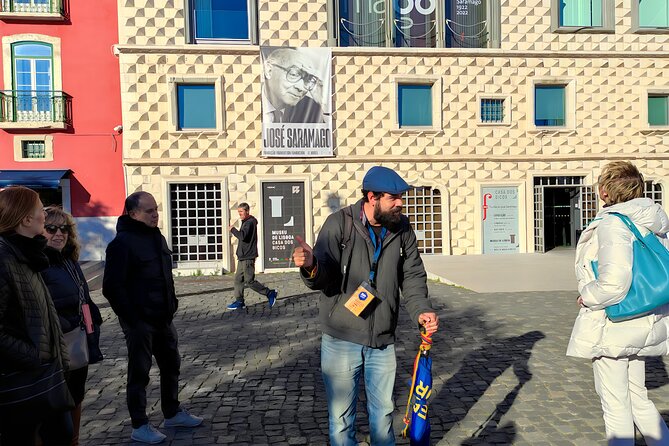
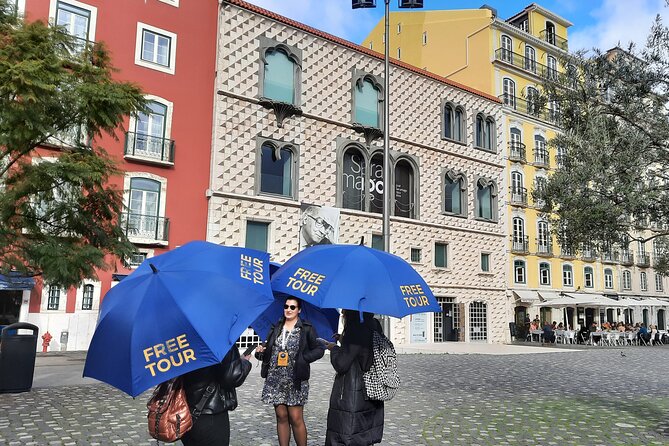
- Casa dos Bicos: The Blue Umbrellas Start Your Alfama Story
- Chafariz d’El Rei and the Fountains That Still Run Old Lisbon
- Largo do Chafariz de Dentro, São Rafael, and Salvador: Squares for Stories
- Igreja de São Miguel and Popular Saints Festivities Energy
- Nuno Saraiva Mural and Miradouros: Portas do Sol to Santa Luzia
- Sé de Lisboa From Outside, Then Church of St. Anthony in the Streets
- Where the Best Guides Go Beyond the Script
- What You Should Bring for This Alfama Walk
- Who This Tour Fits Best (and Who Might Want a Different Plan)
- FAQ
- How long is the Alfama walking tour?
- What does the tour cost?
- Is the tour in English?
- Where does the tour start?
- What time does it run?
- Is the Lisbon Cathedral included?
- Do we pay for any admissions during the walk?
- Are food and drinks included?
- How big is the group?
- Can service animals travel with you?
- Should You Book This Alfama Tour?
Key highlights at a glance
- Tip-based walking tour that still feels organized and easy to follow
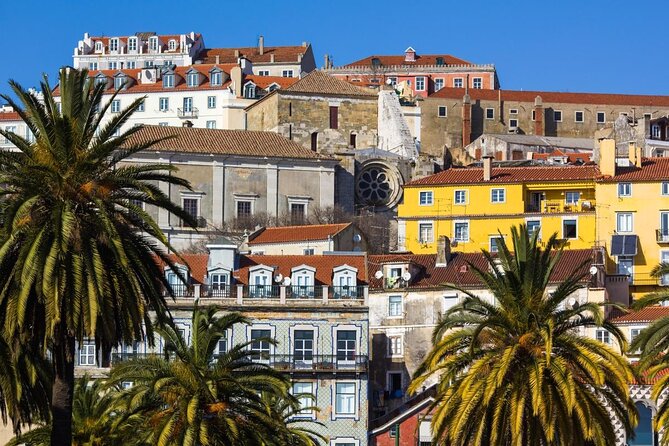
- Alfama viewpoints like Portas do Sol and Santa Luzia, timed for the best strolling pace
- Iconic history stops including Lisbon Cathedral (seen from outside) and the Sé de Lisboa area
- Public fountain heritage, from 13th-century Chafariz d’El Rei to central plaza fountains
- Local culture beats, with Popular Saints Festivities tied to Igreja de São Miguel
- Guides add flavor, including ginjinha and Fado context in the stories
Pay What You Want, But Bring Comfortable Shoes
At $3.62 per person, the price looks almost too good to be true, and that is the point. This tour is built around the idea that the guide should earn what the experience is worth, which is why tipping is part of the deal. For me, the value is not the low upfront fee, it is that you get a local voice for 2.5 hours in one of Lisbon’s most confusing neighborhoods.
Also, this is not a casual flat stroll. Alfama climbs. Many reviews call out steep grades and lots of steps, and at least one guide slows down so people can keep up, even with limited mobility. If you want a low-stress walk, pick good shoes, take it slow when the route turns uphill, and do not plan anything intense right after.
Group size stays small, up to 25 people, which helps with questions and pacing. It is offered in English, and you get a mobile ticket.
More old-town walks in Lisbon:
- Private Lisbon Sightseeing Tuk-Tuk Tour: Alfama, Belém & More
★ 5.0 · 4,277 reviews - Lisbon: Hills, Alfama, and Mouraria Tour by Electric Bike
★ 4.8 · 3,438 reviews - Best of Lisbon Walking Tour: Rossio, Chiado & Alfama
★ 4.9 · 2,700 reviews
Casa dos Bicos: The Blue Umbrellas Start Your Alfama Story
Most tours begin with a landmark. This one starts with a landmark you can actually spot: the Casa dos Bicos-Museu de Lisboa. Look for the blue umbrellas. Once you see them, you know you are in the right place and the tour is real.
This stop is about setting the emotional tone. The area around Casa dos Bicos is a strong introduction to Lisbon, because it hints at how Alfama is built from layers. The time here is short, about 15 minutes, and admission to the museum is not included.
What I like here is that the guide uses the start as a reset. They orient you to how the neighborhood works, then you move into the streets where Alfama becomes less postcard and more lived-in.
Practical note: If you are tempted to go inside Casa dos Bicos, build that into a separate stop. This tour is focused on walking and storytelling, not museum time.
Chafariz d’El Rei and the Fountains That Still Run Old Lisbon
Next you hit Chafariz d’El Rei, a fountain tied to the practical side of medieval Lisbon. It is described as likely the first public fountain in the city, and it uses water from the Alfama hillside. That is the kind of detail that makes a neighborhood feel smarter, not just older.
Admission is free here, and you will spend about 10 minutes. The quick pace matters. In Alfama, you do not have time to stop and analyze every corner unless you have a guide who can pick the most meaningful ones.
Then you move to Largo do Chafariz de Dentro, an important central plaza in Alfama. It was once called Chafariz dos Cavalos, the Horse Fountain. You will also see the way names reflect location and old city walls, because Largo do Chafariz de Dentro sits within the Fernandina wall.
For me, these fountain stops are what turn Alfama into a readable place. They show you Lisbon’s habit of solving daily needs with public works, long before tourism made the streets famous.
Largo do Chafariz de Dentro, São Rafael, and Salvador: Squares for Stories
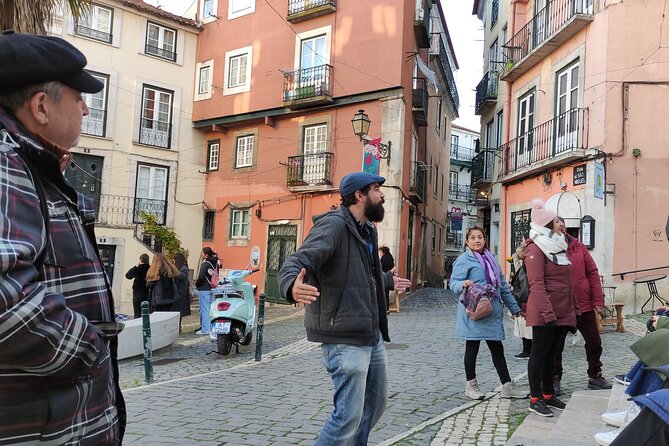
From the first fountain area, the tour keeps stepping through Alfama’s small “rooms,” the little squares and lanes where community life happens. You will visit Largo de São Rafael, described as a place where memories of old Alfama still linger near the ancient wall.
These are free stops, around 10 minutes each, and they are designed for your legs and your brain. You get small breaks from the uphill climbing, plus short explanations that connect what you are seeing to what came before.
Then comes Largo do Salvador, where the guide typically slows down and sets you up to listen. The emphasis here is on stories that cross culture and ancient habits. That phrase is vague, but the effect is not. This is where many guides make the neighborhood feel like a living timeline instead of a set of photos.
If you like walking tours where the guide actually talks to you, not just at you, this part is usually where it clicks.
Other Lisbon plans worth comparing
- Lisbon City Center Tour – The Unmissable Lisbon
★ 5.0 · 22,234 reviews - Lisbon: Sintra, Pena, Regaleira, Cabo da Roca & Cascais
★ 4.7 · 19,656 reviews - Lisbon Card: 24, 48, or 72-Hour Pass
★ 4.5 · 17,944 reviews - Lisbon: Jerónimos Monastery Entrance Ticket
★ 4.1 · 14,164 reviews
Igreja de São Miguel and Popular Saints Festivities Energy
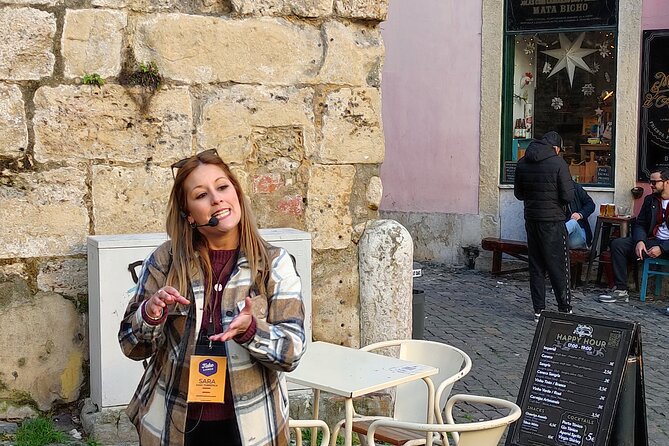
At Igreja de São Miguel, you get a church stop with a neighborhood pulse. It is noted as one of the main spots for the Popular Saints Festivities. Even if you visit outside festival season, you can still see why this church square matters: it sits at the center of a street culture that gathers people.
This stop runs about 15 minutes, and entry is free for the stop itself. What you should expect is context: how religious life, local tradition, and public spaces overlap in Alfama.
I like this contrast. Alfama is famous for hills and viewpoints, but it also has strong community rhythm. This is the stop that reminds you you are in a place where people still live, celebrate, and argue about which stories are the real ones.
Nuno Saraiva Mural and Miradouros: Portas do Sol to Santa Luzia
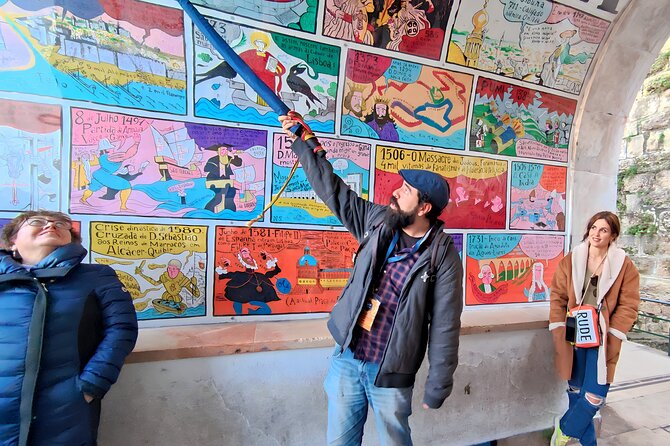
Now you start climbing toward the views, and you also start seeing modern Lisbon leave its mark on old streets. You will stop for the History of Lisbon Mural by Nuno Saraiva. It is an easy 10-minute stop that helps you connect past and present without forcing you into museum mode.
Then you shift to the miradouros, the classic Alfama balconies over the city. The route can vary by pace, but the stop sequence includes:
- Miradouro de Santo Estêvão, where you walk through the maze of Alfama and reach the viewpoint by the Church of Santo Estêvão. About 15 minutes.
- Miradouro das Portas do Sol, described as one enormous balcony that overlooks all of Alfama. About 10 minutes.
- Miradouro de Santa Luzia, a terrace that is easy to understand as romantic, because it is built for slow looking. About 10 minutes.
These are all free stops. And timing is everything. In Alfama, the viewpoint moments can feel crowded if you do them on your own. With a guide, you tend to arrive with a sensible rhythm, which makes it easier to take photos and actually take in the neighborhood.
One of the best parts, based on how guides talk during the viewpoint section, is how they connect longing and Lisbon’s emotional story to what you see below. Some guides bring in Fado context and explain saudade as more than a word, but as an inheritance shaped by history and movement.
Sé de Lisboa From Outside, Then Church of St. Anthony in the Streets
You will reach Lisbon Cathedral, also called Sé de Lisboa. The key detail here is that you will not go inside. Entry costs about 5€, and the tour itself does not include that admission. You spend about 15 minutes here, likely focused on the exterior and the surrounding area.
This works well for first-time visitors. The cathedral is important enough that seeing it from the outside still gives you the right scale. Plus, it keeps the tour’s 2.5-hour flow intact.
Then you finish with the Church of St. Anthony (Church of Santo António). You are in the streets for about 15 minutes, and the stop is framed as a way to celebrate Lisbon in front of one of its most cherished saints.
If you want one last emotional anchor to end the walk, this is a smart choice. It brings the story back to local life and public space.
Where the Best Guides Go Beyond the Script
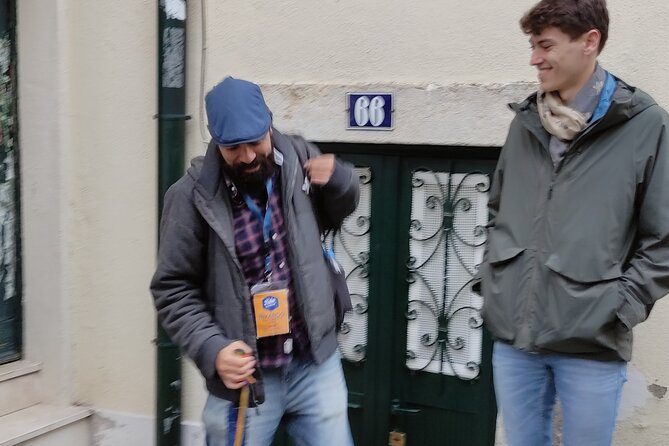
This tour shines when the guide turns it from information into a narrative. I have seen that with guides like Hugo, Laura, Cecelia, Belem, Jessica, Claudia, Katrina, Mariam, Fernanda, Nina, and Joao. They all follow the same core stops, but the stories get different.
Here are the most praised kinds of additions that show up in the experience:
- Singing and storytelling moments, including guides who share music or perform as part of the narration
- A clear, human explanation of how different eras show up in the same street
- Fado context, including explanations tied to longing and saudade
- A chance to try ginjinha, Lisbon cherry liqueur, sometimes via a doorway stop where locals serve it, including the well-loved version in chocolate cups sold by Dona Alice
Not every guide will include the same food or drink side moments, since the tour data only guarantees the walking and the guidance. But the guides who are getting top marks tend to add those small local experiences that make Alfama feel less like a lesson and more like a day you want to replay.
And yes, tipping matters. More than one review mentions situations where people did not tip, and it affects the guide experience. If you want the tour to feel positive, tip at the end based on what you actually got.
What You Should Bring for This Alfama Walk
This is where small planning choices make the day better. I suggest you pack for legs first, then comfort.
- Shoes with strong grip because Alfama slopes and steps can be slick
- A light layer, Lisbon weather can shift even when the sun is out
- Water, since no food or beverages are included
- Cash or a card you are comfortable using for optional extras like museum entry (Casa dos Bicos) or the cathedral entry fee if you decide to go in on your own later
If you are planning a tight schedule, remember the route ends in a different location than it starts. Decide how you will get back before you leave.
Who This Tour Fits Best (and Who Might Want a Different Plan)
This tour fits best if you want:
- A guided way to understand Alfama’s street logic
- Viewpoints with context, not just scenery
- A small-group walking format with room for questions
- A chance to hear local recommendations beyond the route
It might feel like hard work if you dislike stairs and hill climbs. The tour is listed as requiring moderate physical fitness, and reviews confirm there is a lot of walking uphill and stair time.
FAQ
How long is the Alfama walking tour?
It runs about 2 hours 30 minutes.
What does the tour cost?
The price is listed as $3.62 per person, and the experience is tip-based, with tips welcomed and expected at the end.
Is the tour in English?
Yes, it is offered in English.
Where does the tour start?
The start point is R. dos Bacalhoeiros 12A, 1100-070 Lisboa, Portugal.
What time does it run?
One listed start time is 3:30 pm. The tour also offers a morning or afternoon option.
Is the Lisbon Cathedral included?
You will not go inside Lisbon Cathedral. Entry is not included, and the cost mentioned is 5€.
Do we pay for any admissions during the walk?
Casa dos Bicos-Museu de Lisboa is noted as not included. Lisbon Cathedral entry is also not included. Other stops listed are free.
Are food and drinks included?
No food or beverages are included.
How big is the group?
The tour can have up to 25 travelers.
Can service animals travel with you?
Yes, service animals are allowed.
Should You Book This Alfama Tour?
If your goal is to understand Alfama fast, this is a strong yes. The combination of fountains, squares, viewpoints, and cultural stops means you see more than scenery. You also get a guide who can connect the neighborhood to Roman, Moorish, and Jewish-quarter threads, plus optional local flavor like ginjinha and Fado context.
Book it if you are willing to work a little for the views with proper shoes and a slow uphill pace. Skip it or look for a less strenuous option if stairs and steep walking will drain you too much.
If you do book, do the simple things that make it better: arrive with comfortable footwear, bring water, and plan for the fact that the tour ends in a different location than it starts. Then tip well at the end, because this format relies on you to help the guide earn what the experience is worth.
Just added around Lisbon
- Tomar: Knight’s Templar Castle and Convent of Christ Tour★ 4.9 · 84 reviews
- Tour Bohemian de Tuk Tuk: Bertrand, Miradouros e Estrela★ 5.0 · 24 reviews
- From Lisbon: Fátima, Nazaré and Sintra Guided Tour★ 4.7 · 155 reviews
- From Lisbon: Tomar, Batalha, Alcobaça, & Óbidos Templar Tour★ 4.9 · 47 reviews
- From Lisbon: Sintra Pena Palace Cascais 8-People Group Tour★ 4.9 · 93 reviews
- The Real Lisbon Street Art Private Guided Tour by Minivan★ 4.7 · 49 reviews
- Lisbon: The Jewish Sephardic Walking Tour★ 4.9 · 22 reviews
- From Lisbon: Tomar, Christ Convent & Almourol Castle Tour★ 5.0 · 64 reviews
Alfama & Old Town Walks, compared.
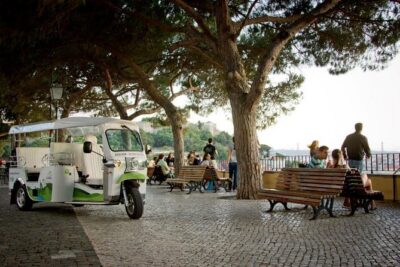
Private Lisbon Sightseeing Tuk-Tuk Tour: Alfama, Belém & More
Read our review →
Hills, Alfama, and Mouraria Tour by Electric Bike
Read our review →
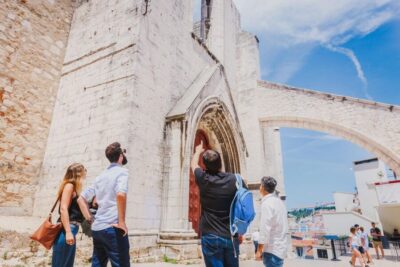
Best of Lisbon Walking Tour: Rossio, Chiado & Alfama
Read our review →
Lisbon Small-Group Food Tour with 18 Tastings in Alfama District
Read our review →
Lisbon E-Bike Tour Commerce Square, Mouraria and Alfama
Read our review →
Old Town TukTuk Tour and Scenic Viewpoints in Alfama
Read our review →
Alfama Tour and Live Fado with Traditional Dinner
Read our review →Browse the lists this tour appears in