
Reviewed · CITY TOURS
Faro: City tour
One hour can be enough to feel like you know Faro. This short private city tour moves fast, but it is not rushed, thanks to 100% electric tuk-tuks and a local guide who ties the sights together into a clear story. I really like how you go beyond the usual postcard stops, with highlights like the Cathedral area plus church-to-church views, and how the guide also gives practical ideas on where to eat and what to do at night. Our guide Mauro felt especially on top of both history and what is happening now.
The one thing to keep in mind is time. With only 1 hour on the clock, you are seeing a lot from the outside and from quick stops, so if you want long museum time or deep inside-visit moments, you will likely need to plan extra time on your own.
In This Review
- Key points before you go
- Entering Faro at Manuel Bivar’s Garden, then gliding through town
- How the guide connects Faro’s Phoenician roots to modern Portuguese life
- Faro Cathedral and the old-town power block you can understand fast
- Jardim da Alameda João de Deus, plus a calm pause in the middle of movement
- The old fenced heart of Faro, then the church-to-church route
- Santo António do Alto, the top of the city, and what you can plan afterward
- Faro Municipal Market, where the tour turns into real local-life planning
- Price and value: $61 per group up to 4 in one focused hour
- Who this tour is best for
- Booking, timing, and the practical tips I would use
- Should you book Faro City Tour with electric tuk-tuks?
- FAQ
- How long is the Faro city tour?
- Is this tour private or shared?
- What vehicle do you ride in?
- What languages are available?
- Where does the tour start and where does it end?
- Are there any rules during the tuk-tuk ride?
Key points before you go
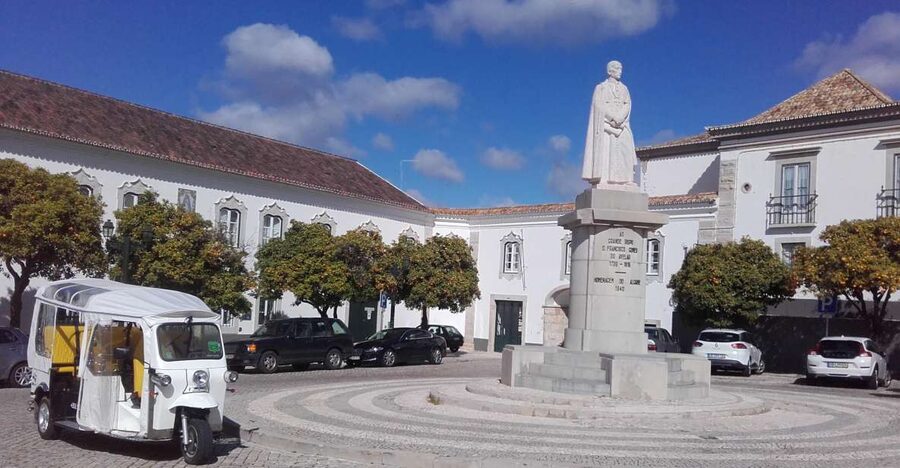
- 100% electric tuk-tuks keep the ride smooth and low-key, so you actually enjoy looking around instead of fighting street noise
- Private local guide and driver means you get a real conversation, not a scripted lecture
- A tight route that hits old and modern Faro so you understand how the city works without getting lost
- 12 Catholic churches in one loop, including Igreja do Carmo and its bone chapel fame
- Viewpoints plus the market: Santo António do Alto and the Faro Municipal Market both make the tour feel practical, not just scenic
- Great for a first day when you want to get bearings fast and plan the rest of your trip
Entering Faro at Manuel Bivar’s Garden, then gliding through town
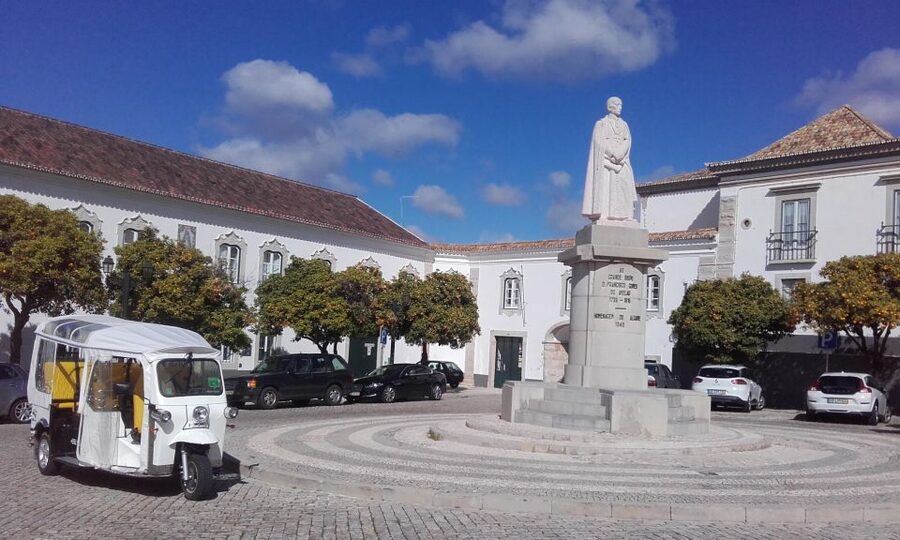
The tour starts at Manuel Bivar’s garden, right in Faro’s downtown near the marina area. That matters because it is a central launch point, and the tour is designed as a quick orientation. You soon head toward the old town, which is the best way to start, since Faro’s “why it looks like this” is tied to centuries of shifting rulers and borders.
You ride in a 100% electric tuk-tuk, and that detail is more than marketing. Electric tuk-tuks tend to feel calmer and easier to hear your guide over, and in a one-hour format, that is a big deal. You also get the experience of moving like a local, not just standing in lines. It is perfect when your legs are tired, or you just want to spend energy on looking and learning.
If you are the type who hates waiting around, you will appreciate the flow. The tour keeps moving, with the guide steering you through the highlights in a way that helps you remember where everything sits in relation to everything else.
Other Faro plans worth comparing
- 4 Stops | 3 Islands & Ria Formosa Natural Park – From Faro
★ 5.0 · 3,080 reviews - From Faro: The Original Benagil Cave, Marinha & More Tour
★ 4.7 · 2,655 reviews - Ria Formosa – Boat trip to the 3 Islands: Armona | Culatra Island | Lighthouse
★ 5.0 · 1,872 reviews
How the guide connects Faro’s Phoenician roots to modern Portuguese life
Before you even reach the main historic core, your guide sets up Faro’s timeline. You hear about early settlement, including the Phoenician occupation, and then the later arrival of the Portuguese crown, anchored around King D. Afonso III. This is the kind of background that actually helps when you stand in front of old buildings and wonder what you are looking at.
I like that the tour does not treat history as trivia. It uses the city as the lesson plan. As you move from stop to stop, you start noticing patterns, like where the old walls and old-town boundaries used to be, and how later development spread outward.
A nice bonus from the guide style is that the experience feels personal. On my reading of the overall vibe from guides Mauro and Ernesto, they come across as people who genuinely like talking about Faro, not just delivering facts. When your guide also seems to know local food options, it helps you turn what you learned into a plan for dinner.
Faro Cathedral and the old-town power block you can understand fast
One of your first major sightseeing stops is Faro Cathedral. Even if you only spend a short time here, the value is in context. The Cathedral area is not just a single building, it is part of the historic center’s “public space” story, where religious, civic, and royal influence meet.
From there, you move through key old-town sights tied to the city’s identity. The tour specifically highlights major buildings such as the episcopal palace and the city hall. You also see the statue of the king, which is a quick way to understand how Faro presented its authority in public spaces.
Then you get a view of the archaeological museum area. You might not have time to go inside during this one-hour loop, but seeing it in the route helps you decide whether it is worth adding later. The tour gives you enough to recognize what kind of heritage Faro is protecting, without turning the whole visit into a museum day.
A practical note: in a short tour like this, you will want to keep your camera ready for angles around these main buildings. You will likely get the best results by paying attention to orientation, then snapping photos while the tuk-tuk pauses.
Jardim da Alameda João de Deus, plus a calm pause in the middle of movement
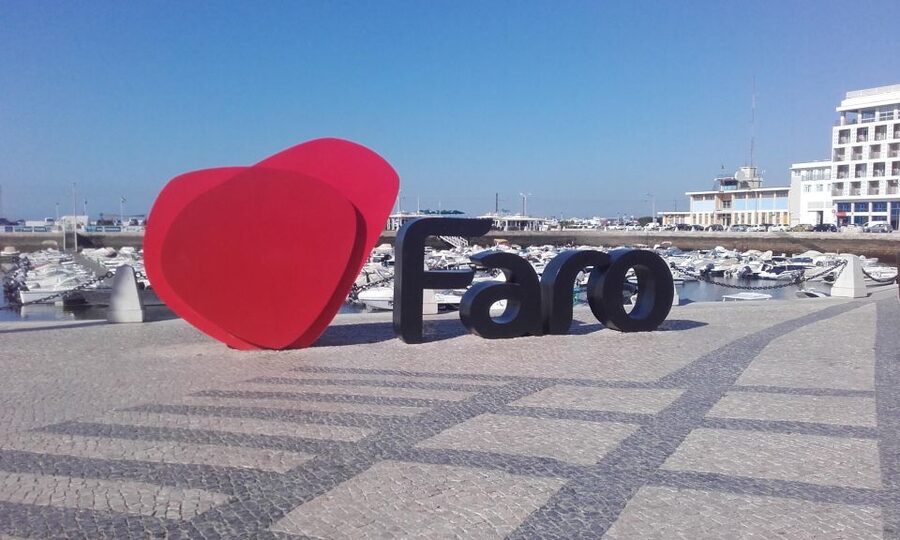
Next up is Jardim da Alameda João de Deus. Gardens can feel like a “filler stop” on fast tours, but here it works as a reset point. You get a breather between dense historic moments and the next round of church and viewpoint sightseeing.
This kind of stop also helps with fatigue management. If you are touring with kids, older relatives, or anyone who does not love constant walking, this garden break makes a big difference. A review mentioned kids enjoying the ride, and gardens like this are part of why the whole loop stays pleasant.
More importantly, it gives you time to absorb the city. When you stop for a moment, you start noticing small details like street layout, how the city slopes, and where the “upward” routes might lead later in the tour. That sets you up for the Santo António high point.
In the same part of Portugal:
- Ria Formosa Natural Park and Islands Boat Cruise from Faro
★ 5.0 · 1,314 reviews - 2 Stop | 2 Islands & Ria Formosa Natural Park – From Faro
★ 5.0 · 1,045 reviews - Faro: Deserta Island and Farol Island Catamaran Boat Trip
★ 4.6 · 955 reviews - From Faro: Benagil, Marinha, 7 Valleys, Algar Seco Adventure
★ 5.0 · 917 reviews
The old fenced heart of Faro, then the church-to-church route
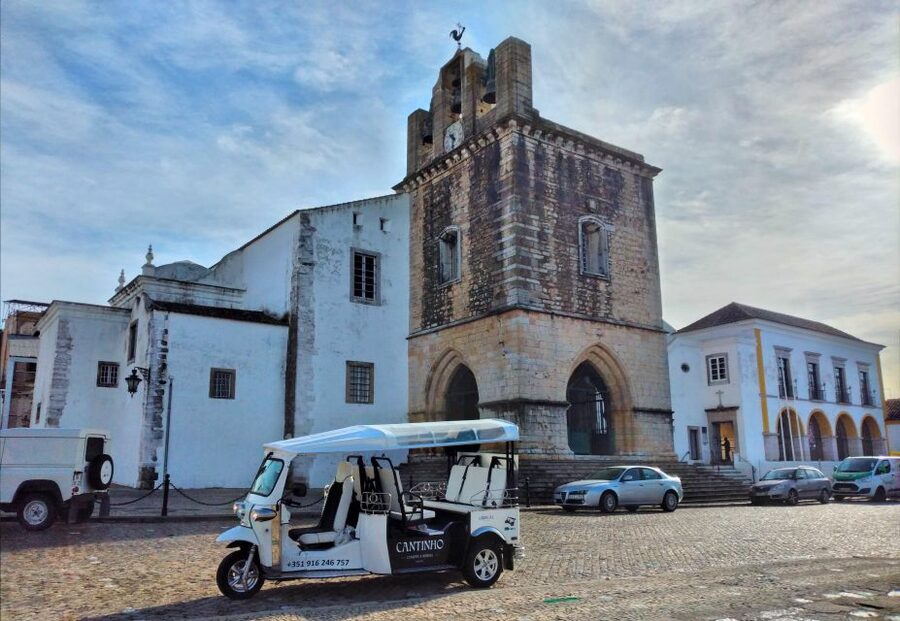
After the core buildings, the tour continues through the older sections of Faro, including what used to be inside a sixteenth-century fence. That explanation matters. Instead of wondering why certain streets feel enclosed or why the old town seems compact, you understand that the boundaries were once more strict.
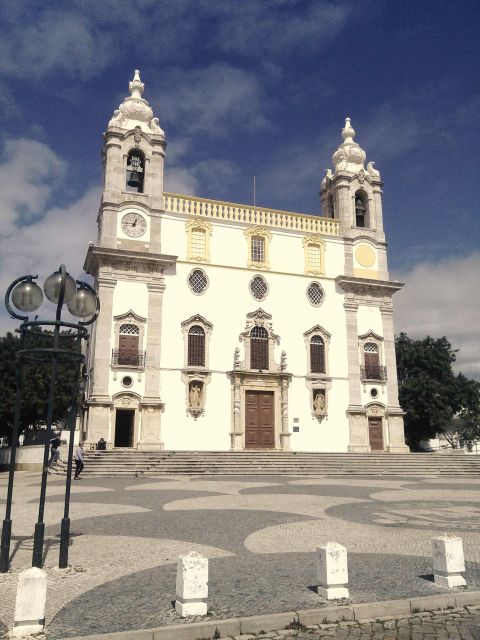
Then comes a standout: the tour sighting all twelve Catholic churches of Faro, including Igreja do Carmo, famous for its bone chapel. Even if you are not obsessed with church architecture, this is a compelling way to see Faro’s religious and cultural imprint across the city.
Here is the practical value: in one hour, you get a “church map” of Faro. Later, if you want to return to a particular church, you already know where it sits relative to the market and the viewpoints. You also get a sense for why some areas feel more historic, and why others feel more connected to daily life.
One thing to consider is that seeing twelve churches in a short time is more about impressions than deep study. Plan to use the tour as a guide to where to go next, not as a complete religious-architecture tour.
Santo António do Alto, the top of the city, and what you can plan afterward
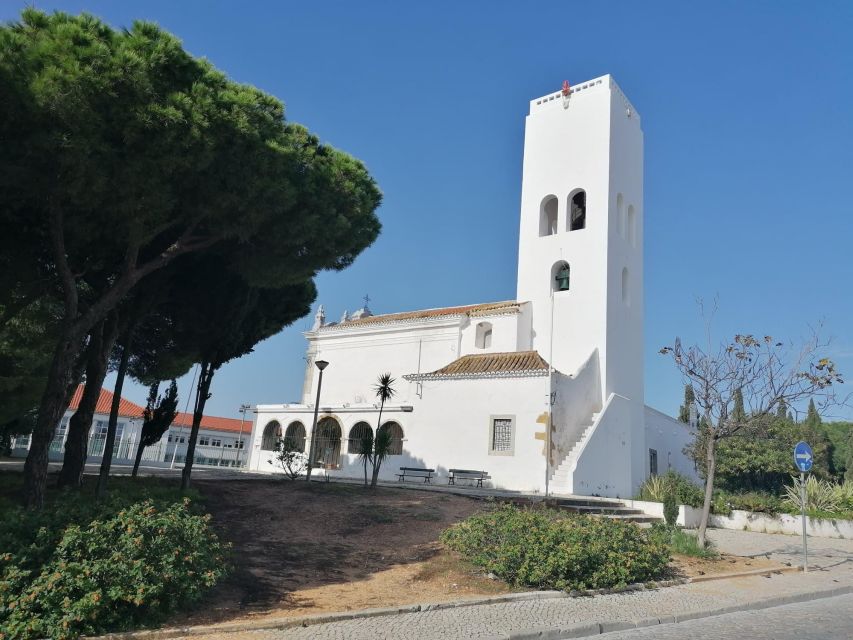
One of your key highlights is Ermida de Santo António do Alto and the Santo António’s tower at the highest point of the city. This is where Faro starts to make sense visually. When you look down from a high point, the whole route you rode through starts connecting in your mind.
The tour also passes by 5th October Avenue, which is useful because it shows the contrast between major modern corridors and the older lanes. You see the “two Faro” feeling in a single loop: old walls and church clusters, plus wider streets, civic spaces, and everyday movement.
On top of that, the route includes Faro’s old theatre. Even if you only see it as you pass, it helps you understand that the city’s heritage is not only religious or military. Cultural buildings fit into the same story, which makes Faro feel more lived-in.
After a high-point stop, I recommend you spend a minute or two thinking about where you want your next photos. If you are doing the rest of the city on foot, the viewpoint gives you a navigation advantage. You will know which areas are closer and which ones are a bit more of a climb.
Faro Municipal Market, where the tour turns into real local-life planning
The Faro Municipal Market is one of the most practical stops of the whole route. A market tells you what the city eats, what it sells, and what people consider normal daily life. Even if you are not shopping, it gives you a sense of the local rhythm.
What makes this stop especially valuable is that your guide also shares tips on where to eat and what to do at night. That kind of advice is hard to get from guidebooks, because it depends on what is open, what is nearby, and what fits your travel style.
In reviews, Mauro was highlighted for giving good insights into foods to try and places to eat, plus tips about current events. Ernesto also stood out as someone who helped people connect history with what to do next. That is a strong combo. You do not just learn about Faro, you leave with a plan.
If you want to stretch your trip, the market is a great place to decide your next move. Pick up snacks, then head to a nearby viewpoint or choose a restaurant based on what you saw and what the guide recommended.
Price and value: $61 per group up to 4 in one focused hour
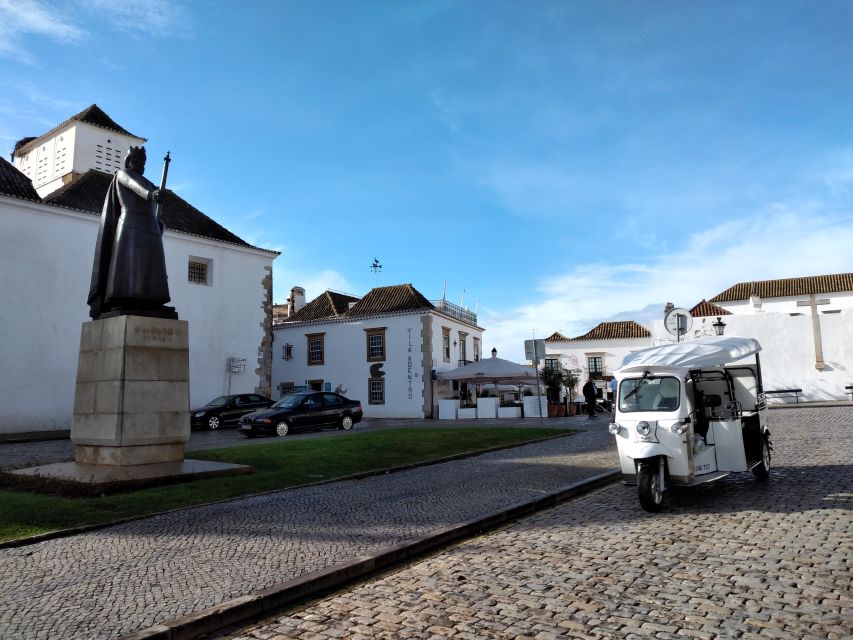
The tour costs $61 per group up to 4, which is a smart deal when you travel as a small unit. If you have four people, you are paying about $15 each for a private guide plus the tuk-tuk ride. Even with fewer people, you are still buying something you might struggle to recreate on your own: a focused route, historic context, and a local who can steer you to good food and night plans quickly.
The value also comes from the format. A one-hour private tour is not trying to replace a full-day sightseeing plan. It is a “get your bearings fast” ticket. That is exactly when you should do it, because it helps you walk the right streets later and avoid wasting your limited time.
Also, you are paying for convenience. Parking, transit, and figuring out the order of stops on your own can turn into a half-day headache, especially if the goal is to see old town, churches, and viewpoints all in one go. The tuk-tuk loop solves that instantly.
If you are traveling solo, the price can feel less “bargain” than splitting with a group. Still, if you want a guide-led overview without committing to a longer tour, it can be worth it.
Who this tour is best for
This tour fits best when you want maximum understanding without maximum walking.
It is especially good for:
- First-time visitors who want to learn Faro fast before venturing off on their own
- Families or mixed-age groups who want comfortable transport and a friendly pace
- People who like history but also like practical tips for food and evenings
If you already know Faro well and you are craving long museum time or deep architectural study, you might feel the one-hour format is too short. In that case, you can still use the tour as a planning tool, then follow up with longer independent visits.
Booking, timing, and the practical tips I would use
I would schedule this tour early in your trip. You see the main historic areas, the church circuit, the high point at Santo António, plus the market. Once you have those anchors, your next day on foot becomes easier and less random.
Also, go in with a small game plan. Decide if you want to take photos mainly at the viewpoint or mainly around the Cathedral and church cluster. With limited time, your priorities will help you enjoy the stops instead of rushing through your own photo list.
Finally, there are some simple vehicle rules: no smoking and no alcohol in the vehicle. That is a small constraint, but it also means the ride stays comfortable and family-friendly.
Should you book Faro City Tour with electric tuk-tuks?
Yes, I would book it if you want an efficient, friendly way to understand Faro in one hour. The standout reasons are the private guide, the quiet 100% electric tuk-tuk ride, and the way the tour blends major historic sights with practical city-life pointers like where to eat and what to do at night. Adding the stop for the market also turns the experience from “just sightseeing” into a trip planning tool.
Skip it only if you prefer slower travel, long indoor visits, or deep dives into a single landmark. For everyone else, this is one of those smart early-trip choices that pays off when you later wander the old streets with a map in your head.
FAQ
How long is the Faro city tour?
The tour lasts 1 hour.
Is this tour private or shared?
It is a private group experience.
What vehicle do you ride in?
You ride in 100% electric tuk-tuks. Your local tour guide is also the driver.
What languages are available?
The live tour guide is available in English, French, Spanish, and Portuguese.
Where does the tour start and where does it end?
Pickup options include Largo Dr. Francisco Sa Carneiro 67, Praça Dom Francisco Gomes 5, AP Eva senses, and MANGO. The tour ends at Praça Dom Francisco Gomes 5, 8000-168 Faro.
Are there any rules during the tuk-tuk ride?
Smoking is not allowed in the vehicle, and alcoholic drinks are not allowed in the vehicle.
Just added around Faro
- Olhão: Ria Formosa 3 Islands Guided Day Trip by Boat★ 4.7 · 138 reviews
- From Faro: Boat trip to Benagil Cave & Praia da Marinha★ 4.7 · 256 reviews
- From Faro: Adventure Express Tour – Cliff Jump & Beach★ 4.9 · 58 reviews
- FOUR SENSES: The Immersive Experience in the Dark – Faro★ 5.0 · 54 reviews
- From Faro: Ria Formosa Sunset Boat Trip★ 4.8 · 315 reviews
- Faro: Ria Formosa Sunset Nature Boat Tour★ 4.7 · 72 reviews
- Faro: Private & Flexible Walking Tour in Historic Center★ 4.5 · 52 reviews
- Faro: Portuguese Tapas Guided Tour★ 4.8 · 85 reviews
City Tours, compared.
Lisbon City Center Tour – The Unmissable Lisbon
Read our review →
Daytime/Sunset/Night City Sailboat Tour with Drink
Read our review →
City Highlights 3-Hour Guided Electric Bike Tour
Read our review →
Browse the lists this tour appears in