
Reviewed · HISTORICAL TOURS
Jewish Sephardic history in Lisbon
Jewish history in Lisbon is not tidy, it is layered. This small-group walk connects Sephardic stories to real streets you can still stand on, starting inside the Shaare Tikva synagogue.
I especially love that you get tickets handled for you and skip the line at the key stops, so your time goes to the story, not logistics. The second big plus is the human factor, when guides like Paulo Levy bring a personal connection to the history and turn it into something you can actually picture.
One thing to think about first: the walking is real. You are going up and down narrow streets with steps, and there is a dress code for the synagogue, plus the inside visit is only on Tuesdays and Thursdays.
In This Review
- Key Things You’ll Notice on This Lisbon Jewish History Walk
- Shaare Tikva Synagogue: Start Where Lisbon’s Jewish Thread Still Shows
- Principe Real to Chiado: Learning the City by Walking Its Changes
- Bertrand Bookstore: Why Pedro Faure and a 1732 Address Fit the Sephardic Story
- Terreiro do Paço (Praca do Comercio): Portugal’s Big Spaces, Portugal’s Big Turning Points
- Rossio Square and the D. Maria II National Theatre: From Inquisition Headquarters to a National Stage
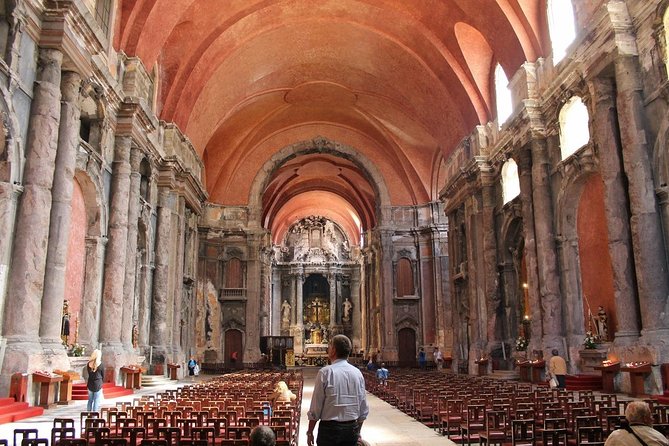
- Igreja de S Domingos and the 1506 Lisbon Massacre: The Hard Part of the Story
- How the Tour Works in Real Life: Group Size, Timing, and Your Pace
- Price and Value: Why $84.10 Can Be a Good Deal Here
- Tickets, Passport Details, and Dress Code: Small Rules, Big Impact
- Guides Who Make It Work: Paulo Levy and the Personal Connection
- Who Should Book This Lisbon Sephardic History Tour
- Should You Book This Tour or Do It on Your Own?
- FAQ
- How long is the Jewish Sephardic history tour in Lisbon?
- Where does the tour start?
- Where does the tour end?
- Is the tour offered in English?
- Is the synagogue visit inside included?
- What’s included in the price?
- What if I want to visit a synagogue on a day other than Tuesday or Thursday?
- Do I need to provide passport details?
- What should I wear for Shaare Tikva?
- How many people are in the group?
Key Things You’ll Notice on This Lisbon Jewish History Walk
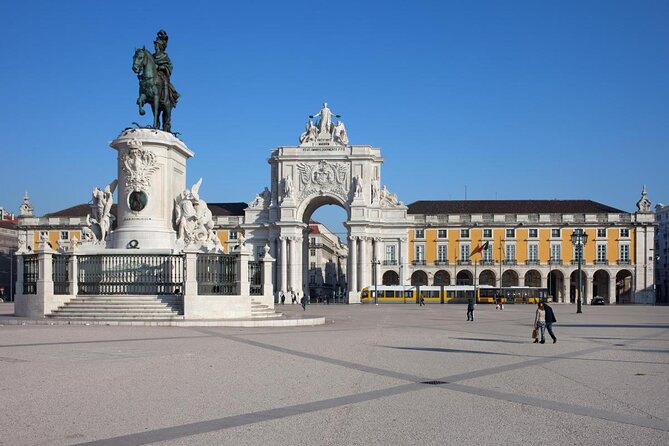
- Shaare Tikva is the first synagogue built in Portugal since the late 15th century, and you visit it from the inside
- Small group max of 8 people means more time to ask questions and keep the pace sane
- Bertrand Bookstore matters, not just as a stop, but as a clue to how Jewish life shaped Lisbon culture
- Rossio Square is where Portugal’s Inquisition era meets later national power, with the D. Maria II National Theatre replacing former Inquisition headquarters
- Igreja de S Domingos anchors the 1506 Lisbon massacre story, including what followed for New Christians
- Tickets are included for the paid-entry parts, so you avoid extra costs and hassle
Shaare Tikva Synagogue: Start Where Lisbon’s Jewish Thread Still Shows
Most Lisbon tours start with views. This one starts with a building, and that matters. Your first stop is Sinagoga Shaare Tikva, described as the first synagogue constructed in Portugal since the late 15th century. Even if you know very little about Jewish Sephardic history, you can feel that this is not a museum about the past. It is a living sign of continuity.
What I like about the way this start works is that it sets expectations. Lisbon has fewer surviving physical Jewish landmarks than many cities, mostly because Lisbon has been through major destruction over the centuries, including the 1755 earthquake, tsunami, and fires. Add the centuries-long pressure of the Portuguese Inquisition, and many Jewish symbols and sites were erased or transformed. So a synagogue visit here is not just an architectural highlight, it is your anchor. It helps you read the rest of the walk with more accuracy.
From inside the synagogue, you get the core narrative: the Jewish story through exile and return patterns, including the journey that brought communities through many lands before arriving in what is today Portugal. This tour also leans into how communities could appear, disappear, and reappear, belonging in one place for a time and then forced elsewhere. In Lisbon, that theme is not abstract. It becomes the thread that your guide keeps returning to as you move from stop to stop.
Dress code is an unglamorous but important detail. For this synagogue, you need to avoid uncovered shoulders and also avoid shorts and very short skirts. If you forget and show up in summer gear, you might not get in comfortably, and that can ruin your mood fast.
Also note the schedule reality: the inside synagogue visit is only possible on Tuesdays and Thursdays. If your travel dates do not line up, you may not get the full interior experience.
Other Lisbon plans worth comparing
- Lisbon: History, Stories and Lifestyle Walking Tour
★ 4.8 · 10,902 reviews - Lisbon: Daytime or Sunset Boat Cruise with History and Wine
★ 5.0 · 1,053 reviews - Explore Lisbon by Tuk Tuk: History and Viewpoints
★ 5.0 · 840 reviews
Principe Real to Chiado: Learning the City by Walking Its Changes
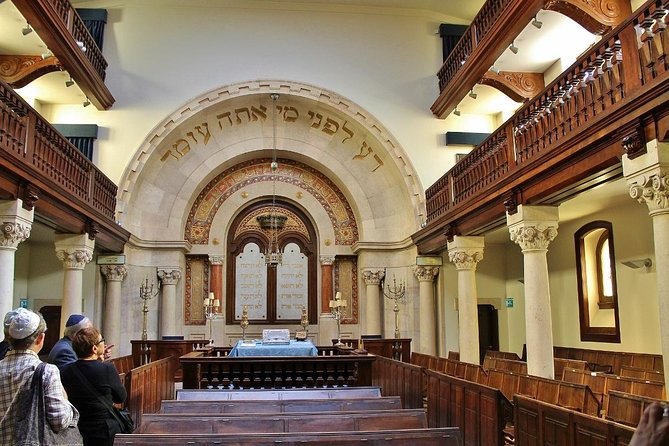
After the synagogue, you head down through Principe Real Park and then into Chiado. This part is shorter and lighter on paid entries, but it is not filler. It is your transition from sacred space to street space.
Principe Real and Chiado sit in the Lisbon fabric where you can still understand how the city grew and shifted. Your guide uses this walk to explain how Portuguese Jewish life connected to neighborhoods and daily routines, not just grand monuments. You are not looking for one single building that screams Jewish history. Instead, you are learning the pattern of where communities lived and how Lisbon neighborhoods evolved around them.
This stop also matters for pacing. It is one of the few segments where you can catch your breath, check your map, and refocus before the cultural hit in the next stop.
Bertrand Bookstore: Why Pedro Faure and a 1732 Address Fit the Sephardic Story
Once you reach Chiado, your tour turns to something you can touch in the moment: Bertrand, often called the oldest bookstore in the world. The specific detail that sticks is that it was founded in 1732 by Pedro Faure.
Here is why this stop works for the Jewish history angle. Instead of pretending you will find one preserved street corner from centuries ago, the tour connects Jewish life to Lisbon culture through the things that kept shaping the city even when other evidence was damaged or lost. Book culture, public life, and education show up in unexpected ways when you know how to look.
Also, this is one of the stops where having a guide makes a real difference. Without context, Bertrand is just a historic store you browse. With context, it becomes a marker in the larger story of Lisbon intellectual life, including the way minority communities often fed into broader cultural currents.
The good news is that this stop is not long. It is about 30 minutes, with an admission ticket included, so it does not eat the entire afternoon.
Terreiro do Paço (Praca do Comercio): Portugal’s Big Spaces, Portugal’s Big Turning Points
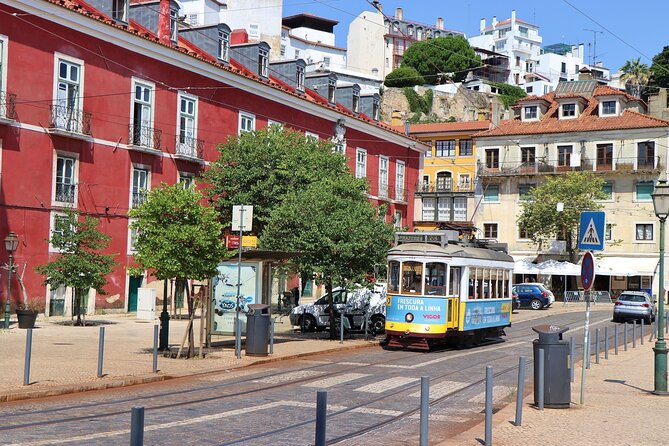
From Chiado, you walk toward the Baixa area and the huge open square: Terreiro do Paco, today commonly called Praca do Comercio. If you have been to Lisbon before, you might remember this space as a grand, postcard-level moment. What this tour adds is the historical framing.
Your guide uses this setting to explain important situations that changed Portugal’s history. This is where the tour does a smart balancing act. Yes, you are learning Jewish Sephardic history, but you are also learning why Jewish lives in Portugal could not be separated from the wider machinery of power. Major shifts in Portugal reshaped who felt safe, who got targeted, and which communities were allowed to flourish.
This stop is also a mental reset. After synagogue and bookstore, you are stepping into wide-open civic space. It is a useful break in the middle of a walking route.
In the same part of Portugal:
- Lisbon City Center Tour – The Unmissable Lisbon
★ 5.0 · 22,234 reviews - Lisbon: Sintra, Pena, Regaleira, Cabo da Roca & Cascais
★ 4.7 · 19,656 reviews - Lisbon Card: 24, 48, or 72-Hour Pass
★ 4.5 · 17,944 reviews - Lisbon: Jerónimos Monastery Entrance Ticket
★ 4.1 · 14,164 reviews
Rossio Square and the D. Maria II National Theatre: From Inquisition Headquarters to a National Stage
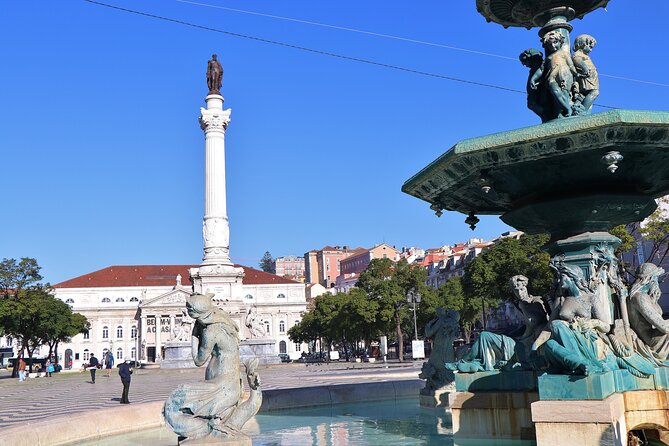
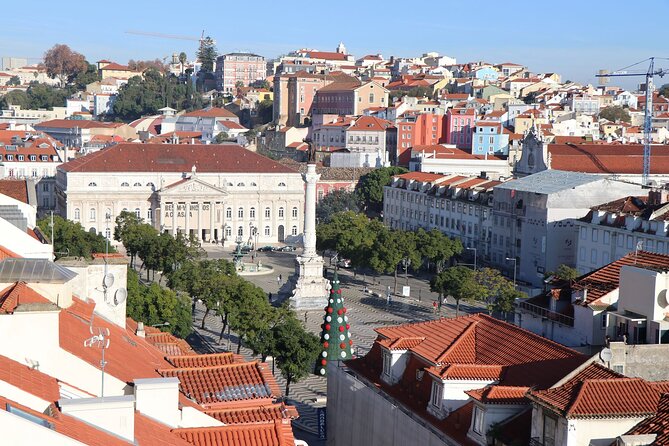
Next you head to Praca Dom Pedro IV and the center of Rossio Square. If you like visible monuments, you will enjoy this segment. In the middle sits the Column of Pedro IV, known as the Soldier King. At the base, you can see four female figures representing Justice, Wisdom, Strength, and Moderation.
It is a striking visual, and your guide ties it to the broader story of Lisbon power and public identity. The tour then brings in one of the most concrete examples of how the city repurposed old control structures: the D. Maria II National Theatre was founded in 1842, replacing the Esta’us Palace, which had been headquarters of the Portuguese Inquisition since the mid-fifteenth century.
That is the kind of fact you cannot really get from a guidebook alone. Here, it matters because it explains why Lisbon’s Jewish story can feel like a ghost. When institutions change form, the city’s map changes, too. You end up with fewer preserved Jewish landmarks, but you still have evidence of the historical system that pressured Jewish life.
You get about an hour at this stop zone, and admission is listed as free. Use the time to look slowly. If you rush, you miss the symbolic details at the column base.
Igreja de S Domingos and the 1506 Lisbon Massacre: The Hard Part of the Story
If you want the joyful version of Lisbon history, this stop will not give it to you. It gives you accuracy.
Passing by the site linked to the April 19, 1506 Lisbon massacre, your guide explains what happened and why. Then comes the grim scale: during the next three years, more than 3,000 New Christians were murdered in the streets. The story also notes that the killings were halted by the Kings Royal Army.
The epicenter in this account is Sao Domingo Church, the church connected to the violence in the story the tour tells. This is the part where the tour earns its name as Jewish history, because it does not stop at culture and architecture. It also faces the danger that shaped Jewish life and forced conversions and survival strategies.
Emotionally, this segment often hits hardest because it is so specific: a date, a scale, a location. Practically, it is also useful because it helps you interpret why Lisbon can feel both layered and incomplete, especially when you are trying to find physical remnants from earlier centuries.
How the Tour Works in Real Life: Group Size, Timing, and Your Pace
This experience runs about 4 hours and is offered in English, with a maximum group size of 8. That small size is a big deal on a walking route through tight streets. You are more likely to ask questions, and you are less likely to get shoved along like a human ferry.
Your paid time is focused where it counts. The synagogue visit runs about 45 minutes, and you also have admission included for Bertrand. Other stops are free or no-admission stops, which keeps the money tied to meaningful sites rather than random streetscapes.
In terms of pacing, the itinerary includes several neighborhood changes, from Principe Real to Chiado, down into Baixa, then to Rossio. Reviews also mention a walking distance around 4 miles, so plan for that. You do not need athlete fitness, but you do want moderate fitness and comfort with steps.
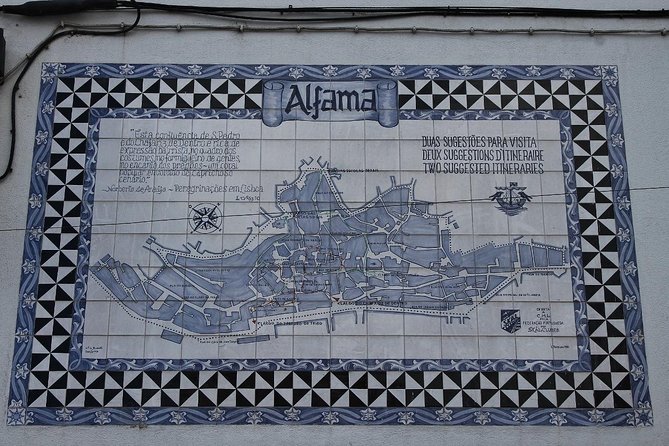
Weather can affect the exact end point. The tour ends in Old Town, sometimes near Alfama but not guaranteed. It depends on your curiosity and physical capability, plus weather conditions. That flexibility is helpful, but it also means you may not end at the exact place you expected.
Price and Value: Why $84.10 Can Be a Good Deal Here
At $84.10 per person, this is not a bargain-basement walking tour. The value comes from what is handled for you:
- Inside Shaare Tikva synagogue tickets included
- Bertrand admission included
- All entrance fees included for the paid parts, so you avoid add-on costs
- A small group setup
- Guaranteed skip ticket lines
In other words, you are paying for time efficiency. Lisbon can be frustrating when you lose 30 minutes to entry lines. If the paid stops are the core of your experience, reducing that friction is worth money.
Also, the tour is booked on average about 53 days in advance, which is a hint that slots can fill. If you want a specific date, lock it in early rather than hoping.
Tickets, Passport Details, and Dress Code: Small Rules, Big Impact
There are a few practical requirements you should treat seriously, because they can affect whether you get the full experience.
- You need passport details (name, number, expiry, country) for security reasons at the time of booking.
- There is a dress code for the synagogue: no uncovered shoulders, no shorts, no mini-skirts.
- The synagogue inside visit is only possible on Tuesdays and Thursdays.
You will likely be fine if you plan ahead, but this is the type of rule list that bites people who pack light and assume Lisbon is casual everywhere. Bring a layer if your wardrobe leans sleeveless.
Guides Who Make It Work: Paulo Levy and the Personal Connection
The quality of this tour rides hard on the guide. The stand-out name in the guide feedback is Paulo Levy (also written Paulo Levi). People describe him as passionate, energetic, and deeply invested in Portuguese Jewish history, not just as trivia but as identity and memory.
What I think is most useful about his approach is how he connects the dots. You see the city’s visible monuments, but you also hear the stories behind them and why they matter to Sephardic history. Some guides can recite dates. Paulo’s style (as reflected in the guide notes you’ll encounter on the tour) leans toward connecting Portugal’s bigger history to the Jewish community experience.
There is also an additional introduction inside the synagogue. Reviews mention a lady staff member at the synagogue giving an excellent introduction about the synagogue’s membership and relationship to the community. If you are the kind of traveler who likes structured context before the walking starts, that combo is a win.
Who Should Book This Lisbon Sephardic History Tour
This tour is a strong match if you want:
- A focused Jewish history experience in Lisbon without spending hours figuring out what to visit
- A synagogue interior visit on the correct days (Tuesdays and Thursdays)
- A guide who explains why Lisbon’s Jewish story is often visible indirectly, through repurposed buildings and neighborhood patterns
- A manageable group size that supports questions
It may be less ideal if you dislike walking a few miles, have mobility issues, or you expect multiple preserved Jewish buildings. Lisbon is not that kind of city. The experience is built around interpretation, not a straight line of intact historic Jewish sites.
Should You Book This Tour or Do It on Your Own?
Book it if you want the quickest way to understand Lisbon’s Sephardic Jewish story in a single half day. The tour’s biggest strength is that it combines a meaningful Shaare Tikva synagogue interior with cultural stops like Bertrand and hard-history framing around Rossio and Igreja de S Domingos. The guided interpretation is what makes it more than a checklist.
Skip it or consider another option if you do not want to walk, cannot meet the synagogue dress code, or your dates do not include Tuesday or Thursday for the inside visit. In those cases, you could lose some of the tour’s core value.
If you do go, go prepared to look longer than you usually would. This is a story tour. You are learning how to read Lisbon like it has footnotes.
FAQ
How long is the Jewish Sephardic history tour in Lisbon?
It lasts about 4 hours.
Where does the tour start?
The start is at Shaare Tikvah Synagogue, R. Alexandre Herculano 59, 1250-010 Lisboa, Portugal.
Where does the tour end?
The end is in Lisbon’s Old-Town. It may be near Alfama, but it can vary depending on travellers curiosity and physical capabilities, plus weather conditions.
Is the tour offered in English?
Yes, it is offered in English.
Is the synagogue visit inside included?
Yes, you visit Shaare Tikva from the inside with tickets included, and your guide will accompany you to explain its history. Inside visits are only possible on Tuesdays and Thursdays.
What’s included in the price?
A small group tour with a professional guide, the synagogue visit from the inside with tickets included, and admission tickets for listed paid stops. The tour also guarantees skip ticket lines.
What if I want to visit a synagogue on a day other than Tuesday or Thursday?
The tour states that you can only visit the synagogue inside on Tuesdays and Thursdays, so planning around those days is important.
Do I need to provide passport details?
Yes. You need to provide passport details (name, number, expiry, and country) at the time of booking for security reasons.
What should I wear for Shaare Tikva?
There is a dress code. You need to avoid uncovered shoulders and shorts or mini-skirts.
How many people are in the group?
The tour has a maximum of 8 travelers.
Just added around Lisbon
- Morning Sailing Tour in Tagus River from Lisbon★ 5.0 · 68 reviews
- Private Half Day – The Majestic Pena Palace & Sintra★ 5.0 · 90 reviews
- Lisbon Private 3 hours tour★ 4.5 · 33 reviews
- PRIVATE Unforgettable Full Day Tour to Sintra from Lisbon★ 5.0 · 236 reviews
- Lisbon: Catamaran Luxury Sunset and Wine Tour★ 5.0 · 119 reviews
- Lisbon’s authentic Food and Wine tour with a Winemaker★ 5.0 · 67 reviews
- Sesimbra Wild Beach Tour from Lisbon★ 5.0 · 57 reviews
- Private Jeep Tour from Lisbon – Arrábida, Sesimbra & Beach Picnic★ 5.0 · 48 reviews
Historical Tours, compared.


Douro Valley: Historical Sites, Wine Experience, Lunch & Cruise
Read our review →


Daytime or Sunset Boat Cruise with History and Wine
Read our review →
Private Tour of the Historic City in a Ford T Car
Read our review →
Browse the lists this tour appears in