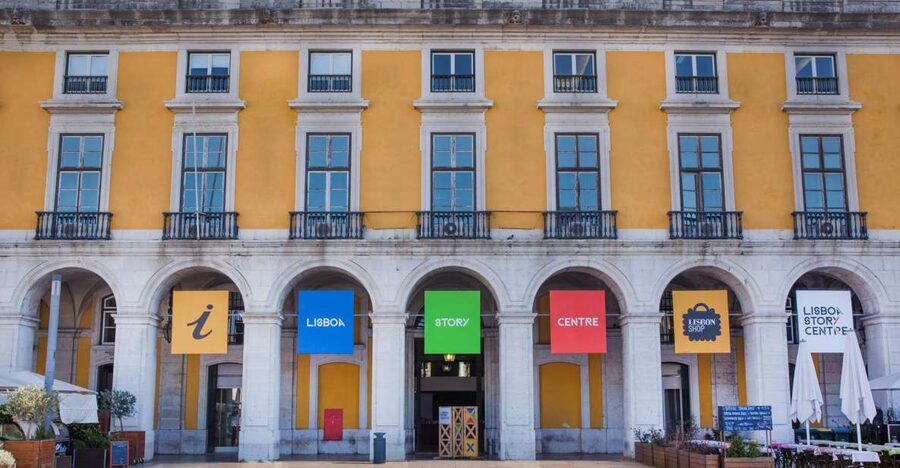
Reviewed · 1-DAY TOURS
Lisboa Story Centre: 1-Day Admission Ticket
Lisbon has a way of telling stories in rooms. Lisboa Story Centre turns the city’s past into a 60-minute, audio-guided journey you can follow step by step.
I especially like the mix of hands-on sets and state-of-the-art media, because it makes big events easier to understand fast. And I love that the chronological layout helps you build a clear sense of how Lisbon changed over centuries.
One drawback to plan around: the experience is built mainly around historical moments, so if you’re hoping for lots of today-in-Lisbon discussion, you may leave wanting more.
In This Review
- Lisboa Story Centre, Terreiro do Paço, in one glance
- Inside Terreiro do Paço: why this 1-day ticket feels like a Lisbon shortcut
- The flow of your visit: 6 public areas, 1 recorded storyteller
- Ground floor timeline: from early civilizations to Lisbon as a global city
- The 16th-century warehouse and New World goods
- The 1755 Great Earthquake, All Saints’ Day, and Lisbon’s shock
- Marquis of Pombal and rebuilding Lisbon
- The fifth ground-floor chapter: Lisbon’s story moves into later centuries and beyond
- First floor virtual scale model: see Lisbon’s architecture patterns before you walk them
- Temporary exhibitions: a useful extra stop when your timing allows
- Audio guide and language options: set your pace and follow the recorded storyteller
- Timing and hours: how to choose your entry time at Terreiro do Paço
- Value check: what you get for your ticket
- Who should book Lisboa Story Centre?
- What to watch out for: heat and the contemporary gap
- Should you book Lisboa Story Centre? My take
- FAQ
- What is the duration of the Lisboa Story Centre experience?
- How many exhibition areas are included in the visit?
- What time is the last entrance?
- Where is the meeting point?
- Is an audio guide included, and what languages are available?
- Does the ticket let me skip the ticket line?
- Is Lisboa Story Centre wheelchair accessible?
- Can I get a full refund if I cancel?
- Can I reserve now and pay later?
Lisboa Story Centre, Terreiro do Paço, in one glance
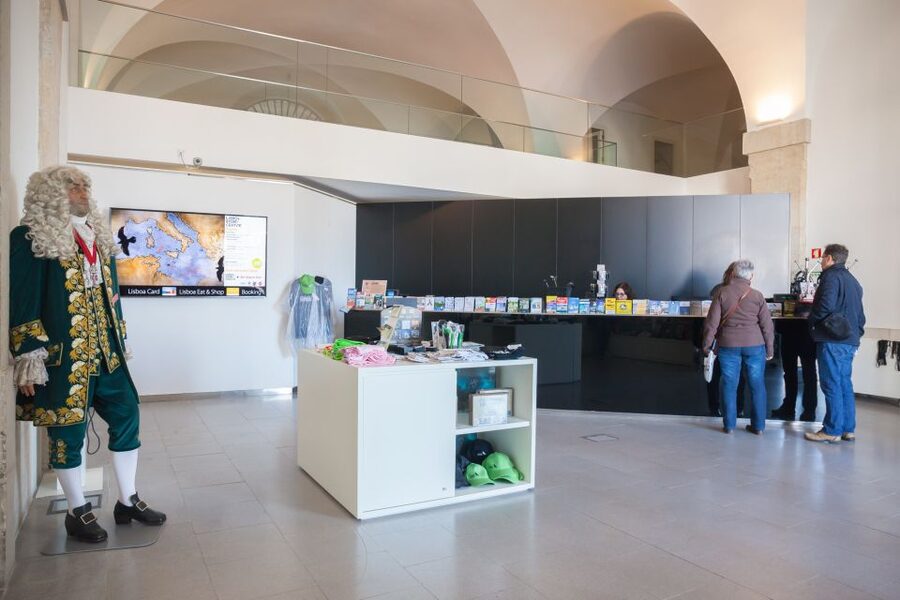
- Six areas across 2,200 square meters, with a recorded multilingual storyteller to keep you on track
- A 60-minute ride through time, using sets plus multimedia and sensory moments
- Key chapters you can’t miss, including the 1755 earthquake and the reconstruction vision of the Marquis of Pombal
- A first-floor virtual scale model, letting you visualize Lisbon’s architecture and spot patterns in how the city is built
- Audio guide in many languages, with adult and child Portuguese versions
Inside Terreiro do Paço: why this 1-day ticket feels like a Lisbon shortcut
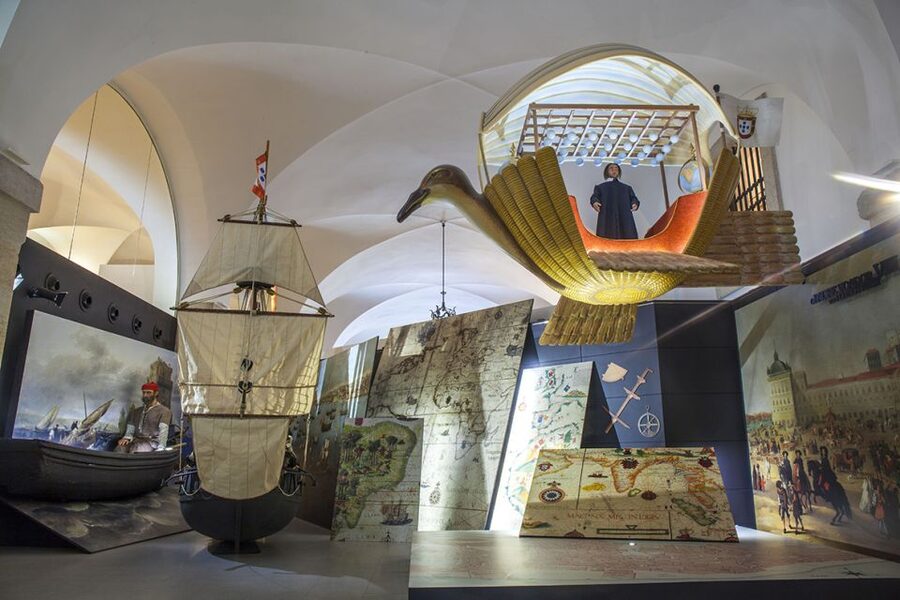
Terreiro do Paço sits right on the riverfront end of Lisbon’s center, and Lisboa Story Centre takes over the East Wing of the newly renovated complex. You’re not just reading about the city here. You’re moving through it, in order, with an audio guide that acts like a storyteller as you go.
For me, the smartest value is time. The core experience is designed as a 60-minute journey across time and space, so you can fit it into almost any day without losing your whole afternoon. If you’re also planning a few outdoor neighborhoods, this kind of indoor anchor makes the rest of Lisbon click.
And because it’s staged with technology plus dramatic recreations, it’s built for different learning styles. You can watch and listen, but you can also walk through scenes that make the historical stakes feel immediate.
Other Lisbon plans worth comparing
- Lisbon City Center Tour – The Unmissable Lisbon
★ 5.0 · 22,234 reviews - Lisbon: Sintra, Pena, Regaleira, Cabo da Roca & Cascais
★ 4.7 · 19,656 reviews - Lisbon Card: 24, 48, or 72-Hour Pass
★ 4.5 · 17,944 reviews
The flow of your visit: 6 public areas, 1 recorded storyteller
Your day ticket includes admission to the Lisboa Story Centre and an audio guide. The tour itself is guided by a recorded multilingual storyteller, and it is presented in a playful, interactive style while still aiming to respect Lisbon’s historical background.
Plan to take your time moving between areas, even if the main journey is about an hour. The building is about 2,200 square meters, and the rooms are designed so you naturally slow down. If you rush, you’ll miss details that help the chronological story make sense.
The center’s design splits the experience into:
- Five main exhibition areas on the ground floor, arranged in chronological order
- A sixth exhibition area on the first floor, focused on a virtual scale model of Lisbon
- A temporary exhibition space, tied to the center’s main themes
There’s no requirement that you do everything in one go. But if you want the story to connect, I’d treat the ground-floor route like your backbone, then use the first floor and the temporary exhibition as your add-ons.
Ground floor timeline: from early civilizations to Lisbon as a global city
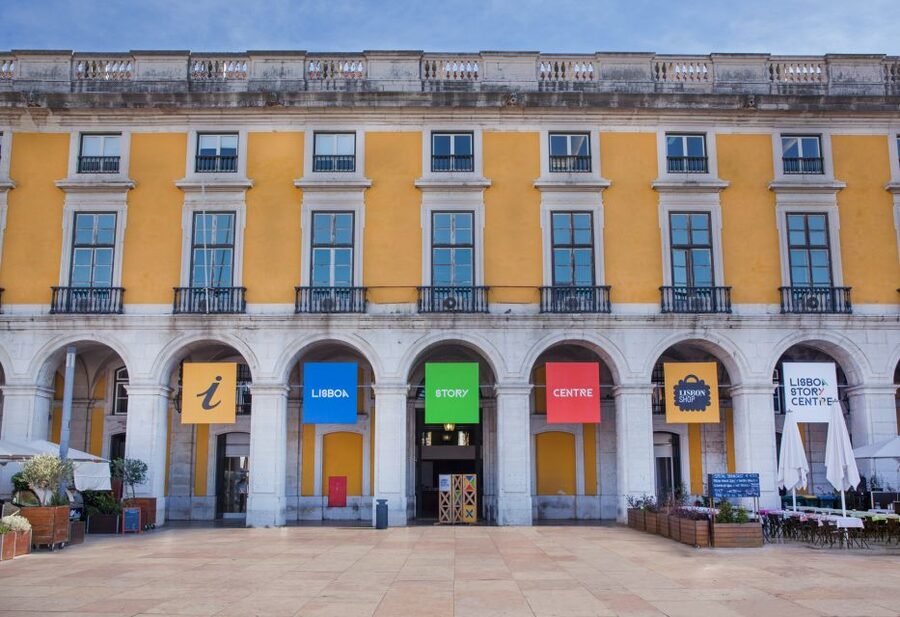
The first part of the story starts with Lisbon’s earliest civilizations. You get guided narration as the exhibitions progress through major episodes, and the chronological ordering matters more than you might think. Lisbon can feel like a collage when you’re outside. Here, the city becomes a timeline.
What makes these early sections useful is clarity. Even if you don’t memorize dates, you start to recognize the logic of Lisbon’s growth. You see how people, trade, and power shift the city’s direction, not just its buildings.
Then the story moves into the Lisbon that looked outward. This is where the center uses atmosphere and objects to help you picture long-distance connections, not just local streets.
The 16th-century warehouse and New World goods
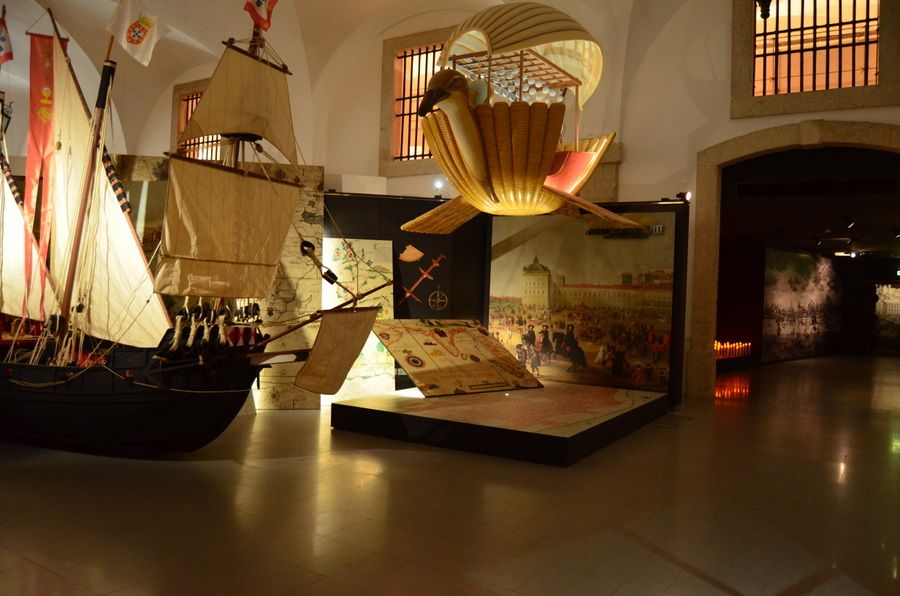
One standout room recreates the feel of a 16th-century warehouse, with displays tied to the New World and transported goods shown as part of Lisbon’s trading world. You’ll also see products presented alongside caravela ship elements.
Why I like this part: it’s a history lesson you can grasp with your eyes. You don’t have to work hard to translate. The setup turns trade into something tangible, and it helps explain why Lisbon became such an important hub.
If you’re a visual learner, this section can be your “aha” moment. It also sets you up for understanding later events, because the center’s story treats Lisbon’s crises and choices as connected to its wider role.
In the same part of Portugal:
- Lisbon: Jerónimos Monastery Entrance Ticket
★ 4.1 · 14,164 reviews - Lisbon: History, Stories and Lifestyle Walking Tour
★ 4.8 · 10,902 reviews - Lisbon: Sunset Boat Party Cruise with DJ and Open Bar
★ 4.5 · 10,378 reviews - Lisbon: Sintra, Pena, Regaleira, Cabo da Roca, and Cascais
★ 4.7 · 10,147 reviews
The 1755 Great Earthquake, All Saints’ Day, and Lisbon’s shock
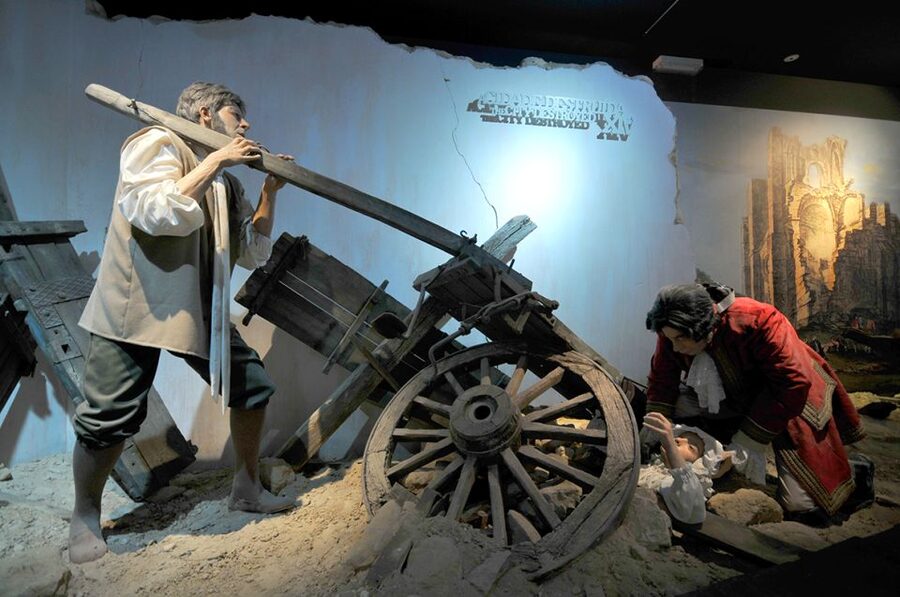
The tour’s emotional peak is the section tied to All Saints’ Day in 1755. You witness the tragic consequences of the Great Earthquake through an intense, scene-based presentation.
This isn’t just facts on a panel. The center uses immersive-style staging (without requiring you to be an expert in geology or architecture) to show what a catastrophe does to a city’s momentum and its people. The narrated story gives it context, so you don’t feel lost in the drama.
A practical note: if you’re sensitive to high-intensity sound, lighting, or staged chaos, treat this as the moment to slow down. Stand where you can control what you experience, and take a breath if the room ramps up quickly.
Marquis of Pombal and rebuilding Lisbon
After the earthquake chapter, the center moves into reconstruction, and you’ll accompany the Marquis of Pombal as he pushes a far-reaching vision for rebuilding.
I like this shift because it adds cause-and-effect. You start to see that reconstruction wasn’t only about repairing buildings, it was about planning how Lisbon would function afterward. If you love urban history, this is one of the strongest parts of the show.
It also helps explain the modern Lisbon you’ll see outdoors later. You begin to notice that a city’s layout is often the echo of past decisions.
The fifth ground-floor chapter: Lisbon’s story moves into later centuries and beyond
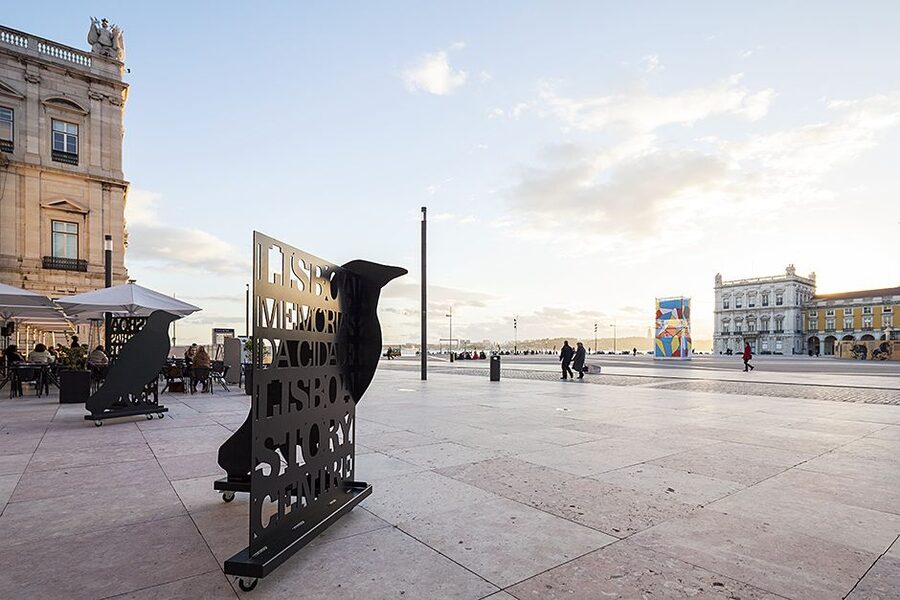
The five ground-floor areas cover Lisbon’s entire history, from the earliest civilizations to the present day. The center doesn’t present Lisbon as one long static scene. It keeps moving, and your audio guide keeps you oriented as the story advances.
Because the specific subtopics for each room aren’t laid out in your face everywhere, I recommend treating each ground-floor stop like a waypoint. Let the narration do the connecting. When you listen in order, the sections feel like steps forward, not random exhibits.
If you feel you’re rushing, slow down in this later section. This is where it’s easiest to accidentally “pass through” without getting the timeline benefits.
First floor virtual scale model: see Lisbon’s architecture patterns before you walk them
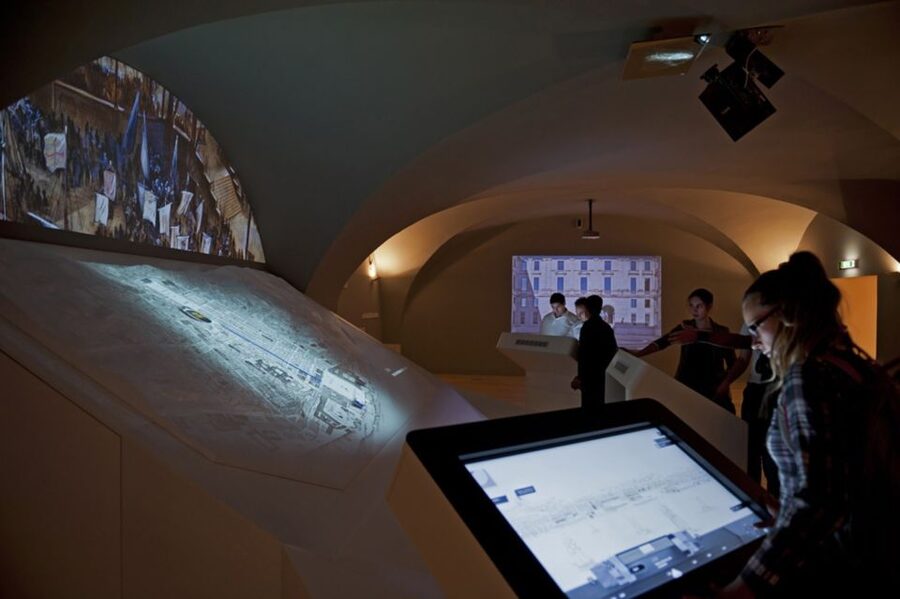
The sixth exhibition area is upstairs and centers on a virtual scale model of Lisbon. This is where you shift from dramatic scenes to spatial understanding.
The model helps you see different types of architecture and encourages you to spot how the city’s past becomes visible in the present. Even if you’re not sure what you’re looking at while you’re outside, this room gives you a vocabulary of shapes and styles.
Think of it as your visual map study session. When you later wander Lisbon’s streets, you’re not starting from zero. You’ve already trained your eye to recognize patterns in the city’s built form.
Temporary exhibitions: a useful extra stop when your timing allows
Besides the permanent sections, you also get access to a temporary exhibition area focused on the same broad themes as the center.
Is this a must-see? If you only have an hour, prioritize the main ground-floor timeline plus the first-floor model. If you have extra time or you genuinely enjoy the interactive, multimedia approach, the temporary show is a nice extension. It can add new angles to the story without changing the overall structure.
Audio guide and language options: set your pace and follow the recorded storyteller
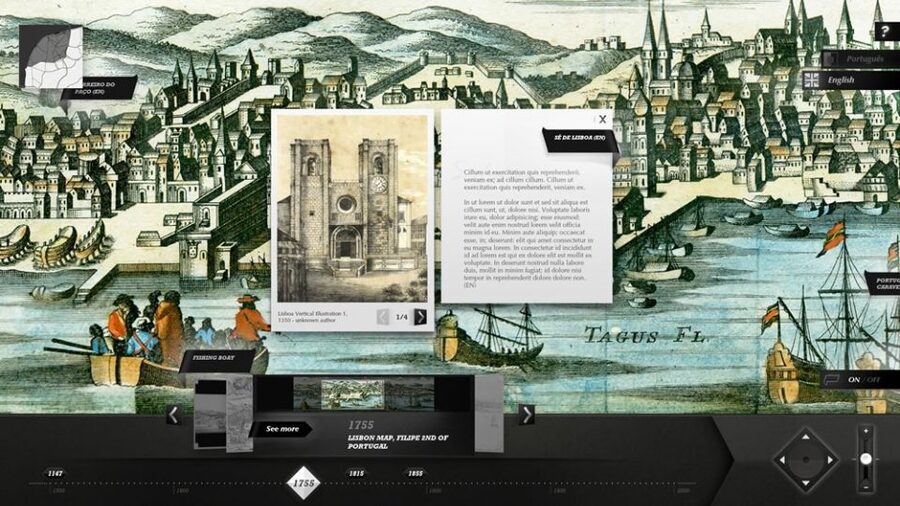
The audio guide is included with your admission ticket and works as your guide through the experience. It’s available in many languages, and Portuguese includes both adult and child versions.
Languages listed for audio include:
- Portuguese (adult and child)
- English
- Spanish
- French
- Italian
- German
- Russian
- Mandarin
- Japanese
Why this matters for you: the narration is what turns the rooms into a coherent tour. If you’re traveling with someone who reads faster than listens, or vice versa, you’ll find the recorded format easier to manage than expecting a live guide to pause for everyone.
One smart move: start your route a few minutes before you feel fully ready, because the story flows best when you begin at the beginning of each area.
Timing and hours: how to choose your entry time at Terreiro do Paço
Lisboa Story Centre is open daily from 10:00 to 19:00, and the last entrance is at 18:00.
Since the core journey is 60 minutes, I suggest choosing a time that still leaves you energy for whatever you plan next outside. If you go too late, you may end up rushing the later chapters or skipping the temporary exhibition, just because Lisbon gets dark and you want food and views.
If you’re planning a day that includes popular viewpoints, I like placing the Story Centre earlier. It gives you context before you see the city’s skyline and riverfront for real.
Value check: what you get for your ticket
Even without looking at any price label, this ticket has clear value ingredients:
- Admission to six exhibition areas that cover Lisbon’s timeline
- Audio guide included, in multiple languages
- Skip the ticket line, so you spend time inside rather than waiting outside
- A format designed for one-day flexibility, with validity for that day
For many visitors, the value comes from structure. The center gives you a guided narrative, not just rooms full of objects. It’s one of those experiences where you can leave feeling like you learned something real, without spending hours researching before you arrive.
Who should book Lisboa Story Centre?
This works best if you want history you can actually follow while standing up and walking. It’s especially good for:
- Families, because it’s playful and interactive, and kids can enjoy the staged scenes
- First-time Lisbon visitors who want a clean overview before neighborhood hopping
- Travelers who like a mix of media plus physical displays, not just reading walls
What to watch out for: heat and the contemporary gap
One practical issue to plan around is temperature. The indoor installations do not have air conditioning, so summer visits can feel warm. If you’re going in the hottest months, I’d prioritize a cooler entry time and bring water. Dress in light layers you can peel down.
Also, be aware of the scope of the story. The center focuses on the historical chapters that shaped Lisbon, and you may find that the modern, contemporary angle does not get a lot of time. If your travel style is all about today’s culture, nightlife, and current events, you might feel the show ends earlier than your curiosity wants.
Should you book Lisboa Story Centre? My take
Book it if you want a structured way to understand Lisbon’s turning points. The chronological flow, the audio-guided narration, and the combination of scenes plus the virtual Lisbon model are exactly the kind of support that makes cities easier to explore later.
Skip it or reconsider if you already know Lisbon’s history well and you’re mainly chasing present-day culture. The center’s strength is historical moments, not modern commentary.
If you can only do one indoor activity that will still help you outdoors, this is a strong candidate. It’s short enough to fit almost any itinerary, and it helps you read Lisbon with your eyes, not just with your phone.
FAQ
What is the duration of the Lisboa Story Centre experience?
The experience is designed as a 60-minute journey across time and space.
How many exhibition areas are included in the visit?
The center features 6 public areas, with 5 main exhibition areas on the ground floor and the sixth area on the first floor.
What time is the last entrance?
Lisboa Story Centre is open 10:00 to 19:00, and the last entrance is at 18:00.
Where is the meeting point?
The meeting point is at Terreiro do Paço, 78-81 1100-148 Lisboa.
Is an audio guide included, and what languages are available?
Yes, an audio guide is included. Languages include Portuguese (adult and child), English, Spanish, French, Italian, German, Russian, Mandarin, and Japanese.
Does the ticket let me skip the ticket line?
Yes, the ticket includes skip-the-ticket-line entry.
Is Lisboa Story Centre wheelchair accessible?
Yes, it is wheelchair accessible.
Can I get a full refund if I cancel?
Yes, there is free cancellation up to 24 hours in advance for a full refund.
Can I reserve now and pay later?
Yes, you can reserve now and pay later, with the option to keep travel plans flexible.
Just added around Lisbon
- Tomar: Knight’s Templar Castle and Convent of Christ Tour★ 4.9 · 84 reviews
- Tour Bohemian de Tuk Tuk: Bertrand, Miradouros e Estrela★ 5.0 · 24 reviews
- From Lisbon: Fátima, Nazaré and Sintra Guided Tour★ 4.7 · 155 reviews
- From Lisbon: Tomar, Batalha, Alcobaça, & Óbidos Templar Tour★ 4.9 · 47 reviews
- From Lisbon: Sintra Pena Palace Cascais 8-People Group Tour★ 4.9 · 93 reviews
- The Real Lisbon Street Art Private Guided Tour by Minivan★ 4.7 · 49 reviews
- Lisbon: The Jewish Sephardic Walking Tour★ 4.9 · 22 reviews
- From Lisbon: Tomar, Christ Convent & Almourol Castle Tour★ 5.0 · 64 reviews
1-Day Tours, compared.

Sintra and Cascais Small-Group Day Trip from Lisbon
Read our review →

Three Cities in One Day: Porto, Nazare and Obidos from Lisbon
Read our review →
Fátima, Nazaré and Óbidos Small-Group Day Trip from Lisbon
Read our review →
Best of Braga and Guimaraes Day Trip from Porto
Read our review →