Reviewed · LISBON TOURS & ACTIVITIES
Lisbon: Graça Church | Convent & Terrace viewpoint access
Lisbon really feels like it lifts off when you reach the Graça heights. This Graça Church and Convent visit pairs historic rooms you can actually enter with a terrace viewpoint that frames the city like a postcard you can walk into.
I especially like two things: the 18th-century tile panels and cloister spaces, and the terrace view that reaches from St. George’s Castle across the Tagus River to the old bridge and all the way toward Cristo Rei.
The main drawback is simple. The visit is not for everyone because you will climb, and it is not suitable for wheelchair users or anyone who feels unwell with altitude.
In This Review
- Key highlights worth planning for
- Why Graça feels like Lisbon’s skybox
- The Convent of Nossa Senhora da Graça: origins, rebuilding, and meaning
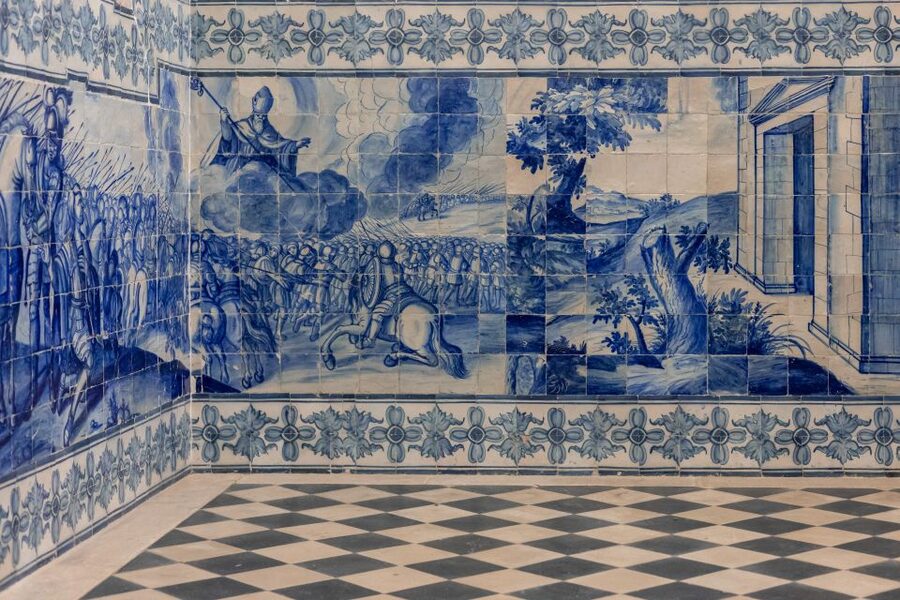
- Entering the cloister and 18th-century tile panels
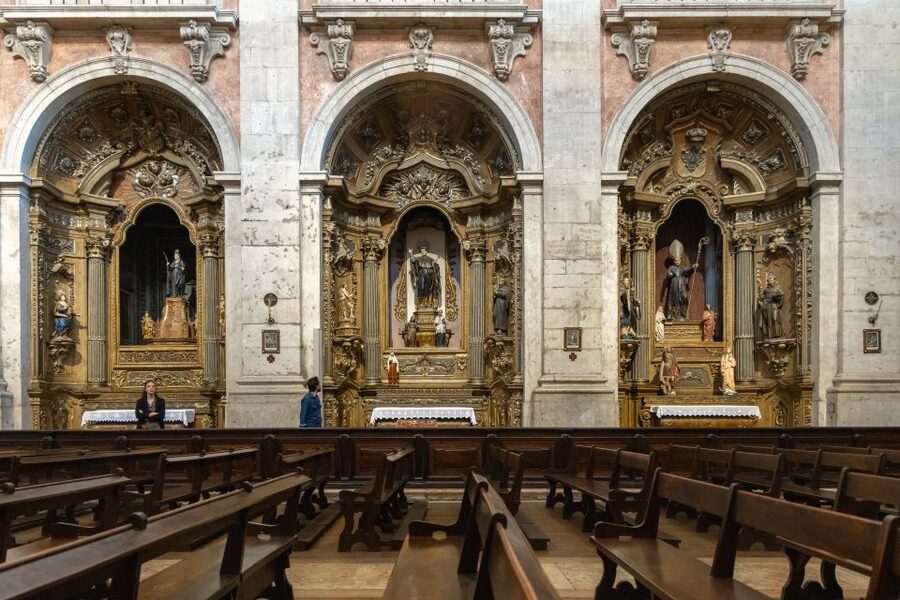
- Church interiors: gilded woodwork and grisaille ceilings
- What the access includes: high choir and upper cloisters
- The terrace viewpoint: St. George’s Castle, Tagus, old bridge, and Cristo Rei
- Getting the most out of your 1-hour visit
- Price and value: is $7 worth it for the terrace access?
- Who this is best for, and who should skip it
- Practical tips so the visit goes smoothly
- Should you book this Graça Church and Terrace access?
- FAQ
- How long does the Graça Church and Convent access take?
- What is included in the ticket?
- What is not included?
- Where do you exchange your voucher?
- What languages are available with the host or greeter?
- What should I bring?
- Is this activity suitable for wheelchair users or altitude sickness?
Key highlights worth planning for
- A 700-plus-year setting, with origins starting in 1271 and later rebuilds after the 1755 earthquake
- Terrace access included, so you are not limited to a faraway overlook
- Cloister and tile panels, plus church artwork like gilded woodwork and grisaille ceiling paintings
- Included upper areas, including the high choir and upper cloisters
- Great panorama lines, toward St. George’s Castle, the Tagus, the old bridge, and Cristo Rei
- Often calmer inside than at the main viewpoint, if you spend time in the church and monastery rooms
Why Graça feels like Lisbon’s skybox
There is a moment in Lisbon when you stop looking at the street and start looking at the map. Graça does that fast. You are in a historic church and convent complex perched above the city, and the spaces gradually pull your attention upward, from stone and tiles to the sky-facing terrace.
What makes this access worth it is the combination. Many Lisbon overlooks are basically just a view spot. Here, you get a real interior visit first, with rooms that carry centuries of religious life, processions, and rebuilding after catastrophe. Then you step out to the terrace for the payoff: Lisbon spread beneath you, with major landmarks visible in one sweep.
I like that the visit is only about 1 hour. That keeps it focused, especially if you already have a jam-packed day of viewpoints. You are not committing to a long museum slog. You are getting a tight, meaningful taste of the Graça hillside, with a viewpoint that has real city connections.
Other Lisbon plans worth comparing
- Lisbon City Center Tour – The Unmissable Lisbon
★ 5.0 · 22,234 reviews - Lisbon: Sintra, Pena, Regaleira, Cabo da Roca & Cascais
★ 4.7 · 19,656 reviews - Lisbon Card: 24, 48, or 72-Hour Pass
★ 4.5 · 17,944 reviews
The Convent of Nossa Senhora da Graça: origins, rebuilding, and meaning
The Convent of Nossa Senhora da Graça is one of Lisbon’s most imposing convent complexes, and the building story helps you see it with fresh eyes. Construction began in 1271, at a place then called Almofala, and the site started as an Augustinian convent. Later, the dedication shifted to Nossa Senhora da Graça, either in 1305 or 1362, depending on the historical account you are following.
Then comes the part you should file away before you go: the complex was destroyed by the 1755 earthquake. After that, the church and convent were restored in a late Baroque style. So as you walk through, you are seeing layered Lisbon, not just one era frozen in time.
One small but helpful way to use this history on-site is to compare your expectations to what is in front of you. If you think of convents as plain and cold, you will notice the opposite here, especially once you reach the cloister and church interiors. If you love architecture, this is a good reminder that surviving buildings in Lisbon often have a second life after 1755. You are stepping into that continuity.
Entering the cloister and 18th-century tile panels
The cloister is where the visit starts to feel personal. Even if you are not a dedicated art person, cloisters tend to slow you down. They pull your gaze toward patterns, repetition, and small details that you would miss in a hurry.
In Graça, that slow looking matters because the complex includes 18th-century tile panels and cloister spaces full of story. Tiles are not just decoration. In Portugal, they are visual writing, scenes and symbolism arranged to teach and remind. Here, that tradition is part of what makes the building feel lived-in, even though you are touring it as a visitor.
A practical tip for getting value out of tiles: take five minutes and move your gaze the way your eyes would in a book. Look low, then mid-height, then upward. The goal is to catch how the panels interact with the space around them, especially where the colors and shapes frame doors, arches, and corners. You end up appreciating the architecture and the artwork together.
Also, if you are trying to escape the most crowded areas of Graça, this is a good strategy. One reason this visit feels pleasant is that many people treat the nearby miradouro as the whole experience. Spending time inside the church and monastery areas can feel noticeably calmer.
Church interiors: gilded woodwork and grisaille ceilings
When you reach the church spaces, pay attention to texture and light. Graça’s church includes gilded woodwork and grisaille paintings on the ceiling. That mix gives you two different kinds of beauty in one room: the warm reflectiveness of gilding and the more controlled, monochrome mood of grisaille artwork.
Gilded woodwork is one of those features that can look spectacular in photos but still works better in person, because you see how the surfaces catch light from the windows. With ceiling paintings, the trick is patience. If you crane your neck for too long, you will start rushing. Instead, scan from one section to another and pause for a few seconds each time.
If you enjoy religious art, also connect what you see to the convent’s historic role. In 1586, this convent became famous for housing Senhor dos Passos. Starting the following year, a famous procession ran from Graça to São Roque. Even if you are not watching a procession today, the idea of movement and devotion is baked into the building’s identity.
That context helps the church feel less like a stop and more like a place where people used to gather, witness rituals, and remember events year after year. It is not just pretty. It is purposeful.
In the same part of Portugal:
- Lisbon: Jerónimos Monastery Entrance Ticket
★ 4.1 · 14,164 reviews - Lisbon: History, Stories and Lifestyle Walking Tour
★ 4.8 · 10,902 reviews - Lisbon: Sunset Boat Party Cruise with DJ and Open Bar
★ 4.5 · 10,378 reviews - Lisbon: Sintra, Pena, Regaleira, Cabo da Roca, and Cascais
★ 4.7 · 10,147 reviews
What the access includes: high choir and upper cloisters
This ticket does more than get you into the church. It includes entry to the convent and church, and also access to areas that many people only hear about: the high choir and the upper cloisters, plus the included climb to the terrace.
The value here is the vertical story. Convents were designed for different roles and different movement patterns, and upper spaces often reveal how the complex functioned. Even if you do not know every architectural term, you can usually feel the change in atmosphere. Higher levels tend to be quieter and more enclosed, which helps your brain slow down and focus.
One reason I like this style of access is that it makes the visit feel complete. You are not just checking a box at one point in the building. You are getting multiple perspectives of the complex itself, from interior religious spaces up to the elevated viewpoint terrace.
Do take a moment before you climb on to ask yourself what you want from the hour. If your goal is photos and skyline, plan to keep moving without lingering too long in every hallway. If your goal is atmosphere and details, take your time on cloister tiles and ceiling artwork, then move briskly to the terrace so you still catch clear sightlines.
The terrace viewpoint: St. George’s Castle, Tagus, old bridge, and Cristo Rei
The terrace is the reason most people care about this stop, and for good reason. From the Graça terrace, you get one of Lisbon’s most beautiful panoramas. You can see St. George’s Castle, the Tagus River, the old bridge, and far into the horizon toward Cristo Rei.
This is the kind of view that helps you understand how Lisbon works. It is not random hills and streets. You can trace the city’s structure: the river acting as a divider and a guide, the castle rising as the defensive focal point, and the bridge as the major connector. Then Cristo Rei anchors the far distance and makes your brain feel the scale.
A reality check from experience style here: the terrace can be windy. One recent visit described the cold and wind, yet they still felt the experience was worth it. That matches what you should assume about any high Lisbon viewpoint. Bring layers, especially in cooler months, and do not underestimate how quickly you can feel chilled up there.
If you have binoculars, use them. The tour includes bringing binoculars, which suggests the viewpoint is set up for close reading of distant landmarks. Even without fancy gear, you will notice that the horizon view holds up better if you spend a few minutes adjusting your position and angle.
Getting the most out of your 1-hour visit
Because this visit is about 1 hour from activation, you will get the best results with simple pacing. Think of it as two halves: interior first, terrace second.
Start inside with the spaces that benefit from slow looking: the cloister and tile panels, then the church interiors with gilded woodwork and grisaille ceiling paintings. Once you have those details in your head, the terrace will feel even more rewarding, because you will connect the skyline with the building you just toured.
If you tend to get photo-heavy on viewpoints, resist the urge to race to the terrace immediately. You may end up spending the best light and best energy on skyline shots, then rushing through the interior without feeling the building’s story. Graça rewards a little order.
Also, wear shoes that work for climbing. This is not stated as a casual stroll. The complex includes climbs to reach the terrace, and the overall experience is not suitable for wheelchair users. If you are comfortable on stairs and uneven surfaces, you will likely feel fine. If you hate stairs, plan on skipping this or visiting at a slower pace with extra care.
Price and value: is $7 worth it for the terrace access?
At around $7 per person for convent, church, included upper areas, and terrace access, the value is strong for a short, focused outing. You are paying for more than a landmark. You are paying for entry to spaces that are typically closed or only partially accessible to ordinary passes, including the high choir and upper cloisters, plus the terrace.
That matters because the terrace view is the star attraction. But if you arrive with only an external miradouro mindset, you miss the real value: the inside access changes the experience from a photo stop into a layered cultural visit.
And since the visit time is about 1 hour, it is easy to fit. If you are spending your day hopping between Lisbon neighborhoods, this is the type of stop that adds meaning without eating your whole schedule.
One more way to think about value: the building has centuries of history, including its Augustinian origins and later devotion connected to Senhor dos Passos and the Graça to São Roque procession tradition. You are not just buying a view. You are buying time in the setting where those stories lived, and you end it with the panorama that helps you understand where you are on the map.
Who this is best for, and who should skip it
This experience is ideal if you want a Lisbon viewpoint with context. You like architecture, churches, old cloisters, and details like tiles and ceiling paintings. You also want your viewpoint time to feel worth it beyond snapping a few shots.
It is also a good match if you prefer quieter moments. Spending time in the church and monastery areas can feel calmer than standing in the most crowded viewpoint areas of Graça.
However, skip or reconsider if you have mobility limits that make climbing hard. This visit is not suitable for wheelchair users, and the activity is also not suitable for people with altitude sickness. If you are sensitive to height or steep walking, you will likely feel uncomfortable.
Finally, if your travel style is purely food or purely museums, this may feel too “focused” for you. But if you enjoy short heritage stops that connect to a skyline payoff, it is a strong choice.
Practical tips so the visit goes smoothly
Bring a camera and binoculars, since both are specifically suggested. If you have even basic binoculars, this is the kind of viewpoint where they can help you make out landmarks across distance.
Dress for wind and cooler temperatures, especially if you plan to go earlier in the day or in the shoulder seasons. Lisbon viewpoints can feel exposed, and one review highlighted that the cold and wind were real, yet the experience still felt worthwhile.
When you arrive, plan to present your voucher at the ticket office and exchange it for an entrance ticket. That is how you gain entry to the areas included in your visit.
And once inside, give yourself permission to look slowly. Graça is not about rushing. If you spend five minutes more in the cloister tile area, the terrace view afterward can feel even more complete, like you earned it.
Should you book this Graça Church and Terrace access?
Book it if you want a short, high-return Lisbon stop. You get terrace access with an elite panorama, plus interior time in a convent complex with cloister spaces, tile panels, and church details. The included high choir and upper cloisters make it feel more than a simple viewpoint ticket.
Skip it if climbing is a problem for you, or if altitude sickness is a concern. Also, if you hate stairs and wind-exposed spaces, you may find the terrace portion uncomfortable.
If you are deciding between Graça as a quick photo and Graça as a real visit, this ticket pushes you toward the better version. You end with Lisbon spread out before you, and you also leave with a clear sense of why Graça matters.
FAQ
How long does the Graça Church and Convent access take?
It lasts about 1 hour, valid from the first activation.
What is included in the ticket?
Entry to the Convent and Church of Graça, including access to climb to the terrace, the high choir, and the upper cloisters.
What is not included?
Drinks and merchandising are not included.
Where do you exchange your voucher?
You must present your voucher at the ticket office and exchange it for an entrance ticket.
What languages are available with the host or greeter?
Portuguese and English.
What should I bring?
Bring a camera and binoculars.
Is this activity suitable for wheelchair users or altitude sickness?
No. It is not suitable for wheelchair users, and it is also not suitable for people with altitude sickness.
Just added around Lisbon
- Tomar: Knight’s Templar Castle and Convent of Christ Tour★ 4.9 · 84 reviews
- Tour Bohemian de Tuk Tuk: Bertrand, Miradouros e Estrela★ 5.0 · 24 reviews
- From Lisbon: Fátima, Nazaré and Sintra Guided Tour★ 4.7 · 155 reviews
- From Lisbon: Tomar, Batalha, Alcobaça, & Óbidos Templar Tour★ 4.9 · 47 reviews
- From Lisbon: Sintra Pena Palace Cascais 8-People Group Tour★ 4.9 · 93 reviews
- The Real Lisbon Street Art Private Guided Tour by Minivan★ 4.7 · 49 reviews
- Lisbon: The Jewish Sephardic Walking Tour★ 4.9 · 22 reviews
- From Lisbon: Tomar, Christ Convent & Almourol Castle Tour★ 5.0 · 64 reviews
Lisbon Tours & Activities, compared.
Lisbon City Center Tour – The Unmissable Lisbon
Read our review →
Sintra, Pena, Regaleira, Cabo da Roca & Cascais
Read our review →


Sunset Boat Party Cruise with DJ and Open Bar
Read our review →
Sintra, Pena, Regaleira, Cabo da Roca, and Cascais
Read our review →