
Reviewed · HISTORICAL TOURS
Lisbon: Jewish History Tour of Lisbon
Lisbon tells its Jewish story in plain sight. I love the street-level route through key neighborhoods and the way a guide turns details into storytelling you can actually picture, with names like Jose and Filipa showing up again and again in guide praise. You’ll get a focused day of walking across Lisbon’s most important Jewish-era places, plus the modern threads that link Lisbon to a wider Jewish world.
Here’s the one thing to think about: there are few physical remains of Lisbon’s medieval Jewish community to see up close, so a lot of what you learn is historical narration. If you’re okay with that, you’ll come away with a clearer mental map of how people lived, were restricted, and were sometimes forced to change.
In This Review
- Key highlights that make this tour worth your time
- Getting Your Bearings at Praça do Comércio (and why it matters)
- Riverfront to Resistance Museum: Rua do Comércio, Casa dos Bicos, Ribeira
- Mouraria to Praça da Figueira: following Lisbon’s crossroads
- Alfama and the Jewish quarter: medieval segregation on the ground
- Baixa District and forced conversions: how power shows up in streets
- Rossio and the 1506 Pessah massacre: history anchored to a nameable place
- WWII refugees in the 1940s: Lisbon’s modern role in a larger story
- Price, pace, and who this $106 tour fits best
- Should you book the Lisbon Jewish History Tour?
- FAQ
- Where do I meet the guide?
- How long is the tour?
- What is included in the $106 price?
- What is not included?
- What languages are available?
- What should I bring?
- What is the cancellation policy?
Key highlights that make this tour worth your time
- Praça do Comércio as a starting point tied to the Exodus origin story
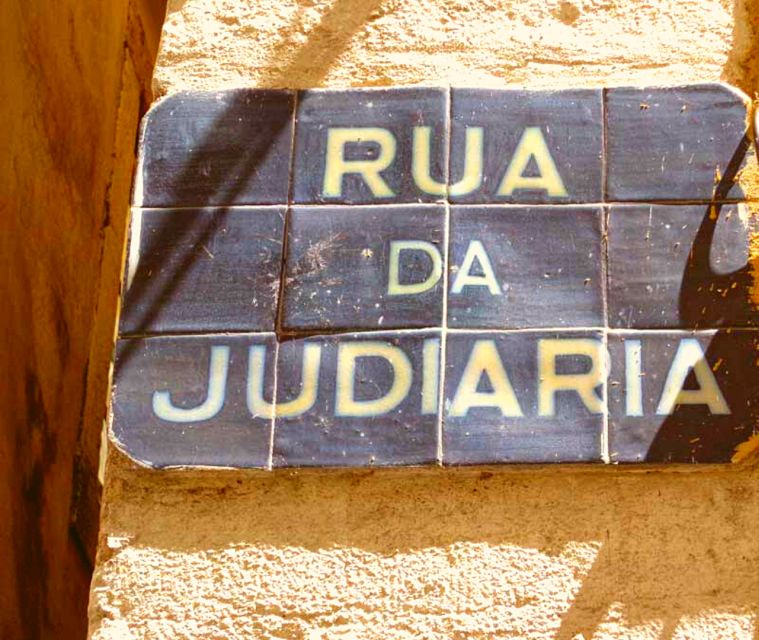
- Alfama and the medieval Judiarias, including how segregation shaped everyday life
- Baixa District and forced conversions, read through the city’s layout
- Rossio and the 1506 Pessah massacre, with the date given real weight
- WWII-era refugee passage in the 1940s, showing Lisbon in a modern crisis context
- Private-group flexibility, with guides like Jose, Filipa, Rita, Sofia, and Jorge known for keeping the group engaged and on track
Getting Your Bearings at Praça do Comércio (and why it matters)
The tour kicks off at Praça do Comércio, right under the big triumph arch. Your guide will be easy to spot, wearing an orange backpack or a Lisbon Walker totebag, which is handy in a busy plaza where everyone is looking at maps.
This stop works as more than just a meeting point. The guide frames the story here, including an Exodus-linked origin idea that sets the tone for the whole walk. It’s a smart move, because it helps you understand Lisbon as a place where stories traveled, not just a place where monuments sit quietly.
You’ll also get an immediate sense of how this part of town connects to the rest of Lisbon. After this, the route starts to feel like one connected puzzle rather than separate stops.
Other Lisbon plans worth comparing
- Lisbon: History, Stories and Lifestyle Walking Tour
★ 4.8 · 10,902 reviews - Lisbon: Daytime or Sunset Boat Cruise with History and Wine
★ 5.0 · 1,053 reviews - Explore Lisbon by Tuk Tuk: History and Viewpoints
★ 5.0 · 840 reviews
Riverfront to Resistance Museum: Rua do Comércio, Casa dos Bicos, Ribeira
From Praça do Comércio you head along the city’s center and toward the waterfront area. Expect passes such as Praça do Município, Rua do Comércio, and Casa dos Bicos, then down toward Ribeira.
Casa dos Bicos is one of those Lisbon buildings that immediately signals Lisbon was never isolated. It has that distinctive presence that makes the city feel layered, and your guide uses it to connect architecture and community life in a practical way.
Then comes the Resistance Museum. This is where the tour stops being only about medieval Lisbon and becomes about the 20th century as well. The guide addresses the 1940s passage of WWII refugees through Lisbon, which adds emotional weight without turning the day into a lecture.
One thing I like about this pacing is that it gives you a modern anchor before the route climbs toward older neighborhoods. You’re not stuck in one century the whole time.
Mouraria to Praça da Figueira: following Lisbon’s crossroads
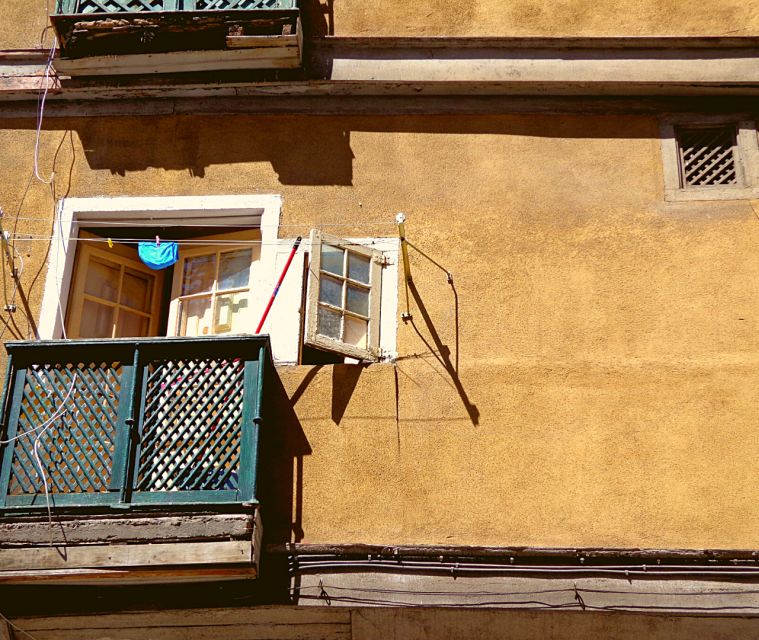
The walk continues into Mouraria and then toward Praça da Figueira. These are the kinds of neighborhoods where you can sense the idea of overlap, where different communities and identities have rubbed shoulders for centuries.
This part of the tour is valuable because it keeps you moving through real streets. Instead of only learning facts, you learn how those facts sit inside Lisbon’s geography. If you start thinking in routes, stairs, view lines, and distances, everything else in the story starts to make more sense.
Your guide also ties this area back to broader themes, like the world diaspora that spread from Lisbon across the Atlantic, into the Mediterranean, Asia, and northern Europe. Even without seeing a big museum display for everything, the explanation helps the places feel connected to a much wider story.
Alfama and the Jewish quarter: medieval segregation on the ground
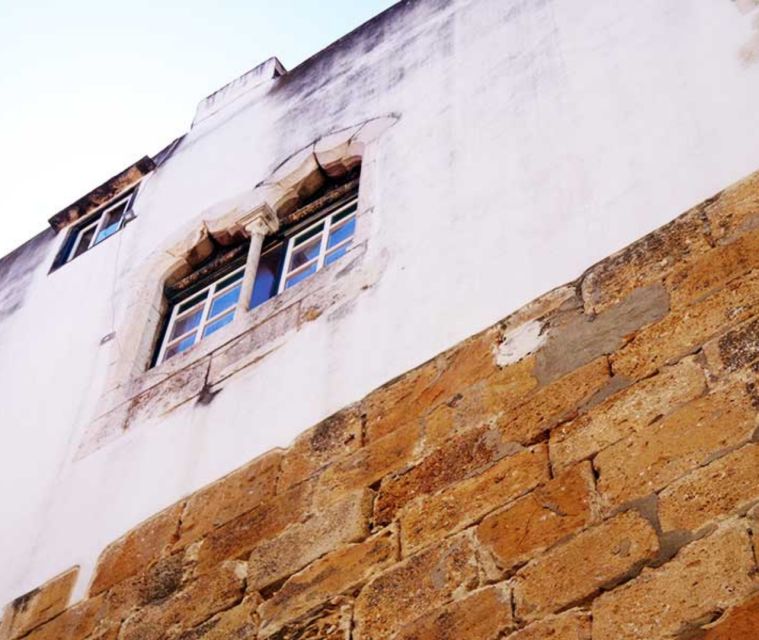
One of the biggest tour draws is the emphasis on Alfama, including the Jewish quarter and the reality of medieval segregation. You’ll feel it as you walk: Lisbon’s hills and winding streets make social separation feel less like a textbook term and more like a daily lived experience.
The guide’s job here is crucial. With few surviving artifacts from the medieval community, the tour leans heavily on interpretation and context. Still, that doesn’t mean it’s vague. When the guide is strong, you get a clear picture of where people would have been, what boundaries meant, and how restrictions changed life.
Alfama also repeats as a central theme in the tour highlights, so you’ll likely spend enough time there to understand it as more than one stop. Think of it as a neighborhood with a viewpoint, both literal and historical.
Practical tip: plan for uneven pavement and stairs. This tour is walking-first, and comfy shoes are not optional.
In the same part of Portugal:
- Lisbon City Center Tour – The Unmissable Lisbon
★ 5.0 · 22,234 reviews - Lisbon: Sintra, Pena, Regaleira, Cabo da Roca & Cascais
★ 4.7 · 19,656 reviews - Lisbon Card: 24, 48, or 72-Hour Pass
★ 4.5 · 17,944 reviews - Lisbon: Jerónimos Monastery Entrance Ticket
★ 4.1 · 14,164 reviews
Baixa District and forced conversions: how power shows up in streets
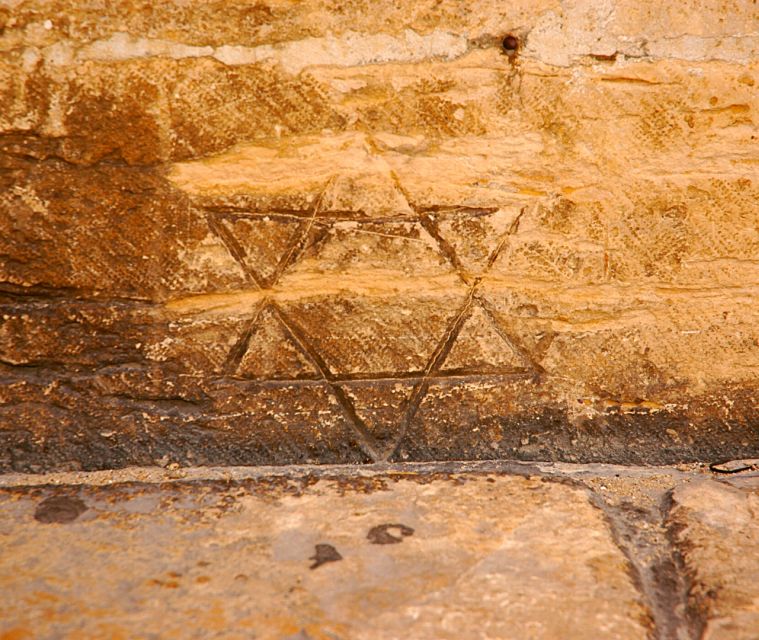
Next you shift toward the Baixa District, where the story turns toward forced conversions and the pressure that reshaped Jewish life in Portugal. This is the part of the tour where the route becomes a way to understand systems, not just individuals.
What you’ll gain here is perspective on how a city’s civic and religious decisions affect real people. The guide connects this to the broader Portuguese narrative of how Jewish communities evolved into new Christian realities under coercion. You don’t just hear what happened, you understand why it mattered that it happened in Lisbon’s power center.
Your guide also links Jewish community legacy to Portuguese culture, science, and gastronomy. The details can be surprising, and they help you avoid the trap of thinking Jewish history ended with persecution. Instead, you see how influence traveled, even when it was forced to change its public form.
This segment is also one of the clearest examples of why the tour is guide-led. When physical remains are limited, the guide’s clarity makes or breaks the experience.
Rossio and the 1506 Pessah massacre: history anchored to a nameable place
The tour’s Rossio stop is built around the 1506 Pessah massacre. Getting a date like that attached to a real square changes how your brain files the story. It stops being general and becomes specific.
Rossio is busy, and it can be tempting to treat it as just another central landmark. The guide counters that by giving context and connecting the event to what it meant for Lisbon’s Jewish population.
This is also where you tend to notice the tour’s structure. You move from setting up the long arc, to seeing neighborhoods and pressures, and then to a turning point event. It’s the kind of storytelling that helps your understanding stick.
If you’re the type who likes asking questions, this is a great moment to do it. Strong guides handle follow-ups well, and the tour’s format is private-group style, so you’re not stuck waiting your turn.
WWII refugees in the 1940s: Lisbon’s modern role in a larger story
After the medieval segments, the tour brings you back to the 20th century thread. The guide covers the WWII refugees passage in the 1940s, which broadens Lisbon’s role beyond a historical backdrop.
This matters because it shows continuity. Lisbon wasn’t just a medieval stage. It kept functioning as a point where vulnerable people needed routes, information, and sometimes survival.
The tour also explains how diaspora spread from Lisbon outward. That helps you connect what you learned in neighborhoods like Alfama and Baixa to the wider Jewish world beyond Portugal. You start to see Lisbon as a node in a network rather than a closed chapter.
This segment tends to be emotionally heavier than the medieval parts, but it’s handled as part of the same story. You’re not left with medieval tragedy and then dropped onto something unrelated.
Price, pace, and who this $106 tour fits best
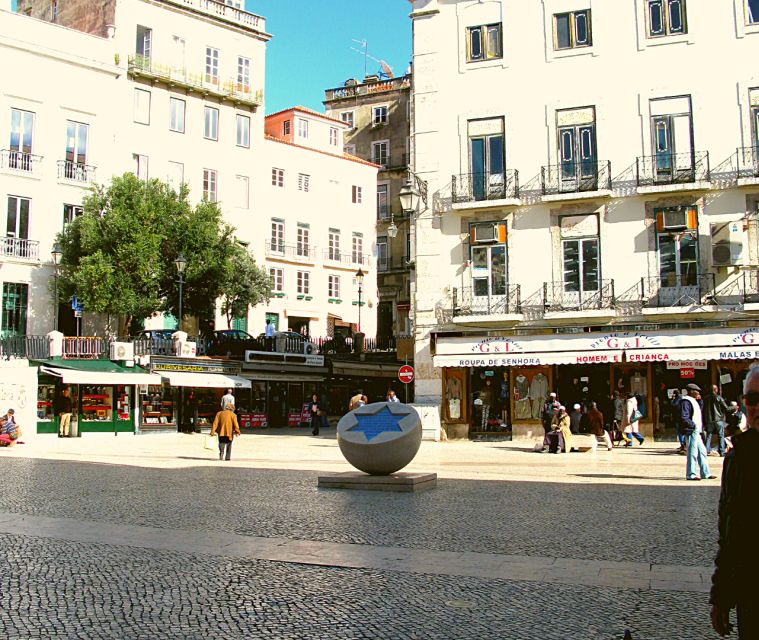
The price is $106 per person for a 3-hour guided tour, which is a fair value for a private group in Lisbon. You’re paying for more than walking. You’re paying for a guide who can connect neighborhoods, explain medieval segregation and forced conversions, and keep the narrative coherent even when physical evidence is limited.
Is it cheap? No. But it’s also not overpriced for what it offers, especially if you want the convenience of having everything tied together into one route.
You also get practical perks like skipping the ticket line when there are entry points involved, and you can tailor the walk if you have a different time frame or need a different starting point. The private format makes a difference, because the guide can adjust pacing and focus.
Who should book: people who like history explanations that rely on context, street geography, and storytelling. This tour suits you if you enjoy understanding how communities lived when you cannot simply point at ruins.
Who might want to think twice: if your travel style is mostly about inspecting surviving artifacts and buildings, you may feel the limit quickly. Guides do their best, but you won’t walk out surrounded by medieval synagogue remains.
My practical advice: come with curiosity, not expectations of lots of physical relics. Wear shoes built for Lisbon stone and hills.
Should you book the Lisbon Jewish History Tour?
Yes, if you want a well-organized walking route that links Alfama, Baixa, Rossio, and modern Lisbon into one story. It’s the kind of tour where a strong guide can make the difference between facts you forget and a map you remember.
Book it if you’re comfortable learning history mostly through narration and location context. That might sound like a warning, but it can actually be the best part. When you understand why artifacts are scarce, the tour’s focus on neighborhoods and events becomes even more meaningful.
Skip it only if you absolutely need lots of surviving physical Jewish landmarks to feel satisfied. Otherwise, you’ll likely leave with a clearer understanding of Lisbon’s Jewish legacy and how it echoed far beyond Portugal.
FAQ
Where do I meet the guide?
Meet at Praça do Comércio, and look for the guide under the big triumph arch. The guide will be wearing an orange backpack or a Lisbon Walker totebag.
How long is the tour?
The guided portion is 3 hours, and it is listed as a 1-day experience.
What is included in the $106 price?
The price includes the 3-hour guided tour. Hotel pickup and drop-off are not included.
What is not included?
Food and drinks are not included, and there is no hotel pickup and drop-off.
What languages are available?
The tour is offered with live guiding in English and Portuguese.
What should I bring?
Bring comfortable shoes for walking around Lisbon.
What is the cancellation policy?
You can cancel up to 24 hours in advance for a full refund.
Just added around Lisbon
- Tomar: Knight’s Templar Castle and Convent of Christ Tour★ 4.9 · 84 reviews
- Tour Bohemian de Tuk Tuk: Bertrand, Miradouros e Estrela★ 5.0 · 24 reviews
- From Lisbon: Fátima, Nazaré and Sintra Guided Tour★ 4.7 · 155 reviews
- From Lisbon: Tomar, Batalha, Alcobaça, & Óbidos Templar Tour★ 4.9 · 47 reviews
- The Real Lisbon Street Art Private Guided Tour by Minivan★ 4.7 · 49 reviews
- From Lisbon: Sintra Pena Palace Cascais 8-People Group Tour★ 4.9 · 93 reviews
- Lisbon: The Jewish Sephardic Walking Tour★ 4.9 · 22 reviews
- From Lisbon: Tomar, Christ Convent & Almourol Castle Tour★ 5.0 · 64 reviews
Historical Tours, compared.

Douro Valley: Historical Sites, Wine Experience, Lunch & Cruise
Read our review →

Daytime or Sunset Boat Cruise with History and Wine
Read our review →
Private Tour of the Historic City in a Ford T Car
Read our review →
Browse the lists this tour appears in