
Reviewed · HORSES
Lisbon: Portuguese Riding School Trainig with Lusitano Horse
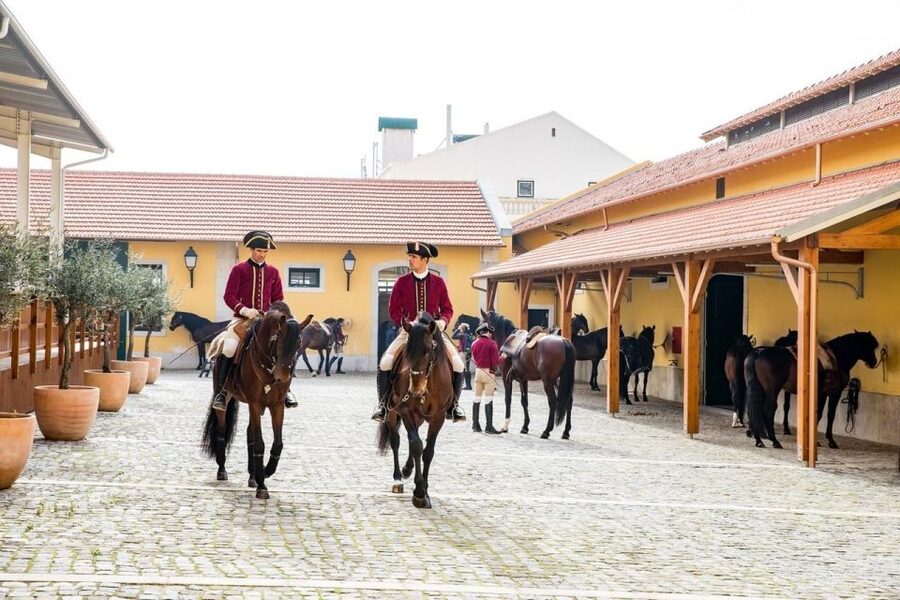
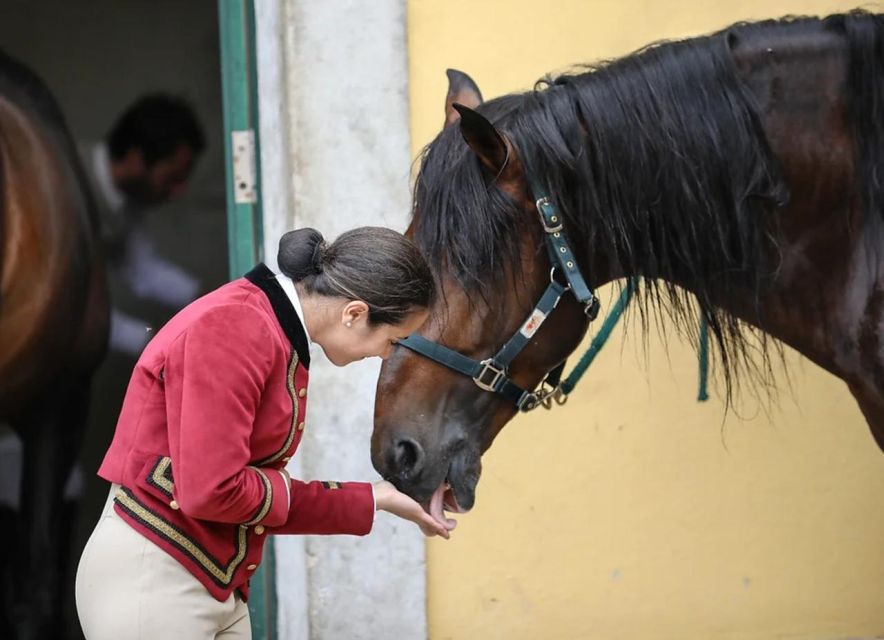
Lusitano horses, up close, in period dress. A Lisbon morning at Henrique Calado Riding Ring is interesting because you do not just watch a performance. You see the warm-up and resourcefulness work that powers the Portuguese School of Equestrian Art’s higher-level gala routines.
I also love how the session keeps the focus on handlers caring for the horses and on the riders respecting each horse’s rhythm, health, and physical needs. One drawback to note: the time is fairly tight, so if you want a longer, slow stable visit, you might wish you had a bit more of that behind-the-scenes moment.
In This Review
- Key things to know before you go
- Entering Henrique Calado Riding Ring, Lisbon style
- Watching Lusitano warm-ups and resourcefulness exercises
- Behind the scenes: handlers, health, and why the stables matter
- The Alter Real Stud Farm link, and what you’re actually watching
- Rehearsals of complex Equestrian Art exercises in period settings
- The audio guide: what it helps you catch
- Cost and value: how $17 holds up for Lisbon
- Timing: 10am to 1pm, and why 11am to 12:30 works best
- Practical tips: tickets, phones, headphones, and photo rules
- Who this Lisbon riding school session is perfect for
- Should you book this Portuguese Riding School training?
- FAQ
- What time does the activity run?
- How long is the experience?
- What is included in the ticket price?
- Is transport included?
- Are headphones included?
- Is photography allowed?
- What should I bring?
- What languages are available for the audio guide?
- How do I show my ticket at the meeting point?
- Is the experience wheelchair accessible?
Key things to know before you go
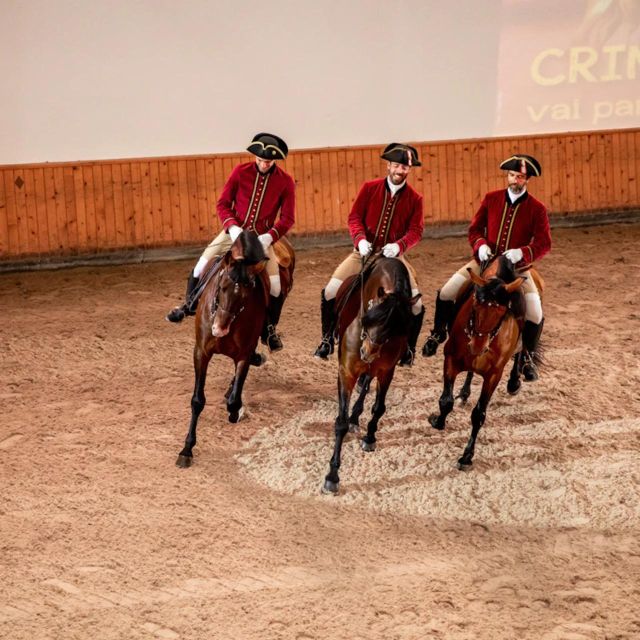
- Period-couple rehearsal vibe with music that helps you picture an 18th century court atmosphere.
- Warm-up and resourcefulness exercises that show technique before the choreography.
- Henrique Calado Riding Ring horse care moments that make the training feel real, not staged.
- Lusitano training tied to Alter Real Stud Farm, so you are watching high-level work, not a demo.
- Audio guide in English, Portuguese, and French that helps you follow what you are seeing.
- Photography limits (flash photography not allowed), so plan for phone-free observation time.
Entering Henrique Calado Riding Ring, Lisbon style

This is a morning session in Lisbon built around one simple idea: watch the work. You start at the Henrique Calado Riding Ring, where handlers and riders are doing the kind of careful, repetitive prep that serious equestrian training needs. It is not rushed like a theme-show. You get to see the process.
If you are the type who likes to understand how things run, you will appreciate the pacing. The atmosphere is also part of the deal. You will hear engaging period music as rehearsals get underway, and you’ll notice how the space and the staging help recreate that 18th century court feeling.
Practical note: wear comfortable shoes. You will likely stand for stretches. Also, no smoking is allowed, and you should be prepared to follow the venue’s photo rules (more on that later).
Other Lisbon plans worth comparing
- From Lisbon: Horseback Riding on Comporta Beach
★ 4.7 · 167 reviews - From Lisbon: Comporta and Setúbal Trip with Horseback Riding
★ 4.3 · 90 reviews - Lisbon: Morning of Equestrian Art with Lusitano Horses
★ 4.4 · 87 reviews
Watching Lusitano warm-ups and resourcefulness exercises
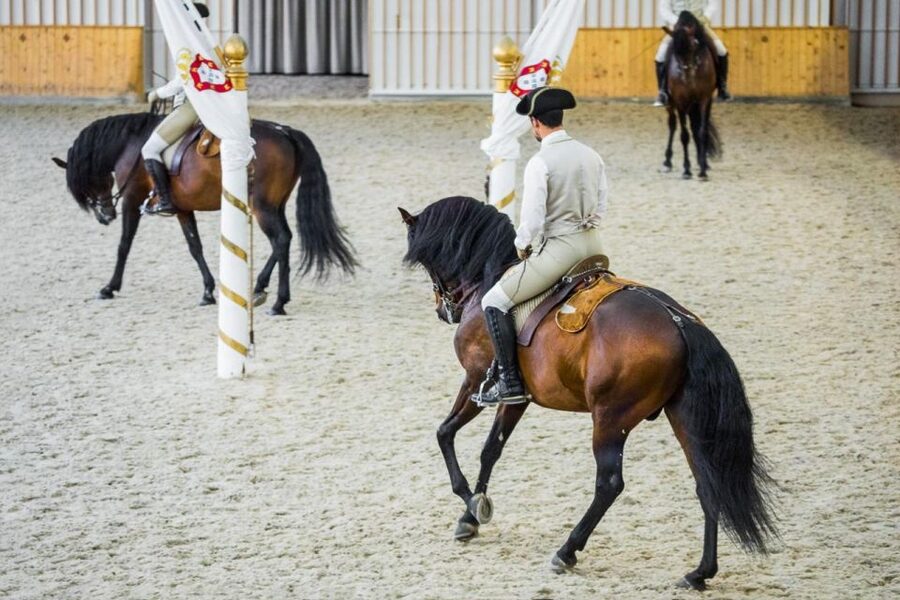
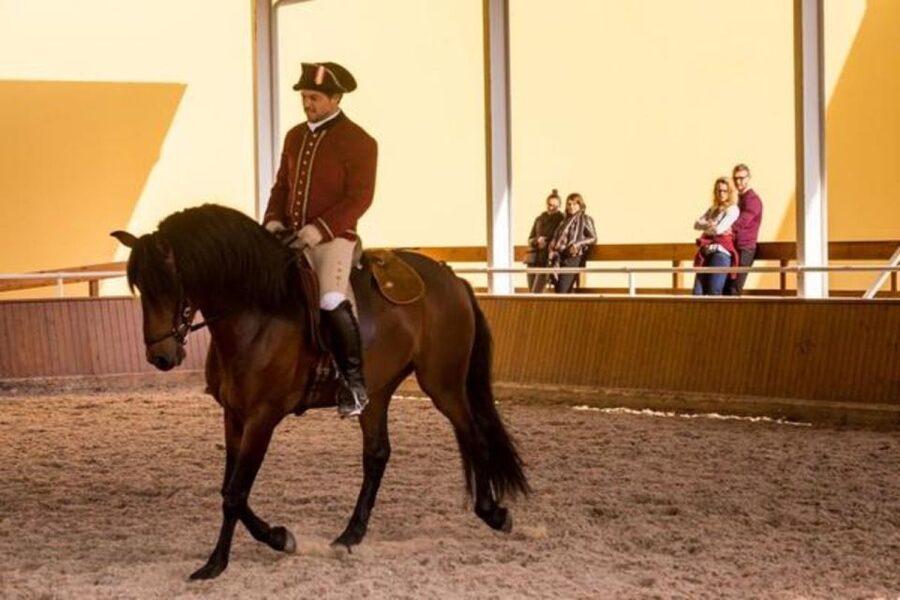
The most satisfying part, for me, is the start. You spend time watching riders warm up and practice resourcefulness exercises, with the riders dressed in period costume. That matters because it changes how you read the training. You are not only seeing motion. You are seeing discipline, timing, and communication that the riders are putting into everyday preparation.
You also get a chance to observe how horses respond to the plan. The session emphasizes respecting each horse’s rhythm and physical needs. That is not a small detail. When a training program is built around health and balance, the work looks calmer and more controlled. You can tell that the goal is long-term soundness, not quick tricks.
What to do while you watch:
- Watch for how the rider and horse move as a unit. The rhythm is the story.
- Look at how handlers keep the environment orderly before and during training moments.
- Use the audio guide for context so you know what you are seeing, not just that you are seeing it.
Behind the scenes: handlers, health, and why the stables matter
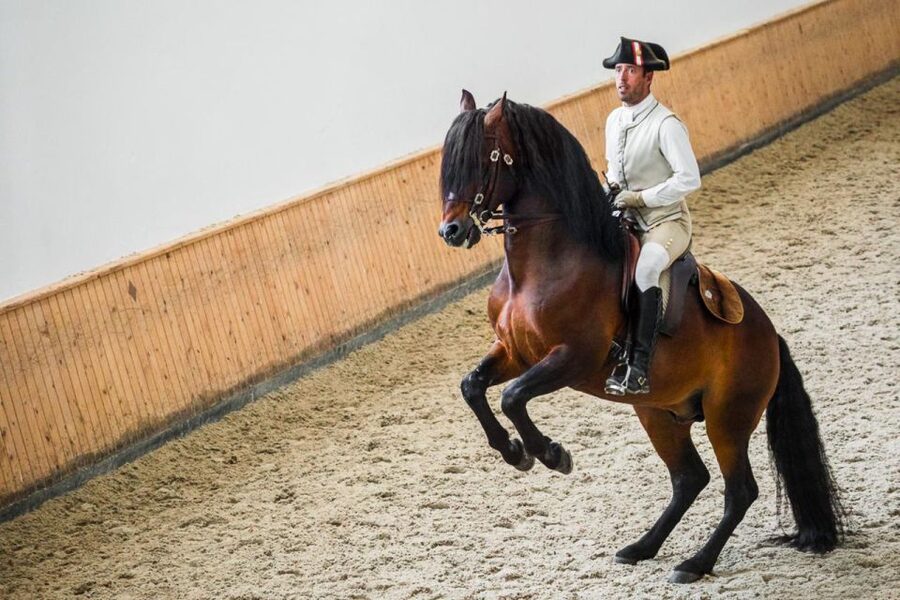
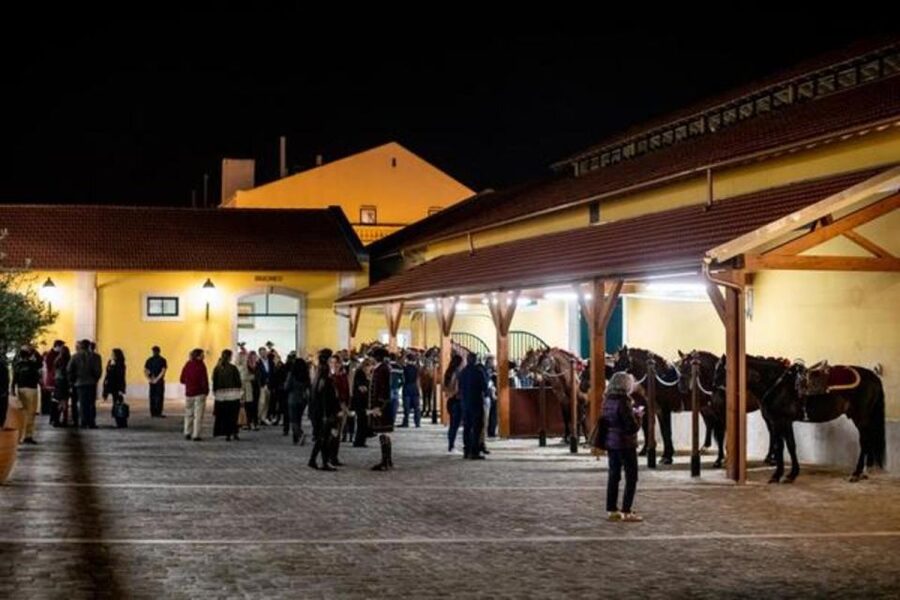
This experience is strong on the “how it is cared for” side, not just “how it is performed.” At Henrique Calado Riding Ring, you get to see the horses being cared for by handlers. You are watching the practical side of training: preparation, attention, and routine.
You will also learn about the horses’ health and physical needs. That theme runs through the whole morning. It is why the training does not look random. It looks planned around the horse, not the crowd.
The value here is that you leave with a more grounded understanding of Portuguese equestrian art. A lot of equestrian tourism is spectacle-first. This one is technique-first. You get to understand the logic of the work. And when the choreography starts later, it lands better because you have already seen the foundation.
The Alter Real Stud Farm link, and what you’re actually watching
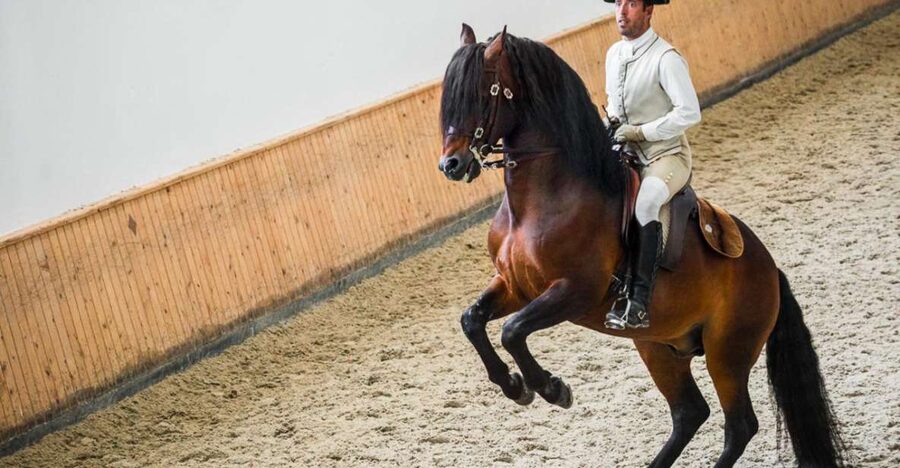
One key inclusion is watching daily training of Lusitano horses from the Alter Real Stud Farm. That connection matters. It signals you are not simply looking at generic schooling. You are observing Lusitano training tied to a recognized stud environment and a serious equestrian tradition.
Why that makes your visit more worthwhile:
- You get to see horses in a training rhythm that is consistent with high-level equestrian standards.
- The morning format lets you watch progression. You see the warm-up work, then the rehearsed, more complex Equestrian Art sequences later.
A small reality check: this is not a full-day immersion at the stables. It is a morning session, and the schedule is designed to flow from stable viewing into rehearsals.
If you want extra stable time, it is wise to plan your expectations. The experience already gives you a meaningful amount of viewing time in the stables area, and then it shifts to rehearsals in the main spaces.
In the same part of Portugal:
- Lisbon City Center Tour – The Unmissable Lisbon
★ 5.0 · 22,234 reviews - Lisbon: Sintra, Pena, Regaleira, Cabo da Roca & Cascais
★ 4.7 · 19,656 reviews - Lisbon Card: 24, 48, or 72-Hour Pass
★ 4.5 · 17,944 reviews - Lisbon: Jerónimos Monastery Entrance Ticket
★ 4.1 · 14,164 reviews
Rehearsals of complex Equestrian Art exercises in period settings
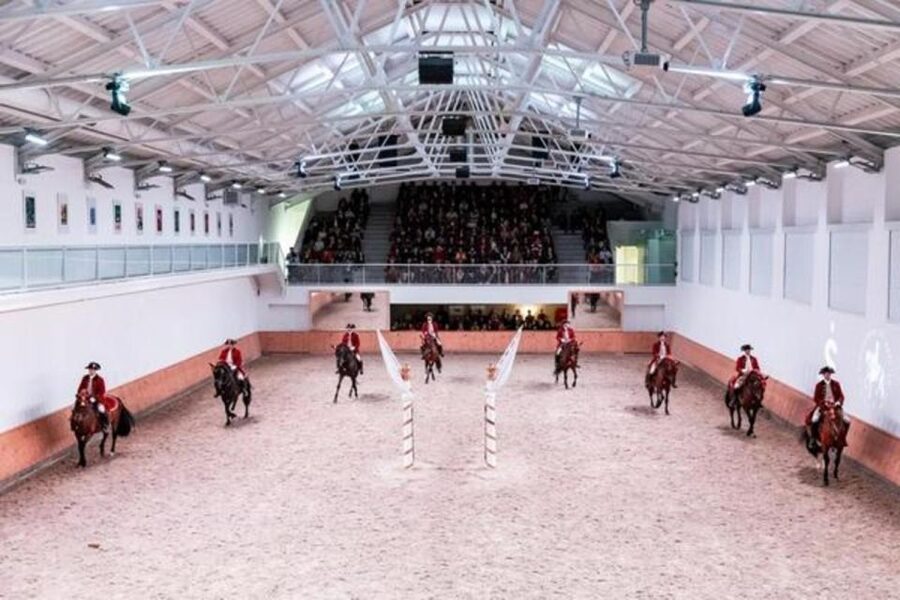
After you have seen warm-up and care work, the tour moves into the rehearsals. You attend training sessions and rehearsals of complex Equestrian Art exercises and choreographies. The goal is to recreate the charming atmosphere of an 18th century court.
This is where the experience turns cinematic. You’ll hear the period music again, and you’ll see riders working through movements that feel like they belong in a staged scene. But it does not feel like a random dance practice. Because you already watched the warm-ups and the rhythm-focused horse preparation, the rehearsal time looks purposeful.
Two venues are part of this experience:
- Nora Patio, where you’ll experience the court atmosphere.
- Henrique Calado Riding Ring, where training and rehearsal activity continues.
I like that the choreography is presented as training. That keeps it from becoming just an old-costume photo opportunity. You get the sense of craft.
What to look for during rehearsals:
- How the riders keep the horse’s rhythm while transitioning between steps.
- How the choreography uses space and timing, not just individual movement.
- How the rehearsal environment feels controlled, with the music and pacing guiding the session.
The audio guide: what it helps you catch
The audio guide is included, and it is offered in English, Portuguese, and French. That is a big help here because equestrian training has its own language. If you are not familiar with what you are seeing, the audio guide bridges the gap.
The audio guide is also designed to explain the stables and present the different horses. In practice, that means you can watch with more clarity. You are not just staring at motion. You are following a thread.
One more practical point: you need headphones, but headphones are not included. Bring your own. If you forget, you might still be able to hear parts in the room, but you will not get the full benefit of the guide.
Also, plan for a charged smartphone and internet access. After booking, you receive a separate email with instructions on how to access and download your ticket and audio guide. Check your email spam folder too.
Cost and value: how $17 holds up for Lisbon
Price matters most when you compare what you get. This one is $17 per person and includes:
- Entry ticket to the Portuguese School of Equestrian Art
- Watching daily training of Lusitano horses from the Alter Real Stud Farm
- Audio guide
Not included are the usual extras like transport, food and drinks, and photography support. But the experience itself is doing a lot of work for the price. You are paying for access to the stable viewing plus the period-costume training and rehearsal sessions.
Where the value is clearest:
- You get multiple types of viewing: horse care, rider warm-up, and rehearsal choreography.
- You get interpretation through the audio guide, so you are not dependent on guessing.
- You can skip the ticket line.
Potential value concern:
- The stable viewing window is not huge. If your top priority is spending a long time in the stables, you may find the timing moves you along quickly.
- One review note suggests the guide presence can be a bit limited, so your main learning may come from the audio guide rather than from live narration. That is not a deal breaker, but it is worth knowing.
For many people, $17 feels fair because you are buying time in the right places, not a quick look at a single moment.
Timing: 10am to 1pm, and why 11am to 12:30 works best
The activity runs from 10am to 1pm, with the best time to visit listed as 11am to 12:30pm. If your schedule allows it, I’d target that window.
Why that timing helps:
- It increases your chance of catching the flow when both the training and rehearsal parts are feeling active.
- It gives you a more complete morning arc, from warm-up viewing into the more complex rehearsals.
The experience is short enough that you should treat it like a purposeful morning stop. Do not stack it with a long walking plan immediately before, unless you enjoy rushing.
Practical tips: tickets, phones, headphones, and photo rules
A few practical rules can save you stress.
First, ticket handling: the meeting point instruction is specific. Get your Book N Tour ticket, not a GetYourGuide QR code or voucher. Show your Book N Tour ticket to staff at the reception desk and they will assist you accordingly.
Second, audio guide access: you’ll get a separate email with instructions to download your ticket and audioguide. Use your charged smartphone. Keep internet access available on the day.
Third, headphones are your job: they are not included. Bring a pair.
Fourth, photography and behavior rules:
- No flash photography
- No alcohol and drugs
- No smoking
Food and drink are not included either. That means you should eat before you go, and plan your hydration around the rest of your day.
Wheelchair accessibility is listed, so if you need accessible arrangements, you should be able to plan your visit accordingly.
Who this Lisbon riding school session is perfect for
This is a great fit if you want more than a show. It is for people who enjoy watching training and learning how horses are handled respectfully.
You’ll likely enjoy it if you:
- Love Lusitano horses and want to see them in a training routine
- Appreciate period costume and period music as context, not just decoration
- Like using an audio guide to understand what you are seeing in real time
- Prefer calm, craft-focused viewing over big crowds and loud storytelling
Who might want to adjust expectations:
- If you mainly want lots of time wandering stables on your own, the morning format may feel short.
- If you are expecting a constant, animated live guide, the audio guide may be doing most of the explaining for you.
Should you book this Portuguese Riding School training?
I think this is worth booking if your ideal Lisbon morning includes real training, careful horse care, and rehearsals that show Portuguese equestrian art in motion. The best reason to choose it is the structure: you see warm-up and resourcefulness exercises first, then you watch rehearsals that recreate that 18th century court atmosphere in the Nora Patio and at Henrique Calado Riding Ring.
Book it if you like learning by watching. Bring your own headphones, aim for the 11am to 12:30 slot, and plan to spend most of the visit standing and observing.
Skip it or think twice if you need more stable time than this morning schedule offers, or if you are hoping for flash-heavy photo opportunities. The experience is designed for respectful viewing, so it rewards patience.
FAQ
What time does the activity run?
It runs from 10am to 1pm. The best time to visit is 11am to 12:30pm.
How long is the experience?
It is scheduled for a morning session, with total duration presented as 1 day in the booking details.
What is included in the ticket price?
You get an entry ticket to The Portuguese School of Equestrian Art, watching daily training of Lusitano horses from Alter Real Stud Farm, and an audio guide.
Is transport included?
No. Transport is not included.
Are headphones included?
No. Headphone use is supported by the audio guide, but headphones are listed as not included, so you should bring your own.
Is photography allowed?
Photography is not included as part of the activity, and flash photography is not allowed.
What should I bring?
Bring comfortable shoes, headphones, a charged smartphone, and internet access.
What languages are available for the audio guide?
The audio guide is available in English, Portuguese, and French.
How do I show my ticket at the meeting point?
Use your Book N Tour ticket (not a GetYourGuide QR code or voucher). Show it to staff at the reception desk, and they will assist you.
Is the experience wheelchair accessible?
Yes, wheelchair accessibility is listed as available.
Just added around Lisbon
- Tomar: Knight’s Templar Castle and Convent of Christ Tour★ 4.9 · 84 reviews
- Tour Bohemian de Tuk Tuk: Bertrand, Miradouros e Estrela★ 5.0 · 24 reviews
- From Lisbon: Fátima, Nazaré and Sintra Guided Tour★ 4.7 · 155 reviews
- From Lisbon: Tomar, Batalha, Alcobaça, & Óbidos Templar Tour★ 4.9 · 47 reviews
- The Real Lisbon Street Art Private Guided Tour by Minivan★ 4.7 · 49 reviews
- From Lisbon: Sintra Pena Palace Cascais 8-People Group Tour★ 4.9 · 93 reviews
- Lisbon: The Jewish Sephardic Walking Tour★ 4.9 · 22 reviews
- From Lisbon: Tomar, Christ Convent & Almourol Castle Tour★ 5.0 · 64 reviews
Horses, compared.

Algarve: 1-Hour Carrapateira Horseback Riding Tour
Read our review →

Algarve: Horse Riding Beach Tour at Sunset or Morning
Read our review →


Melides: Horse Riding on the Beach with Wine Tasting
Read our review →
Browse the lists this tour appears in