Reviewed · LISBON TOURS & ACTIVITIES
Lisbon Revelation Tour
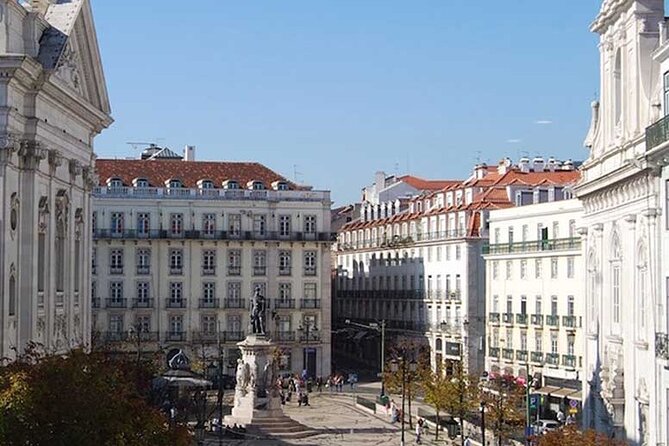
Lisbon turns into a story when someone points out the details. This Lisbon Revelation Tour is a 3 to 4 hour introductory walking loop that strings together the city’s big moments from the waterfront to viewpoints. You cover downtown highlights like Praça do Comércio, Rossio, and Largo do Carmo, then finish looking down over Castle Hill from Miradouro de São Pedro de Alcântara.
I especially like the format: a morning tour that leaves you free afterward, plus a guide who tells history in a way that helps streets and buildings make sense. And the included tasting, a pastel de nata or ginjinha, is a simple, Lisbon-flavored payoff before you wander on your own.
One thing to consider: you do walk a decent amount and the route includes steps and hills. The tour says moderate fitness is best, so if your legs are touchy, wear good shoes and plan for slower moments.
In This Review
- Key things I’d watch for before you go
- First stop: Praça do Comércio, and why the meeting point matters
- What makes this tour a smart Lisbon first-day move
- Praça do Comércio (Terreiro do Paço): the city’s “old power center”
- Baixa, Rossio, and Restauradores: seeing Lisbon after the big reset
- Praca da Figueira and the downtown square rhythm
- Elevador de Santa Justa: a 360º view without the guesswork
- Largo do Carmo: democracy made tangible in city space
- Chiado and Carmo, plus the Gothic clue and the poet tribute
- Igreja de São Roque: Baroque extravaganza you can see in real time
- Miradouro de São Pedro de Alcântara: the view that finishes the story
- The included tasting: pastel de nata or ginjinha as a Lisbon shortcut
- English commentary, practical pace, and how to get the most out of it
- Who this tour fits best
- Price and value: what $30.25 buys you in Lisbon time
- Quick planning tips so you enjoy the walk
- Should you book the Lisbon Revelation Tour?
- FAQ
- What time does the Lisbon Revelation Tour start?
- How long is the tour?
- Is the tour offered in English?
- What food is included in the tour?
- Where does the tour meet and where does it end?
- How big is the group?
- Does the tour run in bad weather?
- What if I need to cancel?
Key things I’d watch for before you go
- Small group size (max 16) keeps the tour from feeling crowded and makes questions easier
- Art historian guide approach means you get context, not just names of places
- A morning start at 10:00 am helps you still enjoy the rest of your afternoon
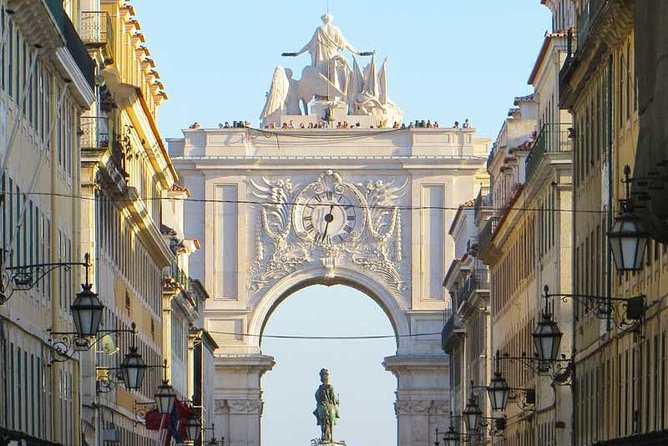
- Major Lisbon squares plus viewpoints gives both history and practical orientation
- Included tasting means you get a classic food moment without planning it
- All-weather operation means you should dress for rain or sun, even if the route stays the same
First stop: Praça do Comércio, and why the meeting point matters
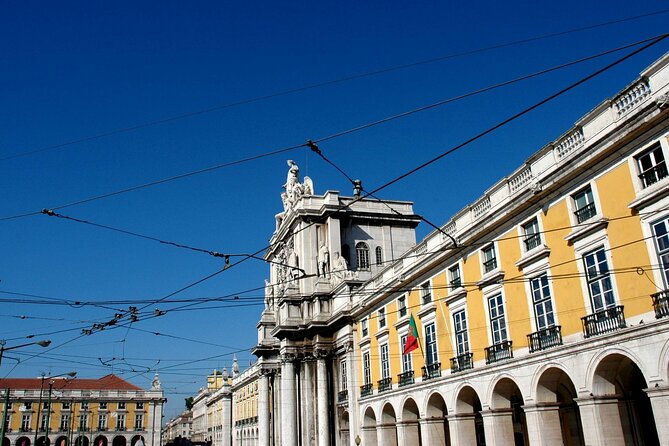
You start near Praça do Comércio at Cervejaria Antártida Lisboa, Ala Poente do Palácio Real, right off the waterfront side of the action. That matters because it sets the tone for the walk. Lisbon’s downtown is dramatic, but it can also feel like a maze until you understand where the “starting lines” are.
The tour starts at 10:00 am and runs about 3 to 4 hours. That timing is smart for first-timers because you get a structured introduction, then you can choose what to repeat or expand later. You also get a mobile ticket, which simplifies the day if you are moving fast between sights.
Group size is capped at 16. In my book, that is a sweet spot. Large enough to feel lively, small enough that the guide can slow down for questions and not just sprint to the next photo spot.
Other Lisbon plans worth comparing
- Lisbon City Center Tour – The Unmissable Lisbon
★ 5.0 · 22,234 reviews - Lisbon: Sintra, Pena, Regaleira, Cabo da Roca & Cascais
★ 4.7 · 19,656 reviews - Lisbon Card: 24, 48, or 72-Hour Pass
★ 4.5 · 17,944 reviews
What makes this tour a smart Lisbon first-day move
Lisbon has layers. You can feel them just by walking: eras stacked on top of eras, styles changing neighborhood to neighborhood, and names that shift depending on what part of town you are in.
This tour helps you put those layers in order. It hits a sequence of squares and landmarks that map onto major themes: power and rebuilding after disaster, civic change, and the way lookouts and churches reflect Lisbon’s identity. The guide commentary is the glue here, and the tour is led by a professional art historian guide, so you get explanations tied to the buildings and their roles in the city.
The added bonus is the pacing. The best walking tours do two things: they keep you moving, and they give you enough time to actually see. Here, each stop is short, usually 5 to 20 minutes, which keeps momentum without turning every landmark into a quick drive-by.
Praça do Comércio (Terreiro do Paço): the city’s “old power center”
Your first major stop is Praca do Comercio (Terreiro do Paco). This is where Lisbon looks like a capital pretending it is in control. The tour frames it as the everlasting centre of power, and that idea sticks because the square is built for spectacle and state presence.
In practical terms, this is a useful start because it anchors you to the waterfront edge of Baixa. From here, the rest of downtown starts to line up visually. You’ll understand why people head toward certain streets, and why some neighborhoods feel wider, more formal, and more “planned” than others.
The stop is about 20 minutes. That is enough time to notice the layout rather than just snap a picture and move on. You also get the chance to ask questions early, while the guide is still setting the big story.
Baixa, Rossio, and Restauradores: seeing Lisbon after the big reset
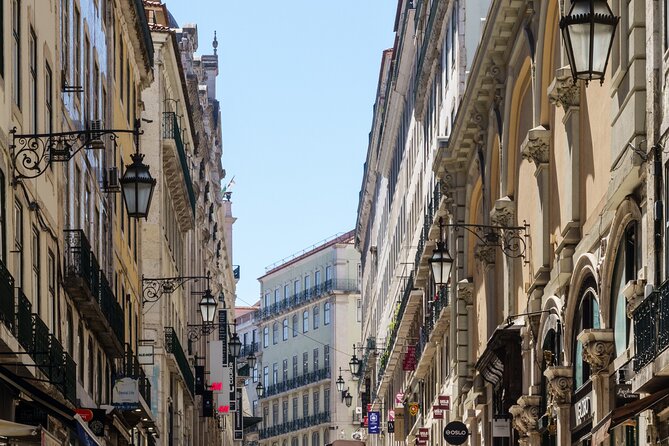
Next you move into the core downtown belt: Baixa, Rossio & Restauradores. The tour notes this as the new city built after the Earthquake. That is a big clue for how to interpret what you see.
When a city rebuilds, it changes more than buildings. It changes how people move, how blocks are shaped, and what the streets prioritize. In Lisbon’s case, this part of town is easier to navigate than the steep older quarters. It feels like Lisbon’s “engine room,” more straight-line and intentional than the hill towns.
Rossio is also a mental reset. Once you know where it sits, you stop feeling lost between viewpoints. Restauradores and the squares around it help you calibrate where elevation begins. If you are trying to plan your day, this is the portion that tells you what is walkable and what is a steep push uphill.
In the same part of Portugal:
- Lisbon: Jerónimos Monastery Entrance Ticket
★ 4.1 · 14,164 reviews - Lisbon: History, Stories and Lifestyle Walking Tour
★ 4.8 · 10,902 reviews - Lisbon: Sunset Boat Party Cruise with DJ and Open Bar
★ 4.5 · 10,378 reviews - Lisbon: Sintra, Pena, Regaleira, Cabo da Roca, and Cascais
★ 4.7 · 10,147 reviews
Praca da Figueira and the downtown square rhythm
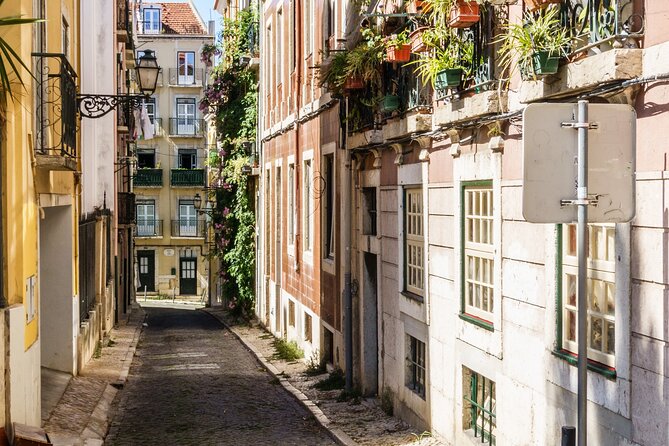
You get quick hits at Praca da Figueira, Lisbon’s traditional market square. Even if you are not shopping, market squares are a window into everyday life. They show how locals actually live around the big sights.
Then you pop over to Praca Dos Restauradores and Praca Dom Pedro IV, with the tour describing Restauradores as the image of an European capital and Pedro IV as the heart of downtown. These labels are more than poetic. They help you read the streets with a purpose.
A square like Pedro IV is the kind of place where street life and navigation collide. You can use that to your advantage later. After this tour, you’ll likely feel more confident cutting through downtown instead of treating everything like a separate mission.
Elevador de Santa Justa: a 360º view without the guesswork
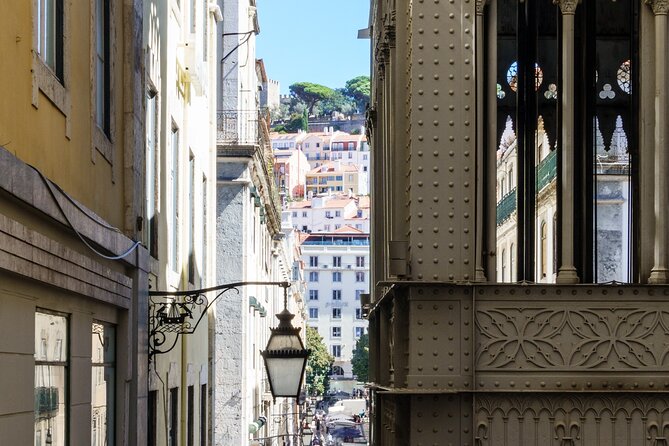
At Elevador de Santa Justa, the tour aims at the 360º view over the downtown district, a payoff moment that gives you orientation fast. Views can be hit-or-miss on walking tours, but this one uses the viewpoint to help you understand the geography you walked through.
From up there, Lisbon suddenly makes sense in a new way. You see how the downtown grid gives way to climbs. You also get a clearer sense of where the Castle Hill area sits, which helps later when you decide whether to keep exploring near the viewpoints or head to other neighborhoods.
Even though the stop is about 10 minutes, it’s long enough to take in the big picture, then still keep moving. For many people, this is where the tour turns from facts into “I get it.”
Largo do Carmo: democracy made tangible in city space
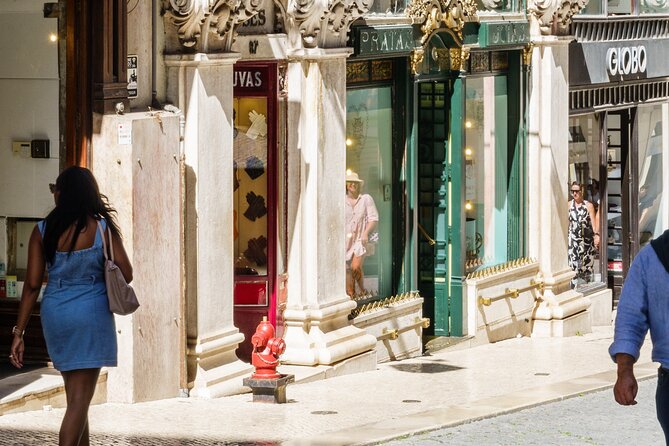
Next is Largo do Carmo, tied to the democratic revolution of 1974. The tour gives this stop a specific meaning, and that is why it’s worth paying attention. It is not just a pretty square. It is a place associated with a turning point.
What I like about stops like this is they give history a footprint in real space. You begin to see that Lisbon is not only about monarchs and explorers. It also has modern political moments, and those are still embedded in public gathering places.
The stop is short, around 5 minutes, so you’re not sitting forever. But the guide commentary here can stick because it connects an event to a specific setting you can return to later.
Chiado and Carmo, plus the Gothic clue and the poet tribute
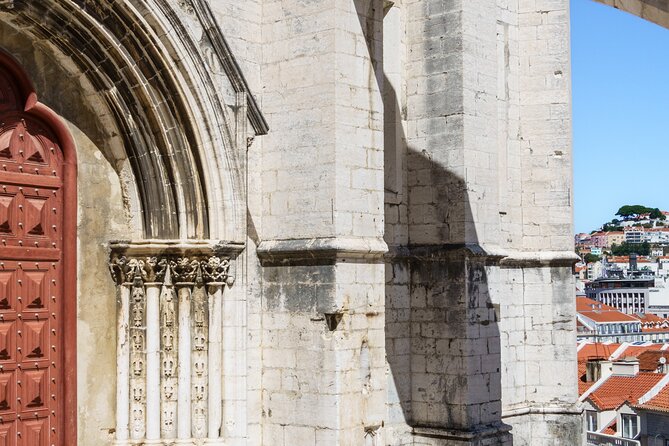
You then reach Chiado & Carmo, described as the only Gothic monument of the city. That detail is handy. It tells you to look for something unusual in a city that often gets summarized by other architectural themes.
Chiado is also known for its mix of culture and street energy. On this tour, you’ll get the lively bohemian district feel in this area, and you also get a tribute to the Discoveries epic poet. The specific person is not spelled out in the tour description you provided, so I’ll keep it general, but the point is the same: Lisbon ties its identity to exploration, language, and storytelling.
This is a 10 minute segment. It works best if you let the guide’s explanation guide where your eyes go. If you just treat it like a stroll-through, you’ll miss the architecture-specific moment the tour is trying to highlight.
Igreja de São Roque: Baroque extravaganza you can see in real time
The tour continues to Igreja de Sao Roque, described as a Baroque extravaganza. Churches are often “look fast, move on” stops. Here, the description signals you should slow down enough to notice the style, not just stand in front of a door.
Baroque art is built to make you feel something. That means details, drama, and a sense of movement. Even in a short stop, if your guide points out what to look for, the church starts to feel like more than a stop on a checklist.
If you are the type who usually rushes interiors, this is a good one to try not rushing. Give yourself those extra moments while the guide is speaking. The more you listen, the more the details start to matter.
Miradouro de São Pedro de Alcântara: the view that finishes the story
Finally, the tour ends at Miradouro de São Pedro de Alcântara, a breathtaking view over the Castle Hill area. This is one of those classic Lisbon moves: you walk the city, learn it, then end by seeing it from above.
That timing is smart. By the time you reach the viewpoint, you already know the names and the layout of what you walked through. So the view feels like a reward, not just a photo moment.
You’ll likely leave with an easier mental map of where to go next. Do you want to return to the downtown squares you liked most? Do you want to push uphill toward the castle area? With this viewpoint as the finish line, your afternoon planning gets a lot easier.
The included tasting: pastel de nata or ginjinha as a Lisbon shortcut
One small line item that matters: you get food tasting, either a pastel de nata (cream custard tart) or ginjinha (brand cherry liquor).
I like tastings on walking tours when they are built for real momentum. You do not want a sit-down meal that breaks your day. Here, the tasting is simple and portable, and it gives you a taste of Lisbon without adding planning work.
If you take the ginjinha option, it also helps you understand why Lisbon has a strong, almost ritual relationship with small indulgences. It’s the kind of local detail that makes your trip feel more lived-in.
English commentary, practical pace, and how to get the most out of it
This tour is offered in English, and the guide is part of the value. The route itself is impressive, but the narration is the difference between collecting photos and understanding a city.
The pacing tends to be manageable, with short stops and enough time for questions. The tour still involves walking, including elevation and steps, so bring water and comfortable shoes. If you need to move slower, do it. This is not a race, it is a guided orientation.
Also, if you like asking about where to go next, use that early. Many guides naturally include practical recommendations, and it is easier to act on those suggestions while you still have the tour story fresh.
Who this tour fits best
This is a strong match if:
- You are visiting Lisbon for the first time and want your bearings quickly
- You like history, but you also want it tied to what you can see
- You want a structured morning so your afternoon is free to wander
- You prefer a smaller group experience (max 16) where questions are welcome
It may be less ideal if:
- You have limited mobility or struggle with stairs, since the tour notes moderate fitness and includes elevation
- You want a super slow, museum-style day with long indoor time, because the stops are brief by design
Price and value: what $30.25 buys you in Lisbon time
At $30.25 per person, this is not a splurge, and it also is not a bare-bones “walk and point” tour. You are paying for three things that add value in a city like Lisbon: a guided story with art-historian framing, a route that hits the most useful downtown anchors, and a built-in tasting.
The best value perk is the timing. Because it is a morning tour, you get orientation, then you can spend the rest of your day picking priorities. That can save you money later by preventing the classic first-day problem: wandering without a plan and paying for extra transport back and forth.
Also, the group size cap can matter for value. If you get lots of back-and-forth questions and explanation because the group is small, that’s time you cannot easily buy later.
Quick planning tips so you enjoy the walk
- Wear shoes with grip. Lisbon streets can be slippery, and you will be moving on uneven ground.
- Bring water, especially if you go in warmer months.
- Arrive a little early at Cervejaria Antártida Lisboa so you are not stressed finding the exact spot.
- If the weather is bad, dress for it. The tour runs in all weather, and comfort improves everything.
If plans change, the tour offers free cancellation up to 24 hours in advance for a full refund, which is a nice safety net for trip timing. And like many tours, it requires a minimum number of travelers, so if it does not meet that threshold, you may be offered another date or a full refund.
Should you book the Lisbon Revelation Tour?
Yes, if you want a smart first pass through Lisbon that mixes big squares, art-and-architecture context, and viewpoints that help you navigate. The near-16-person group size, the art historian guide, and the way the route connects Lisbon’s rebuilding, civic moments, and architectural highlights make it a good use of half a day.
If you are nervous about walking or hills, you can still consider it, but go in honestly prepared: good shoes, water, and pacing your legs. For everyone else, it is a practical way to start Lisbon without feeling like you’re just chasing landmarks.
If you tell me your dates and your walking comfort level, I can also suggest how to plan your afternoon right after the tour so you keep the momentum going.
FAQ
What time does the Lisbon Revelation Tour start?
The tour starts at 10:00 am.
How long is the tour?
It lasts about 3 to 4 hours.
Is the tour offered in English?
Yes, it is offered in English.
What food is included in the tour?
The tour includes a food tasting, either a pastel de nata (cream custard) or a ginjinha (brand cherry liquor).
Where does the tour meet and where does it end?
It starts at Cervejaria Antártida Lisboa, Ala Poente do Palácio Real, Praça do Comércio, and ends at Miradouro de São Pedro de Alcântara.
How big is the group?
The tour has a maximum of 16 travelers.
Does the tour run in bad weather?
Yes, it operates in all weather conditions, so you should dress appropriately.
What if I need to cancel?
You can cancel for a full refund up to 24 hours in advance of the experience start time. If you cancel less than 24 hours before, the amount paid will not be refunded.
Just added around Lisbon
- Morning Sailing Tour in Tagus River from Lisbon★ 5.0 · 68 reviews
- Private Half Day – The Majestic Pena Palace & Sintra★ 5.0 · 90 reviews
- Lisbon Private 3 hours tour★ 4.5 · 33 reviews
- PRIVATE Unforgettable Full Day Tour to Sintra from Lisbon★ 5.0 · 236 reviews
- Lisbon: Catamaran Luxury Sunset and Wine Tour★ 5.0 · 119 reviews
- Lisbon’s authentic Food and Wine tour with a Winemaker★ 5.0 · 67 reviews
- Sesimbra Wild Beach Tour from Lisbon★ 5.0 · 57 reviews
- Private Jeep Tour from Lisbon – Arrábida, Sesimbra & Beach Picnic★ 5.0 · 48 reviews
Lisbon Tours & Activities, compared.
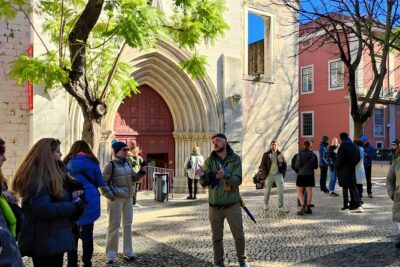
Lisbon City Center Tour – The Unmissable Lisbon
Read our review →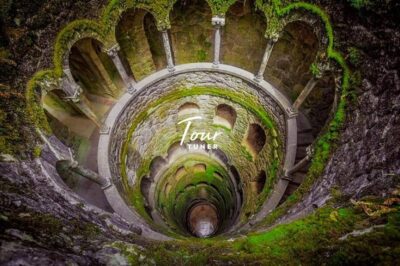
Sintra, Pena, Regaleira, Cabo da Roca & Cascais
Read our review →

Sunset Boat Party Cruise with DJ and Open Bar
Read our review →
Sintra, Pena, Regaleira, Cabo da Roca, and Cascais
Read our review →