
Reviewed · DOURO VALLEY TOURS & RIVER CRUISES
Porto 6 bridges Speedboat Tour along the Douro
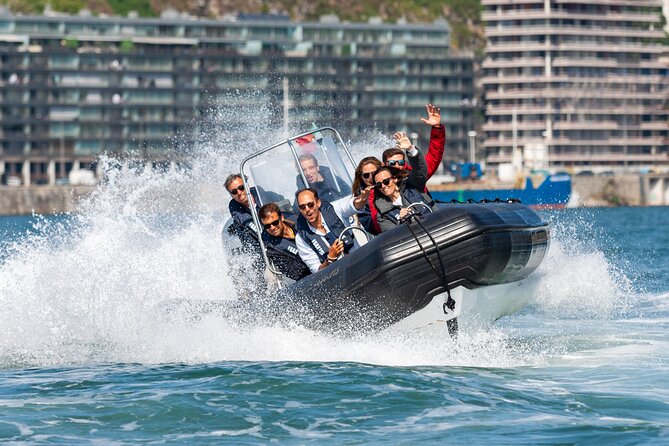
Speed, views, and Porto from the water.
This Porto 6 bridges speedboat tour turns a short 45 minutes into a fast loop of the Douro River and the Gaia waterfront, with big views of classic bridges and river icons. I like that you get the feel of the river fast, not after a long day of transfers, and the timing is friendly if you are juggling wine tastings or a late dinner.
What I really enjoy is the way the tour mixes key landmarks with real river context. You are not just looking at buildings, you are also spotting the working-water story, from rabelo boats and wine caves to the estuary area known for wildlife. The life vest part is handled without fuss, and yes, you can still have fun while staying safe.
One thing to consider: this is weather-dependent. If conditions are rough, the ride may change or get canceled and rebooked, so plan a little flexibility in your Porto schedule.
In This Review
- Key things to know before you go
- Porto from the water, with speed you can feel
- Getting to BBDouro Marina and what to expect on board
- The Douro River route: your 45 minutes of bridges and waterfront icons
- Douro River viewpoints: wine country meets the city
- Douro Marina: a working harbor behind the scenes
- Afurada and the Estuary walkway: a fisher village edge-of-river feel
- Ponte da Arrábida: crossing history and engineering
- Tram Museum area and Porto churches: old transit and old stone
- Gaia waterfront stops you will actually feel while passing
- Alfândega Porto Congress Centre: old customs with ironwork bones
- Passeio das Virtudes and gardens with terrace views
- Torre dos Clérigos and the Porto skyline marker
- Cais de Gaia and the Port wine cellar line
- Rabelo boats: the river transport system before roads and rail
- Wrapping the loop in Ribeira and Serra do Pilar
- Paco Episcopal and the hilltop view
- Dom Luís I Bridge: Porto’s emblematic connector
- Miradouro Serra do Pilar: circular monastery on the hill
- Jardins do Palácio de Cristal and Passeio Alegre
- Safety and comfort: how to enjoy speed without feeling stressed
- Time of day, weather, and the value of a short booking window
- Who this Porto 6 bridges speedboat tour fits best
- Should you book this speedboat tour?
- FAQ
- How long is the Porto 6 bridges speedboat tour?
- Where do I meet for the tour?
- Is this tour offered in English?
- What is the maximum group size?
- Do I need to wear a life vest?
- What is the minimum age to join?
- Does the tour always cruise out to sea?
- What happens if the tour is canceled due to poor weather?
- How much does it cost?
Key things to know before you go
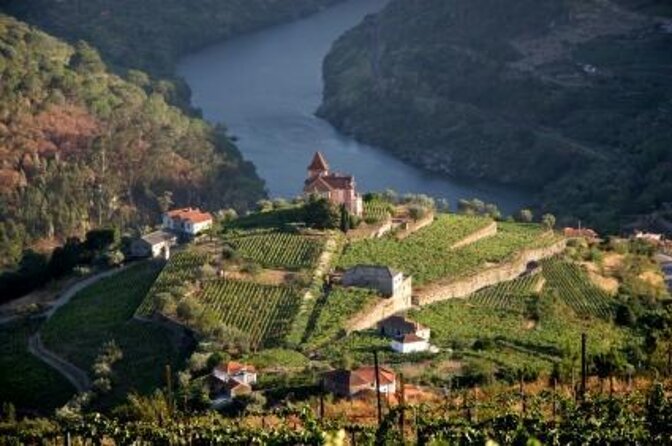
- Small boats with a tight group: up to 10 people per boat, and there are three boats running.
- A fast route built for big sights: you cover famous Porto and Gaia waterfront landmarks in about 45 minutes.
- Possible run toward the sea: if the conditions are right, you cruise out beyond the river mouth.
- Safety gear is part of the deal: life vests are worn, and the crew keeps it controlled.
- You may get wet, but you can plan for it: some jackets are offered as a just-in-case option.
- English-speaking option: the tour is offered in English, with a mobile ticket for smoother check-in.
Porto from the water, with speed you can feel
Porto is one of those cities that rewards different viewpoints. From street level, you get the pretty facades and the stair-step neighborhoods. From the river, you get something else, the way the city is shaped by the Douro, and how bridges and waterfronts connect two places that feel almost like separate worlds.
This speedboat format matters. A 45-minute ride is short enough that you do not lose the day to logistics, but it is long enough to notice details you would miss if you only did a quick ferry hop. And because it is a speedboat, you feel the river movement, the turns, and the change from narrow river sections out toward wider water.
More Boat Tours in Porto
- From Porto: Douro Valley w/ Boat Tour, Wine Tasting & Lunch
★ 4.7 · 19,061 reviews - Complete Douro Valley Wine Tour with Lunch, Wine Tastings and River Cruise
★ 5.0 · 12,920 reviews - Porto: Six Bridges Cruise
★ 4.2 · 11,680 reviews
Getting to BBDouro Marina and what to expect on board
Your meeting point is BBDouroDouro Marina, on Rua da Praia in Vila Nova de Gaia. The good news is it is a simple start point, and it is near public transportation, so you do not need a taxi for the whole day just to get on the water.
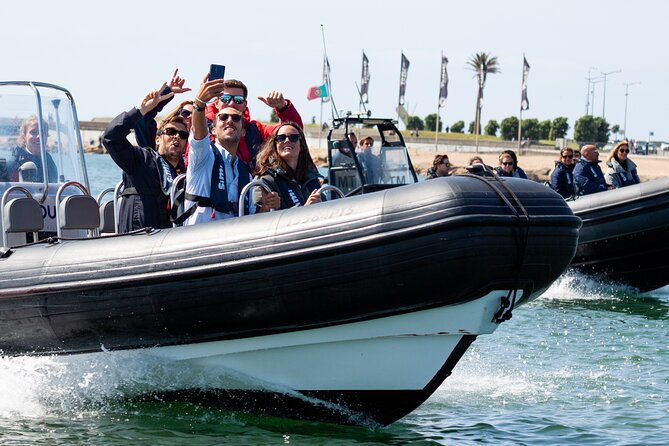
Once you arrive, you are looking at a setup designed for quick boarding. The tour runs with multiple boats, and the group size stays small, with up to 10 people per boat and three boats in the mix. That usually means less crowding and more chance to hear the crew clearly.
The tone on board tends to be practical and upbeat. You wear a life vest throughout for safety, and the crew style I’m picking up from the experience is confident, the kind that makes speed feel controlled instead of chaotic. One helpful detail: some guests noted they were offered jackets if they needed them, which is smart on the Douro because wind off the water can make even mild weather feel cool.
The Douro River route: your 45 minutes of bridges and waterfront icons
The tour description is packed with stops, but the real value is how you experience them: you see these places from the water, in motion. Think of it as a guided “greatest hits” loop where the river is the main street.
Douro River viewpoints: wine country meets the city
The ride starts with the Douro River itself and its view of the most emblematic areas of both cities. From the water, you can spot the Wine Caves area (important in Port wine’s story), Ouro Street, Clerics Church, and the rabelo boats used historically to move barrels of Port wine downriver.
You also get the Douro Estuary, described as a protected area with wildlife. Even if you do not get a wildlife sighting every single moment, the perspective is the point: you see that this river is not only for ships and wine, it is also an ecological corridor.
More Douro Valley wine days:
- Porto: Douro Valley with Winery Lunch, Tastings & Cruise
★ 4.7 · 7,002 reviews - Porto: 6 Bridges Douro River Cruise
★ 4.3 · 6,472 reviews - Porto: Guided Tour by Tuk-Tuk & Optional Douro River Cruise
★ 4.5 · 5,980 reviews - Douro Valley: Historical Sites, Wine Experience, Lunch & Cruise
★ 5.0 · 5,133 reviews
Douro Marina: a working harbor behind the scenes
Next up is Douro Marina, a public port opened to the public in February 2012. What makes this stop interesting is the scale and function. It has capacity for 300 vessels up to 20 meters and includes repair and maintenance areas, shops, restaurants, and water-sports businesses.
From a passenger viewpoint, it helps you understand what you are looking at when you spot boats from the city. Porto and Gaia are famous for charm, but they are also active waterfront places. Seeing the marina helps connect the Instagram side of the river to the practical side.
Afurada and the Estuary walkway: a fisher village edge-of-river feel
Afurada sits near the mouth of the Douro, with a fishing-rooted community. In a short tour like this, you are not there for a long stroll, but the way the route passes by makes it easier to picture where the river meets open water.
The Reserva Natural Estuario do Douro is included as a stop too, and it is noted as accessible by a suspended walkway. The key value for your trip planning is the setting: bird migrations are part of the story, and the estuary is described as sitting along an East Atlantic migratory corridor.
Ponte da Arrábida: crossing history and engineering
Ponte da Arrábida connects Porto to Vila Nova de Gaia. This arch bridge has a reputation tied to scale, and it was built because traffic needed alternatives to older bridges. The bridge inaugurated in 1963 and, at construction time, had the largest reinforced concrete arch of any bridge in the world.
Even if you never count structural facts on a trip, the river perspective makes the bridge feel real. You see it as part of a living route between neighborhoods, not just as a postcard object.
Tram Museum area and Porto churches: old transit and old stone
The Museu do Carro Electrico (Tram Museum) gets a mention, including its historic building and the electric cars collection. There is also a strong design detail you may recognize if you choose to visit later, the way the interior preserves early 20th-century character with wood and iron.
I Igreja da Confraria das Almas do Corpo Santo de Massarelos is another listed stop, and its facade is tiled, with three-part structure and a patron saint niche. These are the kinds of landmarks you can never fully appreciate from afar unless you see them in context. From the river, you get that context fast, with the city rising behind you.
Gaia waterfront stops you will actually feel while passing
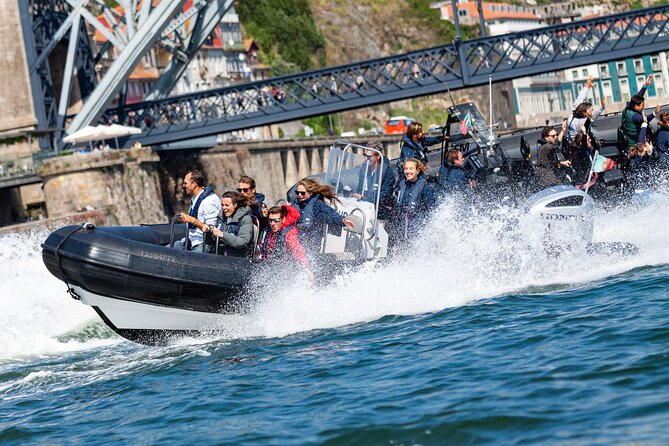
As the route swings, Vila Nova de Gaia waterfront becomes the stage. You are moving between the Porto side and the Gaia side, and the river flow helps you feel why wine storage built up here for centuries.
Alfândega Porto Congress Centre: old customs with ironwork bones
The New Customs building, also known as the Alfândega Porto Congress Centre, is a 19th-century structure tied to the mercantile growth on the Douro. It was designed by Jean Colson, with iron used in construction alongside stone, small bricks, and wood. There’s even a note about the Riga oak roof.
Why this matters for you is simple: it explains the shift from medieval waterfront buildings to more industrial-era architecture. When you spot it from the water, you can see the contrast the tour description talks about.
Passeio das Virtudes and gardens with terrace views
Passeio das Virtudes is described as a vertical park built on terraces. The practical takeaway is that these terraces create viewpoints toward the Alfândega area, the river, and Vila Nova de Gaia. If you like scenic walks, this is one of the places that can turn your cruise into a longer day, because it is made for views.
Torre dos Clérigos and the Porto skyline marker
Torre dos Clérigos, completed in 1763, is a landmark you will recognize in the skyline. It was first a bell tower, and later served as an orientation point for boats and a strategic military point.
On the boat, you may not climb the 225 steps in the moment, but seeing it from the water is still valuable. It gives you a fixed reference in a city of slopes and angles, so you understand where you are.
Cais de Gaia and the Port wine cellar line
Cais de Gaia is the waterfront where Port wine history concentrates, with Rabelo boats anchoring there for centuries. A refurbishment completed in 2003 helped make this quay more leisure-focused and tourism-friendly.
If you want to connect the cruise to tastings, this is the bridge. The area is also where many Port wine cellars are located, with about 30 companies offering guided tours and tastings. From a visitor planning angle, it helps you pick which cellar you want to do right after your ride.
Rabelo boats: the river transport system before roads and rail
Barcos rabelos are explained as typical Douro River vessels that carried Port wine between the remote wine region and Gaia. The route mattered because there were no roads or railways for that work, and before dams, the Douro could be treacherous with fast currents.
The tour includes this story as part of the experience. It is what makes the speedboat feel more meaningful. You are not just racing past scenery, you are passing the path that once carried the cargo that made the region famous.
Wrapping the loop in Ribeira and Serra do Pilar
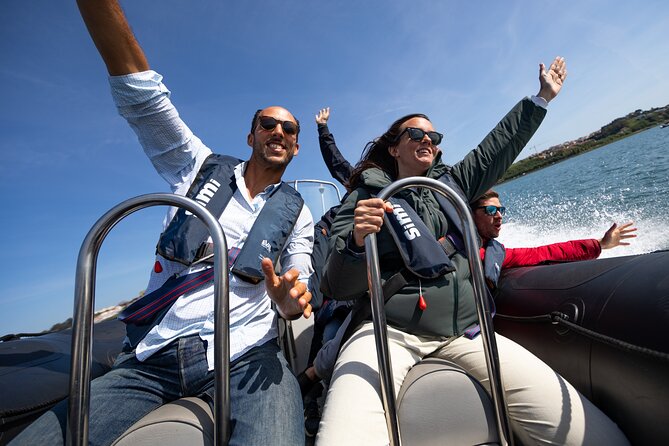
On the Porto side again, you circle through Ribeira, the oldest and most classic part of Porto’s historic center. The description highlights its UNESCO World Heritage status and its medieval commerce and movement tied to the river.
Paco Episcopal and the hilltop view
Paço Episcopal is the former residence of Porto bishops, and it sits by the Cathedral with an elevated position. From the river, that elevation is easier to appreciate, since you see the building dominate the historical center rather than blend into streets.
Dom Luís I Bridge: Porto’s emblematic connector
Dom Luís I Bridge is the main connection between Porto and Gaia. It is a metal bridge about 395 meters long, with two decks connecting upper and lower city areas. It was completed in 1888 and is named after King Louis I.
This bridge is usually the moment where you stop thinking in terms of a “tour route” and start thinking in terms of Porto’s identity. Even during a fast ride, the bridge feels like the hinge between two worlds.
Miradouro Serra do Pilar: circular monastery on the hill
Miradouro Serra do Pilar is tied to the Serra do Pilar Monastery, an austere 17th-century church with a circular plan and a hemispherical vault. It has UNESCO World Heritage status since 1996. The note about the circular cloister and its 36 Ionic columns gives you a sense of how distinctive the architecture is.
The practical point for your trip: if you want a viewpoint after the boat, this area is one of the places that can keep the route going without needing a major detour.
Jardins do Palácio de Cristal and Passeio Alegre
Finally, you sweep through garden areas tied to Porto’s Crystal Palace era. Jardins do Palácio de Cristal began in 1861 and opened in 1865, and the original Palácio de Cristal was later demolished in 1951 for a sports pavilion. The gardens still preserve design elements including work attributed to Emil David and features like the Avenida das Tílias and Avenida dos Plátanos.
Passeio Alegre Garden rounds it out as a late 19th-century public park, also designed by Emil David. The tour notes it gives shade and views where the Douro meets the Atlantic, plus a granite turtle fountain designed by Nicolau Nasoni and a bandstand used for concerts.
Even if you do not step off the boat for those gardens during the ride, the viewpoint passing by gives you a map in your head. You start to see which areas you might want to return to on foot.
Safety and comfort: how to enjoy speed without feeling stressed
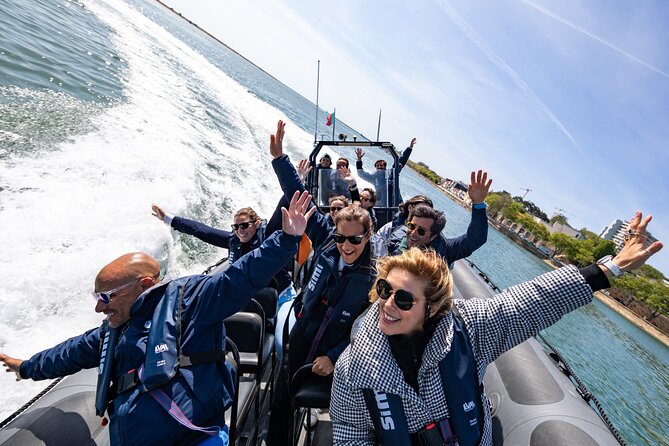
This is a speedboat, so you should expect some splash and wind. The good part is the safety side is straightforward: you wear a life vest, and the captain style described in the reviews centers on feeling safe while still having fun.
Here’s how to pack smart for a ride like this:
- Wear quick-dry or fabric you can tolerate getting damp.
- Bring a light layer for wind off the water, especially if you are doing an early evening ride.
- If rain is possible, assume you will get some spray even when it is not pouring.
- If you feel unsure about weather, the fact that jackets may be offered gives you a comfort buffer.
One small planning tip: if you can, time your booking for a calmer weather window. The tour is designed for enjoyment, but it is also designed to run safely, so conditions matter.
Time of day, weather, and the value of a short booking window
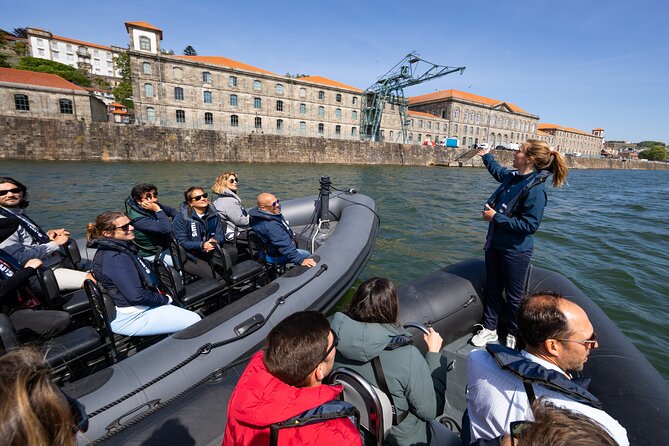
The tour can be a great choice when you want a big visual hit without a half-day commitment. At $54.22 per person, it is not the cheapest thing in Porto, but it often makes sense because you are paying for motion and access to viewpoints that take hours to recreate on foot.
The other pricing value is the small-boat setup. With up to 10 people per boat and three boats, you avoid the feel of being trapped in a large crowd. That matters for hearing the crew and getting your own time to look.
Also, it is often booked about 18 days in advance on average. If you have a limited window in Porto, booking sooner helps you lock in the day you want.
One more reason to think timing: the ride may try to head out toward the sea if conditions are right, and that can make the experience feel extra special. If you want that more open-water feel, ask yourself if your schedule can tolerate a slight shift due to conditions.
Who this Porto 6 bridges speedboat tour fits best
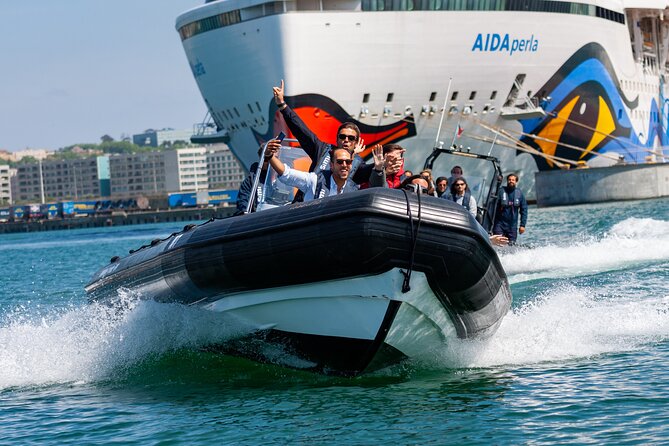
This tour is a strong match if you:
- Want speed and views, not museum hours.
- Like Porto and Gaia but want to see how the river connects them.
- Prefer small group energy rather than a big bus crowd.
- Are interested in Port wine history and river life, but want it explained through the water route.
It is also a good choice for people who know they will do wine cellars later and want the cruise as the visual appetizer.
It might be less ideal if you want a long stop at each landmark, because the ride is 45 minutes and the experience is built for passing by many sites quickly.
Should you book this speedboat tour?
If you want a short, high-reward way to see Porto and Gaia from the river, I think this is an easy yes to book. The combination of small boat size, fast 6-bridge views, and the river story from wine transport to estuary protection makes it feel more than just a scenic ride.
Book it when you can keep your day flexible enough for weather, and pack for spray and wind. If your goal is simply to stand in one place and admire the city for hours, this probably will not satisfy you. But if your goal is to get your bearings fast, understand why the Douro matters, and then keep exploring on foot or with wine tastings, this is a very solid use of time.
FAQ
How long is the Porto 6 bridges speedboat tour?
The duration is listed as about 45 minutes.
Where do I meet for the tour?
The meeting point is BBDouroDouro Marina, R. da Praia, 4400-554 Vila Nova de Gaia, Portugal. The activity ends back at the meeting point.
Is this tour offered in English?
Yes. The tour is offered in English.
What is the maximum group size?
The tour lists a maximum of 38 travelers, with the note that 10 people per boat can participate and there are three boats.
Do I need to wear a life vest?
Yes, life vests are part of the experience for safety.
What is the minimum age to join?
The minimum age is 10 years old.
Does the tour always cruise out to sea?
It says you will cruise on the Douro River, and if conditions are right, you cruise out to sea. So it depends on conditions.
What happens if the tour is canceled due to poor weather?
If canceled due to poor weather, you will be offered a different date or a full refund.
How much does it cost?
The price is $54.22 per person.
More Cruises & Boat Tours in Porto
- From Porto: 2 Wine Regions, Farm-to-Table Lunch & Boat
★ 4.9 · 5,724 reviews - Authentic Small Group Douro Wine Tour with Lunch & River Cruise
★ 5.0 · 4,775 reviews - Porto: Bridges Cruise & Sunset & Port Wine Cellar Option
★ 4.2 · 4,180 reviews - Porto: River Douro 6 Bridges Cruise
★ 4.3 · 4,168 reviews
Just added around Porto
- Meditation Experience at a Lovely Farm in Porto★ 5.0 · 19 reviews
- Private Portuguese Cooking and Wine Experience in Porto★ 5.0 · 30 reviews
- Douro Valley Prime Tour: Wine Tastings, Boat & Lunch from Porto★ 5.0 · 572 reviews
- Port Wine Tour | 3 Cellars | 7 Tastings | 12 Participants Maximum★ 5.0 · 443 reviews
- Private Boat Tour on the Douro River at Sunset★ 5.0 · 21 reviews
- Visit to Cockburn’s Cellars★ 5.0 · 526 reviews
- Wine Tasting with Tapas Walking Tour in Porto★ 4.5 · 544 reviews
- PORTO city Walking Tour★ 5.0 · 132 reviews
Douro Valley Tours & River Cruises, compared.
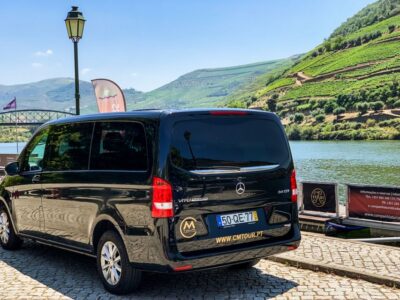
Douro Valley w/ Boat Tour, Wine Tasting & Lunch
Read our review →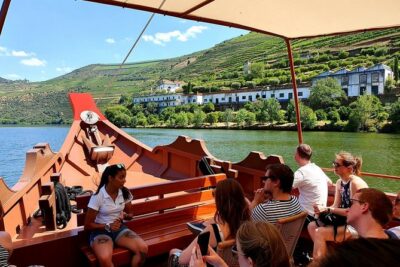
Complete Douro Valley Wine Tour with Lunch, Wine Tastings and River Cruise
Read our review →
Douro Valley with Winery Lunch, Tastings & Cruise
Read our review →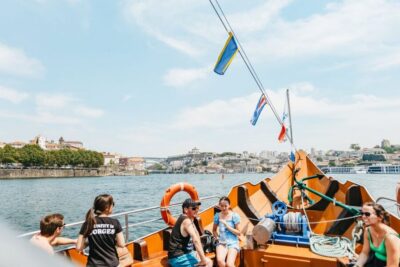
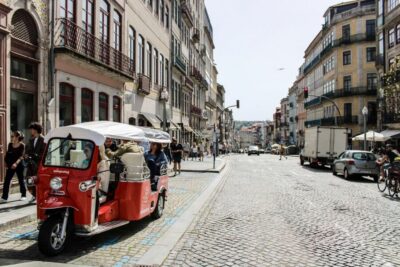
Guided Tour by Tuk-Tuk & Optional Douro River Cruise
Read our review →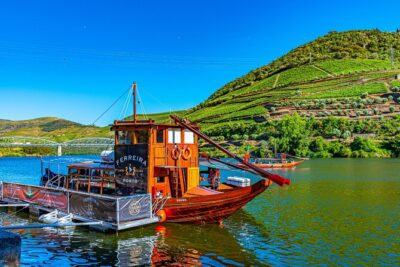
Douro Valley: Historical Sites, Wine Experience, Lunch & Cruise
Read our review →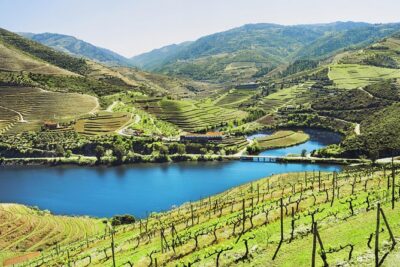
Authentic Small Group Douro Wine Tour with Lunch & River Cruise
Read our review →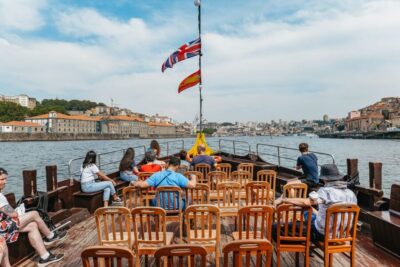
Browse the lists this tour appears in