
Reviewed · TUK TUK CITY TOURS
Porto Guided Tour to the Historical Center on a Tuk Tuk
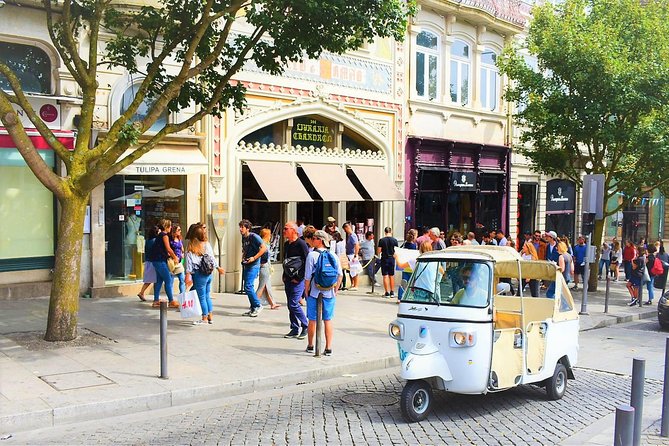
Tuk tuks turn Porto into a street-level show. This Porto historical center tour is a fast, guided way to connect big landmarks and lesser-known corners without burning your day on walking. I especially like the tuk tuk format for tight cobbled lanes, and the included sip of Port wine that keeps the trip fun between stops.
You also get a real guiding hand during the whole loop. Guides like Victor, Natalia, Anna, Ana, Gonçalo, and Gabby came up in the comments for a reason: they keep the pace lively, point out photo angles, and explain how Porto’s layers formed over time. If you time it well, you end up with an easy first-day overview plus a few spots you might not pick on your own.
The main drawback is practical: in a moving tuk tuk, hearing commentary can be tough, and traffic or weather can slow the schedule. If you are sensitive to noise or plan to do lots of interior visits, build in some flexibility.
In This Review
- Key takeaways before you book
- Tuk tuk touring in Porto: how this 1 hour 50 minutes actually feels
- Starting at R. de Augusto Rosa and planning your timing
- Theaterfront Porto: Teatro Nacional São João and the city’s rebuilt stage
- Fernandine Wall: Porto’s medieval fort line in plain sight
- Catedral do Porto and the Pelourinho story after the 1940 demolitions
- Paco Episcopal: 13th-century roots, 18th-century face
- São Bento Station tiles: a quick look at 20,000 narrative panels
- Praça Nova, blacksmith square history, and the Charles Alberto connection
- Fonte dos Leões and rococo church façades you might otherwise miss
- Cordoaria Garden and the Torre dos Clérigos bell tower
- Palácio da Bolsa and the Arabian Room focus
- Livraria Lello: an Art Nouveau façade with neo-Gothic details
- Mercado Ferreira Borges and the iron architecture angle
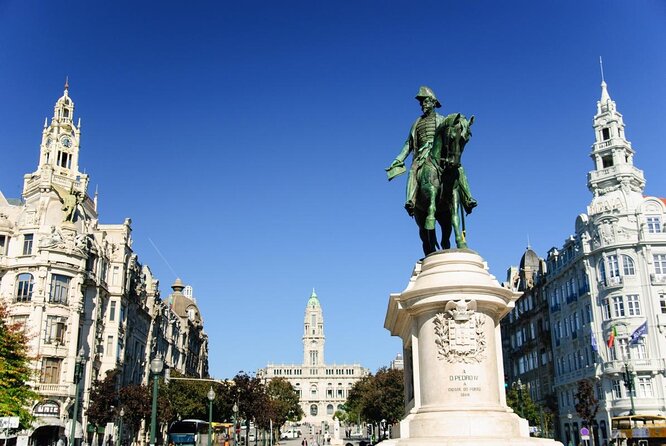
- Jardim and statue moments: the Infante D. Henrique square
- Alfândega Nova do Porto: iron and river-facing design
- Serra do Pilar viewpoint and why it is the tour’s mental reset
- D. Luís I bridge and the Metro route above the river
- Maria Pia Bridge: a modern leap with a record span
- Price and what you get for about 42 USD
- Best fit: who should book this tuk tuk historical center tour
- A few practical tips to make the most of it
- Should you book Porto’s historical center on a tuk tuk?
- FAQ
- How long is the Porto historical center tuk tuk tour?
- What is included in the tour price?
- Is the tour offered in English?
- Where do I meet, and does the tour end at the same place?
- What should I know about weather?
- Is this a private tour?
Key takeaways before you book
- Fast orientation in under two hours: You cover a lot of territory in one guided loop.
- Tight-lane access: The tuk tuk gets you closer to the old center’s cramped streets.
- Included Port wine: One drink is part of the tour, not an add-on.
- Top viewpoints without a hike: Serra do Pilar delivers a major river view in a short stop.
- Mostly short stops: Some places are outside or quick-photo breaks, with interiors often extra or optional.
- Hearing can vary on the ride: If you are far from the guide or it is loud, bring patience.
Tuk tuk touring in Porto: how this 1 hour 50 minutes actually feels
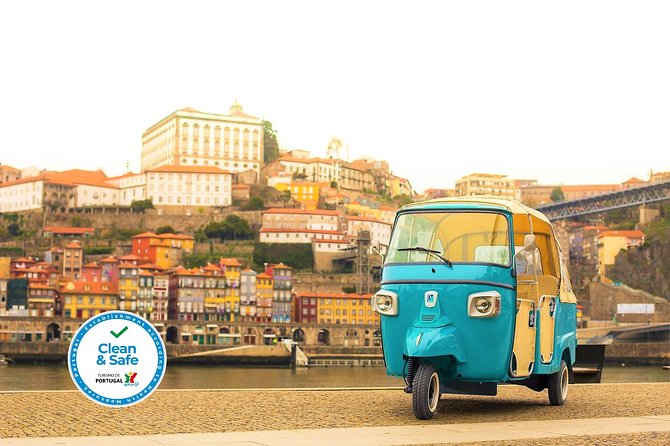
This is built for people who want the historic core without spending half a day commuting between sights. At about 1 hour 50 minutes total, you get a tight route with multiple stops where you can step out for quick looks, photos, and a bit of context.
The value is clearer than it sounds. Your ticket includes the driver or guide team plus a local guide, and you get one glass of Port wine during the experience. Monument entrances are not included in the price, so you control what you pay for based on your interests.
One more practical detail matters: the tuk tuk capacity is limited. Each vehicle carries 2, 3, or 4 adults (up to about 75 kg each), so larger groups split across multiple tuk tuks but keep the same stops at the same time.
More Tuk Tuk Tours in Porto
- Porto: Guided Tour by Tuk-Tuk & Optional Douro River Cruise
★ 4.5 · 5,980 reviews - Discover Porto’s Highlights on a 2-Hour Private Electric Tuk Tuk
★ 4.5 · 1,860 reviews - Porto: Guided Tuk Tuk Tour
★ 4.6 · 1,390 reviews
Starting at R. de Augusto Rosa and planning your timing
The tour starts and ends at R. de Augusto Rosa 180, in central Porto. That matters because the best way to enjoy this kind of route is to arrive ready to move, not searching around at the last second.
Also keep your expectations aligned with the timing. This is a guided loop with short viewing windows at each stop. If your goal is long cathedral-style interior time, you will likely want to do those on a second visit day.
If weather is poor, the experience may shift or be canceled and rescheduled. The operator notes it requires good weather, and on rainy or windy days, a raincoat can make the tuk tuk part much more comfortable.
Theaterfront Porto: Teatro Nacional São João and the city’s rebuilt stage
One of the first big impressions comes near the Teatro Nacional São João area. This building dates to 1910 and was constructed on the ruins of the Real Theatre, which burned in 1908. The façade features stylistic emblems tied to themes like pain, quality, hate, and love, and the renovation influence is linked to Luís XVI style trends common in the early 1900s.
What I like for you here is how the guide can turn a street corner into a story. Even if you do not enter the theater, it gives you a strong sense of Porto’s identity as a place where performance and public life mattered.
In terms of tradeoffs, this is mostly an exterior moment in a schedule full of them. You get orientation, not a deep theater visit, so if you are a serious arts fan you may want to plan a separate day for interiors.
Fernandine Wall: Porto’s medieval fort line in plain sight
Next comes one of Porto’s most quietly powerful features, the Fernandine Wall. It stretches for about 3,000 steps and was built between 1368 and 1437, funded in part through Sisa do Vinho tax revenue tied to wine. Even if you know Porto for riverside views and tiled façades, this is the kind of defense architecture that reminds you how strategic the city had to be.
This stop is short, but it can change how you understand the center. When you see where the wall ran, the streets feel less random. They start to read like a map of protection, access, and old urban limits.
If you want to maximize this moment, wear shoes for uneven ground. Even quick photo stops can involve a bit of walking along older surfaces.
More tuk tuk rides in Porto:
- Historic Porto by Private Electric Tuk Tuk to Top Landmarks
★ 4.5 · 735 reviews - Porto: Private Sightseeing Tour by Electric Tuk Tuk
★ 4.8 · 305 reviews - Oporto Tuk-Tuk Tour: Fast, Fun & Flexible – 1H to Full Day!
★ 4.7 · 280 reviews - Porto Half Day Private Tuk Tuk Tour
★ 4.5 · 246 reviews
Catedral do Porto and the Pelourinho story after the 1940 demolitions
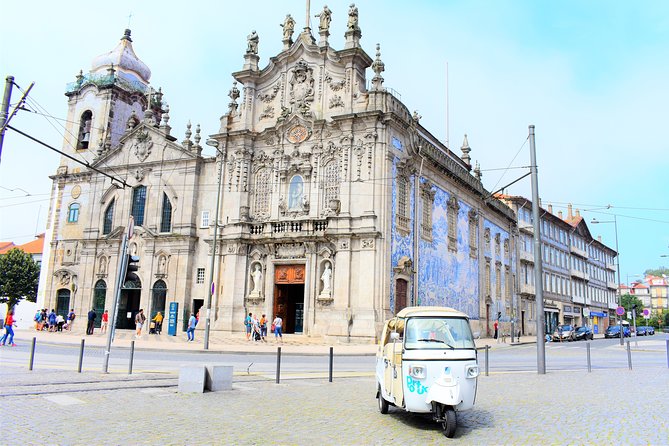
The route includes the Cathedral of Porto, with construction starting in the 12th or 13th century in a Romanesque style. Over time it was enlarged and renewed through different eras, with final twentieth-century work shaping an idealized medieval look.
You also get a quick visit near the Pelourinho sign by the cathedral area. Under the Estado Novo policy, the surrounding buildings around the cathedral and bishop’s palace were demolished in 1940, and a terrace was built instead. The stone monument placed there in 1945 is a reproduction of a drawing from 1797, making it feel like a curated memory of how local government once looked in that space.
The practical point: cathedral interiors are not automatically part of your ticket. If you want to go in, expect to manage entrance timing and possible extra cost.
Paco Episcopal: 13th-century roots, 18th-century face
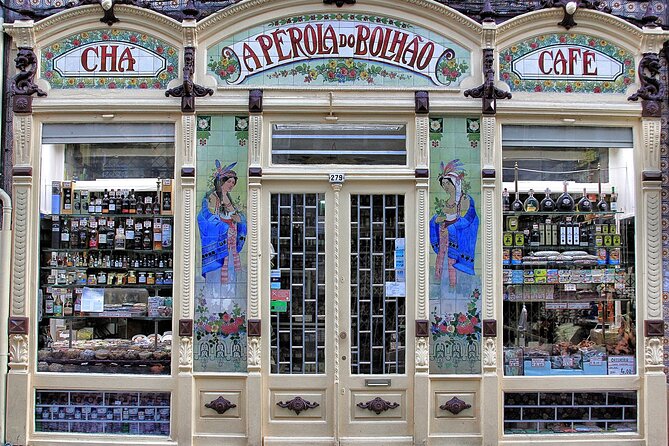
You then pass by the Paco Episcopal, likely built in the 13th century but with later remodeling in 1737. The refurbishment includes design work associated with Nicolau Nasoni, and the architectural layout uses an open arch façade flanked by pilasters, topped with a decorated fronton. The central window has a stone balustrade and the fronton reveals the coat of arms of Bishop D. Rafael de Mendonça.
For a tour like this, the payoff is learning what changed and when. Porto is full of buildings that look medieval at first glance but carry later edits on top. This stop helps you read those layers quickly.
The downside is the short time. Think of it as a visual orientation stop where you catch the façade details and move on.
São Bento Station tiles: a quick look at 20,000 narrative panels
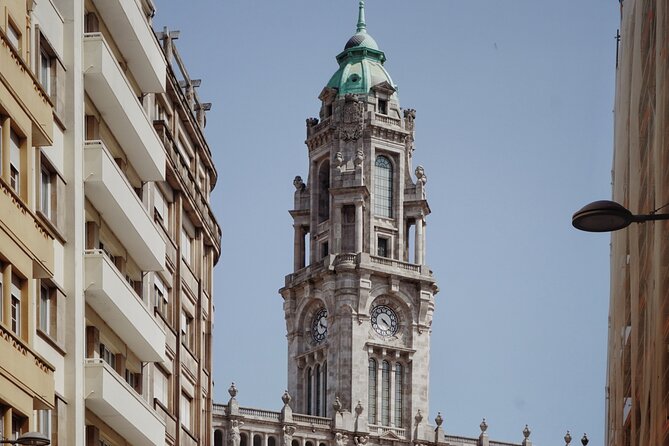
If you want one stop that feels both famous and instantly rewarding, it is São Bento Railway Station. It sits in the center and has an early 20th-century glass and cast iron roof. The lobby is covered with about 20,000 narrative tiles created by painter Jorge Colaço.
You will probably spend around ten minutes here. Admission is listed as free, so you do not have to budget time and money just to see the tile-covered interior space.
This stop also works as a break in the schedule. It is a good place to pause, look up, and take photos with a calmer rhythm than the street stops.
Praça Nova, blacksmith square history, and the Charles Alberto connection
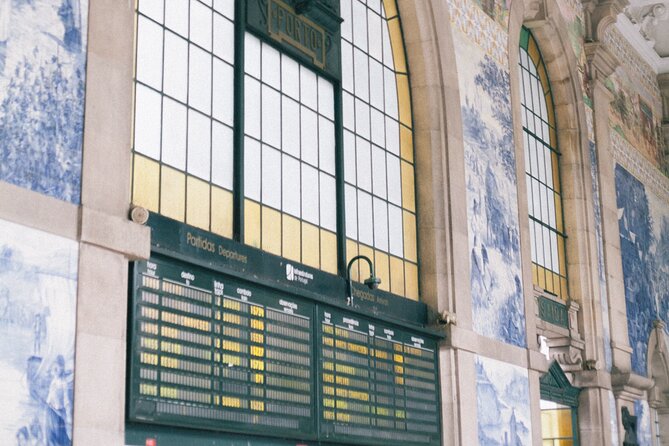
The tour also moves through civic spaces shaped by old walls and later urban planning. The square origins trace to the early 18th century, when a project began in 1718 to urbanize the area. That created new streets and a spacious square called Praça Nova, also known historically by other names.
One version of the past is Praça dos Ferradores, the square of blacksmiths, with workshops there over the centuries. Later, the Palace of Viscondes de Balsemão was built on the east side and then became a guesthouse. It hosted King Charles Alber from Sardinia during his exile to Porto, and in his honor the square took its current name.
If you like context that makes you feel like you are walking through time, these civic spaces do the job. They are not just pretty backdrops; they explain how Porto’s public life shifted.
Fonte dos Leões and rococo church façades you might otherwise miss
A small but memorable stop is the Fonte dos Leões, the Fountain of the Lions. It is a 19th-century fountain built by a French company and cast at the Val d’Osne foundry in France, with it described as a copy in most part of a fountain in Leicester, England.
Short stops like this are where a guided tour can feel better than self-walking. A local guide can tell you why the fountain exists and how it relates to the broader European connections of the era.
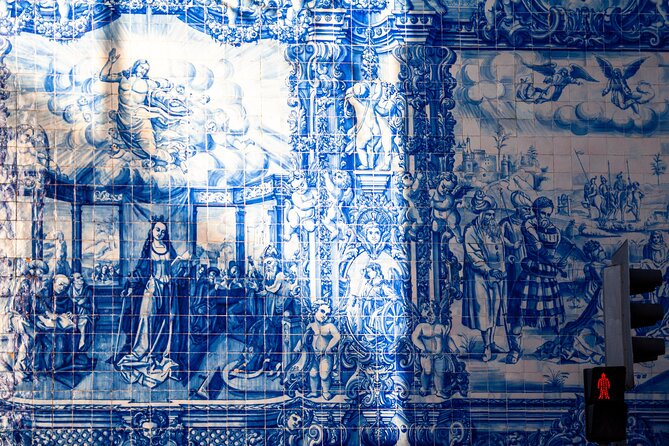
The route also includes two church moments tied to Porto rococo style and later façade treatments. One features a classical façade attributed to Nicolau Nasoni and an altarpiece described as Porto rococo, designated a national monument. Another, built in the second half of the 18th century, is considered a major example of Porto rococo, with a lateral façade covered in tiles completed in 1912, with drawings by Silvestre Silvestri that reference the cult of Nossa Senhora, Our Lady.
Expect these to be quick. If you want a long look at interiors, plan to come back on another day or take a separate church-focused route.
Cordoaria Garden and the Torre dos Clérigos bell tower
Near the center, you pass through Cordoaria Garden, also known as Jardim João Chagas since 1924. It connects to the rope makers who stayed in the area for about 200 years, and later the municipality turned Praça da Cordoaria into a public garden in the mid-1800s. Statues include figures like Ramalho Ortigão and António Nobre, plus sculptures by Juan Muñoz added during Porto 2001, European Capital of Culture.
This is a good reset between heavier architectural stops. You get a moment of calm, and you can cool down before heading to the big, unmistakable landmark: Torre dos Clérigos.
The Clérigos Church is Baroque, and the bell tower is one of Porto’s signature symbols. The tower is listed as a short stop, and the point is visibility. You will see it from multiple points across the city, so even a quick visit helps you understand the geography.
If you are planning your own photo plan, this is a helpful orientation moment. Once you know where the tower sits, you can spot it later from streets and viewpoints.
Palácio da Bolsa and the Arabian Room focus
At Palácio da Bolsa, you are in neoclassical territory from the mid-1800s. The building is the property and headquarters of the Commercial Association of Porto, designed in 1842 by Joaquim da Costa Lima, and it is linked to cultural and conference events.
The big reason people put Bolsa on their must-see list is the Arabian Room. Your tour route treats it as a highlight, but remember monument entrances are not included in the tour price. That means you may need to manage entry if you want the interior experiences.
This stop is a great example of what a guided loop is good at. The outside gives you scale and style, and the guide helps you decide if the interior is worth your time during your trip window.
Livraria Lello: an Art Nouveau façade with neo-Gothic details
Another major highlight is Livraria Lello, famous for its Art Nouveau exterior with neo-Gothic details. The library building was inaugurated in 1906, and inside you find painted plaster work that imitates wood plus a dramatic staircase linking floors. The stained-glass skylight bears the library’s monogram and motto, Decus in Labore.
The structure of the tour usually means a brief stop. If you want the full interior experience, treat it like a separate planning item, not a quick photo stop.
This library also carries a credibility boost from major international travel coverage noted in the provided details, including The Guardian and Lonely Planet rankings. Even if you are not a bookworm, the architecture is the main event.
Mercado Ferreira Borges and the iron architecture angle
Near the waterfront side of the historic center, you pass Mercado Ferreira Borges. The market was built in 1885 to replace the old Mercado da Ribeira, and it is recognized as a key example of iron architecture in Porto. It had a short period as a working market and later shifted into an entertainment venue, with Hard Club noted as the current use.
This is the kind of stop that works well by tuk tuk. You see how the historic center blends old street textures with industrial-era materials and new modern uses.
Again, think short exterior-to-interior decisions. If interiors are important to you, you will need to budget time beyond the tour’s quick look.
Jardim and statue moments: the Infante D. Henrique square
Your loop also touches the square area surrounded by Mercado Ferreira Borges and Palácio da Bolsa, with a small garden and a monument to Infante D. Henrique. The monument began construction in 1894 and was completed in 1900, with the dedication tied to the 5th centenary of his death. It is described as representing Portuguese navigation and faith.
There is also an included garden sculpture moment during this general stretch of time. The guide’s job here is to point out meaning, since statues can look like just another photo backdrop if nobody explains what you are seeing.
Alfândega Nova do Porto: iron and river-facing design
The route brings you to Alfândega Nova do Porto, a neoclassical building from the 19th century designed by engineer Jean F. G. Colson. The building has two façades, one facing the Douro river and another facing the city. The structural approach uses iron along with stone, brick, and wood depending on the function of each space.
It is also tied to restoration work and adaptation for museum and congress use, with Eduardo Souto Moura named in the adaptation project. If you like industrial design or want a break from strictly religious and baroque architecture, this is one of the more interesting stops on the route.
Serra do Pilar viewpoint and why it is the tour’s mental reset
The itinerary saves one of the most impressive moments for a longer stop: Mosteiro da Serra do Pilar. Construction began in 1538 and was finished around 1670. It began for Augustinian Friars linked to Grijó, then had a major life shift during the Civil War of 1832 to 1834 when the liberal army settled there.
Later, after neglect and attacks, the building was recovered starting in 1834 with the Royal Brotherhood of Lady of the Pilar, then strengthened again with the Group of Friends of the Monastery in 1925.
What matters for you is the view. From the grand terrace, you can see Porto and Gaia’s riverside area up to Arrábida Bridge, plus the historic center including the Cathedral and D. Luís I bridge. In the other direction you can take in Fontainhas and the São João bridge.
This is exactly the kind of stop people remember, even on a weather day. If it is clear, it feels like you suddenly understand the city’s layout in one glance.
D. Luís I bridge and the Metro route above the river
From Serra do Pilar, the route follows the D. Luís I Bridge story. It was planned by engineer Teófilo Seyrig, a disciple of Eiffel, and inaugurated in 1886. The bridge is described as having two overlapping iron decks, with a 395 m length and an 8 m width, and it is noted for having one of the world’s biggest forged iron arches.
Today, the upper deck carries Porto Metro, connecting the Cathedral area to Garden of Morro and Avenida da República in Vila Nova de Gaia. That’s a cool practical detail because it makes the landmark feel alive, not just historic.
This segment is mostly about seeing how the river crossing shaped the city’s growth patterns.
Maria Pia Bridge: a modern leap with a record span
The tour finishes with another bridge viewpoint: the Maria Pia Bridge. It was inaugurated in 2003 to replace the upper deck lane used now by the Metro line D. The project is attributed to engineer Adão da Fonseca.
Structurally, it is described as a Maillart-type arch bridge built at high altitude, with a 371 m long deck and a 20 m width. The arch span is listed as 280 m and described as a world record, with experts calling it one of the most elegant in its type.
If you like engineering, this is a great closing image. It links Porto’s industrial story to its modern infrastructure without requiring extra time for museums.
Price and what you get for about 42 USD
The price is listed at $42.33 per person. For this format, it is best compared to the cost of piecing together a short guided orientation plus local insider time.
You get:
- Port wine glass included
- Driver or guide plus local guide
- English language tour
- A private group setup where only your party participates
You do not get monument entrances included. So you might pay extra if you want interior access at places like Bolsa, Clérigos, the cathedral area, or the library.
If your priority is the quick, scenic overview, the included guiding and transport make it feel fair. If your priority is interiors, you might need to plan extra funds and extra time outside the tour.
Best fit: who should book this tuk tuk historical center tour
This tour is a strong match when:
- You have limited time and want a logical route through central Porto.
- You prefer short stops and photo breaks over long walking days.
- You want a guide who can connect buildings like São Bento tiles, rococo church details, and the bridges into one coherent picture.
It is also a decent family option because the pace includes short viewing windows, and the tuk tuk helps reduce foot fatigue.
If you are hard of hearing or easily annoyed by noise, it may be worth bringing hearing-friendly strategies, like focusing on the stops rather than relying on audio while riding.
A few practical tips to make the most of it
- Bring a raincoat if the forecast looks moody. Porto weather can flip fast, and getting wet in a small open or partially open vehicle is the worst part.
- Have your phone ready for photos, especially around Serra do Pilar and the bridge viewpoints.
- Use the tour day for orientation, then schedule deeper interior visits on another day.
- If you hate crowds, keep expectations realistic. You are covering some of Porto’s best-known areas, so it is not a quiet, off-the-map route.
Should you book Porto’s historical center on a tuk tuk?
I would book this when you want a guided, efficient Porto overview and you value transport that handles narrow streets better than a bigger vehicle. The included Port wine and the Serra do Pilar viewpoint are two reasons people remember this tour, and the short stop structure fits an itinerary where you still want time to wander on your own afterward.
Skip or reconsider if you know you want mostly interiors during the tour window, or if you get frustrated when you cannot hear instructions clearly during movement. In those cases, you may prefer a walking-focused plan or a tour with longer stop times at fewer sites.
If your goal is a practical first-day orientation, this is a solid way to get your bearings fast and see why Porto’s historic center is so hard to summarize with just one street.
FAQ
How long is the Porto historical center tuk tuk tour?
It runs about 1 hour 50 minutes.
What is included in the tour price?
The tour includes a Port wine glass, a driver or guide, and a local guide. Monument entrances are not included.
Is the tour offered in English?
Yes, it is offered in English.
Where do I meet, and does the tour end at the same place?
You start at R. de Augusto Rosa 180, 4000-528 Porto, Portugal, and the activity ends back at the meeting point.
What should I know about weather?
The experience requires good weather. If it is canceled due to poor weather, you will be offered a different date or a full refund.
Is this a private tour?
Yes, it is private, meaning only your group will participate. A minimum of 2 people is required per booking.
More Historical Tours in Porto
- Douro Valley: Historical Sites, Wine Experience, Lunch & Cruise
★ 5.0 · 5,133 reviews - Porto: An Intimate Fado Show in a Historical Tavern
★ 4.8 · 2,055 reviews - Porto: Historic City Center Walking Tour
★ 4.7 · 1,172 reviews - Porto: Private Tour of the Historic City in a Ford T Car
★ 4.8 · 932 reviews
Just added around Porto
- Meditation Experience at a Lovely Farm in Porto★ 5.0 · 19 reviews
- Private Portuguese Cooking and Wine Experience in Porto★ 5.0 · 30 reviews
- Douro Valley Prime Tour: Wine Tastings, Boat & Lunch from Porto★ 5.0 · 572 reviews
- Port Wine Tour | 3 Cellars | 7 Tastings | 12 Participants Maximum★ 5.0 · 443 reviews
- Private Boat Tour on the Douro River at Sunset★ 5.0 · 21 reviews
- Visit to Cockburn’s Cellars★ 5.0 · 526 reviews
- Wine Tasting with Tapas Walking Tour in Porto★ 4.5 · 544 reviews
- PORTO city Walking Tour★ 5.0 · 132 reviews
Tuk Tuk City Tours, compared.

True 4Hour Private Tuk Tuk Tour: Discover Lisbon with a Local!
Read our review →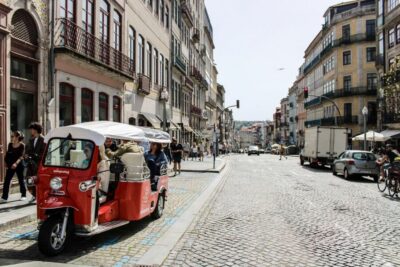
Guided Tour by Tuk-Tuk & Optional Douro River Cruise
Read our review →
Private Guided Tuk-Tuk Tour with Hotel Pickup
Read our review →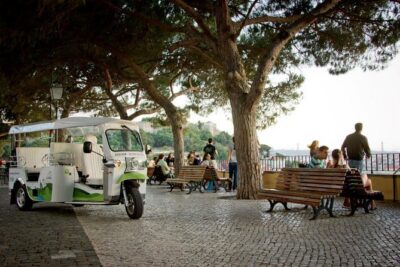
Private Lisbon Sightseeing Tuk-Tuk Tour: Alfama, Belém & More
Read our review →
Lisbon Highlights: Private Tuk Tuk Tour Adventure Sightseeing
Read our review →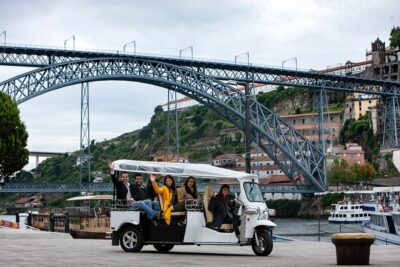
Discover Porto’s Highlights on a 2-Hour Private Electric Tuk Tuk
Read our review →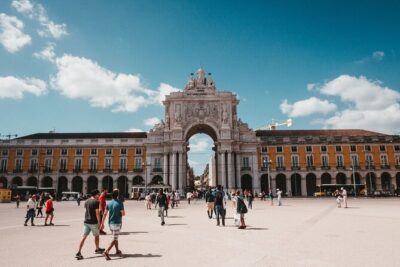
Welcome Lisbon Tour with Local Guide in Private Eco Tuk Tuk
Read our review →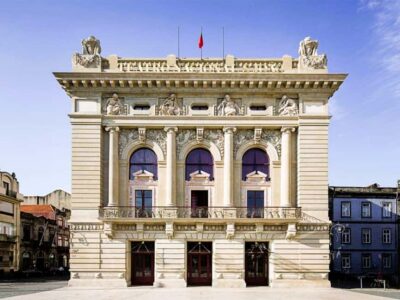
Browse the lists this tour appears in