Reviewed · MORNING
Porto private morning Tour, discover the most iconic attractions
Porto hits different when you have a driver doing the stitching. This 4 hour private morning tour strings together the city’s big UNESCO moments, from tile-happy São Bento to the views from Clérigos Tower. I especially love the onboard Wi-Fi and the fact that the stops feel planned rather than rushed. One thing to consider: several top sights require separate tickets if you want to go inside.
The tour is built for real-time orientation. You get a luxury vehicle, bottled water and refreshments, and a driver who can explain what you’re seeing as you move through the historic core and across to Gaia. If you have limited time, this is one of the fastest ways to get your bearings and understand why Porto looks the way it does.
The vibe is practical, not academic. The pace is busy, so if you prefer slow wandering with long indoor time, you may want to add a separate visit to your favorite stop later.
In This Review
- Key things to know before you go
- A private 4-hour Porto route that makes the city click
- Price and what you really get for $185.02
- Starting around Praça da Liberdade, then letting the city steer you
- Avenida dos Aliados area: history at street level
- Mercado do Bolhão and Praça da Batalha: the city’s daily heartbeat
- The medieval wall, then the Cathedral of Porto
- São Bento Station: 20,000 painted tiles worth your full attention
- Clérigos Tower and Livraria Lello: the icons, with timing in mind
- Café Majestic and the Relógio clock: Porto’s Belle Époque side
- Church of Gold, then Palácio da Bolsa: power and polish in one loop
- Bridges of Porto and Gaia: from suspension history to the wrought-iron star
- Gaia viewpoints and Serra do Pilar: the calm side of the river
- Forts, Castelo do Queijo, and the sea-air sculpture stops
- Art and modern Porto: Palácio de Cristal gardens, Casa da Música, and Serralves Park
- Optional add-ons: choose your Porto night and your Douro mood
- What I think works best, and what to watch for
- Should you book this Porto private morning tour?
- FAQ
- How long is the Porto private morning tour?
- What does the tour price include?
- Is pickup available?
- Where is the meeting point?
- Is this tour private?
- What language is the tour offered in?
- Is onboard Wi-Fi included?
- Are tickets to Livraria Lello and Clérigos Tower included?
- What optional experiences are available during or after the tour?
- What is the cancellation policy and weather rule?
Key things to know before you go
- Private group time with only your party in the vehicle
- Onboard Wi-Fi plus bottled water and refreshments to keep the morning easy
- Most iconic Porto sights in one route, including bridges and viewpoints
- Plenty of free-to-see stops, but key interiors are extra ticket
- Optional add-ons like a private sunset Douro cruise or a Dona Antónia port tour
- A guide like Carlos comes up repeatedly for strong history and helpful restaurant advice
A private 4-hour Porto route that makes the city click
Porto is compact, but it’s layered. One neighborhood is medieval. Another is art nouveau. Then you cross a bridge and suddenly you’re in a different mood on the Gaia side. This tour helps you connect those dots quickly, so your photos actually make sense later.
What makes it work is the structure. You’re not just dropped at landmarks. You’re guided from place to place with context from the driver, plus short stops where you can look, take pictures, and decide what you want to revisit on your own.
I like that it’s private. In a crowded group tour, you spend time waiting. Here, the pace is more controlled, and you can ask questions as you go. One review also highlighted that someone using a wheelchair found this format easier than trying to piece together transport on their own.
If you’re the kind of person who wants a quick hit of everything, this is a strong fit. If you’re hoping for a relaxed, deep-dive day, you’ll probably want to pair it with an afternoon activity afterward.
Other Porto plans worth comparing
- The Unvanquished Tour in Porto City Center
★ 5.0 · 26,497 reviews - From Porto: Douro Valley w/ Boat Tour, Wine Tasting & Lunch
★ 4.7 · 19,061 reviews - Complete Douro Valley Wine Tour with Lunch, Wine Tastings and River Cruise
★ 5.0 · 12,920 reviews
Price and what you really get for $185.02
At $185.02 per person for about 4 hours, you’re paying for two things: vehicle comfort and guided time. The tour includes luxury transport, personal accident and liability insurance, bottled water, refreshments, and Wi-Fi in the vehicle. That’s not a small benefit in Porto, where walking can add up fast.
Then there’s the time math. If you try to schedule these sights yourself, you’ll burn energy on logistics and transit, especially if you want to see the cathedral area, São Bento, the Clérigos viewpoint zone, and then reach bridges and Gaia in one morning.
The tradeoff is ticketed interiors. The tour includes lots of exterior and free-entry time, but some major attractions have separate charges (more on that below). Think of the price as paying for the route, the driver, and the “where to look” guidance.
If you’re traveling with friends or family and you want a smooth plan with fewer decisions, this can feel like good value. If you only care about one or two interiors, you might save money by booking a shorter walking-focused tour instead.
Starting around Praça da Liberdade, then letting the city steer you
Your tour begins at Praça da Liberdade (19), and you return there at the end. Pickup is offered from downtown Porto and Gaia hotels and B&Bs, which matters because the route includes multiple zones.
Once you’re in motion, the vehicle setup makes a difference. You’ll have bottled water and refreshments, plus Wi-Fi to keep maps, translation, and messaging under control. For a morning tour, that small comfort helps you stay focused on the sights instead of the logistics.
A practical tip: bring a charged phone and use Wi-Fi in the van to save your must-do list. You can see what you love during the tour, then use that list for your afternoon.
Also, because the tour relies on good weather, have a backup plan for indoor time. Porto can be dramatic with clouds and rain, and the tour may shift dates if weather is poor.
Avenida dos Aliados area: history at street level
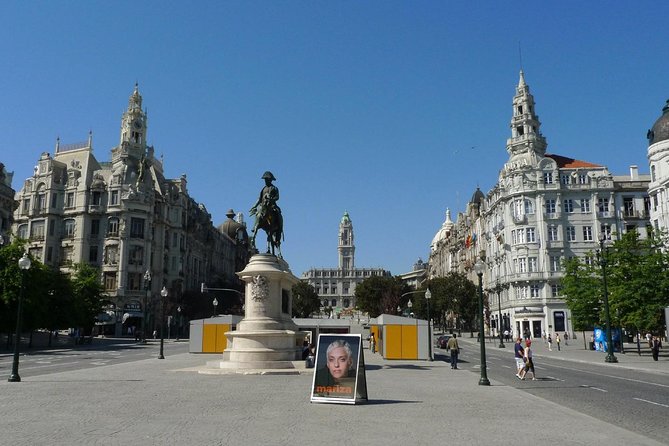
The tour kicks off in the core where Porto’s monumental streets start to define the city. You’ll see the wide avenue framed by buildings from the 1920s through the 1940s, with the Cardosas building on one side and the Porto Town Hall on the other. In the center sits the statue of D. Pedro IV, the Liberator, in D. Pedro Square, right where the square meets the feel of Avenida dos Aliados.
This is a useful first stop because it gives you a scale reference. You’re seeing how Porto went from older layers of stone and defense to a modern city rhythm with formal public buildings and grand streets. Even if you don’t go inside anything yet, you’ll get oriented fast.
One small consideration: early morning can still be busy here, so if you want clear photos of the statue and square, aim for a quick capture and move on while others are still filtering in.
In the same part of Portugal:
- Porto: Six Bridges Cruise
★ 4.2 · 11,680 reviews - Porto: Douro Valley with Winery Lunch, Tastings & Cruise
★ 4.7 · 7,002 reviews - Porto: Live Fado Show with Glass of Port Wine
★ 4.8 · 6,498 reviews - Porto: 6 Bridges Douro River Cruise
★ 4.3 · 6,472 reviews
Mercado do Bolhão and Praça da Batalha: the city’s daily heartbeat
Next comes Mercado do Bolhão, one of Porto’s most emblematic markets. It dates to 1850 and is built as a two-floor neoclassical structure. Outside, the market spills into several streets, with stalls focused mainly on fresh products.
If you like food culture, this is a fun, real Porto pause. It’s not a packaged “tour market” feeling. You’ll see fish, butchers, vegetables, and floral sections, which tells you how people actually shop here.
Then you shift to Praça da Batalha, a historic square with roots in the city’s distant past. The name connects to a 10th-century defeat associated with Almançor, and the square was urbanized around 1861, becoming a major public space. It’s also home to Teatro São João, inaugurated in 1798, and later destroyed by a fire in 1908.
Here’s why this matters on a short tour: you’re standing in a public space where Porto’s story changes eras. Markets and theaters both tell you what the city cared about, whether it was daily survival or cultural life.
The medieval wall, then the Cathedral of Porto
A major “how did this city survive?” moment arrives with the remnants of the defensive wall. Work began in the 14th century under D. Afonso IV to replace an older wall as the city expanded. It wasn’t fully completed until the reign of D. Fernando in 1409, which explains the name you’ll hear tied to the period.
After that, you reach Catedral do Porto, dating from the 12th or 13th century. Over time it expanded and renovated, but it still keeps that medieval cathedral layout at its core. The highlights to look for include the Gothic Chapel of St. John the Evangelist and its cloister, plus the expansion of the chancel. There’s also mention of the Chapel of the Blessed Sacrament and its silver altar.
This stop is a good reality check. Porto didn’t grow because it looked pretty. It grew because it mattered strategically and spiritually. A short guided explanation helps you read the building instead of treating it like a quick photo.
If you’re planning to go inside, check timing and dress norms. Churches in Portugal often require shoulders covered, and some areas are quieter and slower than the outside streets.
São Bento Station: 20,000 painted tiles worth your full attention
São Bento Railway Station is one of those places you feel guilty for treating as a transit stop. It was built in the early 20th century on the site of the former Convent of São Bento de Avé Maria. The vestibule is decorated with 20,000 painted tiles by Jorge Colaço that show the evolution of transport, local history, and everyday life in the region.
If your morning feels too packed, this is where you slow down. Even if you only spend 10 minutes, focus on the scenes rather than the architecture first. The tiles narrate Porto, almost like a visual history book.
This stop is also a smart way to control time and cost. The station is free to access, so you can prioritize it even if other interiors have tickets.
Clérigos Tower and Livraria Lello: the icons, with timing in mind
If you want Porto’s skyline and its literary legend, you’ll hit both Clérigos Tower and Livraria Lello within the same zone.
Clérigos Tower is Baroque, built in the first half of the 18th century by Nicolau Nasoni. It’s famous for the panoramic view from up top and the climb of 240 steps. It also appeared in the 2021 Hollywood film Suicide Squad, which is a fun extra detail if you like pop culture crossovers.
Livraria Lello (open since 1906) brings the Art Nouveau exterior with Neo-Gothic details. Inside, the library has painted plaster that imitates wood, plus a major staircase that connects floors. Don’t skip the huge stained-glass skylight.
Important practical note: tickets for Livraria Lello and a Clérigos Tower entry option are not included. If you want to go up the tower and inside the bookstore, consider buying those timed tickets ahead to avoid delays.
One tip from how people talk about the tour: this is exactly the kind of stop where a good guide helps you choose your priorities. If you’re ticket-budgeted, you might decide to do one paid interior and keep the rest exterior.
Café Majestic and the Relógio clock: Porto’s Belle Époque side
Café Majestic opened in 1921 and is a classic example of Porto’s Belle Époque era. The interior is Art Nouveau with marble, gilded mirrors, and intricate woodwork. It’s a great place to stop for a coffee or a pastry and pretend you live in a noir novel for 15 minutes.
Nearby is the Relógio das Galerias Palladium, an ornate clock with a carillon and four statues. Every three hours, the statues representing São João, Infante D. Henrique, Almeida Garrett, and Camilo Castelo Branco emerge and parade on the façade.
This is a nice break in the middle of the sightseeing. After the religious and architectural stops, these details feel more playful. You’ll also get a better sense of Porto as a city that celebrates ideas, not only monuments.
If you want to keep the morning moving, treat this like a quick reset. Sit down, look up, take one photo, then continue.
Church of Gold, then Palácio da Bolsa: power and polish in one loop
Porto’s religious art can be dramatic, and Igreja de São Francisco, often called the Church of Gold, is one of the best examples. Construction began in the 14th century and it became famous for its golden interior work in the 17th and 18th centuries. A commonly cited detail is the carved woodwork described by Count Raczinsky, and you’ll also hear about the Tree of Jesse and the catacombs.
This is a paid interior (ticket not included). If you’re doing it, give it the time it needs. The effect is visual and takes a few minutes to absorb.
Then you move to Palácio da Bolsa, the Commercial Association of Porto. It’s neoclassical, designed in 1842 by Joaquim da Costa Lima, and built on the site of a former convent destroyed by fire during the Siege of Porto. The Arab Room is the highlight, and the building is also a cultural and conference center.
Guided entry to parts like the Arab Room has an extra ticket cost, so decide based on your interests. If you love interior design, it’s worth it. If you mostly enjoy street-level architecture, you can still enjoy the exterior and keep your money for something else.
Bridges of Porto and Gaia: from suspension history to the wrought-iron star
Porto’s UNESCO story gets real when you cross a bridge. You’ll see the D. Maria II suspension bridge, created to connect Porto and Gaia as a permanent link. It opened in 1843, was deactivated after four years due to insecurity, and today you can find only two stone pillars left.
Then comes Dom Luís I Bridge, the big one. Completed in 1886 and 1888, it’s famous for being the largest wrought iron arch in the world. This bridge is a key part of why the historic center is recognized on the UNESCO list.
A short add-on is the São João Bridge (opened 2003), which carries Porto Metro. It’s described as an arch of the Maillart type and even noted as a slender design with world-record claims for that typology.
If you only remember one thing about this tour, I’d make it bridge awareness. Once you’ve walked or looked along the river crossing zones, Porto’s geography stops feeling random.
Gaia viewpoints and Serra do Pilar: the calm side of the river
After the river crossings, the tour shifts toward Gaia. Jardim do Morro is a public hill garden with panoramic views and a calmer feel. It’s developed in the 20th century and complements the monastery setting, with wide pathways and greenery.
Then you reach Mosteiro da Serra do Pilar. It began with Augustine order roots, with construction starting in 1538 but unfolding in stages over centuries. The church and cloister use circular shapes, which is what makes it such a standout from a distance. It currently serves religious, cultural, and military roles, and it’s part of UNESCO recognition along with the Historic Center of Porto and Luís I Bridge.
If you like viewpoints, this is a high-payoff moment. Even when your morning feels packed, these spaces let you breathe and see how Porto and Gaia sit together across the Douro.
A practical tip: bring layers. Viewpoints near the river can feel colder even when Porto’s streets are warm.
Forts, Castelo do Queijo, and the sea-air sculpture stops
This tour doesn’t only stop at old-world buildings. It also touches the coastline and modern public art.
Fortress São João Baptista is a 16th-century coastal fort built to protect the coast and the Douro entrance. There were later additions in the 17th century. Nearby is Castelo do Queijo, Fort São Francisco Xavier, built in the 17th century to defend against North African pirates, and shaped like a rocky hill said to resemble cheese.
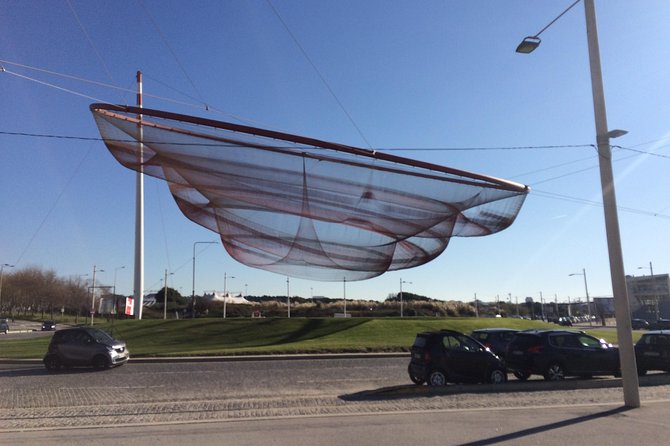
Then you’ll pass by public sculpture moments, including She Changes, known as Anemone. It’s a net-based sculpture by Janet Echelman designed for Porto and Matosinhos, made to move with the wind like a huge anemone reacting to sea currents.
These stops help the tour feel like more than a “cathedral and camera” loop. Porto has defenses, yes, but it also has creative public spaces that show how the city keeps reinventing itself.
Art and modern Porto: Palácio de Cristal gardens, Casa da Música, and Serralves Park
You also get a taste of Porto’s calmer green spots and its contemporary architecture.
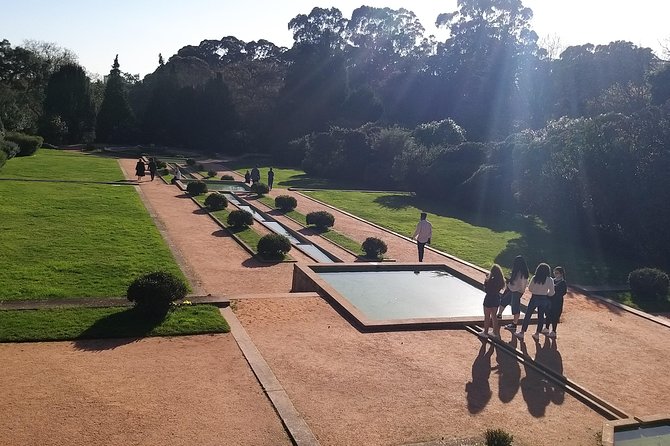
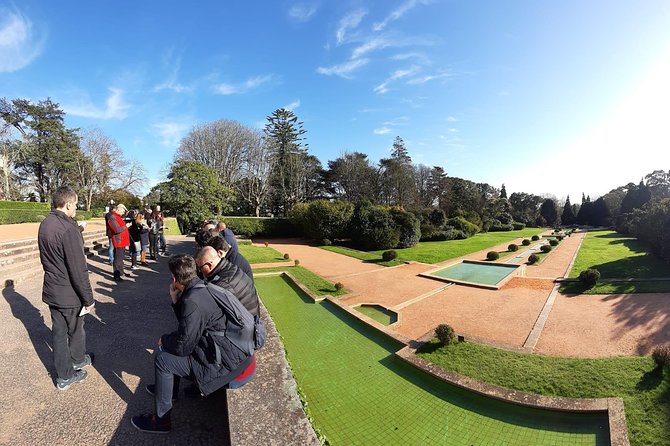
Palácio de Cristal gardens are Romantic-era spaces designed in the 19th century by Émile David. The area is about 8 hectares and includes Jardim Émille David at the main entrance, Avenida das Tílias, forest sections, and balconies overlooking the Douro.
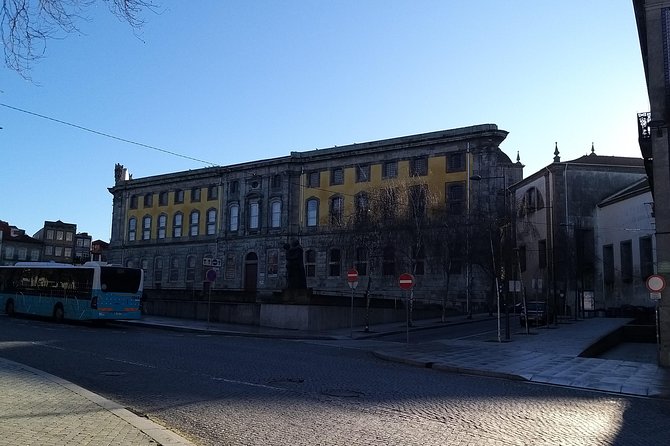
You may also stop near museums tied to transport and movement. The Electric Car Museum covers trams and other rail vehicles, plus an example of an American horse-drawn trolley bus introduced in 1872. There’s also the Museum of Transport and Communications in a former central transport building designed by Jean F. G. Colson, with attention to iron construction methods.
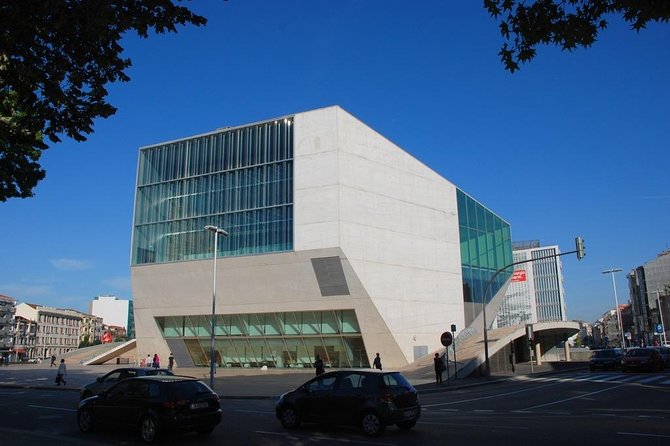
For contemporary architecture, Casa da Música is a major icon in Boavista, designed by Rem Koolhaas and inaugurated in 2005.
If you’re still hungry for art, Serralves is referenced as an Art Deco House within Serralves Park, with the Museum of Contemporary Art and other amenities in the same complex. It’s a big stop, so on a short morning tour you may only see it from outside or get a brief look, but it helps you decide whether to return later.
Optional add-ons: choose your Porto night and your Douro mood
The main morning tour gives you structure. These optional add-ons let you extend it based on what you want next.
For views plus romance, there’s a private Douro sunset river cruise. The experience is about 2 hours and described as an exclusive sunset journey with views of Porto and Vila Nova de Gaia and the bridges along the route.
For wine lovers, there’s an Exclusive Dona Antónia port wine tour. It lasts about 1.5 hours and includes a tasting of five port wines.
For music and dinner, there’s an optional fado night and traditional dinner with transportation included, starting at 20:00 and lasting about 2.5 hours.
If you’d rather keep it simpler, there’s also an optional 1-hour fado show with port wine tasting with performances scheduled daily at 18:00 and 19:30.
You can mix and match, but don’t overload yourself. If you do a paid interior during the morning, consider keeping the evening add-on focused.
What I think works best, and what to watch for
This tour is ideal when:
- you have limited time and want a broad Porto overview
- you want a driver to explain what you’re seeing while you’re moving
- you care about seeing bridge zones and viewpoints, not only museum interiors
- you need transport help over cobbled streets and steep bits
One caution based on how people talk about it: the pace is tight. You’ll get a lot of stops, and if your style is more slow and detailed, you may feel the timing pressure. A guide can only work within a 4-hour window, so your best strategy is to pick one paid interior you care most about, and enjoy the rest as context.
Should you book this Porto private morning tour?
I’d book it if you want the fast track through Porto’s biggest landmarks with real context and comfortable transport. The value comes from the combination: a private vehicle, Wi-Fi and refreshments, and a driver who helps you understand why sites matter, not just where they are.
I would skip or modify it if you only want one or two interiors and you’re happy navigating on your own. For deep museum days, you’ll get more satisfaction by planning a separate half-day or full-day visit.
If you book, do yourself a favor: tell your guide what you want most, bridge views, cathedral interiors, or wine and food ideas. Based on guide feedback like Carlos being consistently praised, you’ll likely get useful guidance on where to eat and how to choose port wine when you’re ready to order.
FAQ
How long is the Porto private morning tour?
It lasts about 4 hours.
What does the tour price include?
Transport in a luxury vehicle, Wi-Fi, bottled water and refreshments, personal accident and liability insurance, and the guided tour experience.
Is pickup available?
Yes. Pickup is offered from downtown Porto and Gaia hotels and B&Bs.
Where is the meeting point?
The meeting point is Praça da Liberdade 19, 4000-322 Porto, Portugal. The tour ends back at the meeting point.
Is this tour private?
Yes. It is a private tour for only your group.
What language is the tour offered in?
The tour is offered in English.
Is onboard Wi-Fi included?
Yes, the vehicle includes Wi-Fi.
Are tickets to Livraria Lello and Clérigos Tower included?
No. Livraria Lello has a Gold Ticket option priced at €16.00 per person, and Clérigos Tower has a ticket option priced at €10.00 per person.
What optional experiences are available during or after the tour?
Optional add-ons include a private Douro sunset cruise, an Exclusive Dona Antónia port wine tour, and fado options (with or without dinner and transport). Prices are listed for each option, and they are not included in the main tour price.
What is the cancellation policy and weather rule?
You can cancel for a full refund up to 24 hours in advance. If the tour is canceled due to poor weather, you’ll be offered another date or a full refund.
Just added around Porto
- Meditation Experience at a Lovely Farm in Porto★ 5.0 · 19 reviews
- Private Portuguese Cooking and Wine Experience in Porto★ 5.0 · 30 reviews
- Douro Valley Prime Tour: Wine Tastings, Boat & Lunch from Porto★ 5.0 · 572 reviews
- Port Wine Tour | 3 Cellars | 7 Tastings | 12 Participants Maximum★ 5.0 · 443 reviews
- Private Boat Tour on the Douro River at Sunset★ 5.0 · 21 reviews
- Visit to Cockburn’s Cellars★ 5.0 · 526 reviews
- Wine Tasting with Tapas Walking Tour in Porto★ 4.5 · 544 reviews
- PORTO city Walking Tour★ 5.0 · 132 reviews
Morning, compared.


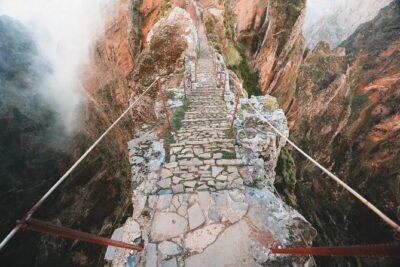
Pico Do Arieiro Pico Ruivo Sunrise or Morning Hike Transfers
Read our review →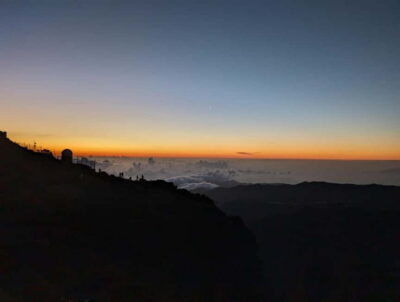
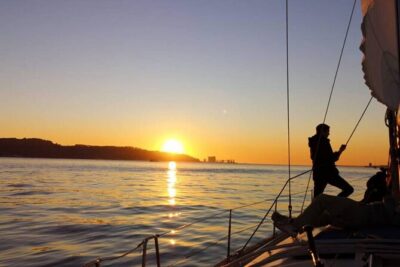
Sailboat Tour in Lisbon with drinks included | Morning and Sunset
Read our review →
Tagus River Cruise, Morning, Day, Sunset, or Night
Read our review →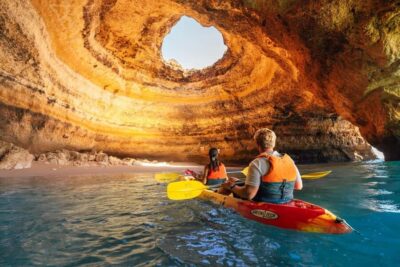
Algarve: Benagil Cave Sunrise Kayak Tour with Shower Use
Read our review →