

Reviewed · HISTORICAL TOURS
Porto: Private Tour to the Historic Center in a Classic Car
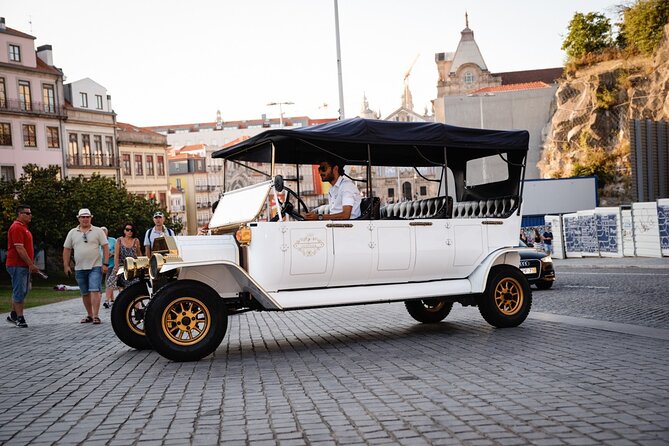
Classic cars make Porto hit different. In about 1 hour 30 minutes, this private ride strings together river views and old-city highlights in a way that feels fast but never rushed, and it starts with the big payoff of Luís I Bridge.
I love that you get photo stops at iconic viewpoints instead of just passing by them, and I also like how the guide brings each place down to human scale.
The second thing I like a lot is the personal touch of the guides. Names like Mariana, João, Gama, Maria, Inez, and Ana show up in the experience for a reason: they explain what you’re looking at and also answer the what’s-that question that always pops up while you’re moving through Porto.
This matters because Porto’s history can sound like a textbook, but on this tour it turns into a walk-up story you can actually use.
The main drawback to plan for is comfort and timing. Expect some bumps because it is a classic car, and road closures or traffic can affect the route speed in the historic center, even when the guide tries to keep things on track.
In This Review
- Key highlights worth planning around
- Why 90 minutes in a classic car is a smart Porto move
- How pickup works in Porto’s historic center (and what you should do)
- Luís I Bridge: the photo stop that frames the whole city
- Infante D. Henrique Museum: Portugal’s sea story in a very human way
- Palácio da Bolsa and the Arab Room: architecture that feels like a time machine
- Porto Customs House: the river setting plus a museum you can skim
- São João Baptista Fort and Queijo Fort: coastal views with low-stress entry
- Electric Tram Museum: transport history that feels oddly fun
- Passeio Alegre Garden and Crystal Palace Gardens: where the tour slows down
- Who this classic-car Porto tour suits best
- Practical tips to get the most out of your 90 minutes
- Should you book this Porto classic car tour?
Key highlights worth planning around
- Luís I Bridge views from the upper deck, with instant photo timing over the Douro River and city skyline
- Infante D. Henrique Museum brings Portugal’s maritime era to life with navigation tools, ship models, and maps
- Palácio da Bolsa and its Arab Room, a standout interior you do not need to be a history buff to enjoy
- Porto Customs House by the river, where the Porto Museum adds context without turning the ride into a lecture
- Free outdoor time at Passeio Alegre, Queijo Fort area views, and Crystal Palace Gardens, so you can rest your legs
- Electric Tram Museum, a fun transport detour inside a former tram factory, with historical trams to see
Why 90 minutes in a classic car is a smart Porto move
Porto can feel like two cities in one. You have the riverfront drama of the Douro, and then you have the tighter historic center streets where it is easy to waste time walking uphill or figuring out transport. A short private car tour is a practical reset, especially when you only have a limited window.
This one is priced at $39.79 per person and runs about 1 hour 30 minutes. That price can feel like a splurge until you compare it to the cost of piecing together several different activities on your own, plus the time cost of moving between them. Here, you’re paying for efficient routing, a guide who can interpret what you see, and the classic-car novelty that makes even a quick stop feel like part of the day.
And because it is private, you’re not stuck with the lowest-common-denominator pace. If you want an extra minute to frame a shot or ask about the next building, the guide can generally work with you.
Other Porto plans worth comparing
- Douro Valley: Historical Sites, Wine Experience, Lunch & Cruise
★ 5.0 · 5,133 reviews - Porto: An Intimate Fado Show in a Historical Tavern
★ 4.8 · 2,055 reviews - Porto: Historic City Center Walking Tour
★ 4.7 · 1,172 reviews
How pickup works in Porto’s historic center (and what you should do)
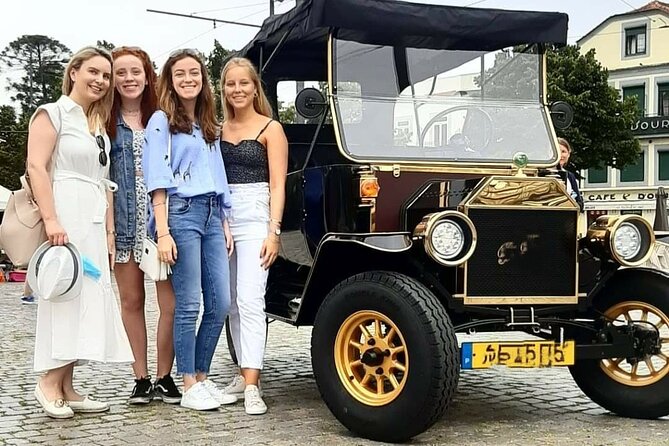
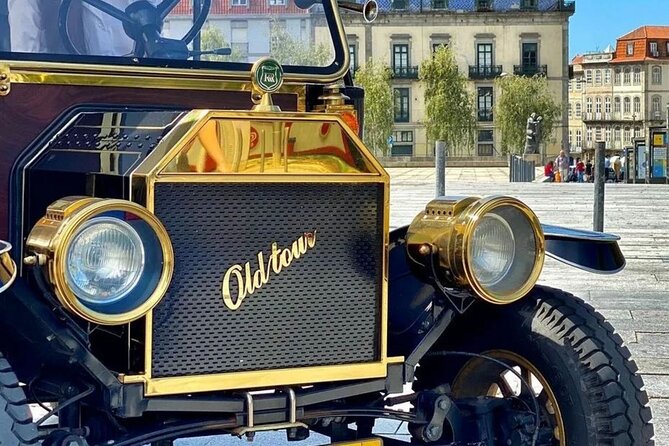
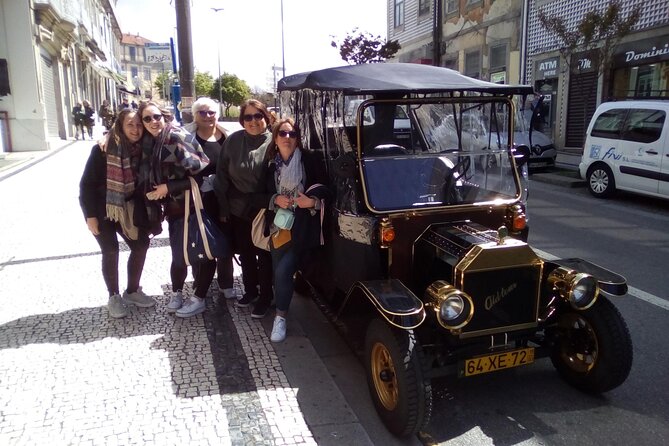
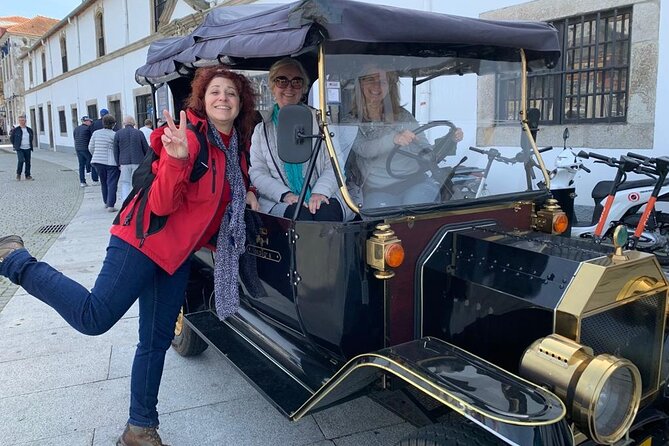
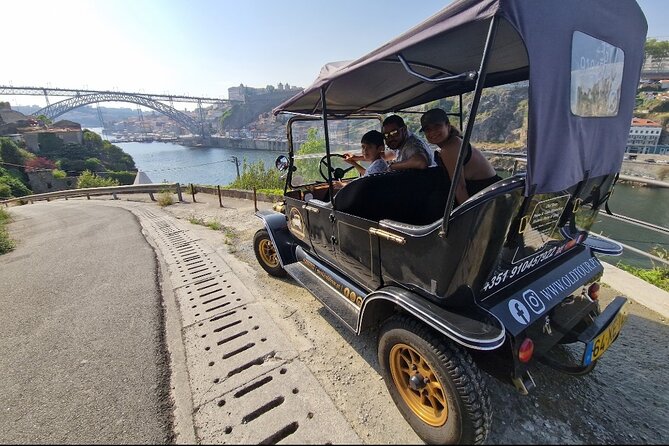
Pickup is offered, but the meeting point is intentionally flexible: it is anywhere in the historic center area. The car is either black or green, and the guides are identified by the name Oldtour. You’ll also get a mobile ticket, which makes the start of the tour easy if you show up with your phone ready.
Two practical tips based on how this tour tends to run:
- Give yourself a small buffer before the scheduled start time, just like you would for a taxi pickup. Old cars and historic streets can slow things down.
- If you are not sure exactly where to meet, look for the classic car color first, then confirm the guide name.
In short, you should be able to find them quickly if you are watching for the car and not wandering around the city like a lost tourist with great optimism.
Luís I Bridge: the photo stop that frames the whole city
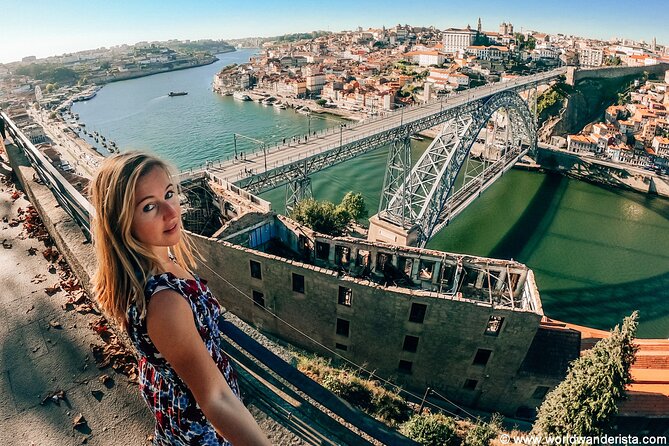
You start with one of Porto’s most recognizable pieces of engineering: Luís I Bridge, connecting Porto to Vila Nova de Gaia. The ride crossing gives you moving views of the Douro River, the waterfront, and the city’s layers.
What makes this stop worth including is the upper deck experience. The bridge sits high, around 60 meters up, so you get a sense of scale, plus the river energy in the background. Boats come and go, water sounds carry across the area, and the geometry of the bridge keeps snapping your attention back to it.
Why it works for real travel decisions: seeing the bridge early helps you understand Porto’s “why.” You quickly get the geography, which makes later stops make more sense when you’re looking back at the river and the neighborhoods.
Infante D. Henrique Museum: Portugal’s sea story in a very human way
Next up is the Infante D. Henrique Museum, built around Portugal’s maritime history and the legacy of the Discoveries era. If you like maps, navigation instruments, ship models, or just the idea of how people found their way across water with limited tools, this is a strong stop.
What you’ll get here is more than decoration. The museum focuses on the practical tools of navigation, plus cartography and exploration. It’s also described as interactive and educational, which is a real plus if you’re traveling with kids who lose interest in long indoor exhibits.
One consideration: it is still a museum stop, which means you may want to go in with an open mind. If you only want outdoor viewpoints, you might treat this as the one indoor interruption. For most people, though, it adds depth to why Porto built its wealth and identity around the sea.
In the same part of Portugal:
- The Unvanquished Tour in Porto City Center
★ 5.0 · 26,497 reviews - From Porto: Douro Valley w/ Boat Tour, Wine Tasting & Lunch
★ 4.7 · 19,061 reviews - Complete Douro Valley Wine Tour with Lunch, Wine Tastings and River Cruise
★ 5.0 · 12,920 reviews - Porto: Six Bridges Cruise
★ 4.2 · 11,680 reviews
Palácio da Bolsa and the Arab Room: architecture that feels like a time machine
Palácio da Bolsa is one of Porto’s big-ticket buildings, and for good reason. Built in the 19th century as the Stock Exchange headquarters, it is known for its Arab Room, which brings Moorish influences into a place connected to Portuguese commerce.
Here’s the value for you: you are not just looking at pretty rooms. You’re seeing a symbol of how the city’s economy evolved, then connecting that to what you learned in the earlier maritime context. Porto’s story is not only ships and rivers. It is also trade, finance, and the shift from one economic era to another.
Practical timing note: because the tour is about 90 minutes total, you’ll likely see the highlights rather than spending hours inside. That can actually be a good thing. If you fall in love with the building, you can always come back later for a longer, unhurried visit.
Porto Customs House: the river setting plus a museum you can skim
On the waterfront stands the Porto Customs House, a neoclassical building from the 19th century that historically served as the city’s tax and trade authority. Today, it houses the Porto Museum, which focuses on Porto’s cultural and social history.
This stop is a smart balance point. You get:
- a strong riverside exterior setting
- context about commerce and city life
- and a built-in chance to reset after earlier indoor time
The surrounding gardens are also mentioned as pleasant for relaxing and taking in bridge and river views. Even a short pause here can make the rest of the day feel less like a checklist.
If you are someone who hates being rushed indoors, this part helps because you can enjoy the building, then spend a few minutes outside where your eyes can breathe.
São João Baptista Fort and Queijo Fort: coastal views with low-stress entry
The tour shifts from the river to the coast. Two of the stops are built around fortifications and viewpoint energy.
First is Fortress São João Baptista, a 17th-century stronghold on the Atlantic coast facing outward. It exists because Porto needed protection from maritime invasions, and you can explore the walls with a focus on those defensive strategies across centuries. The view of the Douro estuary is the payoff.
Important practical detail: admission ticket is not included for this stop. So if you want full access, you should budget extra time to handle entry separately.
Then comes the Cheese Castle, officially the Fort of São Francisco do Queijo, next to the Atlantic. It is a 16th-century fort built to defend the city from pirate-style attacks. The big charm is how locals and visitors use the area for sea and river-mouth views. There is also mention that interior spaces get used for exhibitions and cultural events.
What I like for your planning: these two coastal sites lean on outside views. Even if your feet get tired, you can still enjoy the scenery and the sense of history without needing a long indoor session. Both are also listed as free stops for outdoor admission.
Electric Tram Museum: transport history that feels oddly fun
If you want one stop that breaks up the “big monuments only” rhythm, the Electric Tram Museum is it. It is located in a former electric tram factory and focuses on how trams shaped Porto’s daily life and urban mobility.
You’ll see an extensive collection of trams that operated on Porto’s streets since the 19th century. There are also historical models, photographs, and documents showing how transport changed over time. This is the kind of museum that works for couples, families, and anyone who likes everyday history.
One note from how it’s described: the museum may offer rides on some restored trams. If they’re operating during your visit, it’s a great way to turn a short museum stop into a memorable experience.
Again, the tour timing is tight, so think of this as a taste. If you want more, you can always return later when you have time to get deeper into the exhibits.
Passeio Alegre Garden and Crystal Palace Gardens: where the tour slows down
After the denser city moments, you get two green spaces that feel like a breather.
Jardim do Passeio Alegre is at the mouth of the Douro River and dates to the 19th century. It’s known for diverse plantings, shade, winding paths, and benches placed for lingering. There are ornamental fountains and classical statuary, and it’s described as a popular spot for family picnics. Since it is close to the waterfront, you also get that sea breeze effect.
This stop is listed as free and takes about 5 minutes in the tour flow. That’s short, but it is exactly the length that helps you reset before another viewpoint.
Then you have Jardins do Palácio de Cristal with a history tied to the 19th-century Crystal Palace and the Porto International Exhibition. The gardens were designed in a Romantic European style with elements like lakes, hills, and small pavilions, giving the area a relaxed feel compared to the city streets.
This stop is also free and listed at about 15 minutes. That extra time matters because gardens are one place where you can stop, look, and let your brain catch up.
Who this classic-car Porto tour suits best
This tour is a strong fit if you want:
- a fast way to cover several major sights in one day without constantly changing transit plans
- a guide-led explanation so the places make sense, not just impress you
- a fun tone. Classic car rides tend to lower the stress level in a way walking sometimes cannot
It also works well for families, since at least one indoor stop is described as interactive and educational, and the overall pacing stays fairly light.
Where it may not be ideal:
- If you hate any bumpy ride, consider that classic cars and older streets can feel rough in spots.
- If you want very long, slow museum time at every stop, the tour’s overall 1 hour 30 minutes style means you will likely only see the highlights.
Practical tips to get the most out of your 90 minutes
Here are the small things that make a difference:
- Wear shoes you can handle on uneven historic streets. You’ll likely be stepping in and out for quick photo stops and viewpoints.
- Bring your camera phone charger or extra battery, because bridge and river views are the kind you want to replay.
- If you care about photo timing, sunrise and sunset are explicitly mentioned as great times for bridge colors reflected over the water. Even if you are not at sunrise, you still get scenic options.
- If you’re picky about indoor access, double-check at the start what you’ll spend time inside versus outside. Only one fort stop is clearly labeled as having admission not included, while outdoor gardens and the cheese fort area are free.
And one more thing, based on guide feedback: don’t be shy about asking the human questions. Guides like Mariana and Ana were praised for explaining facts well, and João and Gama got kudos for thoughtful conversation and practical suggestions. That’s often where the best memories come from, not just the monuments.
Should you book this Porto classic car tour?
I think you should book it if you want a high-impact sampler of Porto that balances engineering and architecture with maritime context, then finishes with coastal views and garden calm. The value is in the mix: Douro and bridge views, major interiors like Palácio da Bolsa, plus outdoor stops where you can breathe.
Skip it if you prefer total freedom to roam, or if you want to spend half a day inside museums and do not care much about river and coastal viewpoints. Also, be realistic about the classic-car feel. The ride is part of the charm, but it is still a road trip with historic streets and occasional bumps.
If your goal is simple, get oriented fast and pick which sights you want to revisit later, this tour fits that mission nicely.
Just added around Porto
- Meditation Experience at a Lovely Farm in Porto★ 5.0 · 19 reviews
- Private Portuguese Cooking and Wine Experience in Porto★ 5.0 · 30 reviews
- Douro Valley Prime Tour: Wine Tastings, Boat & Lunch from Porto★ 5.0 · 572 reviews
- Port Wine Tour | 3 Cellars | 7 Tastings | 12 Participants Maximum★ 5.0 · 443 reviews
- Private Boat Tour on the Douro River at Sunset★ 5.0 · 21 reviews
- Visit to Cockburn’s Cellars★ 5.0 · 526 reviews
- Wine Tasting with Tapas Walking Tour in Porto★ 4.5 · 544 reviews
- PORTO city Walking Tour★ 5.0 · 132 reviews
Historical Tours, compared.
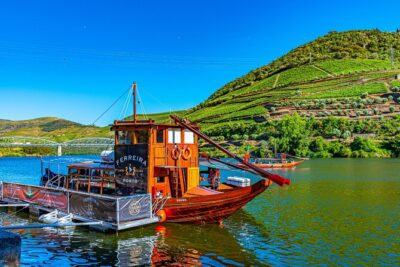
Douro Valley: Historical Sites, Wine Experience, Lunch & Cruise
Read our review →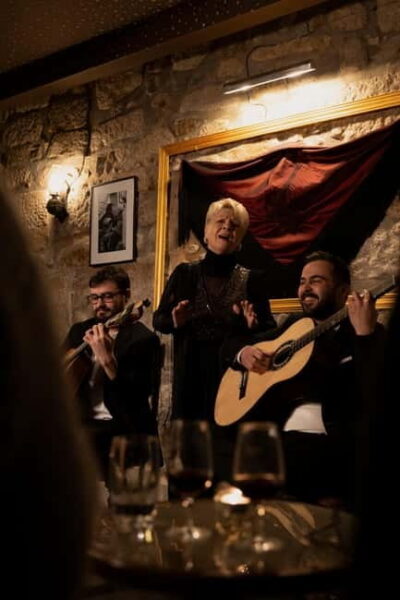
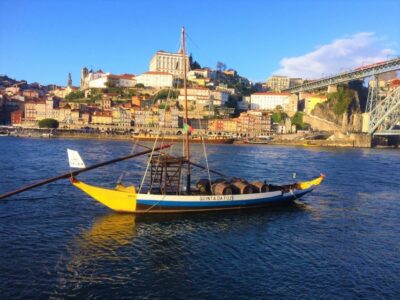
Daytime or Sunset Boat Cruise with History and Wine
Read our review →
Private Tour of the Historic City in a Ford T Car
Read our review →
Browse the lists this tour appears in