
Reviewed · HISTORICAL TOURS
Queer Lisbon Historical Tour
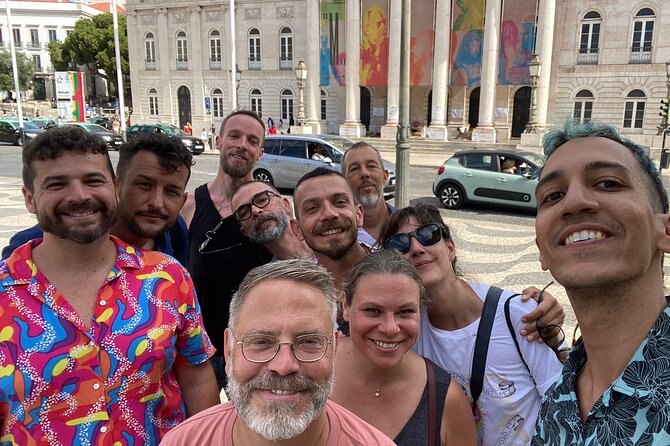
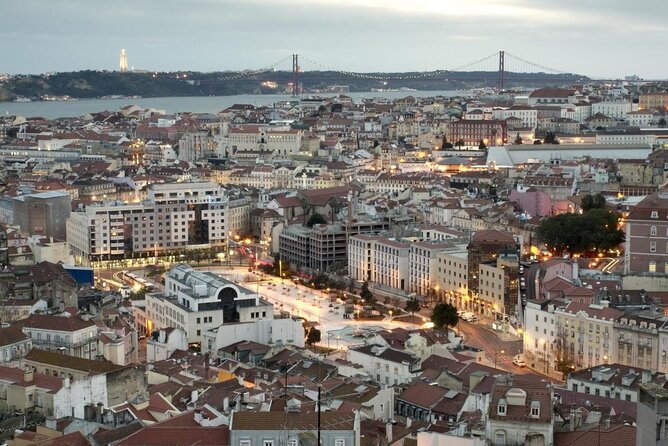
Lisbon gets political, street by street. This 4-hour Queer Lisbon Historical Tour uses major landmarks, monuments, and neighborhood changes to explain how LGBTQ+ life in Portugal has been shaped over time. You’ll move between Príncipe Real, Bairro Alto/Bica/Cais do Sodré, and more, with an emphasis on both history and present-day questions about inclusion.
What I like most is that it feels organized for real understanding, not just vibes. You get an updated Queer Map of Lisbon (PDF) plus a local guide who speaks Portuguese and English, and the stops are designed for reflection on how society regulates identity. I also appreciate the tone, earnestly informative with a fun group energy, and the fact that the tour runs in a small group size (up to 20 people).
One thing to consider: it depends on good weather, and the walk requires a moderate physical fitness level. If you’re looking for a purely social night out, this is more thoughtful and discussion-based than party-focused.
In This Review
- Key highlights at a glance
- The point of this tour: history you can connect to today
- Príncipe Real monument start: where the tour sets its tone
- Bairro Alto, Bica, and Cais do Sodré: watching a neighborhood change
- Largo Trindade Coelho: Padre António Vieira and the church’s role
- Largo do Carmo: revolution, dictatorship, and LGBTQ+ resistance
- Praca Martim Moniz: contemporary queer movements and immigrant voices
- Graça and São Vicente finish: honoring Black queer resistance
- Price and logistics: what you get for $72.29
- Who this tour is best for (and who should rethink it)
- How to get the most out of your 4-hour walk
- Should you book the Queer Lisbon Historical Tour?
- FAQ
- How long is the Queer Lisbon Historical Tour?
- Is the tour offered in English?
- Where does the tour start and where does it end?
- What’s included in the ticket price?
- Are there admission fees at the stops?
- How big is the group?
- Is dinner included?
- Do I need a printed ticket?
- Is the tour suitable if I have moderate physical fitness?
- What happens if bad weather cancels the tour?
- Can I cancel for free?
Key highlights at a glance
- A small-group walk (up to 20) that keeps the conversation grounded
- Admission-free stops across all six key sites you’ll visit
- A free Queer Map of Lisbon (PDF) you can keep using after the tour
- Clear “then and now” structure, from Pride history to contemporary activism
- A finish at a queer-owned venue in Graça, honoring Black queer resistance
The point of this tour: history you can connect to today

I like tours that leave me with more than photos. This one is built to help you connect Lisbon’s LGBTQ+ story across different eras, then ask what inclusion means in everyday life. You’re not only looking at monuments, you’re also hearing how social attitudes are formed, enforced, and resisted.
The format also helps. With an approx 4-hour pace and a maximum group size of 20, you get time at each stop to listen and think, not just rush through. And because the tour is offered in English (with a guide who can speak Portuguese too), you’re not stuck translating in your head the whole time.
Value-wise, it’s also a smart buy. At $72.29 per person, you’re paying for guided interpretation plus a Queer Map of Lisbon (PDF). Since each stop notes admission ticket free, your cost is mostly about the experience itself, not museum fees piling up. You’ll still pay for your own dinner and drinks, but that’s common for a historical walking tour.
Other Lisbon plans worth comparing
- Lisbon: History, Stories and Lifestyle Walking Tour
★ 4.8 · 10,902 reviews - Lisbon: Daytime or Sunset Boat Cruise with History and Wine
★ 5.0 · 1,053 reviews - Explore Lisbon by Tuk Tuk: History and Viewpoints
★ 5.0 · 840 reviews
Príncipe Real monument start: where the tour sets its tone
You begin in Príncipe Real, gathering at a monument honoring the victims of homophobia. This first stop is where the guide frames the big picture, with a brief introduction to what you’re about to see and why it matters.
From there, you’ll explore the beginnings of the LGBTQ+ movement in Portugal, including the first Pride March and public demonstrations. This is an early lesson in how visibility works. You’re not just learning names and dates, you’re learning what it meant for people to show up publicly in the first place.
It’s also a moment to reflect. The site is symbolic by design, and it helps you start the walk with context instead of arriving mid-story. The stop is about 30 minutes, and the admission is ticket-free.
Bairro Alto, Bica, and Cais do Sodré: watching a neighborhood change
Next comes Bairro Alto, Bica & Cais do Sodré, where the tour shifts from early movement history to how queer spaces are experienced in everyday life. You’ll walk through the streets, then pause at a viewpoint for views over the hills and city.
This stop is especially good if you like learning with your eyes. You’re physically in the neighborhood, then hearing how LGBTQ+ presence can look different across time. The guide discusses how the area transforms from day to night, and it’s not treated as a simple “more fun at night” story. It’s used to talk about access and privilege, and how that affects who feels included and who feels watched or limited.
The tour also addresses patriarchal and colonial mindsets still present in behavior, and it asks uncomfortable, useful questions. Is inclusion in Portugal really for everyone? Is there a way to make it better? If you enjoy tours that don’t dodge hard conversations, this is one of the stronger segments.
This stop runs about 20 minutes, with admission ticket free.
Largo Trindade Coelho: Padre António Vieira and the church’s role
At Largo Trindade Coelho, you’ll observe the monument of Padre António Vieira. Then you’ll explore the church’s role in regulating sexuality and how that influence shaped societal attitudes toward homosexuality and other expressions that deviate from the norm of homogeneity.
What I like here is the specificity. Even if you already know religion has played a part in shaping social norms, the tour connects the dots to a clear mechanism: regulation, then influence, then how attitudes stick around. It’s not presented as abstract theory, it’s tied to a visible landmark you can look at while you listen.
This stop is about 20 minutes, ticket-free, and it works well if you want to understand how power can operate indirectly through institutions, not only through individual prejudice.
In the same part of Portugal:
- Lisbon City Center Tour – The Unmissable Lisbon
★ 5.0 · 22,234 reviews - Lisbon: Sintra, Pena, Regaleira, Cabo da Roca & Cascais
★ 4.7 · 19,656 reviews - Lisbon Card: 24, 48, or 72-Hour Pass
★ 4.5 · 17,944 reviews - Lisbon: Jerónimos Monastery Entrance Ticket
★ 4.1 · 14,164 reviews
Largo do Carmo: revolution, dictatorship, and LGBTQ+ resistance
Then you head to Largo do Carmo, a site connected to the Portuguese revolution. Here, the tour turns to dictatorship and its long-lasting impact in Europe, explaining how the regime shaped societal mindsets.
The guide focuses on the strict family model the dictatorship enforced: a man, a wife, and happy children, with nothing different. The contrast is central. You see how social pressure can be systematized, not just argued about in private conversations.
You also learn about resistance by key LGBTQ+ figures during this period. That matters because it prevents the story from becoming only repression. Resistance is part of the timeline, and it sets up the rest of the walk where you’ll see activism continuing in newer forms.
This stop is about 20 minutes and admission is free.
Praca Martim Moniz: contemporary queer movements and immigrant voices
At Praca Martim Moniz, the tour moves into the present. You’ll discuss contemporary queer movements challenging the structures around them and raising important questions. This is where the tour stops being only a history lesson and becomes a discussion about today’s energy.
The guide also highlights how immigrants are bringing new strength and perspectives to LGBTQ+ movements in Portugal. This is one of the most practical ideas in the whole tour, because it explains change as something people build together, across communities and experiences, not something that appears fully formed.
It’s a 20-minute stop, ticket-free, and it sets up your final leg in Graça.
Graça and São Vicente finish: honoring Black queer resistance
The tour ends in Graça and São Vicente, at a queer-owned venue where you’ll pay homage to Black queer resistance connected to Criolense Kitchen Club. This ending matters, because it shifts the focus from monuments and institutions to community life and ongoing cultural work.
You’ll also learn about the area’s role in the LGBTQ+ community. Since the last stop is tied to a real place you can associate with today, it gives you a place to go after the tour if you want to keep the conversation going.
This final segment runs about 20 minutes, with admission ticket free.
Price and logistics: what you get for $72.29

At $72.29 per person for an approx 4-hour guided walk, I think the price is fair for two reasons.
First, the tour includes real extras, not just narration. You get the Queer Map of Lisbon (PDF), and you get a local guide who speaks both Portuguese and English. That’s practical because it helps you keep exploring after the tour without guessing which neighborhoods matter.
Second, the stops themselves are admission ticket free, so the cost stays focused on guidance and interpretation, not on paying for entry fees. You do pay for your own dinner and drinks, but since the tour is daytime and walking-based, that’s not a surprise. You’re also not stuck committing to one long meal as part of the tour plan.
Logistically, it’s also fairly easy to fit in. The meeting point is listed as at the juniper tree arbor in Misericórdia, in Lisbon. The tour ends in Graça, close enough that you can continue on in that neighborhood. It’s near public transportation, and service animals are allowed.
One planning note: the tour requires good weather. If weather shuts it down, you’ll either be offered a different date or a full refund.
Who this tour is best for (and who should rethink it)
This experience is a great match if you want LGBTQ+ history that connects directly to public spaces and social attitudes. I’d especially recommend it if you care about the way neighborhoods change, and you like hearing about access, privilege, and the question of whether inclusion is truly shared.
It also suits people who prefer small-group conversation. With a maximum group size of 20, you’re more likely to feel part of the learning moment than an observer at a distance.
You might want to rethink it if you’re only looking for nightlife routes or a general sightseeing loop. This is a historical walk with discussion, reflection, and critical questions. It’s not trying to be entertainment first. It’s trying to help you understand why Lisbon looks the way it does socially, politically, and culturally.
How to get the most out of your 4-hour walk
Because every stop is about 20 minutes (with a longer first stop at about 30), the tour moves with purpose. Show up with enough energy to listen closely and stand for short stretches while you look at monuments and viewpoints.
Here’s what helps, based on how the tour is structured:
- Bring your full attention for the discussion-heavy segments, especially around inclusion, patriarchal and colonial mindsets, and the questions the guide raises.
- If you’re sensitive to standing and walking, pace yourself. The tour calls for moderate physical fitness.
- Check the weather before you go, since good weather is required.
Should you book the Queer Lisbon Historical Tour?
I’d book it if you want more than a standard walking tour. This is one of those experiences that uses Lisbon’s real landmarks to explain how LGBTQ+ life has been shaped by movements, institutions, and resistance, then links it to current queer activism and immigrant perspectives. The ending in Graça, with a nod to Criolense Kitchen Club and Black queer resistance, is a strong way to finish with living community, not just archived stories.
If your budget is tight, it’s still worth comparing to other guided tours. The value is strong because you get guided interpretation plus a Queer Map of Lisbon (PDF), and the key stops are ticket-free.
If you tell me what dates you’re considering and whether you prefer history, activism, or neighborhood vibes most, I can help you decide if this is the right fit for your Lisbon plan.
FAQ
How long is the Queer Lisbon Historical Tour?
It runs about 4 hours.
Is the tour offered in English?
Yes, it is offered in English.
Where does the tour start and where does it end?
It starts at the juniper tree arbor in Misericórdia, Lisbon, and it ends in Graça, Lisbon.
What’s included in the ticket price?
You get an updated Queer Map of Lisbon (PDF) and a Portuguese and English-speaking local guide.
Are there admission fees at the stops?
The stops listed for the tour are marked as admission ticket free.
How big is the group?
The tour has a maximum of 20 people.
Is dinner included?
No. You pay for your own meal and drinks.
Do I need a printed ticket?
No, it includes a mobile ticket.
Is the tour suitable if I have moderate physical fitness?
It’s designed for travelers with a moderate physical fitness level.
What happens if bad weather cancels the tour?
If it’s canceled due to poor weather, you’ll be offered a different date or a full refund.
Can I cancel for free?
Yes. You can cancel up to 24 hours in advance for a full refund.
Just added around Lisbon
- Morning Sailing Tour in Tagus River from Lisbon★ 5.0 · 68 reviews
- Private Half Day – The Majestic Pena Palace & Sintra★ 5.0 · 90 reviews
- Lisbon Private 3 hours tour★ 4.5 · 33 reviews
- PRIVATE Unforgettable Full Day Tour to Sintra from Lisbon★ 5.0 · 236 reviews
- Lisbon: Catamaran Luxury Sunset and Wine Tour★ 5.0 · 119 reviews
- Lisbon’s authentic Food and Wine tour with a Winemaker★ 5.0 · 67 reviews
- Sesimbra Wild Beach Tour from Lisbon★ 5.0 · 57 reviews
- Private Jeep Tour from Lisbon – Arrábida, Sesimbra & Beach Picnic★ 5.0 · 48 reviews
Historical Tours, compared.
Douro Valley: Historical Sites, Wine Experience, Lunch & Cruise
Read our review →

Daytime or Sunset Boat Cruise with History and Wine
Read our review →
Private Tour of the Historic City in a Ford T Car
Read our review →
Browse the lists this tour appears in