

Reviewed · HISTORICAL TOURS
Queer Lisbon History Tour: scene/history
Lisbon gets personal when you follow queer footsteps. I love how this tour turns street corners into queer history stories from the Inquisition to modern Pride, and I love that you leave with Alex’s LONG LIST updated LGBTQ Lisbon guide in your pocket. One thing to consider: it is adult-focused at 16+, and it covers persecution and policing, so it is not a light, fluffy stroll.
You’ll meet in Príncipe Real at Praça/Jardim do Príncipe Real, outside number 18 by the children’s play area, and you’ll spot the group by the Rainbow Umbrella. It is an English walking tour with a local guide, set up so solo travelers can chat, ask questions, and feel oriented fast.
In This Review
- Key points to know before you go
- Finding the Group in Príncipe Real and Why the Start Matters
- The 3.5-Hour Rhythm, 4 Km Walk, and Keeping Your Energy
- More Than a Monument Tour, It’s Lisbon Through Queer Eyes
- The Historical Thread, From the Inquisition to Policing in the 1950s
- The Weirdly Specific Stops, Cruising Sites, Sex Work, and Life Under Rules
- Why Fado Is Queer, and How Art Survived Censors
- Josephine Baker, WWII, and a Trans Love Story From the 1800s
- The Tour’s Modern Half: Príncipe Real and Bairro Alto Scene-Walk
- Alex’s LONG LIST Guide: The Free 150-Page Tool You’ll Actually Use
- Price and Value: Why $58 Can Be a Good Deal
- Who This Tour Fits Best (And Who Might Skip It)
- Should You Book This Queer Lisbon History Tour?
- FAQ
- How long is the Queer Lisbon History Tour?
- How far do you walk during the tour?
- Where is the meeting point?
- What is included with the ticket price?
- Are food and drinks included?
- What language is the tour offered in?
- Is the tour suitable for children?
- What should I bring, and can I bring luggage?
Key points to know before you go
- A queer history walk that also maps the modern scene, so you understand both the past and where to go tonight.
- Alex’s storytelling links centuries of change, from censorship and police pressure to drag and queer artists.
- You walk about 4 km (2.5 miles) in roughly 3.5 hours, mostly on foot, so comfy shoes matter.
- You get a free, updated 150-page guide: Alex’s LONG LIST, readable on mobiles and downloadable as a PDF.
- Príncipe Real and Bairro Alto are the focus, two neighborhoods that make it easy to connect venues to stories.
- Shorter, shade-friendly pacing on hot days helps you stay comfortable and keep listening.
Finding the Group in Príncipe Real and Why the Start Matters
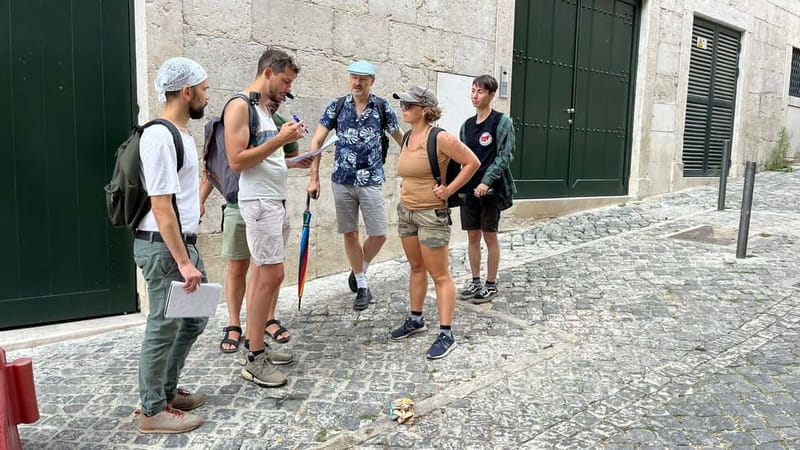
This tour starts in Príncipe Real, one of the best bases for a first taste of Lisbon. The meeting point is specific, outside number 18 on Praça/Jardim do Príncipe Real, near the children’s play corner. You find the guide and group by the Rainbow Umbrella, which is a lifesaver when Lisbon streets start looking like a maze.
What I like about beginning here is how the neighborhood sets the tone. Príncipe Real is the kind of area where you can look at a normal street scene and then, with the right context, it suddenly has layers. Alex uses that exact effect on you, pairing today’s venues with the older stories tied to the same corners of town.
Also, it is set up for real conversation. You’re not just walking and listening into a headset bubble. You can ask questions as you go, and it helps especially if you want recommendations for the kind of nightlife you’ll actually enjoy.
Other Lisbon plans worth comparing
- Lisbon: History, Stories and Lifestyle Walking Tour
★ 4.8 · 10,902 reviews - Lisbon: Daytime or Sunset Boat Cruise with History and Wine
★ 5.0 · 1,053 reviews - Explore Lisbon by Tuk Tuk: History and Viewpoints
★ 5.0 · 840 reviews
The 3.5-Hour Rhythm, 4 Km Walk, and Keeping Your Energy
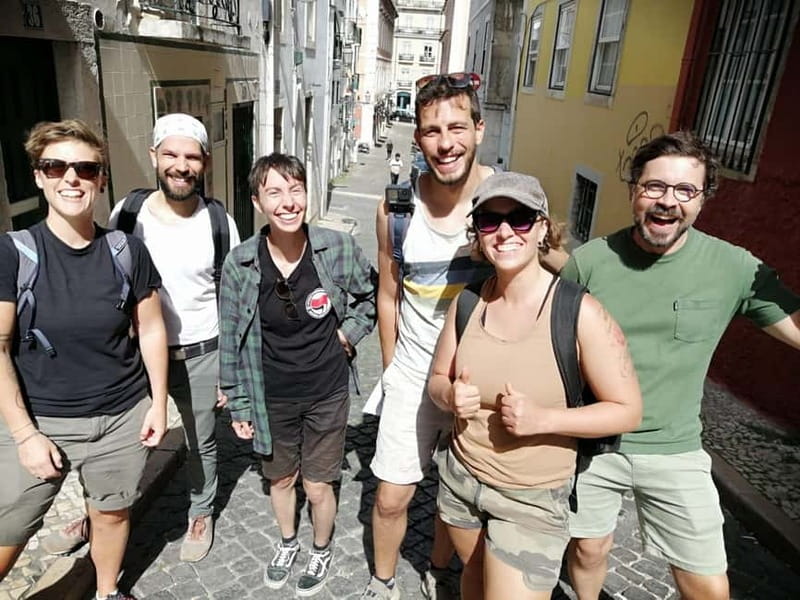
The walk is about 4 km total, with roughly 3.5 hours of touring. That is a solid half-day effort, not a quick hop. If you’re the type who likes to stop for photos constantly, you might feel it, but the tour is designed to keep moving at a human pace.
Bring comfortable shoes, and plan for weather. The guide will alter the route when needed, but tours will still run. On very hot days, the pacing matters a lot, and Alex has a habit of keeping groups in shade and taking heat seriously, so you can stay present instead of swatting flies and wishing for a bench.
The other practical thing: no luggage or large bags. So treat this like a walk with a light day pack, not a whole luggage-and-suitcase logistics exercise.
More Than a Monument Tour, It’s Lisbon Through Queer Eyes
You can do Lisbon the standard way, and you can do it the harder, smarter way. This experience does the second one.
Instead of focusing on big-name sights, you’re walking the parts of town where queer life has happened, and you’re learning how that life collided with power, religion, censorship, and social policing. Alex’s approach is story-first. You get fun anecdotes, scandals, and sometimes bizarre details, but they are anchored to real historical pressures and the way laws shaped daily life.
That matters because Lisbon is not just a backdrop. When you understand how people had to hide, signal, negotiate, or reinvent themselves, the city feels different on your next street crossing. You’ll likely notice details you would have ignored before.
And yes, you also get modern context. The tour passes by main LGBTQ scene venues and talks about how the scene works today, so your experience connects past to present rather than treating them like two separate topics.
The Historical Thread, From the Inquisition to Policing in the 1950s

One of the strongest parts of the tour is how it covers centuries without making it feel like a lecture. The stories jump time periods, but the theme stays clear: queer people in Portugal had to deal with institutions that did not treat them as normal.
You start with darker episodes, including how the Inquisition dealt with gay men. From there, the tour moves toward later eras where censorship and policing kept showing up in new forms. You’ll hear about lesbians battling 1960s censorship, and you’ll also learn about gay men dodging police pressure in the 1950s.
What I find useful is the cause-and-effect framing. You’re not only hearing what happened. You’re also getting a feel for why people had to change how they lived. In many cities, queer life goes through a cycle of visibility and crackdown. Here, you learn that pattern through specific examples tied to Portugal’s history.
It’s also where you may feel the tour is emotionally heavier than you expected. There are persecution and surveillance themes in the mix, but Alex balances that with humor, humanity, and stories of resistance.
In the same part of Portugal:
- Lisbon City Center Tour – The Unmissable Lisbon
★ 5.0 · 22,234 reviews - Lisbon: Sintra, Pena, Regaleira, Cabo da Roca & Cascais
★ 4.7 · 19,656 reviews - Lisbon Card: 24, 48, or 72-Hour Pass
★ 4.5 · 17,944 reviews - Lisbon: Jerónimos Monastery Entrance Ticket
★ 4.1 · 14,164 reviews
The Weirdly Specific Stops, Cruising Sites, Sex Work, and Life Under Rules
Lisbon has always been a city of corners, shadows, and back alleys. The tour uses that reality to explain how queer desire and survival played out in physical spaces.
You’ll hear about 17th-century cruising sites, and later on, 19th-century sex-work stories that show how queer life did not fit neatly into society’s box. The tour also includes stories about lesbian nuns, which is one of those details that can sound surprising until you realize how complex religious life could be for queer people trying to exist within strict systems.
Then you get a thread that helps it all connect: not just individual stories, but how culture and policy shaped what was possible. If you’re the type who likes context, you’ll appreciate how the guide ties queer history to broader Portuguese political and social forces.
Why Fado Is Queer, and How Art Survived Censors

One of the most interesting parts is that the tour doesn’t treat queer history as only about secret bedrooms and legal trouble. It also treats it as art, language, and performance.
You’ll learn why Fado is queer. That might sound like a debate topic, but on the tour it’s explained in a way that connects sound, emotion, and social signals. It is part of a larger point Alex makes: queer presence does not always announce itself directly. Sometimes it shows up in metaphor, style, and who gets listened to.
The tour also covers straight censors, disgraced politicians, and gay writers. Those elements keep reminding you that creative life is never isolated from the politics around it.
And then you get the more celebratory side: the tour includes stories about the first drag shows starting and about queer pop stars and writers. So you leave with a sense that this isn’t just suffering. There is also inventiveness, humor, and pride.
Josephine Baker, WWII, and a Trans Love Story From the 1800s
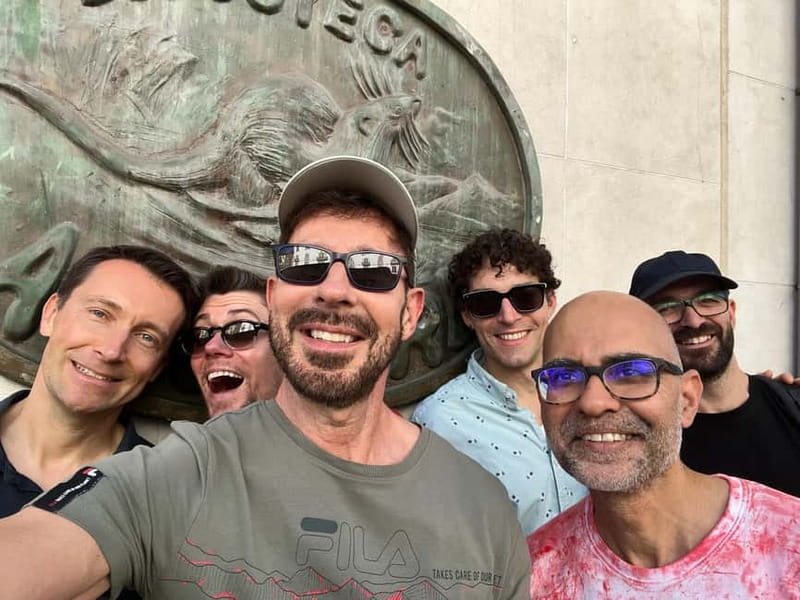
The tour throws in some genuinely unforgettable names and narratives. Josephine Baker comes up through her bisexual legend status and her WWII role as a spy. Hearing that while walking Lisbon streets is a particular kind of “wait, what?” that keeps you alert.
Another standout is a trans love story from the 1800s. It’s not the kind of detail you usually get on generic city tours, and it adds depth to the overall story. It shows how queer history in Portugal includes more than one category of identity and how those stories existed long before today’s language.
These examples matter because they keep the tour from feeling like it only covers the most commonly known eras. Instead, you get a wider, stranger, more human picture of queer life across time.
The Tour’s Modern Half: Príncipe Real and Bairro Alto Scene-Walk
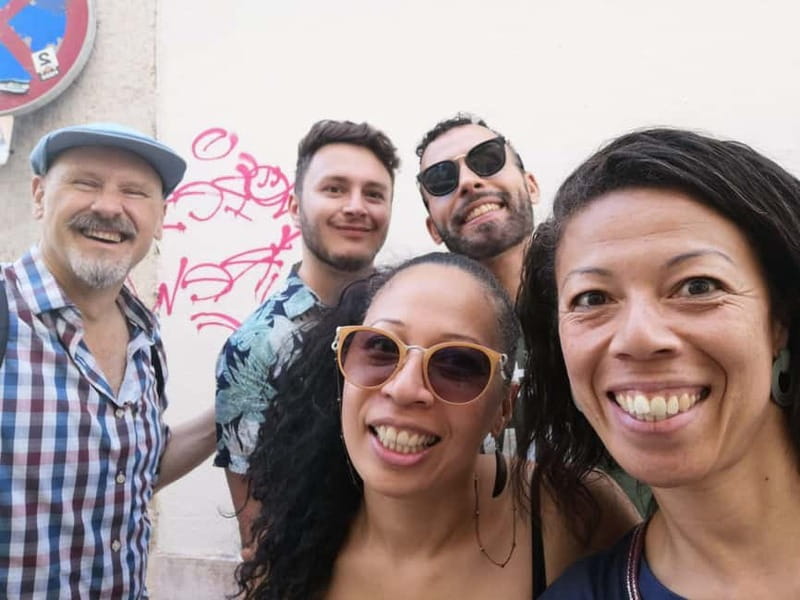
After the history threads, you shift into the modern LGBTQ scene in a practical way. The tour passes by main gay scene venues and explores today’s bars, clubs, cafes, and hangouts. The neighborhoods that anchor this part are Príncipe Real and Bairro Alto.
This modern segment is not only about where places are. Alex gives you insights on how the scene works now, including tips that help you choose the right vibe for your night out. He also points out corners of the scene venues that might fit you better, which is the difference between seeing a sign and actually knowing how to have a good time once you’re there.
From the tour style, you can expect a lot of Q and A. People often ask things like what kind of crowd a venue tends to bring, or how to plan a first night. Alex’s answers help you connect the walking tour to actual decisions you’ll make later that same day or evening.
If you’re doing Lisbon for nightlife, this is where the tour pays off fast. You’ll walk away with a mental map, and with a guide that keeps updating.
Alex’s LONG LIST Guide: The Free 150-Page Tool You’ll Actually Use
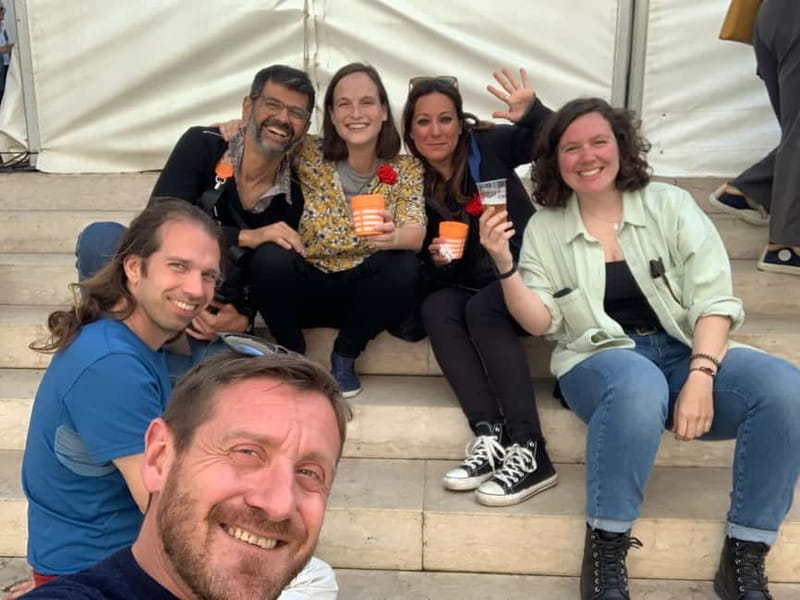
The most practical “take-home” is the free copy of Alex’s LONG LIST Guide to LGBTQ Lisbon and Portugal. It’s 150 pages, written by locals, and updated every month.
It’s designed for real travel use, not shelf decoration. It is readable on mobiles and also downloadable as a PDF. That means you can check it while waiting for a friend, between bars, or on the train without hunting for Wi-Fi or printer access.
What you get in the guide goes beyond bar listings. It includes:
- Queer Lisbon and Portugal maps
- This month’s queer events
- A gay beaches guide and how to get there
- Nightclubs, bars, saunas, and relaxed bars
- Women’s venues and events, including women’s groups and services
- Cabaret venues and queer and Trans spaces
- Community and sports or social groups
- Health services
This matters because the tour is 3.5 hours. Lisbon is more than a single walk. The guide helps you keep the tour going after you leave the Rainbow Umbrella.
Price and Value: Why $58 Can Be a Good Deal

At around $58 per person for a 3.5-hour English guided walk, you’re paying for two things: expert guidance and a usable resource you can take home.
The guidance portion is time-based, you cover about 4 km, and you get stories plus modern scene knowledge. The guide portion is value-heavy: a 150-page updated LGBTQ Lisbon and Portugal guide that you can use in real life, not just read once.
If you compare it to the cost of one nightlife outing, you’re essentially buying a “first night strategy” and a city reference tool. You also get meeting fellow travelers, which can save time if you’re traveling solo and want a way to connect early.
So yes, $58 is not pocket change. But it can feel like a smart purchase if you want your Lisbon nights to be intentional, not random.
Who This Tour Fits Best (And Who Might Skip It)
This works especially well if you are:
- A solo traveler who wants an easy way to meet people and ask questions
- Interested in queer history, including complicated or difficult topics
- Planning to explore the LGBTQ scene and want local context
- The type who learns best from storytelling tied to real street locations
It may not be ideal if you:
- Want only light entertainment and zero heavy themes, because the tour includes persecution and policing topics
- Hate walking 4 km, because the format is built around moving
- Need to bring large luggage, because luggage or large bags are not allowed
- Are traveling with kids, because it is not suitable for children under 16
Should You Book This Queer Lisbon History Tour?
I’d book it if you want more than a standard Lisbon checklist. This tour helps you connect queer history to real neighborhoods, then connects those neighborhoods to where you can go next. The mix of old scandals, political pressure, art, and modern scene tips gives you a Lisbon that feels specific to you, not generic.
If you’re on the fence, make your decision based on one question: do you want to understand the city before you party in it? If yes, this is a strong match. If you only want famous monuments and minimal walking, you’ll likely feel it’s not your kind of tour.
FAQ
How long is the Queer Lisbon History Tour?
It lasts about 3.5 hours.
How far do you walk during the tour?
The total distance is about 4 km (2.5 miles).
Where is the meeting point?
You meet in the garden square of Príncipe Real, outside number 18, Praça/Jardim do Príncipe Real, by the children’s play corner. Look for the Rainbow Umbrella. Coordinates: 38.715994, -9.149382.
What is included with the ticket price?
You get the guided tour with queer history stories, the walk through LGBTQ scene venues in Príncipe Real and Bairro Alto, meeting fellow travelers, and a free copy of Alex’s LONG LIST guide to LGBTQ Lisbon and Portugal (150 pages, mobile readable and available as a PDF).
Are food and drinks included?
No, food and drinks are not included.
What language is the tour offered in?
The tour is in English.
Is the tour suitable for children?
No. It is not suitable for children under 16 years old. It is marked 16+.
What should I bring, and can I bring luggage?
Bring comfortable shoes. Luggage or large bags are not allowed.
Just added around Lisbon
- Tomar: Knight’s Templar Castle and Convent of Christ Tour★ 4.9 · 84 reviews
- Tour Bohemian de Tuk Tuk: Bertrand, Miradouros e Estrela★ 5.0 · 24 reviews
- From Lisbon: Fátima, Nazaré and Sintra Guided Tour★ 4.7 · 155 reviews
- From Lisbon: Tomar, Batalha, Alcobaça, & Óbidos Templar Tour★ 4.9 · 47 reviews
- From Lisbon: Sintra Pena Palace Cascais 8-People Group Tour★ 4.9 · 93 reviews
- The Real Lisbon Street Art Private Guided Tour by Minivan★ 4.7 · 49 reviews
- Lisbon: The Jewish Sephardic Walking Tour★ 4.9 · 22 reviews
- From Lisbon: Tomar, Christ Convent & Almourol Castle Tour★ 5.0 · 64 reviews
Historical Tours, compared.


Douro Valley: Historical Sites, Wine Experience, Lunch & Cruise
Read our review →


Daytime or Sunset Boat Cruise with History and Wine
Read our review →
Private Tour of the Historic City in a Ford T Car
Read our review →
Browse the lists this tour appears in