
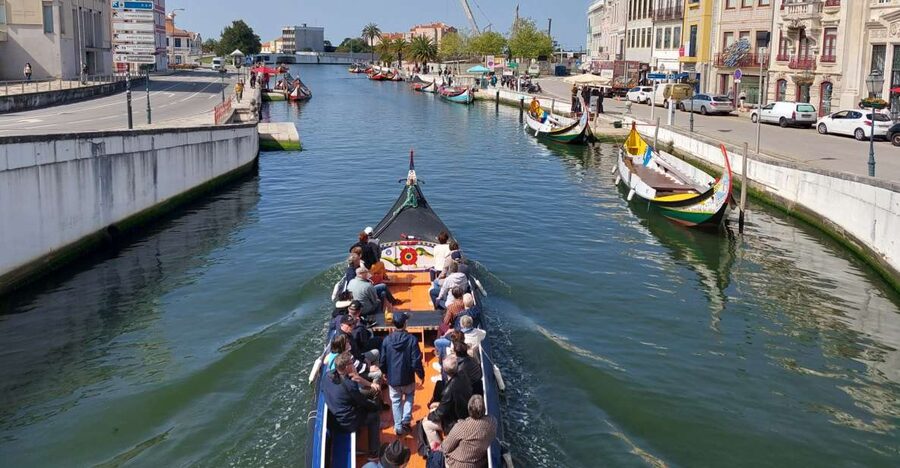
Reviewed · WALKING TOURS
Aveiro: Stories, Canals, and Tiles Guided Walking Tour
Aveiro can feel like a postcard, but the details tell the real story. This guided walking tour turns the city into a living lesson in tiles and canal life, from church interiors to saltpan views. I really like how you learn to spot lagoon boats by type, not just by looks, and how the route uses architecture like a timeline. One thing to plan for: it is a proper walking tour at an easy pace, and it is not suitable for low mobility or wheelchair users.
You start in the middle of town and finish near a local festival tradition, so you see Aveiro’s past and present in one clean loop. The best part for me is the way the guide connects places to the smells and working life around the lagoon, including salt and the Ria de Aveiro. If you hate walking in rain, this is rain or shine, so pack for weather and bring solid shoes.
In This Review
- Key highlights worth your time
- Why Aveiro makes sense on foot
- Starting at Praça da República, where the route gets its rhythm
- Rua de Coimbra to Marques de Pombal: from pavement to baroque jewels
- Azulejos you can name: from Santa Zita to Sapataria Leão
- Convents, saints, and the way Aveiro remembers itself
- Canal da Fonte Nova: ceramics, industry, and the lagoon’s logic
- Moliceiros and mercanteis: learning to recognize lagoon boats
- Beira Mar and the design eras: Art Nouveau, Art Deco, ironwork
- Saltpans and Aveiro’s power from 11th to 19th centuries
- Ovós moles and eel stew: what to taste after the walk
- Finishing at Church of São Gonçalinho and a joyful January ritual
- Price and value: $23 for 2 hours that hits the main beats
- Who this tour suits best
- Should you book this guided walk?
- FAQ
- How long is the Aveiro walking tour?
- Where does the tour meet?
- What is included in the ticket price?
- Does the tour run in bad weather?
- What languages is the guide available in?
- Is the tour suitable for kids or mobility needs?
Key highlights worth your time
- Town center first, starting at Praça da República with the Town Hall and Misericórdia church right away
- Church stops with real access, including entrance to the Church of Mercy and the Carmelite Convent Church
- Tile spotting skill, with azulejos references from early modern times to today
- Lagoon boat recognition, including moliceiros and mercanteis (and what to look for)
- Design eras on the move, Art Nouveau and Art Deco, plus iron architecture around the turn of the 19th to 20th century
- Saltpans context, tying Aveiro’s power from the 11th to the 15th century to later revival
Why Aveiro makes sense on foot
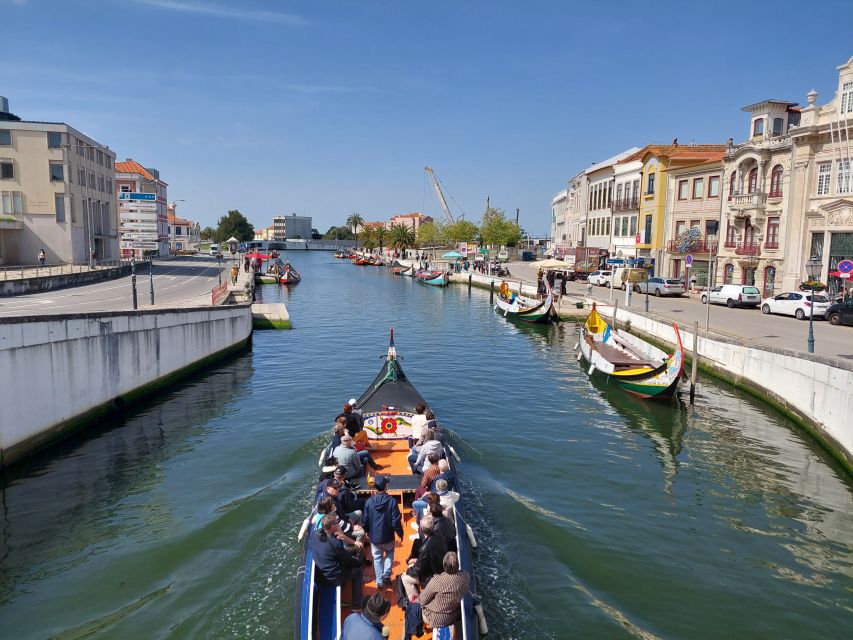
Aveiro is one of those Portuguese cities where the center is compact enough to walk, but the character is spread out in layers. You get that fast here. You’ll move from squares to convents, then to canals, then out toward the lagoon edge where the salt story takes over. That matters because Aveiro’s identity is not just buildings. It’s also work: trade, boat life, ceramics, and salt production.
A walking format also helps you notice details you would miss from a bus window. The city’s most famous visual language is azulejos, but the tiles are not isolated art. They sit on facades connected to local families, trades, and the city’s shifting fortunes. When a guide points out what you’re looking at, you start seeing patterns instead of random decoration.
If you want a hands-on feel for Aveiro’s soul, this is a smart first or mid-trip choice. It gives you a map for later wandering, and you’ll know what to look for when you pass it again.
Other Aveiro plans worth comparing
- Aveiro: Traditional Moliceiro Boat Tour
★ 4.5 · 3,443 reviews - Aveiro and Costa Nova Half Day Tour from Porto with Boat Ride
★ 4.5 · 1,522 reviews - From Porto: Aveiro, Paiva Walkways, & Suspension Bridge Tour
★ 4.9 · 1,357 reviews
Starting at Praça da República, where the route gets its rhythm
The tour begins at Praça da República, near the statue in the center of the square. Your guide will be wearing a yellow or blue card. This opening spot is practical because it anchors you in the historic civic core, and it also keeps the walking route simple.
Right near the start you’ll link together two key references: the Town Hall and the Misericórdia church. From there, the tour shifts into streets that feel local rather than touristy, including Rua de Coimbra. This is where you start learning to read the ground itself. You’ll talk about black and white calçada à portuguesa, the famous Portuguese mosaic pavement style. It may sound basic, but once you see the pattern with context, it becomes part of the city’s visual identity, not just something you step on.
One nice detail: the pacing early on is designed to let you settle. If you’re arriving after travel, you won’t feel rushed before the stories start.
Rua de Coimbra to Marques de Pombal: from pavement to baroque jewels
After Rua de Coimbra, you’ll move toward Marques de Pombal square. This is a pivot point for architecture, because the tour turns from street-level details to a more focused look at church beauty.
In Marques de Pombal square, you enter the Carmelite Convent Church. The tour frames it as a small but impressive baroque jewel. The value here is twofold. First, you get to go inside, not just glance from the outside. Second, baroque design works like storytelling, with shapes and finishes meant to guide your eye. When you walk through places like this with someone who can point out what matters, the church becomes easier to appreciate, even if you are not a dedicated architecture nerd.
If you’re short on time in Aveiro, these early interiors are the kind of “you saw it, you’ll remember it” stops that justify the tour length.
Azulejos you can name: from Santa Zita to Sapataria Leão
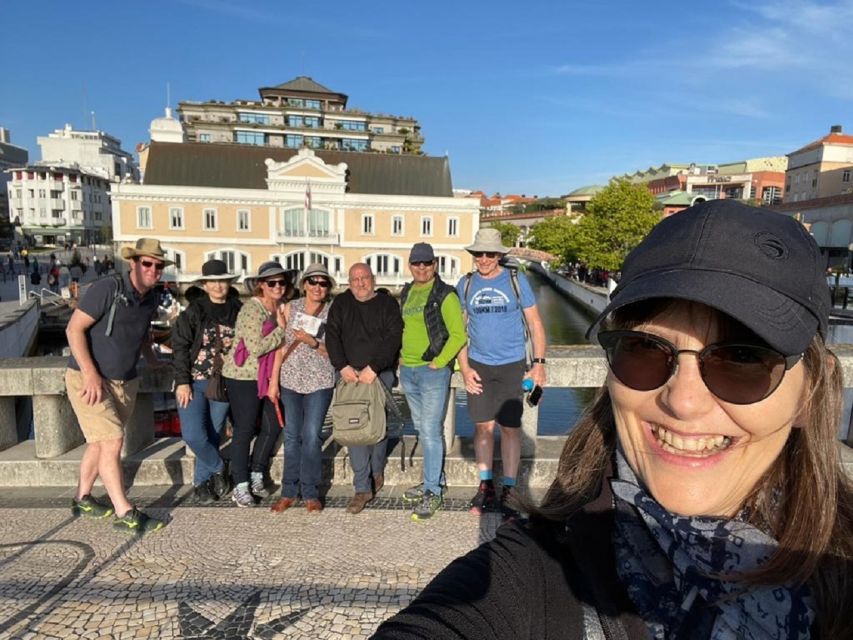
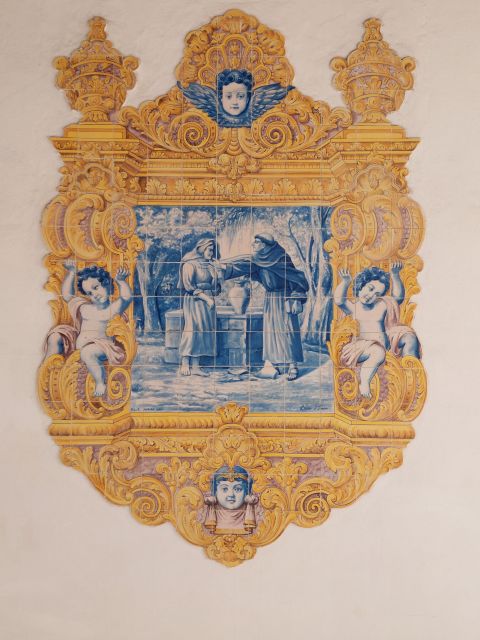
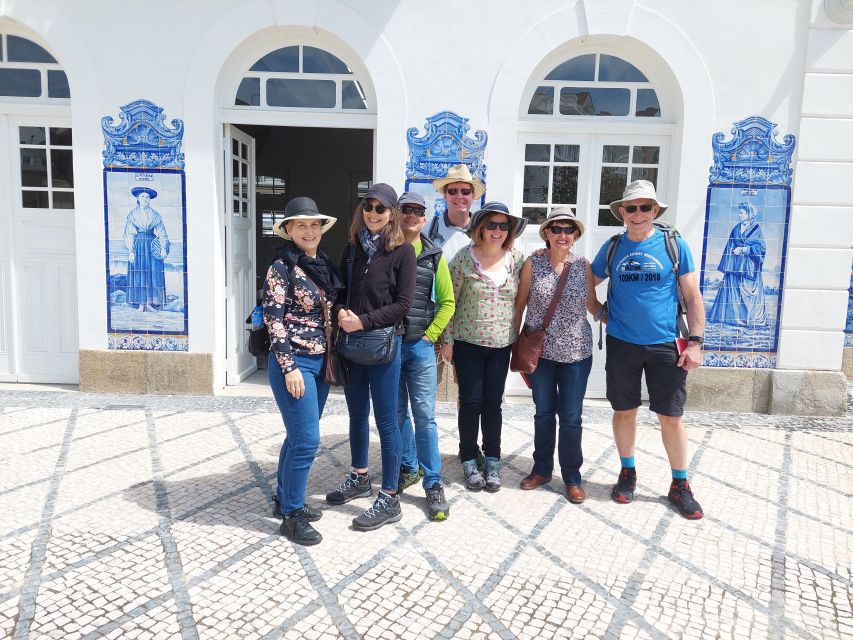
Aveiro’s tiles are often described in broad strokes, but this tour gives you specific anchor points. As you walk, you’ll see tile panels tied to local landmarks like Casa de Santa Zita and Sapataria Leão. Those are not random stops. They are ways to connect tiles to actual addresses, trades, and neighborhood identity.
The tour also zooms out. You’ll hear references to azulejos from early modern time until today. That timeline matters because it helps you stop treating tiles as one style. They change with taste, money, and cultural influence. Once you understand that, you can stand in front of a facade and read it more confidently.
Practical tip: tiles draw your eyes upward, which is great for photos. Just don’t forget to keep an eye on where you step. Historic paving can be uneven, and the tour runs on comfortable walking shoes, not flip-flops.
In the same part of Portugal:
- Aveiro: Scenic Guided Boat Tour
★ 4.4 · 1,342 reviews - Aveiro: Half-Day Tour from Porto with Optional Cruise
★ 4.4 · 1,266 reviews - Porto: Aveiro, Cruise, Costa Nova & Capela da Pedra Full Day
★ 4.6 · 1,039 reviews - Porto to Lisbon Up to 4 Stops: Aveiro, Nazare, Fatima & Obidos
★ 5.0 · 810 reviews
Convents, saints, and the way Aveiro remembers itself
As you continue, you pass the Dominican Convent of Jesus. This stop is about evoking the history of Aveiro’s patron saint, Princess Santa Joana. Then you proceed past the cathedral as the route continues toward the canal area.
These religious landmarks matter because they explain why Aveiro looks the way it does. When you hear the saint story connected to the buildings around you, the city stops being a set of pretty corners and becomes a place with a worldview. Even if you don’t follow the religious history closely, you’ll understand what shaped local identity and public space.
This part of the walk is also where the guide’s flexibility tends to show. In the feedback you’ll notice people appreciated time for questions and an easy pace. If you like to ask why a facade looks a certain way or what a symbolism detail might mean, this is the section where those questions feel natural.
Canal da Fonte Nova: ceramics, industry, and the lagoon’s logic
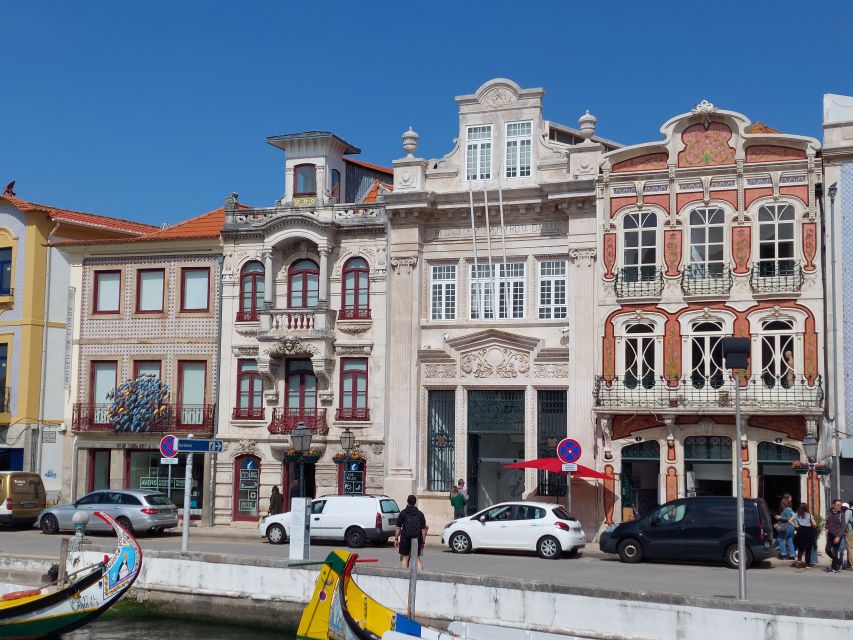
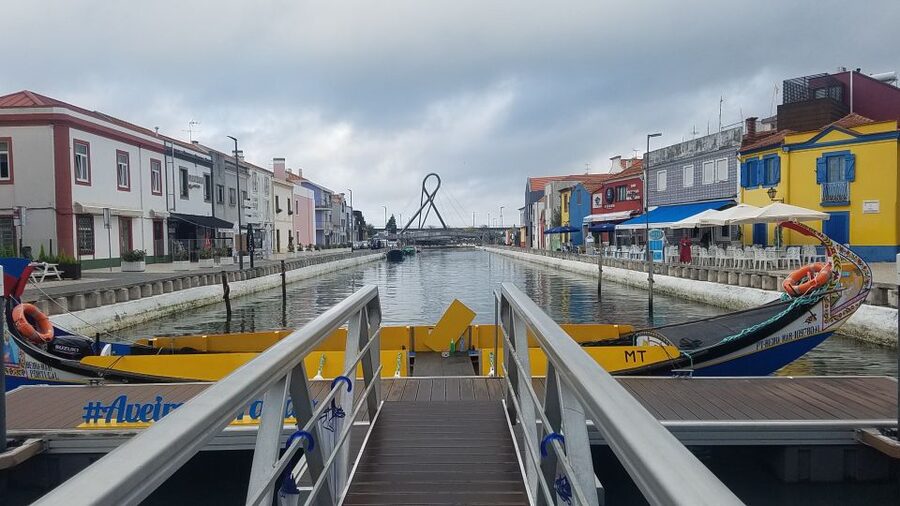
The tour then moves to Canal da Fonte Nova, which is where Aveiro’s working life becomes visible. Here you’ll hear about the canal’s genesis and utility, plus the connection to traditional lagoon boats.
This stop also includes a practical, grounded detail: you’ll see the building of one of the ceramics factories that once existed there, still standing. That matters because Aveiro’s tiles are not only a decorative tradition. They come from real manufacturing. Ceramics were tied to the city’s economy, and the factories shaped where people lived and how the lagoon supported trade and movement.
If you’re the type who enjoys “why this exists” moments, this section is a highlight. The tour doesn’t treat industry like an afterthought. It’s part of the story, and it shapes what you see next.
Moliceiros and mercanteis: learning to recognize lagoon boats
Walking along the canals, the guide explains the traditional boats of the Ria de Aveiro. You’ll be able to recognize moliceiros and mercanteis, plus you’ll get pointers on what to look for when you’re near the water later.
You might not think boat recognition is a big deal, but it changes your experience. If you only know there are boats, they blend together. When you know the types, you start noticing proportions, design cues, and how the boats fit into daily life. It makes Aveiro’s lagoon feel like a real system, not a background view.
This is also where you often feel the city’s sensory identity. The tour highlights the salt and the lagoon smell as part of the context. Even if the weather is mild, that association sticks, and you’re more likely to remember Aveiro as a place with atmosphere, not only visuals.
Beira Mar and the design eras: Art Nouveau, Art Deco, ironwork
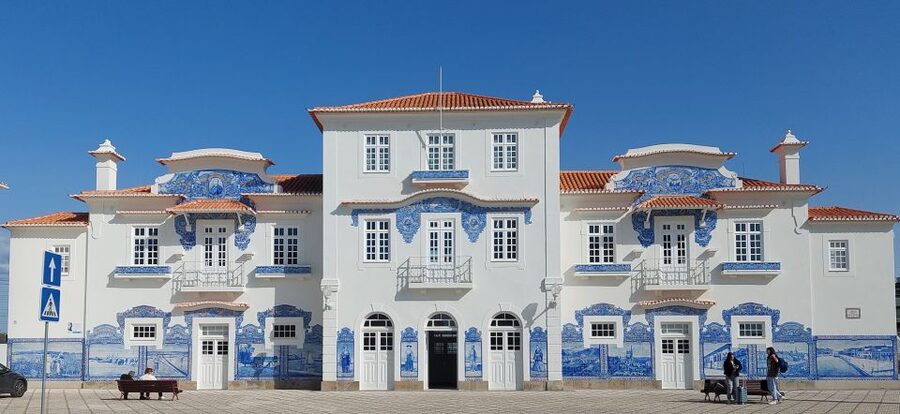
As you pass through the Beira Mar neighbourhood, tiles keep filling your eyes, but the city’s style shifts again. You’ll recognize marks of Art Nouveau and Art Deco, plus iron architecture from the turn of the 19th to 20th century.
This is one of the most fun segments if you like design. Aveiro didn’t develop in only one phase. Different waves of wealth and taste left visible fingerprints. When a guide flags those influences while you are walking past the buildings, you learn faster than you would by reading a guidebook later.
You’ll also pass the two facades of the Museum of Art Nouveau. You do not need to be a museum person to get value here. The facades alone make the point that Aveiro’s tile and architectural identity is not frozen in the past.
Saltpans and Aveiro’s power from 11th to 19th centuries
Then comes the saltpan area, where the tour talks about Aveiro’s power across centuries: strength from the 11th to the 15th century, then its crossing of the desert in the 17th and 18th centuries, and finally the revival in the 19th century.
Even if you don’t remember every century after the tour, the takeaway is clear. Salt made Aveiro matter. When salt production and trade grow, cities grow. When fortunes shift, buildings and streets still show the evidence.
This section is valuable because it explains why you should care about the landscape around the city. Saltpans are not just an interesting walk. They are a historical engine. And because this tour brings you there after the canals and boat talk, the pieces connect in your mind.
Ovós moles and eel stew: what to taste after the walk
On the way back, the guide brings in local gastronomy. You’ll hear about eel stew and traditional sweets, especially ovos moles of Aveiro.
Even though food is not included, this matters for your planning. A tour that leaves you with names and context helps you choose a meal that fits the place you’ve just learned about. If you already feel curious about what you saw, you’re more likely to eat local instead of defaulting to whatever is closest to your lodging.
And since you’ll end near a church, you’ll have time to keep the momentum after the walk, either by heading for lunch or saving sweets for later.
Finishing at Church of São Gonçalinho and a joyful January ritual
You finish at the Church of São Gonçalinho, with references to the traditional January festival. The tour describes a ritual where a hard and heavy traditional sweet is literally thrown over the heads of the faithful, a tradition full of joy.
This is a great closing note because it shows Aveiro’s cultural memory is not only carved in stone. It lives in local celebrations. Even if you are not visiting in January, you’ll leave with a clearer sense of the city’s personality.
By the time you finish, the tour’s main themes line up nicely: civic center, baroque and convent influence, tiles and ceramics, lagoon life, and salt production, then back to local tradition.
Price and value: $23 for 2 hours that hits the main beats
At $23 per person for a 2-hour guided walk, this tour is priced like a solid introduction to a specific kind of city experience: architecture plus lagoon culture. That matters because the tour includes entrances to the Church of Mercy and the Carmelite Convent Church. Those interior visits alone help justify the cost compared to a purely exterior walk.
You also get a lot of “recognition” value. The guide helps you learn how to spot moliceiros and mercanteis, and how to read what azulejos are telling you. Recognition is worth paying for, because it turns random sights into a coherent story.
If you are comparing options in Aveiro, I’d think of this as the explanation phase. Then you can decide later if you want to spend more time in any one area, including the lagoon.
Who this tour suits best
This works best if you:
- Like walking and want a structured way to see Aveiro’s highlights in one go
- Care about tiles, churches, and design styles like Art Nouveau and Art Deco
- Want a local viewpoint with time for questions, not a rushed checklist
It is not suitable for:
- Children under 10
- Wheelchair users or people with mobility impairments
- Anyone with low fitness
Also keep in mind that the tour takes place rain or shine. If you show up prepared with weather-appropriate clothing and comfortable shoes, you’ll get the full experience.
Should you book this guided walk?
Yes, I think you should book it if you want Aveiro to make sense fast. This is one of the few formats that connects azulejos, ceramics, boats, and salt production without turning the route into a long day. The guide approach also gets strong praise, especially the way Tony Walker, also referred to as Antonio, shares stories with humor and answers questions, which is exactly what you want on a short 2-hour loop.
I’d skip it only if you strongly prefer self-guided wandering or you can’t handle walking in rain. Otherwise, you’ll leave with a practical mental map of Aveiro, plus tile and boat spotting skills you can use all over town.
FAQ
How long is the Aveiro walking tour?
It lasts 2 hours.
Where does the tour meet?
Meet your guide near the statue in the center of Praça da República. The guide wears a yellow or blue card.
What is included in the ticket price?
Entrance to the Church of Mercy and entrance to the Carmelite Convent Church. Other stops are walk-through or have free entry.
Does the tour run in bad weather?
Yes. The tour takes place rain or shine.
What languages is the guide available in?
The live tour guide is available in Spanish, Portuguese, French, and English.
Is the tour suitable for kids or mobility needs?
Children under 10 are not suitable. People with mobility impairments, wheelchair users, and people with low level of fitness are not suitable.
More Walking Tours in Aveiro
- Aveiro: Walking Tour, Boat Cruise, Sweets & Church Entrance
★ 4.7 · 375 reviews - Lisbon: History, Stories and Lifestyle Walking Tour
★ 4.8 · 10,902 reviews - Best of Lisbon Small-Group Guided Walking Tour
★ 5.0 · 4,869 reviews - Lisbon: Food and Wine Small Group Walking Tour
★ 4.9 · 4,082 reviews
Just added around Aveiro
- Aveiro, Costa Nova beach and Moliceiro Boat, half-day from Coimbra★ 5.0 · 18 reviews
- From Porto: Aveiro Half-Day Tour with 1-Hour Cruise★ 4.2 · 214 reviews
- Aveiro no Coração – Passeio de barco típico em Aveiro★ 4.9 · 35 reviews
- From Porto: 516 Arouca Bridge, Paiva Walkways and Aveiro★ 4.9 · 74 reviews
- From Porto: Full-Day Trip to Coimbra & Aveiro with Boat Ride★ 4.6 · 92 reviews
- From Porto: Aveiro Boat, Paiva Suspension Bridge & Walkways★ 4.8 · 61 reviews
- From Porto: Aveiro Private Guided Day Trip★ 4.8 · 50 reviews
- From Porto: Aveiro Half Day Tour★ 4.4 · 17 reviews
Walking Tours, compared.


Best of Lisbon Small-Group Guided Walking Tour
Read our review →

Porto Walking Tour, Lello Bookshop, River Cruise and Cable Car
Read our review →
Best of Lisbon Walking Tour: Rossio, Chiado & Alfama
Read our review →
Experience Porto’s Charm: 3-Hour Guided Walking Tour
Read our review →
Enjoy a Guided Levada Walk in the Rabaçal Valley
Read our review →Browse the lists this tour appears in