
Reviewed · SETUBAL & ARRABIDA DAY TOURS
Coasteering at Portinho da Arrábida
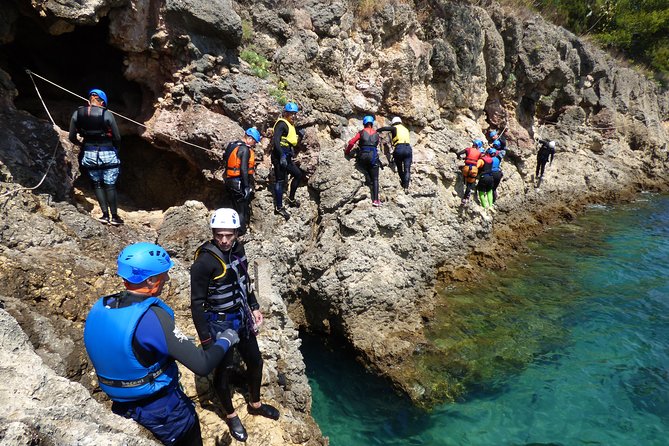
Cliff to water in a single adrenaline session. Coasteering at Portinho da Arrábida turns a short coastal outing into jumps, rock moves, slides, swims, and even a 5mm thermal costume so you can get brave without freezing. I love how the guides coach technique, so even first-timers feel in control. I also love that safety gear is included, so you can focus on the experience instead of shopping for equipment. One thing to consider: this is active and involves heights and uneven rock, so if you dislike exposure or cold water, you may want to skip.
This is a 4-hour, English-friendly group outing in Serra da Arrábida Natural Park, starting and ending at Rua do Portinho da Arrábida. The vibe is outdoor, salty, and fast-moving, and it finishes with a crowd-pleasing zip line moment.
In This Review
- Key points worth knowing before you go
- Coasteering at Portinho da Arrábida: The real hook
- What you do in 4 hours: jumps, climbing, cave time, and slides
- Forte de Santa Maria da Arrábida: the start with dramatic coast energy
- Lapa de Santa Margarida: cave visit and a different kind of challenge
- Gear check: the included thermal suit system actually helps
- Safety and guide style: confidence comes from technique, not pressure
- Who this tour fits best, and who might feel out of place
- Price and value: what you’re really paying for
- Practical logistics that affect your experience
- What to pack and how to show up ready
- My honest bottom line: should you book this coasteering tour?
- FAQ
- How long is the coasteering experience?
- Where does the tour start and end?
- What is the price?
- Is the tour offered in English?
- What gear is included?
- Are water and snacks included?
- Is lunch included?
- What activities are part of the coasteering session?
- What happens if the weather is bad?
- What is the cancellation policy?
Key points worth knowing before you go
- Flying into water style: jumps, slides, swimming, hiking, and cave time in one go
- All the key safety gear included: helmet, harness, life jacket, gloves, plus a 5mm thermal suit
- Forte and cave stops: Forte de Santa Maria da Arrábida and Lapa de Santa Margarida help break up the action
- A zip-line finale: it’s a standout moment, even for teens and beginners
- Guides teach technique, not just thrills: you’ll practice safer, lower options before higher jumps
- Smaller feel for a big activity: capped at 50 travelers, for a more guided experience
Coasteering at Portinho da Arrábida: The real hook
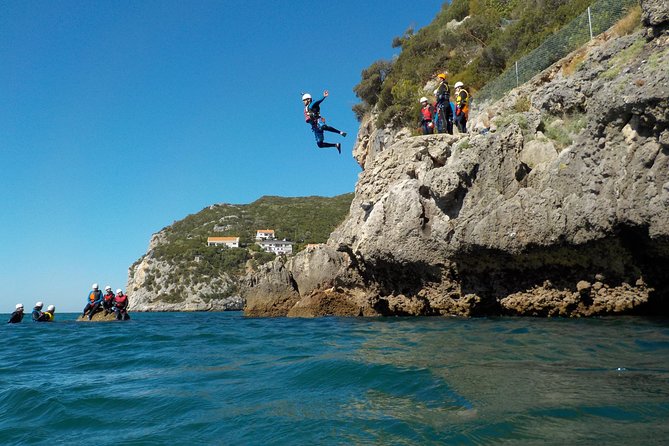
Coasteering here is the kind of adventure that feels like multiple things stitched together. In a single half-day you move from cliffside jumps to hands-on rock sections, then back to water again, with a cave visit thrown in for variety. It’s not a lazy scenic walk. You’re using your body, making small decisions, and getting splashed.
What makes Portinho da Arrábida so appealing is the setting. Serra da Arrábida Natural Park is known for dramatic coastline and that “how is this real?” feeling when you look down from where you’ll be jumping. And because the activity is structured with gear and guides, it stays in the realm of accessible fun, not extreme chaos.
You should also know it’s built around a classic coasteering promise: you get strong emotions without needing a background in climbing or swimming. The experience covers everything from jumping to rappelling-like movements, and it keeps the pacing moving so the group stays energized.
Other Setubal District plans worth comparing
- Setúbal: Dolphin Watching Tour
★ 4.8 · 801 reviews - Sesimbra: Arrábida Dolphin and Whale Watching tour with biologist
★ 5.0 · 248 reviews - Observation of Dolphins and Whales with Marine Biologist in Arrábida
★ 5.0 · 224 reviews
What you do in 4 hours: jumps, climbing, cave time, and slides
This isn’t one big jump and then waiting around. The day is a sequence of movement. The included activities list is the best clue to the shape of your time, and it usually translates into a hands-on flow: you’ll jump from the cliff into the water, tackle rock sections that require climbing support, use gear for safer rope work, and then mix in slides, a cave visit, swimming, and hiking.
Here’s why that matters to you:
- You get variety, so the trip doesn’t feel repetitive.
- You stay busy enough that nerves can turn into focus.
- You’re constantly adjusting, which is part of the thrill.
The guide approach is a big part of why this works for beginners. More than once, I hear the same theme from people who come along: the guides emphasize safety and then help you figure out technique, not just pressure you to jump. If someone is hesitant with the higher jumps, the group typically starts with lower jumps and repeats the basics until the movement feels manageable. That’s a smart way to build confidence, because it lets your brain learn what your body can actually do.
Also, the finale is a major highlight. People remember the zip line at the end, and I get why. After a lot of water and climbing, it gives you that smooth, high-energy finish that feels earned.
Forte de Santa Maria da Arrábida: the start with dramatic coast energy
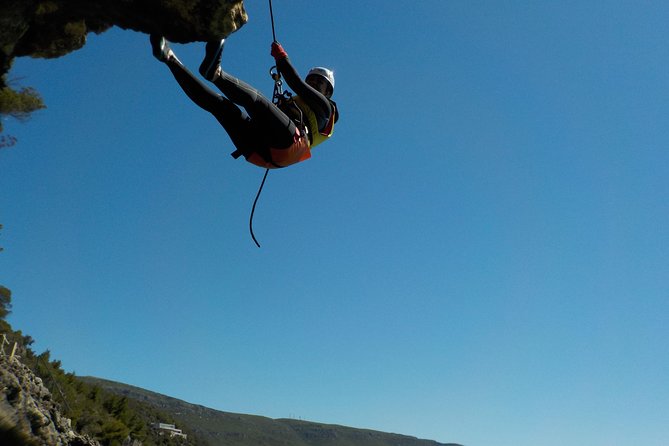
Your first stop is Forte de Santa Maria da Arrábida. Even if you only see it as a launching point, it sets the tone. Forts are built for visibility and control, and starting the coasteering session here gives you that immediate sense of place. You’re on the coast, above the water, with the natural park around you, and it clicks fast: this is not just a beach activity.
What to expect at this stage is mostly about ramping up. You’ll get kitted out with the essentials: helmet, harness, life jacket, gloves, and the included thermal costume. The goal is to make you comfortable enough to focus on the route, not on fighting your gear or worrying about how cold the water will feel.
Potential drawback to keep in mind: if you’re the type who gets overwhelmed by heights, the early cliffside environment might feel intense before you’ve warmed up. The good news is that the guides can often calibrate the session for the group’s confidence level, using lower jumps as training before moving higher.
Lapa de Santa Margarida: cave visit and a different kind of challenge
The second named stop is Lapa de Santa Margarida, and it gives the day a nice rhythm break. A cave visit changes the texture of the experience. Instead of open coastline only, you get a more enclosed section where moving carefully matters.
Even if you’re mostly here for the big water moments, the cave portion adds value in two ways:
- It breaks up the physical pattern, so you don’t just repeat jump, swim, repeat.
- It adds variety to the terrain, which can make the whole session feel more like a real exploration than a single set-piece.
The tradeoff is that cave sections tend to demand more careful body positioning. If you’re tired, you’ll want to listen closely and move with the pace the guide sets. That’s usually when the harness, helmet, and gloves really matter, because they allow you to focus on balance rather than fear.
In the same part of Portugal:
- Évora: Private walking tour with tickets to main monuments
★ 5.0 · 223 reviews - Sesimbra : Guided Kayak Tour in Arrábida Natural Park & Caves
★ 5.0 · 153 reviews - Dolphin watching in Setúbal
★ 5.0 · 146 reviews - Coasteering in the Arrabida Natural Park (Lisbon region)
★ 5.0 · 123 reviews
Gear check: the included thermal suit system actually helps
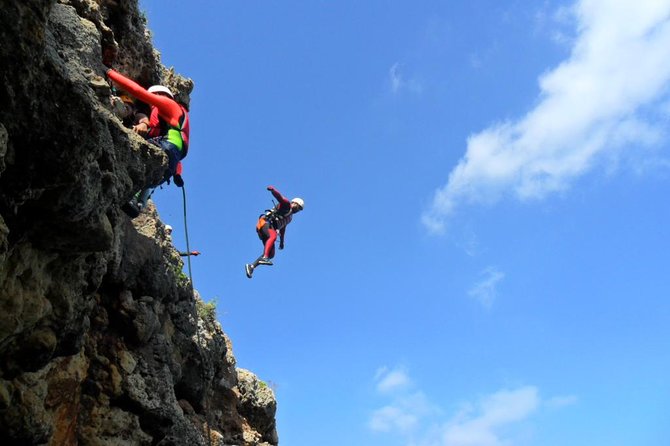
Let’s talk about the most practical included item: the 5mm thermal costume. Cold water is the silent buzzkill for many people, and 5mm matters because it can keep you moving comfortably longer. Coasteering involves time in and around water, plus some swimming. If you’re under-protected, you’ll spend energy shivering instead of enjoying.
You’re also provided:
- Helmet
- Harness
- Life jacket
- Gloves
- Water (bottled)
- Energy bars and snacks
A lot of tours sell you equipment as a footnote. Here, it’s central. The suit and safety gear are what make this feel like an accessible outdoor activity rather than a DIY adventure.
One more real-world tip: hands and feet matter in rocky terrain. Gloves help, and the helmet and life jacket keep you feeling locked in. You might still find you need to mentally commit to moving carefully through the rock sections, but the kit removes a huge chunk of worry.
Safety and guide style: confidence comes from technique, not pressure
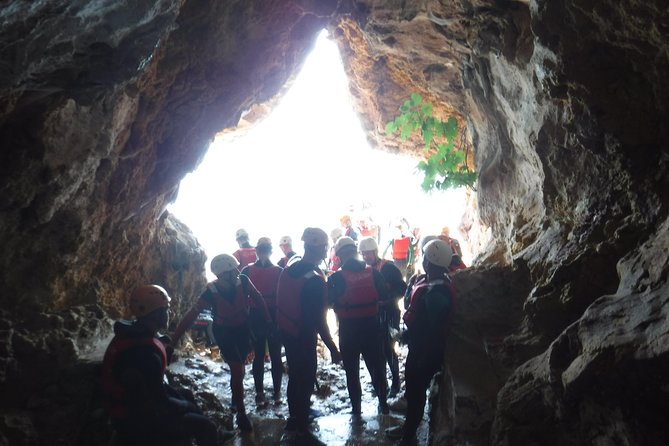
The best part of this coasteering outing is how it handles fear. Safety isn’t just a rule here, it’s the framework for building confidence. The guides are clearly tuned to different comfort levels, and that shows in how they manage hesitations.
If someone in the group hesitates at a higher jump, the guide can switch to a lower jump first. Then they’ll work on technique, and only after the movement feels right do you build up. That does two things for you as a participant:
- You learn the real mechanics of the jump, not just the idea.
- You avoid the situation where you freeze halfway through because you were pushed beyond your current comfort.
It’s also worth noting the encouraging but safety-first tone. One of the most reassuring patterns is when the guide refuses to cut corners. Encouragement is great, but it’s better when it comes with real instruction. That combination is what makes coasteering feel fun instead of scary.
Who this tour fits best, and who might feel out of place
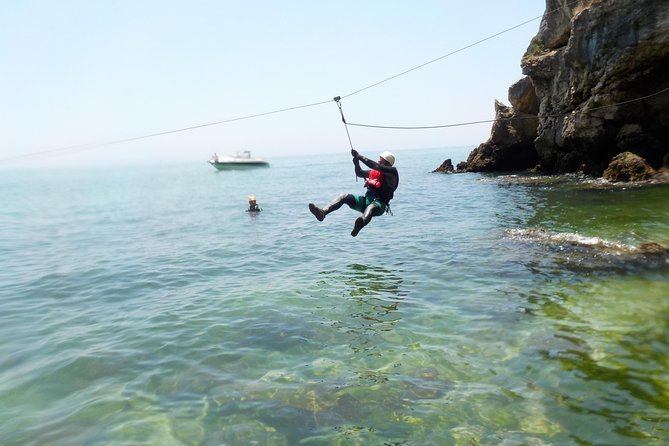
The activity says most travelers can participate, and I think that’s accurate when you look at the way the tour is guided and geared. This is not a specialized climbing expedition. It’s a structured coasteering session with safety equipment and coaching.
That said, coasteering still asks a lot from your body. You should be reasonably comfortable with:
- Climbing on rocks with guided help
- Moving at an outdoor pace for a few hours
- Being in and around cold-ish water, even with thermal protection
- Heights, especially if you’re doing jumps
Also, there may be some climbing in rocky sections. If you want zero technical movement, this may not be your best match. But if you enjoy guided adventure and don’t mind getting your hands dirty, it’s a great fit.
This is especially good for families with teens who want a shared adrenaline moment. It’s also a strong choice for couples and friend groups who like active travel with clear structure.
Price and value: what you’re really paying for
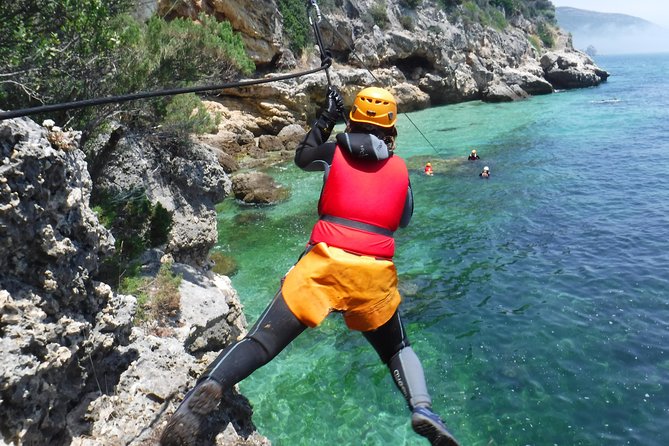
At $84.69 per person for about 4 hours, the price can look like a “sounds fun” splurge. But the value is in what comes with it.
You’re paying for:
- A guided coasteering circuit with multiple components
- Full safety gear (helmet, harness, life jacket, gloves)
- The thermal costume (5mm) so you can actually enjoy water time
- On-course sustenance: bottled water, energy bars, energy-boost snacks
In other words, you’re not just paying for access to a coastline. You’re paying for the safety system and the coaching, plus the gear that you’d otherwise have to buy or rent. And because it’s capped at 50 travelers, the activity stays in the zone of guided rather than mass-chaos.
If you’re considering doing coasteering independently, the cost may be similar once you factor in equipment and the risk. This tour makes that risk manageable and the learning curve smoother.
Practical logistics that affect your experience
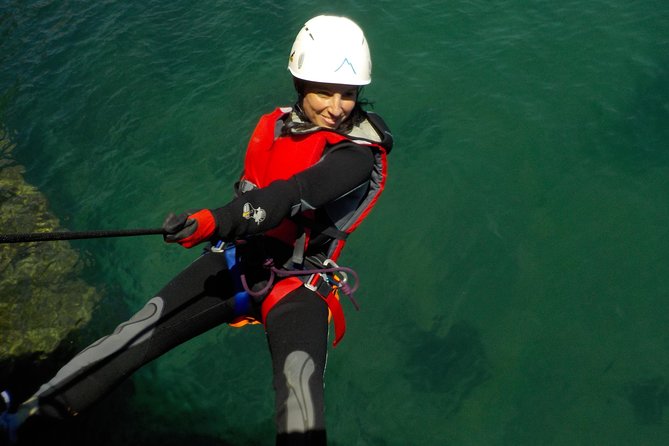
This starts and ends back at the meeting point at Rua do Portinho da Arrábida, 2925 São Lourenço, Portugal. The round-trip structure matters. You’re not spending your day transferring between scattered locations.
It’s also offered in English, so you’re not stuck guessing what comes next. The tour runs about 4 hours, which is a sweet spot. Long enough to feel like an outing with real variety. Short enough that you can still eat later and enjoy the rest of your day.
One more practical note: good weather matters. Coasteering is a weather-dependent activity. If conditions are poor, you should expect the tour to be rescheduled or refunded. Planning wise, try to keep the rest of your day flexible.
What to pack and how to show up ready
I’ll keep this practical and realistic. Coasteering is water plus rock, so your best move is to show up thinking about dryness, comfort, and readiness.
Here are the things I suggest you plan around:
- Wear whatever you’re comfortable with under the thermal suit, since the suit is included
- Bring a towel and a plan to change out of wet clothes afterward, because you will get wet
- Expect active movement. Some rock sections involve climbing, and the guides will help, but you should still be mentally ready to use your arms and legs
- If your group includes shoe rental options, arrive early enough to handle any setup time without stress. One guest noted small issues with shoe rentals and snacks, and that’s exactly the kind of thing that matters more when you’re rushed
The biggest mindset tip: treat it like coaching plus adventure. When you listen and follow instructions quickly, the jumps and rope-assisted moments turn from scary to manageable.
My honest bottom line: should you book this coasteering tour?
If you want a half-day with real variety, this is a smart choice. You get cliff jumps, rock movement support, cave time, swimming, and a zip line finale, all with the gear you need and a guide team focused on safety and technique. I also like that it’s designed for most travelers, not just hardcore adventure athletes.
You might skip it if:
- You strongly dislike heights or water exposure
- You’re not comfortable with active outdoor movement
- You need guaranteed “no cold water” comfort, because even with a 5mm suit, you are still in a coastal environment
If you do book, your best bet is to come with a flexible attitude, listen closely during technique coaching, and start with the mindset that lower jumps or safer options are part of learning. That’s how people end up having the memorable time they came for.
FAQ
How long is the coasteering experience?
It runs for about 4 hours.
Where does the tour start and end?
It starts at Rua do Portinho da Arrábida, 2925 São Lourenço, Portugal and ends back at the same meeting point.
What is the price?
The price is $84.69 per person.
Is the tour offered in English?
Yes, it is offered in English.
What gear is included?
You receive a 5mm thermal costume, helmet, harness, life jacket, and gloves.
Are water and snacks included?
Yes. Bottled water and energy bars are included, along with snacks for an energy boost.
Is lunch included?
No, lunch and dinner are not included.
What activities are part of the coasteering session?
The experience includes jumping from cliffs into the water, rock climbing, rappel, slide, cave visit, swimming, and hiking.
What happens if the weather is bad?
The experience requires good weather. If it is canceled due to poor weather, you will be offered a different date or a full refund.
What is the cancellation policy?
Free cancellation is available up to 24 hours in advance for a full refund. Canceling less than 24 hours before the start time is not refunded.
Just added around Setubal District
- Évora Walking Tour★ 5.0 · 35 reviews
- Coasteering and Speedboat, Arrábida Setúbal, Sesimbra near Lisbon★ 5.0 · 21 reviews
- Lisbon Getaway: Private Arrábida Wine & Food Tour★ 5.0 · 52 reviews
- Lisbon: Try Scuba Diving in Arrabida Marine Reserve with photos★ 5.0 · 99 reviews
- Sintra/Cascais Private Tour★ 5.0 · 22 reviews
- Underwater viewing tours along the coast of Sesimbra★ 5.0 · 35 reviews
- Arrábida Secret Beaches and Caves with Snorkeling Stop★ 5.0 · 109 reviews
- Half Day Megaliths Cromlech Tour from Evora by Archaeologists★ 5.0 · 69 reviews
Setubal & Arrabida Day Tours, compared.
Private Lisbon Arrabida Wine Tour: Food & Wines, Mountain and Sea
Read our review →
Sesimbra: Arrabida Natural Park & Caves Guided Kayaking Tour
Read our review →
Arrabida and Sesimbra Small-Group Day Trip from Lisbon with Wine Tasting
Read our review →

Private Lisbon-Arrábida Wine Tour: 3 Wineries, Coast & Heritage
Read our review →Browse the lists this tour appears in