
Reviewed · SETUBAL & ARRABIDA DAY TOURS
Évora: Private walking tour with tickets to main monuments
Évora hits you fast, then keeps rewarding you. This private walking tour is a smart way to connect the city’s big stories, from Roman leftovers to Renaissance power, without feeling like you rushed through. I like that the experience is built around major monuments plus a few quieter corners that explain why Évora matters.
Two things I especially like: you get entrance tickets included for the Cathedral and the Chapel of Bones, and you’re with a guide who can answer the nitty-gritty. In the recent feedback I reviewed, guides such as John, João, Elsa, and Paulo are repeatedly praised for making the history feel clear and relaxed, not lectured. One possible drawback to plan for is walking time and uneven stone in the old center, so comfortable shoes matter.
Key Points You Will Care About
- Tickets included for the Cathedral of Évora and the Chapel of Bones, so you skip the line anxiety for the big two
- A 2.5-hour private format, which makes it easier to ask questions and adjust pace
- You’ll see how Évora’s power shifted across eras, with stops tied to Roman, Gothic, Renaissance, and defensive-wall layers
- The route mixes famous sights with smaller, less obvious places like Pátio de São Miguel and Ruínas Fingidas
- Guides in English like John, João, Elsa, and Paulo are highlighted for pacing and answering questions clearly
In This Review
- Getting Your Bearings in Évora, Starting at Praça do Giraldo
- Praca do Giraldo to Inquisition Memorial, Plus a Craft-Forward Detour
- The Cathedral of Évora: Gothic Power With a Panoramic Payoff
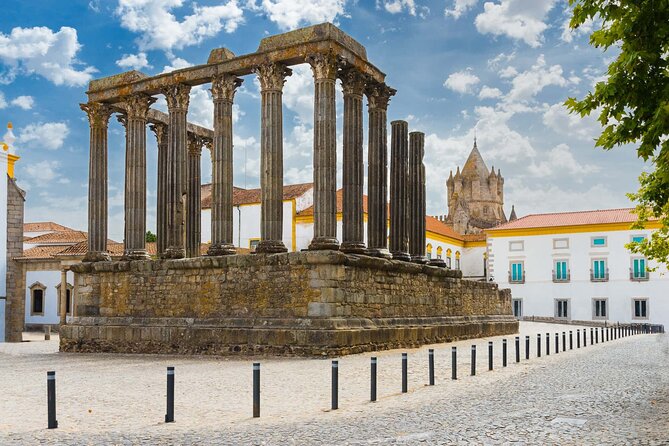
- Templo Romano de Evora (Templo de Diana): Rome Still in Your Line of Sight
- Pátio de São Miguel: A Quiet Corner That Explains the City’s Power
- The Renaissance Glow: Aqueduto da Água de Prata and Igreja da Graça
- Chapel of Bones: Macabre Art That Feels Like History, Not Horror
- Igreja de São Francisco, Palacio de Dom Manuel, and Ruínas Fingidas
- Muralhas de Évora: Roman to Medieval to the Napoleonic Era
- Aqueduto, Walls, and Views: How the Stops Work as One Story
- Price and Value: What $105.26 Gets You in Practice
- Should You Book This Évora Walking Tour?
- FAQ
- How long is the Évora private walking tour with monument tickets?
- Is this tour private or will I share it with other people?
- What monuments include entrance tickets?
- Are the other stops free to enter?
- What language is the tour offered in?
- Where does the tour start?
- What should my walking ability be like?
- Are meals included?
- Is mobile ticketing used?
Getting Your Bearings in Évora, Starting at Praça do Giraldo
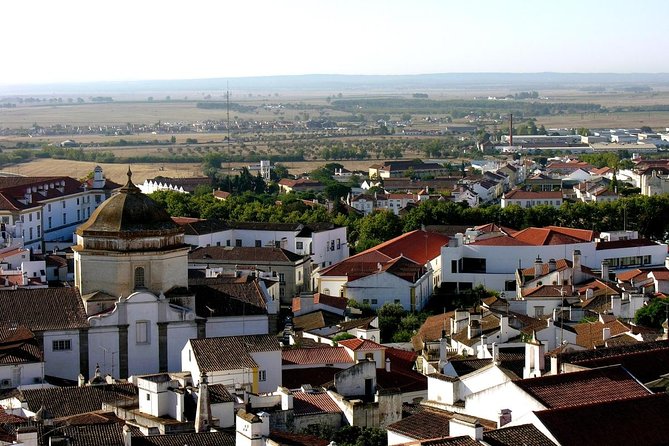
The tour begins where you should begin anyway, Praça do Giraldo. This square is the heart of Évora and a natural meeting point for the city’s public life. Since it has served as the center of economic, social, and political activity since UNESCO recognized Évora in 1986, the whole visit feels more grounded right away.
What I like here is that the guide frames Évora inside Portuguese history and even wider world history. If you enjoy history that connects dots, you’ll likely appreciate how the stops relate to bigger events instead of feeling like disconnected photos. You’ll also get an early sense of the city’s mood, lively square energy mixed with quiet side streets just steps away.
Then comes a sobering contrast. The tour briefly acknowledges Homenagem às vítimas da Inquisição em Portugal in the same general area, tying it to the long period of the Inquisition in Portugal and the brutality inflicted on victims. It’s short, but it gives context you might not pick up just wandering.
Praca do Giraldo to Inquisition Memorial, Plus a Craft-Forward Detour
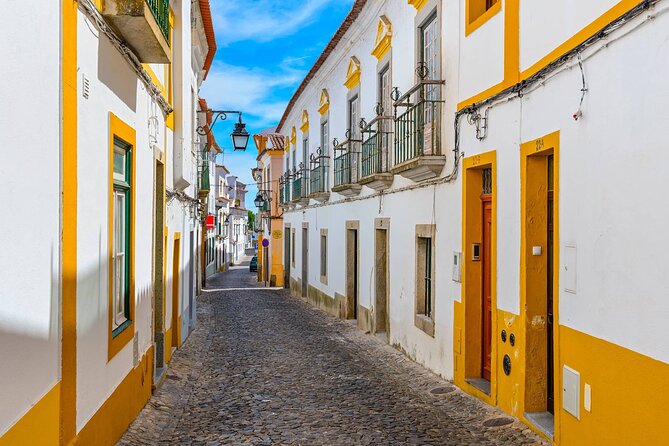
After the city center context, the walk shifts into the human scale of daily Évora. You’ll pass by a traditional commerce street where Alentejo handicrafts are common, including cork objects, pottery, painted furniture, chocalhos (rattles), and traditional cloaks called Capotes. This is a nice chance to slow down for a minute, check out materials, and imagine what life looks like when people live around these monuments year-round.
The Inquisition memorial stop is only a brief moment, but it matters. Évora isn’t only about impressive buildings. It’s also about institutions, power, and how societies handled belief and control, which makes the later religious architecture hits harder in a good way.
More Walking Tours in Evora
- Évora: Private walking tour with tickets to main monuments
★ 5.0 · 91 reviews - Évora: Private walking tour, By Local Guide
★ 5.0 · 87 reviews - Évora: Private & Flexible Walking Tour in Historic Center
★ 4.7 · 73 reviews
The Cathedral of Évora: Gothic Power With a Panoramic Payoff
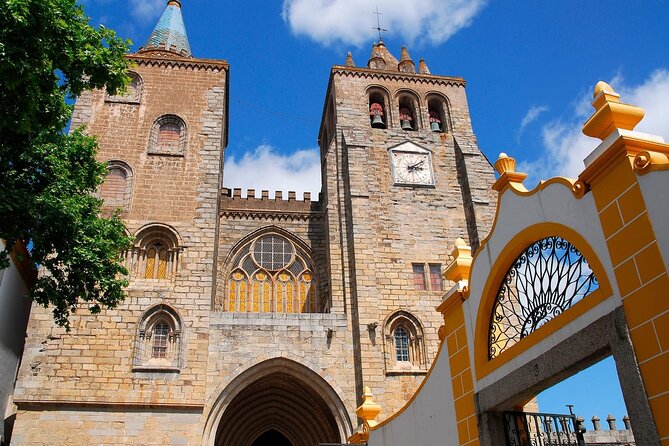
Next up is the Se Catedral de Évora, the largest Portuguese Gothic cathedral, and it’s where the tour earns its ticket inclusion. You’ll spend about 30 minutes inside with included entry, covering the cathedral itself, the cloisters, and a roof visit for panoramic city views.
This stop works well even if you are not a hardcore church person. The cathedral’s size and Gothic style make it an obvious must-see, but the included extras give you more than a quick look at the façade. Cloisters tend to slow time, and the roof view helps you understand Évora’s layout, especially how the old walls and streets shape movement through the city.
One practical consideration: plan for some stairs and indoor walking, since old cathedrals are not designed for modern, easy flow. If you prefer totally flat routes, you might find parts of the interior a bit more effort than expected.
Templo Romano de Evora (Templo de Diana): Rome Still in Your Line of Sight
The Templo Romano de Évora, also called the Templo de Diana, is short, but it lands with weight. It’s an ancient temple with about two millennia of history and is described as one of the best preserved and oldest temples of the Roman Empire. The guide also ties the monument to Évora’s ancient roots, including the idea of the city’s founding associated with Júlio César.
Why this matters on a walking tour: you’re not just seeing one era, you’re seeing how layers pile up. Coming from the cathedral, the Roman stop gives you a different kind of awe, older materials and older intent. It also makes the later Renaissance civil work feel less random, like there’s a long tradition of using stone to show authority.
This is also one of the easiest transitions in the itinerary. Admission is free for this stop, and the time is brief, about 10 minutes, so it doesn’t overload you.
Pátio de São Miguel: A Quiet Corner That Explains the City’s Power
Pátio de São Miguel is one of those places you might miss if you are just aimlessly wandering, which is exactly why it’s valuable on a guided route. The setting is described as an ancient alcove that was strongly fortified, and it was tied to the city governor and royal presence when kings visited Évora.
What I like about this stop is that it’s not only aesthetic. The guide connects the location to orders of knights and a chain of political consequences, including the origin of the religious and military order that later became linked to the Order of Avis. That order is tied to the start of the second dynasty of Portuguese kings, so you’re basically standing in a place where power was literally organized.
It’s about 10 minutes, and admission is free, so it’s a low-cost, high-meaning stop.
Other Evora plans worth comparing
- Évora and Megaliths Full-Day Tour from Lisbon
★ 4.7 · 456 reviews - From Lisbon: Évora and Monsaraz with Regional Wine Tasting
★ 4.7 · 345 reviews - Marble Tour in Vila Viçosa
★ 5.0 · 308 reviews - Lisbon: Évora (w/ Cathedral & Bones), Cartuxa & Cork Factory
★ 4.7 · 97 reviews
The Renaissance Glow: Aqueduto da Água de Prata and Igreja da Graça
The tour’s Renaissance highlights come through best at two points: Aqueduto da Água de Prata and Igreja da Graça. First is the Aqueduto da Água de Prata, open since 1537, with an extension described as 18 km. It’s one of Évora’s most iconic Renaissance civil works, and the arches also blend with houses built between them, which makes the monument feel part of the city instead of isolated off to the side.
Right after that tone-setting, you also get Igreja da Graça, which represents Portuguese Renaissance architecture with Mannerist influence. There’s a specific local story linked to the facade, including the famous boys of Graça. The guide’s job here is to connect the design details to meaning, so you look longer than you would alone.
There is also a fountain stop built into the flow that shows another angle of Mannerism. Inaugurated in 1556, it’s tied to Cardinal D. Henrique, described as a major patron of Évora and the last king of the Avis dynasty. Even if you just catch a quick look, the guide gives you the why, which helps these works stick in your memory.
If you like architecture and want more than postcard-level sightseeing, this portion is where the tour shines.
Chapel of Bones: Macabre Art That Feels Like History, Not Horror
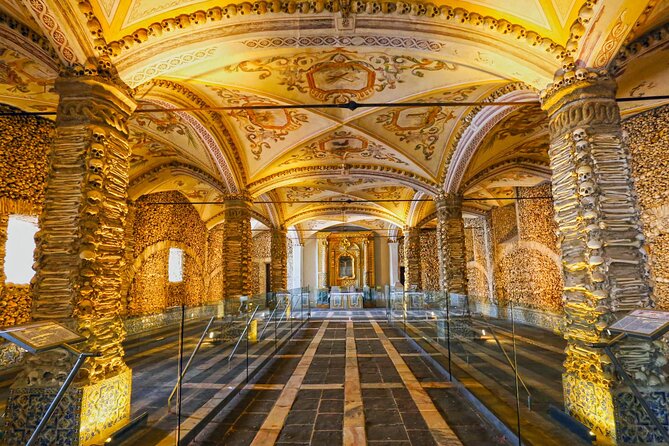
The Chapel of Bones is the stop people usually talk about, and it comes with included tickets and about 30 minutes inside. The famous message you’ll see is an invitation that is macabre by design, and the walls are covered with real human bones from thousands of people who lived in Évora.
Here’s the balanced way to think about it: it can sound creepy before you go, but on this tour it’s framed through stories and meaning. The key value is that the monument is presented as a cultural artifact, not just shock value. The guide shares secrets and legends, so you’re not left staring at bones without context.
Plan for a mentally heavy moment. Even if you are comfortable with the idea, this is still a 17th-century reminder of mortality tied to real local lives. About 30 minutes is enough to get it without overstaying.
Igreja de São Francisco, Palacio de Dom Manuel, and Ruínas Fingidas
After the Chapel of Bones, the tour shifts to other religious and royal architecture, keeping the tone moving through time.
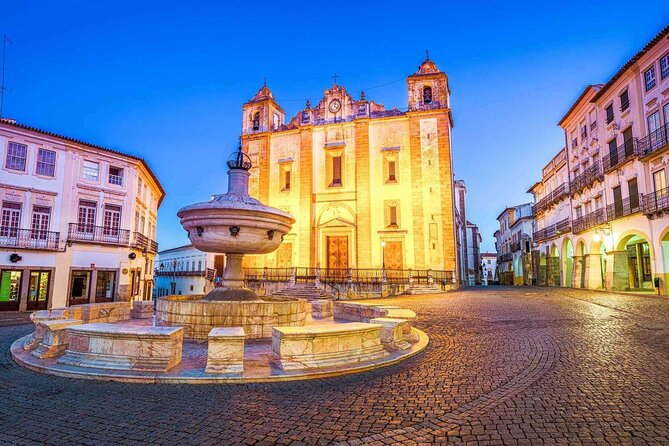
Igreja de São Francisco is described as the golden convent from the 16th century, built on an older Franciscan convent from the 14th century. It’s notable as an innovative architectural work and was connected to royal weddings and baptisms that changed the course of Portuguese and wider history. That’s a lot for a 10-minute stop, but the point is that the guide helps you recognize why the church mattered beyond aesthetics.
Then you get to Palacio de Dom Manuel, where only the Ladies’ Gallery remains. It is described as possibly the most beautiful and romantic part of the 16th-century complex tied to the golden convent. This is another short stop, about 5 minutes, but it gives you a sense of royal life, not just religious life.
Finally, Ruínas Fingidas is a quick 5-minute pause that is almost like a stage set. It is described as a romantic arrangement with ruins of a palace from the 16th century, associated with romanticism at the end of the 19th century. The guide encourages you to ask for a picture here, which is a fun way to break the density of the history stops.
Muralhas de Évora: Roman to Medieval to the Napoleonic Era
The tour passes by Évora’s defensive walls to show how the city protected itself across many waves of control. The wall system is described as layered, starting with Roman walls from the 3rd and 4th centuries, then used by later civilizations including Visigoths and Muslims between the 8th and 12th centuries. You also see medieval walls from the 14th century, then bastioned structures from the 17th century, and reinforcement in the early 19th century in response to French troops during the Napoleonic invasions.
This part is easy to overlook if you are only focused on churches and palaces. But if you care about why cities look the way they do, the walls explain a lot. They shape where people built, where streets had to curve, and why certain neighborhoods feel enclosed.
On a walking tour, this is usually more about observation than deep explanation. Still, it’s exactly the kind of context that helps you understand what you’re seeing as you go.
Aqueduto, Walls, and Views: How the Stops Work as One Story
One reason this tour feels efficient is that it keeps linking art and architecture to real power. Start at a public square. Add religious meaning. Add ancient Roman survival. Then show Renaissance civil engineering and the urban pride of leaders like Cardinal D. Henrique. Finish by showing how walls defended the city through centuries.
The Cathedral and Chapel of Bones are the anchors with included tickets. But the other stops are what make the visit feel like a guided argument, Évora as a place where politics, faith, and engineering all left physical fingerprints.
Also, the pacing is built for a walking visit that feels complete without dragging. The total time is about 2 hours 30 minutes, and it’s designed for a moderate physical fitness level, which is a fair match for most people who can handle uneven old streets.
Price and Value: What $105.26 Gets You in Practice
At $105.26 per person for roughly 2.5 hours, the value depends on what you want from Évora. If you only need one or two “top sights,” it might feel pricey. If you want context and a smooth route where tickets are handled and questions are welcome, it starts making a lot more sense.
Here’s the practical math: entry tickets are included for the Cathedral and the Chapel of Bones. Those two stops are major time-and-planning targets in Évora. Everything else in the walk is listed as free admission, which keeps your cost contained while still giving you a full sweep of eras.
The tour being private also changes the equation. You are not competing with strangers for hearing time, and you can ask follow-ups without feeling like you’re slowing down a larger group. Recent feedback also highlights that guides often tailor the tour and give recommendations, which can make the money feel less like payment for walking and more like payment for understanding.
One more detail: the tour is offered in English, uses mobile tickets, and is described as near public transportation. That combination is helpful if you are in Évora for a short stay and want a reliable plan.
Should You Book This Évora Walking Tour?
Book it if you want the best of Évora in one focused 2.5-hour loop, with tickets handled for the Cathedral and the Chapel of Bones. This tour is especially good for first-timers who want the city’s timeline explained clearly, and for anyone who likes architecture and history connected to the meaning of details.
Skip it or consider another option if you need long, slow exploring with lots of free time for browsing shops and lingering in one place. Some stops are intentionally brief, and the route is designed as a structured overview.
If you do book, go in with two small strategies: wear comfortable shoes, and come prepared to ask questions. With a guide like João, John, Elsa, or Paulo highlighted in feedback, you’ll likely get more out of the stones than you expected.
FAQ
How long is the Évora private walking tour with monument tickets?
It runs about 2 hours 30 minutes.
Is this tour private or will I share it with other people?
It is a private tour, so only your group participates.
What monuments include entrance tickets?
Entrance tickets are included for the Chapel of Bones and the Cathedral of Évora.
Are the other stops free to enter?
The tour lists several stops as free admission.
What language is the tour offered in?
The tour is offered in English.
Where does the tour start?
Meet at Praça do Giraldo 7, 7000-508 Évora, Portugal (Giraldo Square Fountain). The tour ends back at the meeting point.
What should my walking ability be like?
The tour is listed for travelers with moderate physical fitness.
Are meals included?
No, meals are not included.
Is mobile ticketing used?
Yes, the tour includes a mobile ticket.
Just added around Evora
- Monsaraz and Wine guided tour from Évora★ 4.5 · 38 reviews
- Lisbon: Évora (w/ Cathedral & Bones), Cartuxa & Cork Factory★ 4.7 · 97 reviews
- Golden Era of Évora walking & the portuguese wine tasting.★ 4.3 · 19 reviews
- From Lisbon: Évora Wine & Heritage Tour★ 4.1 · 93 reviews
- From Lisboa: Evora and Monsaraz Full-Day Tour★ 5.0 · 22 reviews
- From Lisbon: Évora + Chapel of Bones + Monsaraz + Alentejo Wines★ 5.0 · 73 reviews
- From Lisbon: Évora, Chapel of Bones & Alentejo Wine Tour★ 4.5 · 20 reviews
- Évora: Tales and Legends Guided Walking Tour★ 4.7 · 37 reviews
Setubal & Arrabida Day Tours, compared.

Private Lisbon Arrabida Wine Tour: Food & Wines, Mountain and Sea
Read our review →

Sesimbra: Arrabida Natural Park & Caves Guided Kayaking Tour
Read our review →


Sesimbra: Ribeiro Cavalo Beach, Caves, & Arrábida Kayak Tour
Read our review →Browse the lists this tour appears in