
Reviewed · ALFAMA & OLD TOWN WALKS
Discover Bairro Alto’s Hidden Gems and Stunning Viewpoints
Lisbon rewards you for walking. This Bairro Alto tour ties together poetry, plague-era planning, and grand views, all on one steady route. I especially like the stop at Rossio Train Station, with its Neo-Manueline style that makes you look twice, and the way the guide explains why Luís de Camões still matters today. One thing to keep in mind is that you will be doing a fair amount of uphill walking, so comfy shoes really help.
You also end in a viewpoint area, not just back at a random street corner. The tour is paced for a comfortable 2 hours 30 minutes, with free time at each key location and a small group size (up to 50). The main drawback is that the route is mostly outdoors, so wind and sun can affect your comfort, especially near the viewpoints.
In This Review
- Key highlights you will actually feel
- Starting at Praça Dom Pedro IV, you get Lisbon’s rhythm fast
- Rossio Train Station: the Neo-Manueline face you will photograph
- Praça Luís de Camões: turning a name into a story
- Bairro Alto: how plague, walls, and a relic shaped the neighborhood
- Largo do Carmo and the Carmelite church: victory with a vow
- Price and value for a 2.5-hour Bairro Alto walking tour
- What to wear and how to get the most from the viewpoint finish
- Should you book this Bairro Alto viewpoints tour?
- FAQ
- How long is the Bairro Alto tour?
- Where does the tour start and end?
- What is included in the price?
- Is the tour in English?
- Is there an admission fee for the stops?
- Is Santa Justa elevator included?
- What group size should I expect?
- Can I cancel for a full refund?
Key highlights you will actually feel
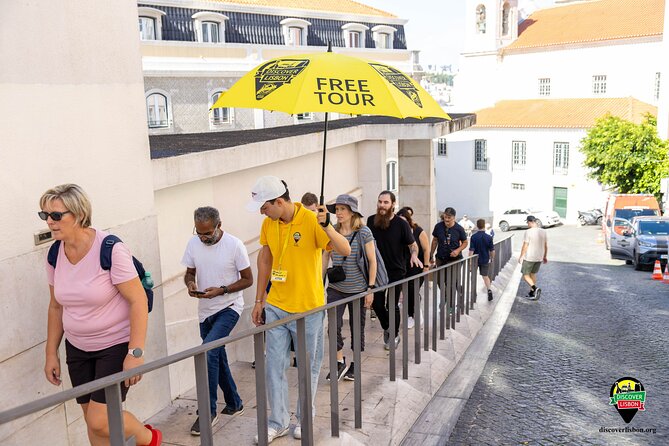
- Neo-Manueline façade at Estação do Rossio: intertwined horseshoe portals and a station that looks more like a temple than a ticket hall
- Luís de Camões at Praça Luís de Camões: the poet behind Os Lusíadas and the idea of the language of Camões
- Bairro Alto’s layered streets: plague cemetery history, Saint Roque, and how the city reshaped itself after the discoveries era
- Largo do Carmo and the Carmelite convent: Nuno Álvares Pereira’s vow, victory at Aljubarrota, and a church with serious backstory
- Tour ends at Miradouro de Santa Catarina: you finish where the views belong, not where the tour stops
Starting at Praça Dom Pedro IV, you get Lisbon’s rhythm fast
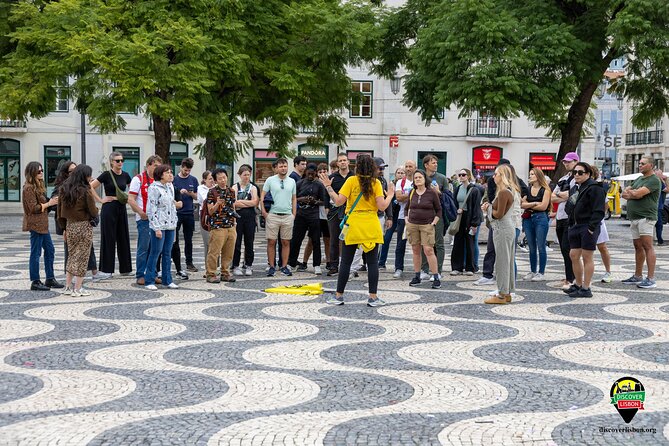
The tour kicks off at Praça Dom Pedro IV, also known as Rossio Square. It is a great place to begin because you can quickly sense the mix of old Lisbon and everyday life, with people heading to work, errands, and trains.
From here, you head toward the Bairro Alto area, which matters because the neighborhood is all about elevation and perspective. As you move, the guide helps you connect what you see with what Lisbon became after major turning points, including earthquakes and rebuilding.
What I like: you are not just “doing sights.” You are learning how Lisbon grew, moved, and re-sorted its neighborhoods over time.
More old-town walks in Lisbon:
- Alfama Tour in Lisbon Old Town
★ 5.0 · 4,936 reviews - Private Lisbon Sightseeing Tuk-Tuk Tour: Alfama, Belém & More
★ 5.0 · 4,277 reviews - Lisbon: Hills, Alfama, and Mouraria Tour by Electric Bike
★ 4.8 · 3,438 reviews
Rossio Train Station: the Neo-Manueline face you will photograph
Next comes Estação do Rossio, a station commissioned by the Portuguese Royal Railway Company and designed by architect José Luís Monteiro (work dated 1886 to 1887, completed in 1890). Even before you go into any details, the exterior grabs your attention.
The station is a strong example of Neo-Manueline architecture, a Romantic recreation of the exuberant Manueline style from early 16th-century Portugal. In other words, this is Lisbon saying, we can do the dramatic, and we can do it in stone.
The entrances are especially striking: you will notice two intertwined horseshoe portals at the entrance, with “Central Station” signage. It is not just pretty. The guide points out how the façade feels more like a temple than a normal train station, and that tells you something about what Lisbon valued when this station was built.
If you are a design person, this is a highlight you will not forget. Practical note: this stop is outdoors and close to traffic, so watch your footing and keep your phone or camera secured while crossing.
Praça Luís de Camões: turning a name into a story
At Praça Luís de Camões, you shift from architecture to literature and language. This square is dedicated to Portugal’s national poet, Luís de Camões, author of the epic poem Os Lusíadas, which describes Vasco da Gama’s sea route to India.
The guide also ties Camões to a personal life detail that makes the statue feel less like a symbol and more like a human story. You learn that Camões is said to have lost one eye in a battle in Ceuta, and the influence of Os Lusíadas is strong enough that Portuguese is sometimes referred to as the language of Camões.
Why this stop is valuable: it is easy to wander through Lisbon and see plaques, but this kind of explanation gives you a quick mental map. Once you understand who Camões was and why his work mattered, the city reads differently as you pass other references.
Small consideration: if you prefer purely visual stops, you may find this one more talk-heavy than photo-heavy. That said, it is the kind of context that pays off later when you see Lisbon’s love for language and storytelling.
Bairro Alto: how plague, walls, and a relic shaped the neighborhood
Now you enter the heart of the Bairro Alto story, and this is where the tour earns its keep. The neighborhood was shaped by decisions made in very different eras, especially around the late 15th century when Lisbon drew people from many places due to Portugal’s discovery period.
The guide explains that the city needed to expand its center. The area you know today as Camões Square connects to earlier city planning, including older city walls such as the Fernandine wall and gates like the door of Santa Catarina. Then came the big upheavals, including destruction and rebuilding after the earthquake, which is why today you see churches such as Encarnação and Loreto in places that once related to earlier urban edges.
One of the most memorable layers is the cemetery for victims of the black plague located up on the hill. This is not “mood history.” It explains how people moved, where they felt safe, and why certain institutions drew them in.
Here is another detail that makes the neighborhood feel real: in 1506, King Manuel I requested a relic of Saint Roque from Venice and placed it in a hermitage near that cemetery. As the city’s population grew and plague arrived, the less fortunate and those who were sick ended up moving closer to the church. An urban plan followed to handle this shift, so the area became organized around need, not just wealth.
What you will notice while walking: streets here feel like they make sense only after someone explains the “why.” Once you hear the wall and plague story, your eye starts picking up the logic behind the layout.
Possible drawback: because this segment focuses on history and planning, you may feel less “free roaming” than you would on a self-guided walk. The tradeoff is that you leave with a coherent story instead of a list of landmarks.
Other Lisbon plans worth comparing
- Lisbon City Center Tour – The Unmissable Lisbon
★ 5.0 · 22,234 reviews - Lisbon: Sintra, Pena, Regaleira, Cabo da Roca & Cascais
★ 4.7 · 19,656 reviews - Lisbon Card: 24, 48, or 72-Hour Pass
★ 4.5 · 17,944 reviews - Lisbon: Jerónimos Monastery Entrance Ticket
★ 4.1 · 14,164 reviews
Largo do Carmo and the Carmelite church: victory with a vow
The tour’s final major stop is Largo do Carmo, tied to the Carmelite church and convent built in 1389. The backstory starts with Nuno Álvares Pereira, a general who helped King John repel Castilian troops.
According to the story you hear on the tour, Pereira vowed to build what he called the world’s most beautiful church if he defeated the Castilians at the Battle of Aljubarrota in 1385. The Portuguese won, and he kept his word by funding the construction of the Carmelite church and convent.
After construction completed in 1423, Pereira joined the Carmelite order and spent the rest of his life in the convent. So this stop is not just about a building. It is about faith, politics, and a vow turning into stone and ritual space.
You will spend a shorter amount of time here than at some other stops, but it is enough to understand the “why.” And since the tour ends at Miradouro de Santa Catarina, this is a good emotional landing point, moving from story to views.
Tip for your photos: go slow around the church area, then look up for angles that show the surrounding hills and streets. The viewpoint payoff at the end feels better when you have a few frames taken along the way.
Price and value for a 2.5-hour Bairro Alto walking tour
The price listed is $3.61 per person, and that number is so low it feels almost unreal for a guided experience. The key is what your money is really buying: a local expert, a dedicated guide, and structured context that connects multiple neighborhood layers in just about 2 hours 30 minutes.
Most of the listed major stops have admission ticket free, including Rossio Train Station, the Camões square area, Bairro Alto, and Largo do Carmo. That means you are paying primarily for the human explanations, not venue fees.
There are also practical perks: you get a mobile ticket, the tour runs in English, and it is offered in a way that is usually booked about 5 days in advance on average. The group size cap of 50 travelers also helps keep the tour from feeling like a moving festival line.
Two budget notes to plan for:
- The tour does not include a guide contribution, often expected at 10 to 20 euros.
- Entry to Santa Justa elevator is not included, so if you want to add it, you will need a separate plan.
If you like value, this is the type of tour that makes sense because Lisbon’s most interesting learning often comes from a good guide pairing with good walking routes.
What to wear and how to get the most from the viewpoint finish
This tour is listed as requiring moderate physical fitness. In real terms, you should expect hills and uneven sidewalks in Lisbon, especially when moving toward Bairro Alto and then to a miradouro area.
Wear shoes you can walk in for a couple hours, and plan for sun or wind since it is mostly outdoors. Bring water if you run warm. Also, you will want enough battery for photos, because the route sets you up for a viewpoint ending at Miradouro de Santa Catarina.
If you are traveling with a service animal, service animals are allowed, and the tour is near public transportation. That matters because Lisbon can make you change plans quickly, and you want a tour that fits the city, not one that forces extra hassle.
Should you book this Bairro Alto viewpoints tour?
Book it if you want a Lisbon walk that explains the city’s logic. You get architecture at Rossio Station, literary grounding at Praça Luís de Camões, and neighborhood history in Bairro Alto that connects walls, plague, and a relic to how streets developed. The finish at Miradouro de Santa Catarina is a strong closer, especially if you like your history with a view.
Skip it if you want minimal talking and purely landmark hopping. This is a guided story walk, and the best parts are the connections the guide makes. If you are short on time but still want a meaningful slice of central Lisbon, this route is a smart use of your half day.
FAQ
How long is the Bairro Alto tour?
It lasts about 2 hours 30 minutes.
Where does the tour start and end?
It starts at Praça Dom Pedro IV, 1100-581 Lisboa, Portugal and ends at Miradouro de Santa Catarina, 1200-262 Lisboa, Portugal.
What is included in the price?
You get a local expert and dedicated guide, insights into Portuguese culture and history, and free admission at the main stops. There are also discounts for booking other experiences for the rest of the day and night in Lisbon.
Is the tour in English?
Yes, the tour is offered in English.
Is there an admission fee for the stops?
The stops listed are marked as admission ticket free, including Rossio Train Station, Praça Luís de Camões, and Largo do Carmo.
Is Santa Justa elevator included?
No, entry to the Santa Justa elevator is not included.
What group size should I expect?
The maximum group size is 50 travelers.
Can I cancel for a full refund?
Yes. You can cancel up to 24 hours in advance for a full refund, and free cancellation is available.
Just added around Lisbon
- Morning Sailing Tour in Tagus River from Lisbon★ 5.0 · 68 reviews
- Private Half Day – The Majestic Pena Palace & Sintra★ 5.0 · 90 reviews
- Lisbon Private 3 hours tour★ 4.5 · 33 reviews
- PRIVATE Unforgettable Full Day Tour to Sintra from Lisbon★ 5.0 · 236 reviews
- Lisbon: Catamaran Luxury Sunset and Wine Tour★ 5.0 · 119 reviews
- Lisbon’s authentic Food and Wine tour with a Winemaker★ 5.0 · 67 reviews
- Sesimbra Wild Beach Tour from Lisbon★ 5.0 · 57 reviews
- Private Jeep Tour from Lisbon – Arrábida, Sesimbra & Beach Picnic★ 5.0 · 48 reviews
Alfama & Old Town Walks, compared.
Private Lisbon Sightseeing Tuk-Tuk Tour: Alfama, Belém & More
Read our review →
Hills, Alfama, and Mouraria Tour by Electric Bike
Read our review →
Best of Lisbon Walking Tour: Rossio, Chiado & Alfama
Read our review →
Lisbon Small-Group Food Tour with 18 Tastings in Alfama District
Read our review →
Lisbon E-Bike Tour Commerce Square, Mouraria and Alfama
Read our review →
Old Town TukTuk Tour and Scenic Viewpoints in Alfama
Read our review →Browse the lists this tour appears in