
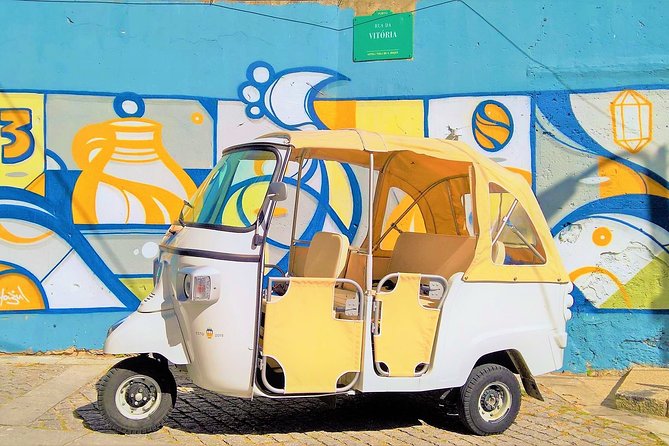
Reviewed · TUK TUK CITY TOURS
Full-Day Private Tuk Tuk All Around Porto
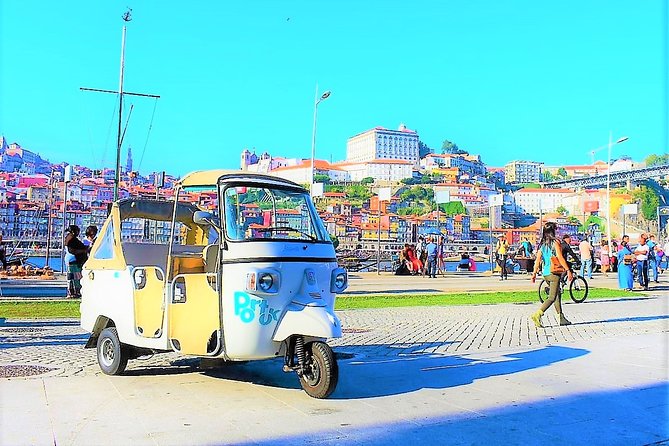
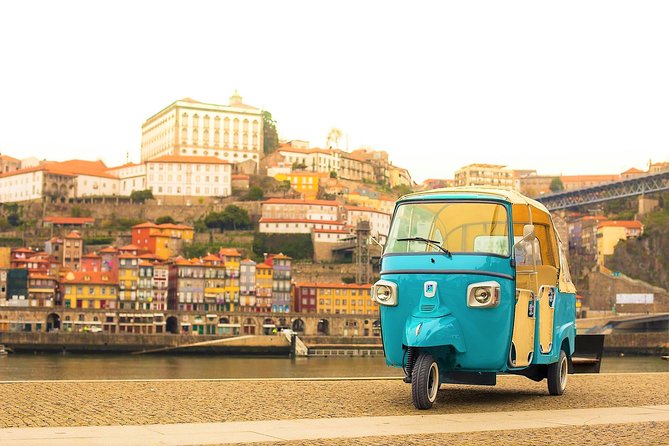
Porto looks different from a tuk tuk. In a single day, you hop between big landmarks and photo stops without the drag of crowded bus groups. You also get real-time flexibility, so your guide can steer the pace and order based on what your group cares about.
What I like most is the mix of famous stops and “speed walking” views, all explained on the go. I also appreciate the included wine tasting and regional lunch, which turns the day from pure sightseeing into something you can taste and remember.
The main thing to consider is comfort. Tuk tuks are small, and on cobblestones you may feel it by hour six. Add rain or wind, and you will want ponchos, since side coverage can be limited, plus one review flagged tight seating and uneven seatbelt availability on a specific day.
In This Review
- Key highlights worth getting excited about
- Price and what you actually get for $166.99
- Why Porto is perfect for a tuk-tuk day
- The full-day route: what each stop is really about
- Teatro Nacional Sao Joao: a grand start with a time-layered façade
- Porto Cathedral: Romanesque roots with later makeovers
- Sao Bento Railway Station: the tiles you cannot unsee
- Igreja do Carmo: a rococo church moment
- Antiga Cadeia da Relacao: prison to photography center
- Fonte dos Leoes: a quick landmark with an international origin
- Livraria Lello: famous, yes, but worth the specific look
- Cordoaria Garden (Jardim de Joao Chagas): rope-makers and shade breaks
- Igreja de San Francisco: the Gothic shell plus golden interior
- Jardins do Palacio de Cristal: a long scenic reset
- Jardim do Infante Dom Henrique: a small square with big symbolism
- Torre dos Clerigos and the skyline pull
- Dom Luis I Bridge: iron decks and an old-engineering flex
- Mosteiro da Serra do Pilar: the circular church with the big terrace
- Ponte Infante Dom Henrique: a modern Maillart arch you can admire fast
- Palacio da Bolsa: where Porto shows off its Arabian Room
- Mercado Ferreira Borges: iron architecture turned entertainment space
- Alfândega Porto Congress Centre: a neoclassical building with iron structure
- Igreja dos Carmelitas: another Nicolau Nasoni connection
- Lunch, wine tasting, and the food stop you should plan for
- Guides, pacing, and what changes depending on your day
- Rain, cobblestones, and the small practical choices that matter
- Should you book this Porto tuk-tuk tour?
- FAQ
- How long is the Full-Day Private Tuk Tuk All Around Porto tour?
- What time does the tour start?
- Where do we meet for the tour?
- Is this tour private?
- Is the tour offered in English?
- What is included in the price?
- Are monument entrances included?
- Do we get tickets on a phone?
- What if the weather is bad?
- Is there a minimum number of people to book?
Key highlights worth getting excited about
- A true full-day circuit across old Porto, the riverfront views, and across to Vila Nova de Gaia highlights
- Live commentary plus a local guide, so the stops connect into a story instead of being random photos
- Included lunch and wine tasting, with regional foods like cheeses, sausages, and canned fish
- Short timed stops that maximize what you see, from Sao Bento Station tiles to Igreja de Sao Francisco gilded interiors
- Great for first-timers who want bearings fast, especially in narrow streets and uphill areas
- Guides you might meet include Gabi, Gabby, Goncalo, Bernardo, Fabio, Renaldo, Leonardo, Anna, and Leandro, and many reviews call them patient and fun
Price and what you actually get for $166.99
At $166.99 per person for about 8 hours, this is not a budget add-on. But it can still feel like value if you compare it to paying for private transport plus timed entries plus a food stop on your own. Your money goes toward the vehicle, the ride-side storytelling, a local guide, wine tasting, and a tasting lunch of regional products with wines from small local producers.
Two small budget notes before you commit:
- Monument entrances are not included. Some places are free to view from outside or in lobby areas, while others likely require tickets if you want to go inside, like Livraria Lello or Torre dos Clerigos.
- If you care about queue-free entry into the big-name interiors, you’ll want to factor that time and cost into your day.
If you are traveling with two adults or a small group, the price is easiest to swallow since the tour is offered as a private experience and you are not paying for seats on a larger bus.
More Tuk Tuk Tours in Porto
- Porto: Guided Tour by Tuk-Tuk & Optional Douro River Cruise
★ 4.5 · 5,980 reviews - Discover Porto’s Highlights on a 2-Hour Private Electric Tuk Tuk
★ 4.5 · 1,860 reviews - Porto: Guided Tuk Tuk Tour
★ 4.6 · 1,390 reviews
Why Porto is perfect for a tuk-tuk day
Porto is the kind of city where a car can feel too big and a walking plan can feel too exhausting. The tuk tuk solves both problems by getting you into the flow of streets and keeping you close to viewpoints.
You start at R. de Augusto Rosa 180 around 9:30 am and you end back at the same meeting point. Since the schedule is tight but not rushed, you can do a lot of ground without the constant “Where is the next stop?” stress. You also avoid the usual cattle-herd rhythm you get on crowded coach tours.
The ride itself is part of the fun. Several guides described in reviews, including Gabi, Gabby, and Goncalo, are praised for pacing and for filling wait time with context, not just directions. In rain, one guide even worked hard to keep the day enjoyable, which matters because Porto weather can change fast.
The full-day route: what each stop is really about
This tour is built around a smart sequence: theaters and stations early, churches and historic buildings around the center, then gardens and bridge viewpoints, and finally markets and river-adjacent sites. Many stops are only 5 to 20 minutes, so the value is in seeing the right place in the right order, with context added by your guide.
Teatro Nacional Sao Joao: a grand start with a time-layered façade
You begin with the Teatro Nacional Sao Joao. It is a classic building constructed in 1910 on top of older ruins, including the Real Theatre that burned in 1908. The façade includes stylistic emblems linked to ideas like pain, quality, hate, and love, and the renovation influence ties to Luís XVI style that was common in France in the early 1900s.
If you like architecture, this is a great opener because your guide can set the tone for how Porto layers eras on the same sites. Admission is free here, so you can enjoy the building without ticket pressure.
More tuk tuk rides in Porto:
- Historic Porto by Private Electric Tuk Tuk to Top Landmarks
★ 4.5 · 735 reviews - Porto Guided Tour to the Historical Center on a Tuk Tuk
★ 4.5 · 418 reviews - Porto: Private Sightseeing Tour by Electric Tuk Tuk
★ 4.8 · 305 reviews - Oporto Tuk-Tuk Tour: Fast, Fun & Flexible – 1H to Full Day!
★ 4.7 · 280 reviews
Porto Cathedral: Romanesque roots with later makeovers
Next is Catedral do Porto, a structure dating to the 12th and 13th centuries in a Romanesque style, later enlarged and renewed across centuries. What makes it interesting is that you are not just looking at one era. You get a museum-like mix, including:
- the Gothic São João Evangelista Chapel and cloister from the 14th century
- the enlarged main chapel and the Santíssimo Sacramento Chapel with an eighteenth-century silver altar
- baroque frescoes in the main chapel and sacristy by Nicolau Nasoni
- the cloister tiles by Vital Rifarto
Your time here is about 10 minutes, and tickets are not included. Plan to enjoy the highlights you can see easily in the time window, and if you want deeper interior access, budget for the extra ticket.
Sao Bento Railway Station: the tiles you cannot unsee
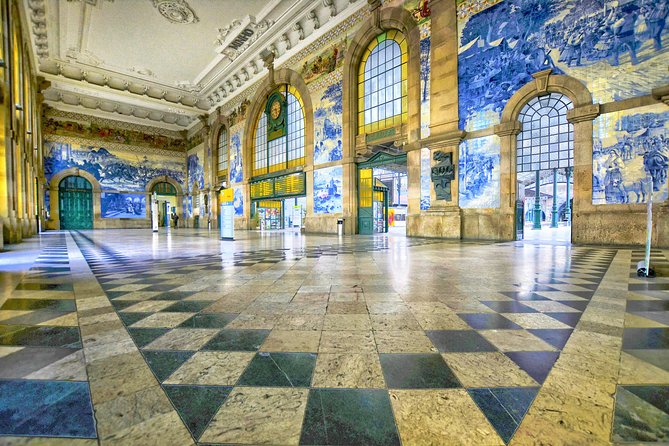
Then you hit Sao Bento Railway Station, located right in the city center. The station’s famous feature is the roof design with glass and cast iron, and especially the lobby covered with about 20,000 narrative tiles by painter Jorge Colaço.
It takes about 10 minutes and admission is free. This stop is a crowd favorite for a reason. You can stand in one spot and learn what the tiles are telling you, rather than trying to spot details while walking.
Igreja do Carmo: a rococo church moment
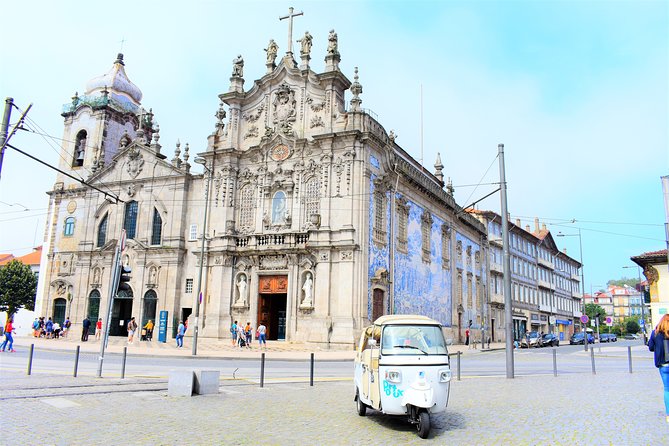
Igreja do Carmo is a standout in Porto rococo style. The main church dates to the second half of the eighteenth century, and the building is considered nationally significant due to its interior carvings. There are also tile-covered areas from 1912, with drawings designed by Silvestre Silvestri that reference devotion to Nossa Senhora, Our Lady.
You get a short 5 minutes here, and admission is not included. Treat this as a look-and-learn stop, unless your guide suggests it is worth paying to go inside.
Antiga Cadeia da Relacao: prison to photography center
One of the more surprising stops is Antiga Cadeia da Relacao. The granite building dates to 1582 and was rebuilt in 1767 in a neo-classical style by architect Eugénio dos Santos. The window count is a fun detail for architecture nerds: there are 103 windows across the façades.
This building has a serious past, including holding famous prisoners like Camilo Castelo Branco and Zé do Telhado. Today it is restored and used as the Portuguese Centre for Photography, and your time here is free.
It is an excellent pause in a day full of churches and monuments because you learn how Porto repurposed an old system into a creative space.
Fonte dos Leoes: a quick landmark with an international origin
The Fonte dos Leoes is a short stop, around 5 minutes, and it is free. This nineteenth-century fountain was built by a French company and cast at the foundry Val d’Osne in France. It is largely a copy of a fountain in Leicester’s Town Hall Square in England. Even if you only snap photos, it adds an interesting layer: Porto didn’t develop in isolation.
Livraria Lello: famous, yes, but worth the specific look
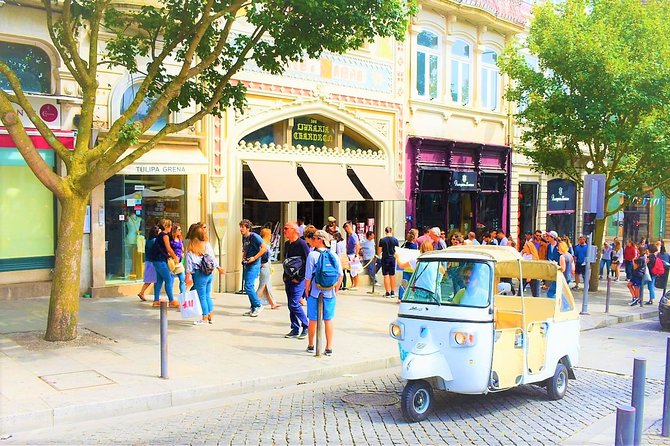
Livraria Lello is probably the most talked-about stop on this route. The library building was inaugurated in 1906 and features an Art Nouveau façade with neo-Gothic details. Inside, the plasterwork imitates wood, and there is a huge stained-glass skylight. One of the most memorable features is the staircase, described as one of the early reinforced concrete works in Porto.
You spend about 20 minutes and admission is not included. This is where planning matters. If you want to go inside and not feel rushed, build in time for tickets and let your guide know if you care most about the façade, the interior staircase, or the stained-glass ceiling.
Cordoaria Garden (Jardim de Joao Chagas): rope-makers and shade breaks
Next is Cordoaria Garden, also known as Jardim de Joao Chagas. The rope makers stayed here for around 200 years, and later the municipality transformed the area into a public garden starting in 1865 to 1866 under landscaper Emile David.
Statues and later sculptures, including works connected to Porto 2001, give you more than just a green break. This stop is free and typically works well as a recovery moment mid-tour.
Igreja de San Francisco: the Gothic shell plus golden interior
Igreja de San Francisco is the Gothic temple that pairs with a richly decorated Baroque interior. Construction began in the fourteenth century, but the interior gilding from the seventeenth and eighteenth centuries is the big draw. People describe it as the Church of Gold, and the guide can point out specific features like the Tree of Jesse and the catacombs.
Admission is listed as free, and you get time to take it in. Still, because the whole day is structured with short stops, decide whether you want to focus on the main interior highlights or spend more time at the points your guide flags.
Jardins do Palacio de Cristal: a long scenic reset
The day’s first longer breath is Jardins do Palacio de Cristal. Expect lawns, sun-dappled paths, fountains, sculptures, and trees like magnolias, camellias, cypress, and olive. It is also famous for how it gradually reveals views of Porto and the Rio Douro.
You get about 30 minutes and it is free. This is a great spot to slow down. If you want photos with less stress, this is where you will feel grateful the day is structured for viewpoints, not just buildings.
Jardim do Infante Dom Henrique: a small square with big symbolism
Then you arrive at Jardim do Infante Dom Henrique, a square connected to the nearby Mercado Ferreira Borges and Palácio da Bolsa. Under or near the square, there is a monument to the Infante D. Henrique. It was started in 1894 and completed in 1900, celebrating Portuguese navigation and faith.
This stop is free, and it is more about the story and context than a long walk.
Torre dos Clerigos and the skyline pull
Torre dos Clerigos is your Porto skyline moment. It is a Baroque church and the tower is a signature symbol you can spot from multiple angles around the city.
You get about 20 minutes, and admission is not included. If you want inside access or a climb, this is where you decide based on energy level and ticket timing.
Dom Luis I Bridge: iron decks and an old-engineering flex
You then cross the iconic Dom Luís I Bridge. It was inaugurated in 1886, designed by engineer Teófilo Seyrig, a disciple of Eiffel. The bridge has two overlapping iron decks and is around 395 meters long. The upper deck is used by Porto’s Metro, linking across toward Vila Nova de Gaia and other areas.
This stop is free and works perfectly for photos and river airflow. It is also a good time to rest your legs after more cobbled streets.
Mosteiro da Serra do Pilar: the circular church with the big terrace
After that, you head to Mosteiro da Serra do Pilar. Construction started in 1538 and finished around 1670. The church is circular, with a dome surrounded by a balcony. The cloister is also circular with 36 Ionic columns, the only example of its kind in Portugal.
What makes this stop special is the terrace view. From here you can see Porto, Gaia, and major bridges in both directions, including Arrábida Bridge and the historic center with emphasis on the Cathedral and Dom Luís I Bridge.
Admission is free and you get about 15 minutes.
Ponte Infante Dom Henrique: a modern Maillart arch you can admire fast
Next is Ponte Infante Dom Henrique, opened in 2003. It replaced the upper deck lane of the Dom Luís I Bridge that was moved to Metro. The structure is a Maillart-type arch bridge with an 280 m arch span, described as a world record for that type.
This stop is free and typically short, which is fine because the important part is seeing the curve and understanding why engineers love this one.
Palacio da Bolsa: where Porto shows off its Arabian Room
Then comes Palácio da Bolsa. It is a National Monument and was designed in 1842 in neoclassical style. Your main highlight is the Arabian Room, plus the building is used as a cultural and conference center.
It is free to include on the route, but because interior access tickets are often separate, you should be ready for the fact that monument entrances may require payment. The tour description lists it as free, so you can at least focus on what you can access in your time.
Mercado Ferreira Borges: iron architecture turned entertainment space
You stop at Mercado Ferreira Borges next. Built in 1885, it is an important example of iron architecture in Porto. The market had multiple uses, and today it is an entertainment venue where Hard Club operates.
This stop is free and a good reminder that Porto’s historic buildings stay in use, rather than being frozen.
Alfândega Porto Congress Centre: a neoclassical building with iron structure
Finally you reach Alfandega Porto Congress Centre, a nineteenth-century neoclassical building. The design mixes iron with stone, brick, and wood depending on where each material fits best. It was once connected to plans for a Museum of Transport and Communications, and now it houses congress activities in parts of the building.
You get free access in the sense that it is included as a stop for viewing, and it is worth noticing how the building holds up without being just a façade.
Igreja dos Carmelitas: another Nicolau Nasoni connection
You finish with Igreja dos Carmelitas. The church has a seventeenth-century origin and a classical façade dating to the 1850s, attributed to architect and painter Nicolau Nasoni. The altarpiece is described as Porto rococo style and called stylistically revolutionary. Admission is free, and it is a quick final look before you head back to your meeting point.
Lunch, wine tasting, and the food stop you should plan for
The included tasting lunch is one of the smartest parts of this tour design. You are not just eating to survive. You get regional foods like cheeses, sausages, and canned fish, along with wines from small local producers.
One review specifically praised lunch at Mercado Lendario, saying it was more and better than expected. That aligns with the overall feel many guides seem to create: they want you to leave Porto with something real from the table, not just a photo outside a restaurant.
One small tip: if you have dietary needs, you should raise them in advance, since some reviews include vegetarian requests not being communicated perfectly on a specific day. You do not want a stressful surprise when the whole day is already planned tightly.
Guides, pacing, and what changes depending on your day
Guides are a big deal here, and the reviews back that up. People mention Gabby and Bernardo for being accommodating and informative. Others praise Fabio for patience and fun. Renaldo and Goncalo show up in praise too, with a consistent theme: they adjust waiting time, suggest where to focus, and keep the day moving without making it feel like a race.
Still, I have to mention one caution from a review: a traveler who booked a private tour reported being told it would be shared last minute due to operational issues. That is not what the tour states it should be. But it is a signal that if private is a top priority, you should confirm day-of expectations with the operator before you settle into the idea that it will be fully isolated.
Also, tuk tuk comfort can vary. One reviewer complained about tight seating and rain cover limitations. If you are tall, broad-shouldered, or riding with three adults, you may want to ask about vehicle size before you go.
Rain, cobblestones, and the small practical choices that matter
Porto cobblestones are not optional, and a tuk tuk seat does not erase them. One reviewer noted they felt stiff and sore by the end, especially over cobblestones. That is not a reason to skip the tour, but it is a reason to prepare.
For a smoother day:
- Wear supportive shoes. You will be stepping in and out frequently.
- Bring a light layer and ponchos for rain. One review said there were limited side covers, but ponchos helped.
- If you care about comfort, consider booking for a group size that fits the tuk tuk comfortably.
The tour is also described as requiring good weather. If weather turns bad, you can expect a different date or refund, so plan your Porto day with a little flexibility.
Should you book this Porto tuk-tuk tour?
Book it if:
- You want a first-day reset in Porto, with major landmarks and quick viewpoints.
- You like having a guide connect the dots with live commentary while you ride.
- Wine and regional lunch are part of your idea of a good day, not an afterthought.
Skip it or look for a different style if:
- You are very sensitive to tight seating or you want maximum comfort for a full 8 hours.
- You need uninterrupted private exclusivity at all costs, since one review reported last-minute sharing.
If your goal is to see Porto efficiently, eat local, and enjoy the city from the right angles, this tour is a strong pick. Just go in with the right expectations for vehicle comfort, bring rain gear, and decide early which paid interiors you actually want so your time stays fun, not administrative.
FAQ
How long is the Full-Day Private Tuk Tuk All Around Porto tour?
It is listed as about 8 hours.
What time does the tour start?
Start time is 9:30 am.
Where do we meet for the tour?
Meeting point is R. de Augusto Rosa 180, 4000-528 Porto, Portugal.
Is this tour private?
It is described as a private tour where only your group participates.
Is the tour offered in English?
Yes, it is offered in English.
What is included in the price?
The tour includes driver/guide, live commentary on board, a local guide, wine tasting, and a lunch with regional products and some wines from small local producers.
Are monument entrances included?
Monuments entrance tickets are not included.
Do we get tickets on a phone?
Yes, the tour offers a mobile ticket.
What if the weather is bad?
The experience requires good weather, and if it is canceled due to poor weather you will be offered a different date or a full refund.
Is there a minimum number of people to book?
Yes, it requires a minimum of 2 people per booking.
Just added around Porto
- Meditation Experience at a Lovely Farm in Porto★ 5.0 · 19 reviews
- Private Portuguese Cooking and Wine Experience in Porto★ 5.0 · 30 reviews
- Douro Valley Prime Tour: Wine Tastings, Boat & Lunch from Porto★ 5.0 · 572 reviews
- Port Wine Tour | 3 Cellars | 7 Tastings | 12 Participants Maximum★ 5.0 · 443 reviews
- Private Boat Tour on the Douro River at Sunset★ 5.0 · 21 reviews
- Visit to Cockburn’s Cellars★ 5.0 · 526 reviews
- Wine Tasting with Tapas Walking Tour in Porto★ 4.5 · 544 reviews
- PORTO city Walking Tour★ 5.0 · 132 reviews
Tuk Tuk City Tours, compared.

True 4Hour Private Tuk Tuk Tour: Discover Lisbon with a Local!
Read our review →
Guided Tour by Tuk-Tuk & Optional Douro River Cruise
Read our review →
Private Guided Tuk-Tuk Tour with Hotel Pickup
Read our review →
Private Lisbon Sightseeing Tuk-Tuk Tour: Alfama, Belém & More
Read our review →
Lisbon Highlights: Private Tuk Tuk Tour Adventure Sightseeing
Read our review →
Discover Porto’s Highlights on a 2-Hour Private Electric Tuk Tuk
Read our review →
Welcome Lisbon Tour with Local Guide in Private Eco Tuk Tuk
Read our review →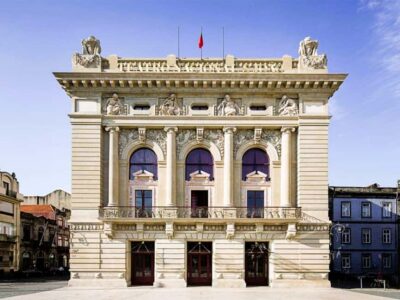
Browse the lists this tour appears in