
Reviewed · WALKING TOURS
LGBTour Porto: Walk through Porto, discover the LGBTQIA+ History
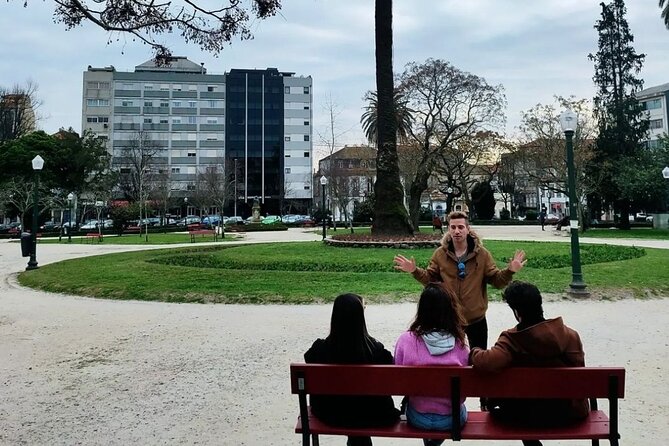
Porto changes when you walk it queer. This 3-hour LGBTQIA+ walking tour uses real neighborhood places, like Campo 24 de Agosto and the route toward Praça da Republica, to explain how pride, politics, and everyday life shaped the community. I love the LGBTQIA+ lens on street corners that most guides race past, and I especially love how Ricardo Barros tells stories with a personal, local angle, not a lecturing tone. One drawback to consider: if you came for classic big-ticket monuments and postcard stops, this tour is intentionally less about that and more about people, places, and meaning.
I also like that you can choose a morning or afternoon start time, and the group stays small (up to 15), so you get time to ask questions and connect. It’s built around a practical flow of short stops, free-to-enter locations, and a finish at the Miradouro area with a view over the Douro.
In This Review
- Key points worth knowing before you go
- Entering Porto’s queer timeline, block by block
- Meeting point and timing: a 3-hour walk with real pauses
- Stop 1: Campo 24 de Agosto Garden, where Pride has a starting point
- Stop 2: Rua de Santa Catarina and how tourism rewrites neighborhoods
- Stop 3: Praça da Republica, Teófilo Braga Garden, and the queer bookstore focus
- Stop 4: Livraria aberta and the idea of representation you can hold
- The student-heavy stretch and why education matters to inclusion
- Stop 5: Tribunal da Relação do Porto and the city’s dates of queer history
- Stop 6: Chafariz das Virtudes and the Miradouro das Virtudes wrap-up
- Why this guide makes the difference
- Price and value: what you’re really paying for
- Who should book this LGBTQIA+ history walk
- Practical tips so your tour day goes smoothly
- Should you book LGBTour Porto?
- FAQ
- How long is the LGBTour Porto walking tour?
- What does it cost?
- Where is the tour meeting point?
- Where does the tour end?
- Is the tour in English?
- Do I need to buy a separate ticket for the stops?
- How big are the groups?
- Can I use a mobile ticket?
- Are service animals allowed?
- What is the cancellation window?
Key points worth knowing before you go
- Small group size (max 15) keeps the walk from feeling rushed.
- Queer bookstores and local businesses get serious attention, not just nightlife.
- Pride locations are mapped in the city’s current geography, so history feels present.
- A guide with lived context makes the facts land as human stories.
- You end with a view at the Virtudes viewpoint, which makes a good wrap-up moment.
- English tour with a mobile ticket makes it easy to plan and show up.
Entering Porto’s queer timeline, block by block
The best way I can describe this tour is as a walking timeline that refuses to stay in the past. You start in central Porto and move through places tied to Pride, visibility, and pressure, then you stop at spots where you can see how culture changes when people organize, publish, and run businesses.
What makes it work is the balance. You get named locations, clear explanations, and then you also get personal framing from Ricardo Barros as someone who grew up in Porto and watched the movement grow. That combination matters because LGBTQIA+ history in Portugal is not always obvious on the street level. The tour gives you a way to read the city that you can keep using after you leave.
And yes, you will notice familiar areas again, like Rua de Santa Catarina and the busy streets near Praça da Republica. But the meaning changes. You look a second time, and the city starts talking back.
More Walking Tours in Porto
- Porto Walking Tour, Lello Bookshop, River Cruise and Cable Car
★ 5.0 · 3,354 reviews - Experience Porto’s Charm: 3-Hour Guided Walking Tour
★ 5.0 · 2,432 reviews - Porto: 3-Hour Guided City Highlights Walking Tour
★ 4.8 · 2,050 reviews
Meeting point and timing: a 3-hour walk with real pauses
You meet at Av. de Fernão de Magalhães 43, 4300-169 Porto, then you finish at Calçada das Virtudes 5, 4050-629 Porto, at the Virtudes viewpoint area.
The total tour time is about 3 hours, with multiple short stops that help you keep up without feeling like you’re being dragged from point to point. The listed stop times add up roughly like this: 20 minutes at Campo 24 de Agosto Garden, 10 minutes on Rua de Santa Catarina, 40 minutes in Praça da Republica, 30 minutes at Livraria aberta, 25 minutes at Tribunal da Relação do Porto, and 30 minutes at the end around Chafariz das Virtudes and the Miradouro das Virtudes.
All the sights on the route are marked as free to enter (no separate admission tickets for the stops themselves). You’re paying for the guided interpretation and the focused route, not for a pile of museum tickets.
Practical note: this is still a walking tour. Porto streets can be uneven, and the route includes busy areas. If you have mobility limits, the good news is that the guide is willing to adjust the walking amount and pace. One guest even shared that the walking was reduced when they needed it, and the tour continued that way.
Stop 1: Campo 24 de Agosto Garden, where Pride has a starting point
The walk begins at Campo 24 de Agosto Garden. This is where the tour frames the start of a Pride story in Porto, pointing to the place linked with the first LGBTQIA+ pride march.
Even though you’re not inside some big formal venue, the context here is powerful. Instead of treating Pride as something that happens only in the news, you’re shown where it can take root in ordinary public space. You look at the garden, then you listen for the timeline: how visibility, community energy, and social tension shaped what comes next.
The stop is short, about 20 minutes, which keeps it from turning into a lecture. You get the idea quickly, then you move on while it’s still fresh.
Stop 2: Rua de Santa Catarina and how tourism rewrites neighborhoods
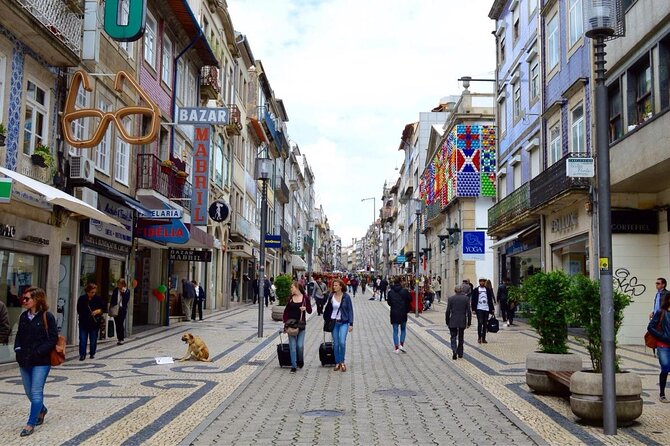
Next comes Rua de Santa Catarina. This segment is about change: how time and tourism have altered a part of Porto that mattered to the LGBTQIA+ community.
The point is not just that the street looks different today. It’s that attention from outsiders can change the local social fabric, and it can also affect how communities are seen, talked about, or erased. You get to compare what you see now with what the tour explains about how the area functioned before tourism became the dominant lens.
It’s a 10-minute stop, so it’s meant to sharpen your perception, not slow the day down. After this, you’re primed for Praça da Republica, because you now understand the tour’s theme: places carry layers.
Other Porto plans worth comparing
- Porto: Wine Tasting with Tapas Walking Tour
★ 4.4 · 1,541 reviews - Porto: Historic City Center Walking Tour
★ 4.7 · 1,172 reviews - Porto’s #1 Walking Tour
★ 5.0 · 1,026 reviews - Porto: Delicious Food and Wine Walking Tour
★ 4.8 · 977 reviews
Stop 3: Praça da Republica, Teófilo Braga Garden, and the queer bookstore focus
Then you head into Praça da Republica, one of Porto’s busiest hubs. The tour uses the busyness as a teaching tool, asking you to reflect on what it means that the Pride march is currently starting from here.
Along the way, you’ll also be near the Teófilo Braga Garden. This is a good example of how the tour blends public space with cultural and community elements.
One of the most helpful moments in this stop is the time spent around a bookshop dedicated to LGBTQIA+ themes. Instead of focusing only on protests or nightlife, the tour puts publishing and everyday cultural life in the spotlight. You talk about why attending queer businesses matters, not as a trendy gesture, but as support for representation and community infrastructure.
This is a 40-minute stop, so it has enough time to be both reflective and practical. You leave with a clearer sense of where to look for queer culture while you’re still in town.
Stop 4: Livraria aberta and the idea of representation you can hold

After Praça da Republica, you visit Livraria aberta, described as linked to diversity and inclusion books, and focused on the importance of queer business.
This stop is about writers and impact. You get introduced to LGBTQIA+ authors and their role in society and representation in culture. The takeaway is simple: visibility is not only about who gets seen in public life, it’s also about what stories people can access, share, and discuss.
This is a 30-minute stop, and it’s one of the best parts to bring your curiosity. If you like to read, it gives you practical ideas for what to seek out after the tour. If you don’t read much, it still helps because you understand how culture travels through books and community spaces.
The student-heavy stretch and why education matters to inclusion
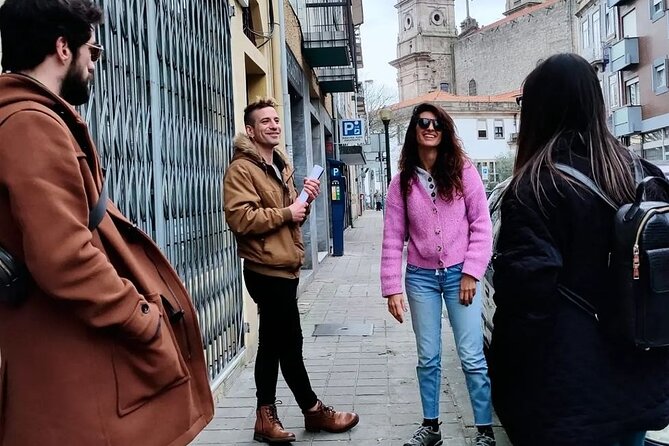
Between the bookstore stops and the tribunal area, the tour moves through a very busy part of Porto with a large student presence. Here, the conversation shifts toward teaching and social changes linked to diversity and inclusion.
This part works well because it doesn’t separate LGBTQIA+ history from the rest of civic life. Education becomes part of the story. You start thinking about how attitudes change, how institutions either help or resist, and how young people can carry new norms forward.
Because this is a walking-through segment, you don’t need to memorize every detail to get value. You just need to stay tuned. The guide uses the street’s energy as a clue: this is where social change looks daily, not only historically.
Stop 5: Tribunal da Relação do Porto and the city’s dates of queer history
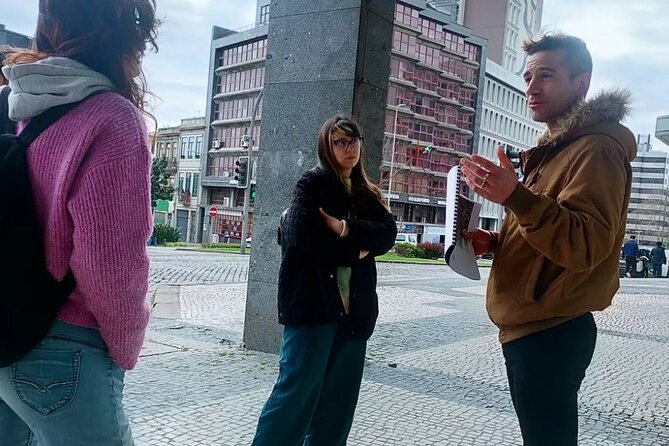
Near the end, you pass the Tribunal da Relação do Porto. The tour focuses on key dates in the queer history of both the city and Portugal, with the statue of justice as an anchor point.
This is where the “what happened” part meets “what it meant.” Legal frameworks and public institutions shape rights, safety, and how communities can organize. The guide explains important moments tied to queer history in front of a justice-related monument, which makes the history feel less abstract.
It’s about 25 minutes. You get just enough time to connect the dots before heading toward the final viewpoints.
Stop 6: Chafariz das Virtudes and the Miradouro das Virtudes wrap-up
The final section is where the tour earns its calm ending. You reach the Chafariz das Virtudes area and finish at Miradouro das Virtudes, known for its diversity and for the view over the Douro.
The guide slows down the tempo on purpose. You relax a little, and the tour becomes more reflective than informational. Ricardo Barros shares how he saw the queer movement grow in his own youth, linking past and present in a personal way.
This ending matters because it gives you a place to absorb what you just learned. You can look out over the city and feel what Porto looks like from the outside, then you can remember what you just learned about how people lived and fought for visibility in those same streets.
Why this guide makes the difference
Plenty of walking tours give you dates. This one gives you a way to interpret the dates in real street settings.
Ricardo Barros is the secret ingredient. He mixes local context with personal anecdotes, and the pacing feels relaxed. A repeated theme in the tour experience is that you get a chance to connect, not just listen. If you have questions, you are encouraged to ask, and the guide is open to conversation rather than running on rails.
There’s also an important emotional tone shift across the route. Early stops focus on Pride and place. Middle stops focus on cultural infrastructure, like books and inclusion. Later stops turn toward justice and civic life, then end with the view and a quieter sense of what you carry home.
That balance helps the tour feel moving without being heavy the entire time.
Price and value: what you’re really paying for
The price is $38.45 per person for about 3 hours in English. That’s not cheap for a walking tour, but it also isn’t inflated for what you get.
You’re paying for:
- A route designed around LGBTQIA+ history and specific places, not generic sightseeing
- Access to interpretation that helps you understand what you’re seeing
- Time in queer-focused spaces like LGBTQIA+ themed bookshops
- A small group size (max 15), which supports conversation
If your goal is to add a meaningful layer to your Porto visit, this has good value. If your goal is only to check a few famous monuments, you might find the emphasis doesn’t match your expectations. But if you want the city to make more sense, this is one of the best ways to do that.
Who should book this LGBTQIA+ history walk
You should seriously consider booking if you:
- Want Porto without the usual tourist-only route
- Like guided storytelling that includes personal context
- Care about queer culture beyond nightlife, especially bookstores and community businesses
- Enjoy walking tours that end with time to reflect
You might skip it if:
- You mainly want big landmark photo ops and minimal talking
- You prefer tours that center only on architecture or museum-style facts
Practical tips so your tour day goes smoothly
A few things will make your experience easier.
- Wear comfortable shoes. Porto involves walking and older streets.
- Bring a light layer. Viewpoints and evenings near the Douro can feel cooler.
- Have your questions ready. The tour is designed for conversation time, not one-way delivery.
- If you have mobility needs, ask about pacing on the day. The guide has shown willingness to adjust walking amount for guests who need it.
Should you book LGBTour Porto?
If you want to see Porto through a queer lens that actually connects to culture and civic life, I think this is a strong yes. The route links Pride locations, queer businesses, writing and representation, and justice-related history into a single walking story. And because the group is small and the guide is personable, it doesn’t feel like you’re being processed.
Book it if you want your Porto day to feel different from the standard checklist. Skip it if you’re hoping for a monument-only highlights tour.
FAQ
How long is the LGBTour Porto walking tour?
The tour lasts about 3 hours.
What does it cost?
The price is $38.45 per person.
Where is the tour meeting point?
The tour starts at Av. de Fernão de Magalhães 43, 4300-169 Porto, Portugal.
Where does the tour end?
The tour ends at Calçada das Virtudes 5, 4050-629 Porto, Portugal, at the Virtudes viewpoint area.
Is the tour in English?
Yes, it is offered in English.
Do I need to buy a separate ticket for the stops?
The listed stops are marked as free entry, so you do not need separate admission tickets for those locations.
How big are the groups?
The tour has a maximum of 15 travelers.
Can I use a mobile ticket?
Yes, the tour includes a mobile ticket.
Are service animals allowed?
Yes, service animals are allowed.
What is the cancellation window?
Free cancellation is available up to 24 hours in advance of the experience start time for a full refund.
More Historical Tours in Porto
- Douro Valley: Historical Sites, Wine Experience, Lunch & Cruise
★ 5.0 · 5,133 reviews - Porto: An Intimate Fado Show in a Historical Tavern
★ 4.8 · 2,055 reviews - Porto: Private Tour of the Historic City in a Ford T Car
★ 4.8 · 932 reviews - Porto: Historical Center Walking Tour
★ 4.8 · 898 reviews
Just added around Porto
- Meditation Experience at a Lovely Farm in Porto★ 5.0 · 19 reviews
- Private Portuguese Cooking and Wine Experience in Porto★ 5.0 · 30 reviews
- Douro Valley Prime Tour: Wine Tastings, Boat & Lunch from Porto★ 5.0 · 572 reviews
- Port Wine Tour | 3 Cellars | 7 Tastings | 12 Participants Maximum★ 5.0 · 443 reviews
- Private Boat Tour on the Douro River at Sunset★ 5.0 · 21 reviews
- Visit to Cockburn’s Cellars★ 5.0 · 526 reviews
- Wine Tasting with Tapas Walking Tour in Porto★ 4.5 · 544 reviews
- PORTO city Walking Tour★ 5.0 · 132 reviews
Walking Tours, compared.
Best of Lisbon Small-Group Guided Walking Tour
Read our review →
Porto Walking Tour, Lello Bookshop, River Cruise and Cable Car
Read our review →
Best of Lisbon Walking Tour: Rossio, Chiado & Alfama
Read our review →
Experience Porto’s Charm: 3-Hour Guided Walking Tour
Read our review →
Enjoy a Guided Levada Walk in the Rabaçal Valley
Read our review →Browse the lists this tour appears in