
Reviewed · TUK TUK CITY TOURS
Porto: Fun Private Tuk Tuk Tour
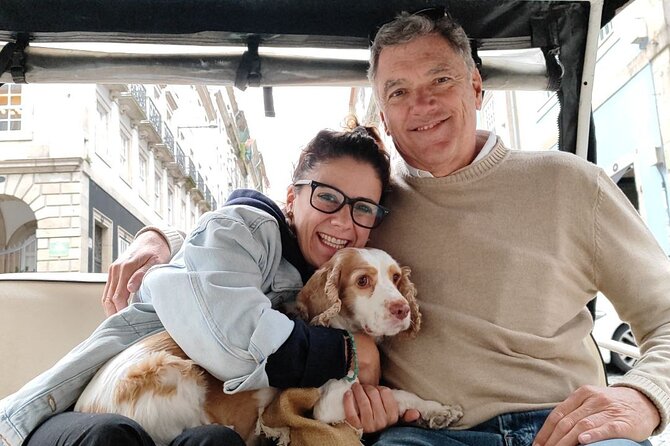
Porto climbs feel lighter in a tuk tuk. In about 1 hour 30 minutes, you zip between top sights in central Porto and along the Douro, with stops timed for great views instead of long walks.
I especially like the private feel. It means your guide can steer the pace and linger where you care, and the ride helps you cover steep neighborhoods without turning the day into a leg workout. I also love that the route naturally mixes famous architecture with specific look-closer moments, like Serra do Pilar’s circular church and the azulejos at São Bento Station.
The main drawback is that you are mostly outdoors on an open-air ride. This tour is best with decent weather, and on rainy days you will want real rain gear and a positive attitude.
In This Review
- Key things I’d circle before booking
- Porto’s hill problem, solved the fun way
- What’s included, and why the price can make sense
- Starting at São João National Theatre, then easing into old Porto
- The Fernandine Wall: medieval defense you can still read
- Serra do Pilar Monastery: the circular church and the best “wow” angles
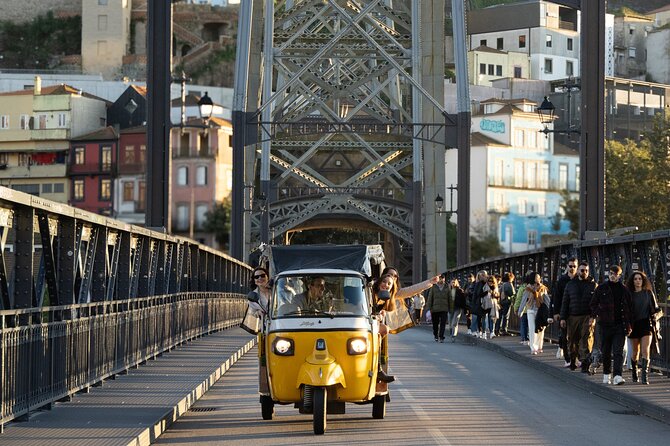
- River bridge circuit: from iron arches to modern concrete
- São João Bridge (rail, 1991)
- Ponte D. Maria Pia (Gustave Eiffel, 1877)
- Dom Luís I Bridge (vehicles, pedestrians, metro)
- Arrábida Bridge (road bridge, 1963)
- The garden and market stops that slow the pace on purpose
- Infante D. Henrique Garden
- Ferreira Borges Market
- Palácio da Bolsa and São Francisco: where Porto shows off
- Palácio da Bolsa (UNESCO) and the Arab Room
- Church of São Francisco: Gothic outside, Baroque inside
- Miragaia and the riverfront mood
- Quick walk section: gardens and two churches side by side
- Cordeiroaria Garden
- Igreja do Carmo (tile panel, admission not included)
- Igreja dos Carmelitas (admission included)
- Clérigos Tower and Crystal Palace gardens: big views without the hours
- Clérigos Tower
- Jardins do Palácio de Cristal
- Passeio das Virtudes
- São Bento Station tiles and the Porto Cathedral viewpoint
- São Bento Railway Station
- Porto Cathedral (Sé do Porto)
- Rainy day reality, and how the best guides handle it
- Who this tour fits best
- Should you book the Porto Fun Private Tuk Tuk Tour?
Key things I’d circle before booking
- A true private ride for your group, not a shared bus schedule
- Douro bridge photos with big impact, including bridges designed in different eras
- Church and palace stops that are mostly free to enter, so your budget stays controlled
- Guides who focus on practical sightseeing and photo spots, with names like José and Leandro showing up often in feedback
- Open-air tuk tuk comfort for hills, especially if you want the city without exhausting stairs
- Short guided walking moments, so you still get up close, without sacrificing the ride
Porto’s hill problem, solved the fun way
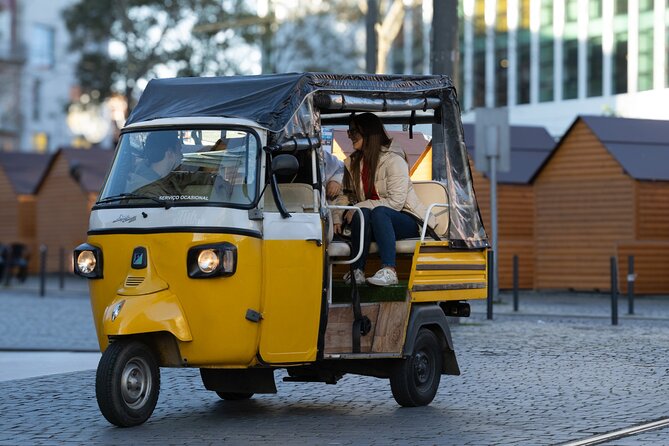
Porto’s charm comes with a catch: the city asks you to climb. Even if you only do the “main sights,” you still hit steep streets, uneven sidewalks, and sudden view points that feel far more dramatic than they look on a map. A private tuk tuk is basically an anti-slog system, letting you see the key areas quickly while your guide handles the turns.
What makes this particular tour feel efficient is how it sequences sights. You start near Praça da Batalha by São João National Theatre, then work through the waterfront and historic core, picking up medieval defenses, major churches, and iconic bridges. You also get a short walking stretch for a few interior-style stops, which keeps the experience from being only a scenic drive.
More Tuk Tuk Tours in Porto
- Porto: Guided Tour by Tuk-Tuk & Optional Douro River Cruise
★ 4.5 · 5,980 reviews - Discover Porto’s Highlights on a 2-Hour Private Electric Tuk Tuk
★ 4.5 · 1,860 reviews - Porto: Guided Tuk Tuk Tour
★ 4.6 · 1,390 reviews
What’s included, and why the price can make sense
This tour costs $57.45 per person for about 1.5 hours. On the surface, that can sound like a lot compared with the cost of buses or trams. But this isn’t just transport. You get private transportation and a local guide, and many of the key stops are listed as free entry.
That free entry detail matters for value. When your route includes things like the Fernandine Wall segments, Serra do Pilar, the river bridge viewpoints, and multiple historic buildings where admission is free, you’re paying mainly for time, navigation, and interpretation. The one notable paid component on the walk section is that Church of Carmelites admission is included, while Church of Carmo admission is not included.
If you’re traveling as a couple or small group, the “private” part becomes even easier to justify. You are paying less for hassle, more for control. And that’s often what you want in Porto, because squeezing it in usually means trading comfort for speed.
Starting at São João National Theatre, then easing into old Porto
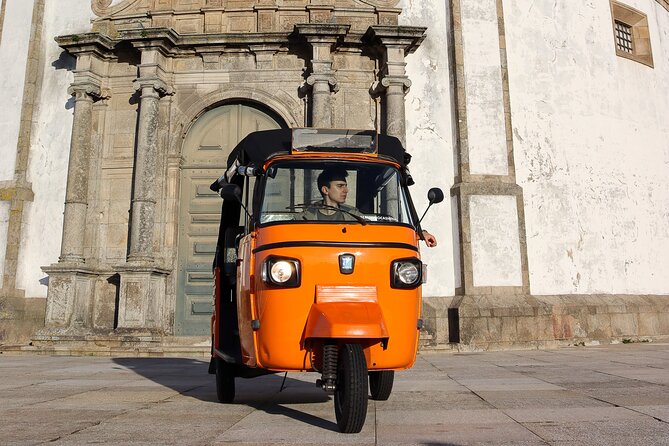
You begin at São João National Theatre, in Praça da Batalha. It’s not just a pretty facade. The theater opened in 1798, then was rebuilt in 1920 after damage, with architect José Marques da Silva behind the restoration. The neoclassical look tells you you are in the part of Porto where culture, ceremony, and civic life have long mixed together.
This is a strong start point because it’s central and visually “clean,” meaning you can mentally orient right away. Your guide can set the tone quickly, then you move into the older, rougher textures of the city, where views and stone details matter more than big modern crowds.
The Fernandine Wall: medieval defense you can still read
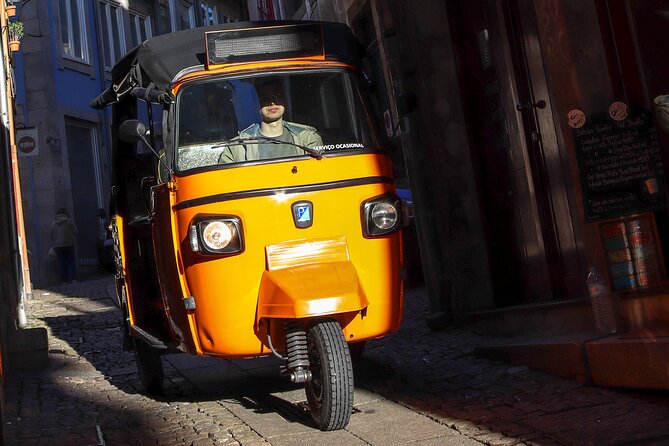
One of the best “quick stops” on this route is the Muralha Fernandina, the Fernandine Wall. Built in the 14th century during the reign of King Fernando I, it was designed to protect Porto as the city grew. Portions were partially demolished in the 19th century, but significant sections still remain, especially around Ribeira and Morro da Sé.
In a short time, what you can actually do is look for continuity. Even when parts are missing, the wall’s surviving stretches act like a timeline you can see. This is the kind of stop that works well on a tuk tuk tour, because you don’t need long museum time. You just need a few minutes to notice the scale and location.
More tuk tuk rides in Porto:
- Historic Porto by Private Electric Tuk Tuk to Top Landmarks
★ 4.5 · 735 reviews - Porto Guided Tour to the Historical Center on a Tuk Tuk
★ 4.5 · 418 reviews - Porto: Private Sightseeing Tour by Electric Tuk Tuk
★ 4.8 · 305 reviews - Oporto Tuk-Tuk Tour: Fast, Fun & Flexible – 1H to Full Day!
★ 4.7 · 280 reviews
Serra do Pilar Monastery: the circular church and the best “wow” angles
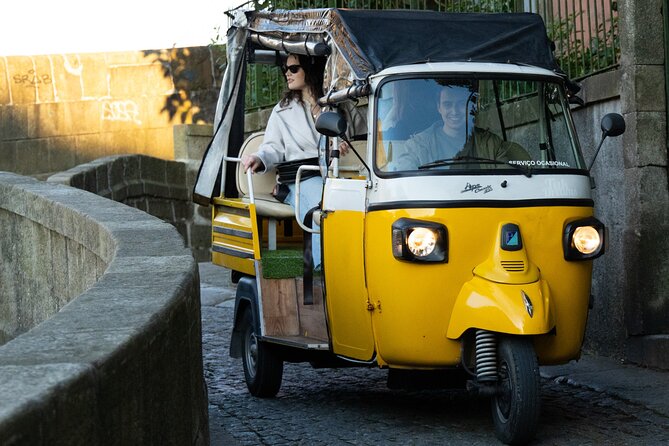
Next you head toward Mosteiro da Serra do Pilar, in Vila Nova de Gaia, a UNESCO World Heritage Site. The big highlight is the monastery’s circular church, with Renaissance architecture and a layout that feels distinct the moment you see it.
What really sells this stop is the payoff. Serra do Pilar gives panoramic views over Porto and the Douro River, and it’s exactly the kind of place where a guide helps. You learn where to point your phone for bridges and rooftops, and you understand why the church position matters on the skyline.
If you’ve spent your first day in Porto doing viewpoints that are far more tiring than they look, this is the stop that makes the whole day feel worth it.
River bridge circuit: from iron arches to modern concrete
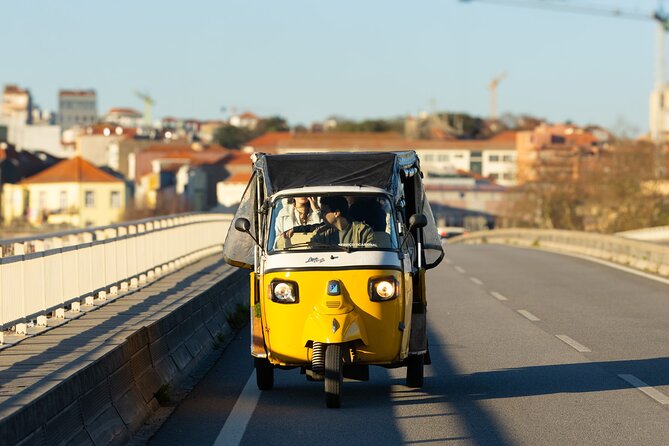
Porto’s river bridges are not just transportation. They are how the city learned to connect its neighborhoods, and they show different engineering eras in one corridor.
You pass by and stop for several major crossings:
São João Bridge (rail, 1991)
The São João Bridge opened in 1991 and was designed by engineer Edgar Cardoso. It’s a reinforced concrete railway bridge that replaced an older connection. Even if you only have a moment, the modern structure gives contrast against the older iron-and-arch styles nearby.
Ponte D. Maria Pia (Gustave Eiffel, 1877)
Then you reach Ponte D. Maria Pia, inaugurated in 1877, designed by Gustave Eiffel. It was the first railway bridge over the Douro, with a distinctive iron arch. It’s been decommissioned since 1991, but it remains a landmark of transportation history, and a stop here feels like looking at industrial art.
Dom Luís I Bridge (vehicles, pedestrians, metro)
The most iconic crossing is Dom Luís I Bridge, opened in 1886 and designed by Théophile Seyrig. What you see right away is the dual-level metal design, with decks that handle vehicles and pedestrians. Today, the metro also uses the bridge, so it stays functional and not just historical.
Practical tip: on an efficient tuk tuk route, you can take photos faster because you’re not stuck on the same hillside twice. Your guide times the quick “look and shoot” moments so you get your images without losing time to backtracking.
Arrábida Bridge (road bridge, 1963)
Finally, you also pass Ponte da Arrábida, a road bridge inaugurated in 1963, again by Edgar Cardoso. It’s known for its reinforced concrete arch and its structural elegance. It’s a good “engineering break” after the older city buildings, and it keeps the tour from feeling only like church and stone.
The garden and market stops that slow the pace on purpose
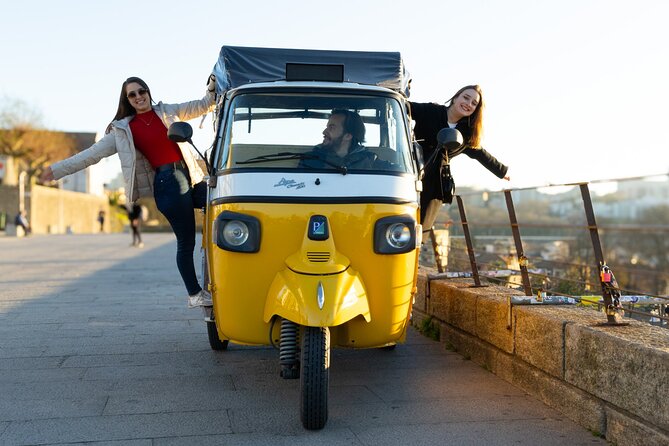
A tuk tuk tour can sometimes feel like a sprint. This one avoids that by threading in places where you can pause without pulling out a guidebook.
Infante D. Henrique Garden
The Jardim do Infante Dom Henrique sits in the Ribeira area and was created in the 19th century. The statue at the center honors Prince Henry the Navigator, tied to the Age of Discoveries. It’s a small stop, but it gives you a history lesson with breathing room, plus a nice chance to look back toward other landmarks in the area.
Ferreira Borges Market
You also pass the Ferreira Borges Market. It opened in 1885 and is known for its imposing iron structure with a neoclassical style. Today it no longer operates as a market, but it’s used as a cultural and leisure space for events and exhibitions. Even if you do not enter, the building gives you an important visual link between industry, civic life, and Porto’s architecture.
Palácio da Bolsa and São Francisco: where Porto shows off
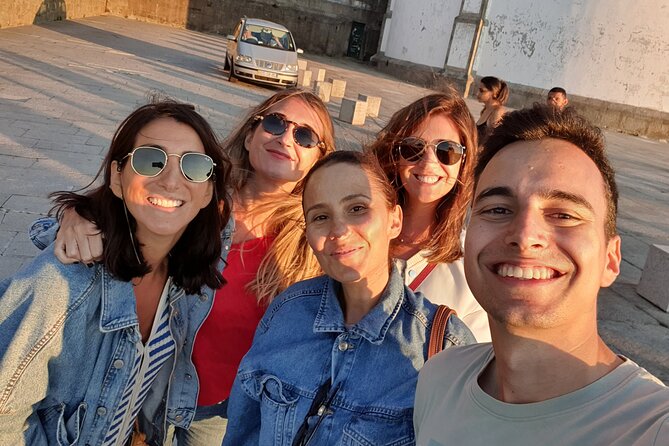
If you want a “classic Porto” interior moment without a long detour, this part of the day is where it happens.
Palácio da Bolsa (UNESCO) and the Arab Room
Palácio da Bolsa is a 19th-century neoclassical building, once the Porto Commercial Association headquarters. The standout detail is the Arab Room, famous for its luxurious interior. It is also a UNESCO World Heritage Site and hosts visitors and international events.
This is one of those stops where your guide helps you prioritize. You likely won’t spend a full deep-time session inside on a 90-minute tour, so it helps to know what to look for first and what to skip.
Church of São Francisco: Gothic outside, Baroque inside
Next you see Igreja de São Francisco, a mix of Gothic architecture and a richly decorated Baroque interior. The golden woodwork grabs your eye fast, and the church is also known for the Jesse Tree sculpture.
This is a great stop if you like ornament but hate wasting time. A guide can point out the specific features that make it memorable, so you feel like you got the main experience even during a brief visit.
Miragaia and the riverfront mood
After the churches and palace, the tour turns more atmospheric. Miragaia is one of Porto’s oldest and most picturesque areas, sitting near the Douro River. You’ll recognize it from the narrow streets, colorful houses, and historic merchant and artisan vibe.
This isn’t just scenery. It helps you understand how Porto’s “big sights” connect to daily life. When you see how the neighborhoods sit against the river, the bridges start to make sense as practical solutions, not just photo props.
Quick walk section: gardens and two churches side by side
Toward the later part of the tour, you get a short walking segment for a cluster of sights. This is a good moment for photos because you move at human speed instead of only from the seat of the tuk tuk.
Cordeiroaria Garden
You may stop at Cordoaria Garden, also connected to the Portuguese Photography Center area. The garden is known for century-old trees and sculptures, including The Boys by Juan Muñoz. It’s a calm break, and it’s a nice change of pace from bridge views.
Igreja do Carmo (tile panel, admission not included)
You’ll also see Igreja do Carmo, an 18th-century Baroque-Rococo church famous for a large tile panel on the side facade depicting religious scenes. Its admission is listed as not included, so decide on the spot whether you want to pay extra to go in.
Igreja dos Carmelitas (admission included)
Right near it is Igreja dos Carmelitas, built in the 17th century in Baroque style. The interior includes richly decorated, gilded woodwork, and here admission is included. If you want at least one church interior that you know is part of the deal, this is the one to prioritize.
Clérigos Tower and Crystal Palace gardens: big views without the hours
Two view-heavy stops cap the best parts of the tour.
Clérigos Tower
Clérigos Tower is one of Porto’s most iconic monuments, built in the 18th century in Baroque style by Nicolau Nasoni. The tower is 75 meters tall, and it’s famous for panoramic views. Even if you don’t go to the top, seeing the tower in person gives you a sense of scale, especially once you understand how steep Porto is.
Jardins do Palácio de Cristal
Then you head to the Crystal Palace Gardens, formerly the site of a 19th-century Crystal Palace building, later replaced by the Rosa Mota Pavilion in the gardens. Expect green space, sculptures, and some of the most scenic views over the Douro River. Admission here is free.
Passeio das Virtudes
Next is Passeio das Virtudes, a terraced area famous for panoramic river views and relaxed surroundings. This stop feels like the bridge-and-church energy switches into “slow travel” mode, with enough time to enjoy the angle rather than just capture it.
São Bento Station tiles and the Porto Cathedral viewpoint
Two final stops bring you back to Porto’s center of life and legend.
São Bento Railway Station
São Bento Station is one of the most beautiful train stations in Portugal, inaugurated in 1916. Its walls are covered with Portuguese azulejos, traditional painted tiles that show historical and cultural scenes. It’s a transportation hub, but it’s also a design landmark, and it’s perfect as a last stop because it’s memorable even for people who do not usually love stations.
Porto Cathedral (Sé do Porto)
Finally, you reach Porto Cathedral, also called Sé do Porto. Built between the 12th and 13th centuries, it is predominantly Romanesque, with Gothic and Baroque influences from later renovations. This is another place where a guide’s “what to look for” approach saves time, because the cathedral’s value is in the mix of architectural layers and the viewpoint over the city and Douro.
Rainy day reality, and how the best guides handle it
Porto weather can change fast. The good news is the tour is built for movement, not for standing in one spot all day. You still get the city’s key sights even if it’s gray, and multiple guides in feedback are praised for pushing through rain while keeping the experience comfortable.
Still, the open-air part matters. If it’s wet, bring a proper rain layer and keep your phone protected. If you are wearing shoes you can’t get slick, you will have a better time too.
One more practical note: this is private, but it is still a small-vehicle operation. If something goes wrong with the tuk tuk, the operator may use a backup vehicle to protect your schedule, and occasionally that can mean different seat comfort. Before you roll, do a quick check of the seat and ask for adjustments right away if it feels uncomfortable.
Who this tour fits best
This is an ideal choice if you:
- Want a fast first look at central Porto and Gaia without repeated hill climbs
- Prefer guided context over self-guided guessing
- Like photo stops and quick architecture moments
- Travel with limited time and want a structured overview in 1.5 hours
It is less ideal if you need long, unhurried museum time. This tour is built for seeing and understanding in motion, not for spending hours inside multiple interiors.
It can also be a strong option for solo travelers who want ease and safety without giving up control. Private transport plus a guide tends to lower stress on a first day.
Should you book the Porto Fun Private Tuk Tuk Tour?
I’d book this tour if you want an efficient, guide-led way to connect Porto’s big icons, river bridges, and church interiors into one easy loop. At $57.45 per person, it becomes a better deal when you value private time, interpretation, and the fact that many stops are free.
I would hesitate if your travel style is mostly “sit and linger for hours,” or if you are going during consistently poor weather and hate being outdoors on an open-air ride. In that case, plan for extra indoor time elsewhere.
Bottom line: if you want to get your bearings fast and still feel you saw real Porto details, this private tuk tuk route is a smart buy.
Just added around Porto
- Meditation Experience at a Lovely Farm in Porto★ 5.0 · 19 reviews
- Private Portuguese Cooking and Wine Experience in Porto★ 5.0 · 30 reviews
- Douro Valley Prime Tour: Wine Tastings, Boat & Lunch from Porto★ 5.0 · 572 reviews
- Port Wine Tour | 3 Cellars | 7 Tastings | 12 Participants Maximum★ 5.0 · 443 reviews
- Private Boat Tour on the Douro River at Sunset★ 5.0 · 21 reviews
- Visit to Cockburn’s Cellars★ 5.0 · 526 reviews
- Wine Tasting with Tapas Walking Tour in Porto★ 4.5 · 544 reviews
- PORTO city Walking Tour★ 5.0 · 132 reviews
Tuk Tuk City Tours, compared.

True 4Hour Private Tuk Tuk Tour: Discover Lisbon with a Local!
Read our review →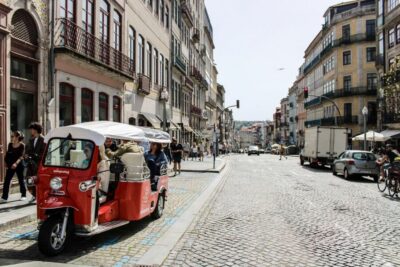
Guided Tour by Tuk-Tuk & Optional Douro River Cruise
Read our review →
Private Guided Tuk-Tuk Tour with Hotel Pickup
Read our review →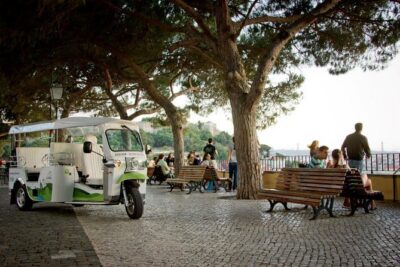
Private Lisbon Sightseeing Tuk-Tuk Tour: Alfama, Belém & More
Read our review →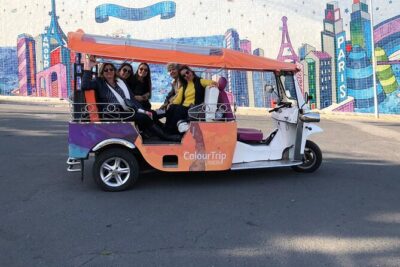
Lisbon Highlights: Private Tuk Tuk Tour Adventure Sightseeing
Read our review →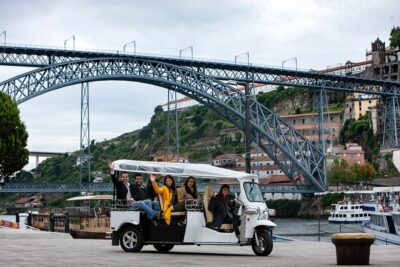
Discover Porto’s Highlights on a 2-Hour Private Electric Tuk Tuk
Read our review →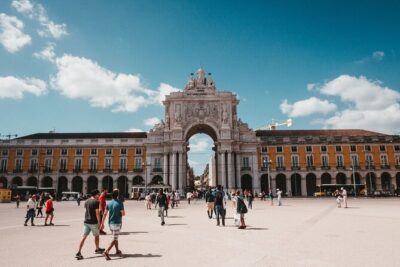
Welcome Lisbon Tour with Local Guide in Private Eco Tuk Tuk
Read our review →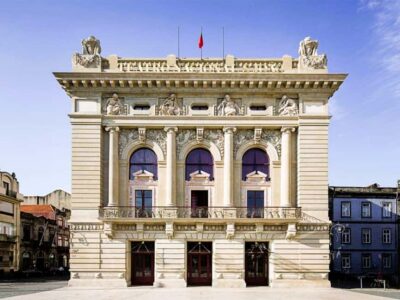
Browse the lists this tour appears in