
Reviewed · WALKING TOURS
Porto Walking Tour
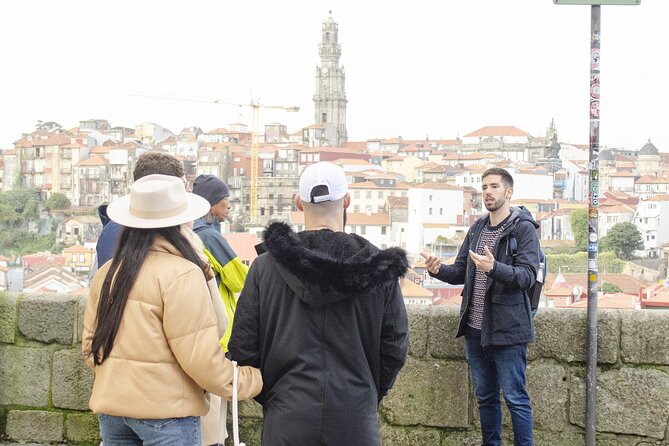
Porto makes sense fast on foot. This 3-hour guided walk strings together major sights with clear stories, from politics and wars to the best city views, and it ends inside the famous São Bento station.
I especially liked the way the guides keep things human and fun, with names like Nuno, Sid, and David popping up in praise for staying upbeat and answering questions without turning it into a lecture. I also love that you get more than photos, you get a tasting stop with a single glass of port plus a light snack.
The main catch is physical. Porto is hilly, and you’ll be on cobblestones and uneven sidewalks, so pack shoes you can trust and expect slow moments on steeper bits.
In This Review
- Key things to know before you go
- Meet by Rua de São Filipe de Nery, then start at Porto Cathedral
- Jardim da Cordoaria and the Tribunal do Porto, plus the Salazar thread
- Clérigos Tower and the Miradouro da Vitória viewpoint pause
- Old Porto on foot, Roman echoes to today’s customs
- Avenida da Liberdade to São Bento station, old tiles and 19th-century design
- Port tasting and snack, plus how to get more from the glass
- Price, pacing, and who this 3-hour walk suits
- Should you book this Porto Walking Tour?
- FAQ
- What time does the Porto Walking Tour start?
- How long is the tour?
- What is included besides sightseeing?
- Where does the tour start and end?
- How big is the group?
- What is the cancellation and weather approach?
Key things to know before you go
- A tight route, about 3 hours with a logical flow through the historic core
- Small group size (up to 15), which makes it easier to ask questions and hear the guide
- Port tasting included, plus a light snack, so the walk feels like more than a sightseeing loop
- Major landmarks in one go, including the Clérigos area and the interior of São Bento station
- You get viewpoint time at Miradouro da Vitória, with big-history context while you look out over the city
Meet by Rua de São Filipe de Nery, then start at Porto Cathedral
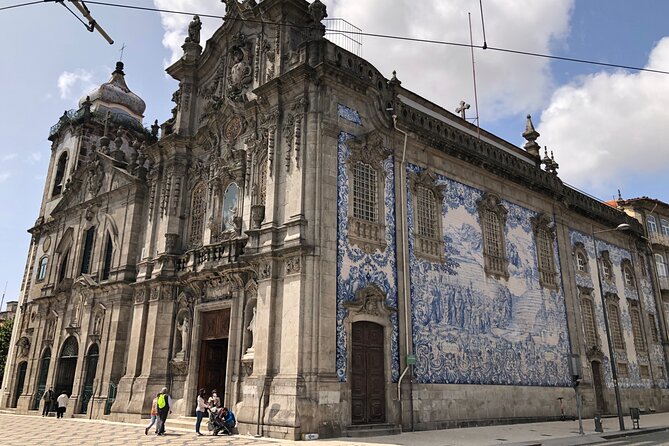
The tour starts at Rua de São Filipe de Nery at 10:00 am. That neighborhood puts you close to the iconic Clérigos area, so your day starts in the right frame of mind for Porto: steep streets, old stone, and church façades that look like they’ve been there forever.
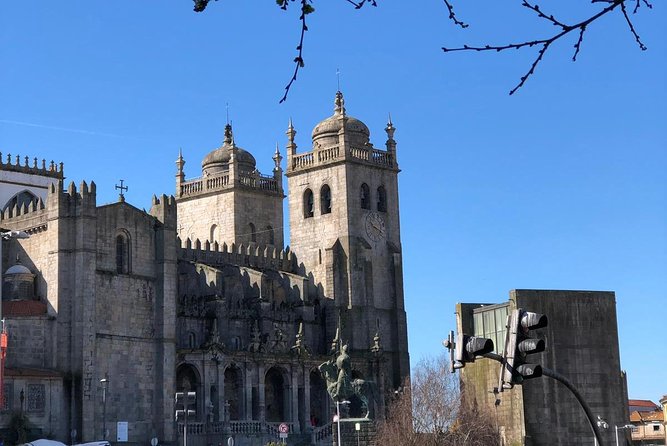
Before you even settle into the rhythm, you’ll move toward Porto Cathedral (Sé do Porto), where the guide sets the big picture for what you’re about to see. This is where the city stops being a list of sights and becomes a place with a timeline, including how Portugal’s story shaped Porto’s role over the centuries. It’s a good warm-up stop because it gives you names, themes, and cause-and-effect, not just locations.
From there, expect a steady walk with short explanatory stops. Reviews repeatedly mention how guides keep momentum without rushing, and that matters in Porto because you can lose time if you’re constantly stopping to figure things out. If you like history but also like your feet moving, this format works.
Practical tip: plan on a lot of looking up. Churches, towers, and viewpoints keep pulling your eyes upward, and you’ll also want to pause quickly for photos. Bring water, and if you’re sensitive to crowds, go into the day with the mindset that the main attraction is the walk and the explanations, not standing around for long.
More Walking Tours in Porto
- Porto Walking Tour, Lello Bookshop, River Cruise and Cable Car
★ 5.0 · 3,354 reviews - Experience Porto’s Charm: 3-Hour Guided Walking Tour
★ 5.0 · 2,432 reviews - Porto: 3-Hour Guided City Highlights Walking Tour
★ 4.8 · 2,050 reviews
Jardim da Cordoaria and the Tribunal do Porto, plus the Salazar thread
One of the tour’s strengths is that it doesn’t treat Porto as only medieval charm. You also get a political thread, starting around Jardim da Cordoaria and the Tribunal do Porto area. The guide discusses the dictatorship of Salazar and how political power shaped everyday life and city institutions.
This stop is valuable because it gives context to what you see. When you later notice government-era buildings, grand civic spaces, or the way authority is expressed in architecture, you’ll know what you’re looking at. You also get a sense of how Porto’s story did not freeze in time. It kept changing, even when the streets looked old.
Also, the tone here tends to be approachable. Multiple guide names in the feedback, including Nuno and David, are praised for making the stories feel lively. That’s not a small thing. Porto can be intense in weather, crowds, or sheer climbing, and a good guide helps you keep your energy up.
Possible drawback at this stage: if you’re expecting only scenic photo stops, the political discussion might feel heavy for a morning walk. My advice is to lean into it. Even a short conversation about dictatorship, institutions, and public life helps you understand why Porto looks the way it does today, not just how it once looked.
Clérigos Tower and the Miradouro da Vitória viewpoint pause
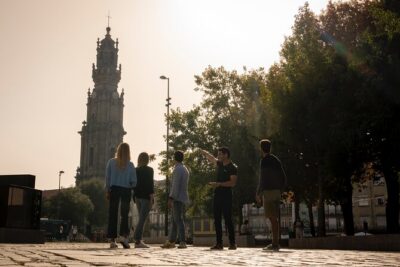
After the civic and institutional stops, you’ll head into the Clérigos Tower area, with the tower described as an essential Porto landmark. This section is about more than architecture. It’s also about timing and orientation, because once you’ve seen the tower and the surrounding streets, the city’s geometry starts to click.
Then you climb to Miradouro da Vitória, one of those places where Porto suddenly feels wide and open. Here the guide connects the view to major 19th-century events, including the Napoleonic invasion and the Portuguese Civil War. You’re not just staring at rooftops and river bends, you’re seeing the city as a strategic space that mattered in war and conflict.
This is a high-payoff moment. Viewpoints can sometimes be a quick stop and done. On this walk, you get context, so the view turns into a story in your head. And since the route is walking-focused, you get the feeling of how neighborhoods sit on hills and curves, which is hard to understand from a bus window.
If you’re planning what to wear, this is where it matters most. Expect uneven ground and steps, even if the pace is steady. Think about traction, not fashion. If your shoes slip on stone, you’ll spend the rest of the tour distracted, and Porto is not the place to rush your footing.
Old Porto on foot, Roman echoes to today’s customs
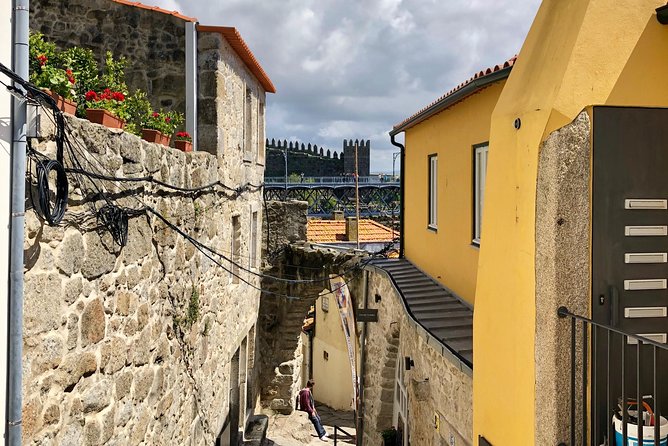
One of the tour’s most interesting ideas is that it treats Porto traditions as something you can still read on the street. Along the way, you visit the oldest and most traditional neighborhood, and the guide talks about how customs have persisted through major waves of influence, including Roman invasions, and how that legacy plays out in Porto today.
This is where the tour feels more like a local introduction than a museum-style route. You’ll see everyday streets and understand how history survives when people keep using spaces. The guide also helps you connect religious art and politics to the city’s development, which is something several people specifically called out as eye-opening.
There’s also a subtle benefit here: you learn where you can comfortably wander after the tour. You’ll likely finish with a better sense of what to revisit, and just as importantly, what to avoid if you want to escape the most tourist-heavy lanes near the river. One consistent theme in the feedback is that the guide’s recommendations help you eat better and move smarter during the rest of your stay.
If you want your “first day in Porto” to feel grounded, this neighborhood portion is a great anchor. It gives you a sense of place, not just a checklist.
Other Porto plans worth comparing
- Porto: Wine Tasting with Tapas Walking Tour
★ 4.4 · 1,541 reviews - Porto: Historic City Center Walking Tour
★ 4.7 · 1,172 reviews - Porto’s #1 Walking Tour
★ 5.0 · 1,026 reviews - Porto: Delicious Food and Wine Walking Tour
★ 4.8 · 977 reviews
Avenida da Liberdade to São Bento station, old tiles and 19th-century design
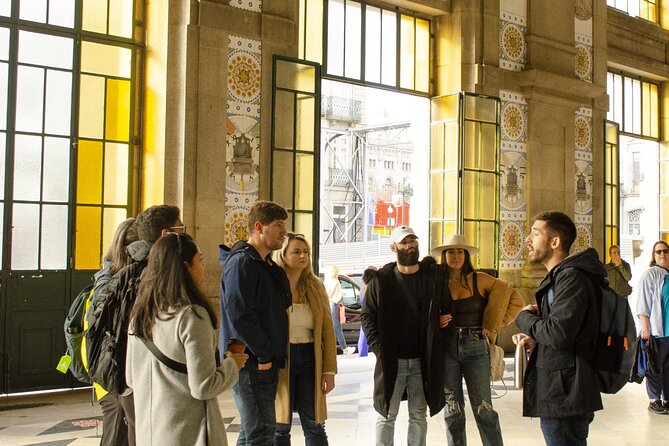
Near the end, you’ll walk down Avenida da Liberdade and finish inside São Bento station. This is a wonderful closing act because the station is not only a transit hub, it’s also a kind of public gallery. It’s described as a former convent and one of the most beautiful train stations in the world, and the interior tiles are usually the main reason people stop in their tracks.
What I like about finishing here is that it changes your perspective. Porto’s story up to this point has been about churches, towers, politics, and viewpoints. Inside São Bento, you see how art, design, and identity get built into daily routines.
One detail worth planning for: the station tiles and the way the space was built come up in the guide’s explanation. Several comments mention that the guide doesn’t just point at the murals, he explains the artist’s approach and how the station was constructed. That makes the artwork feel like part of Porto’s logic, not random decoration.
The practical downside is that São Bento can get busy. Plan to move slowly near the platforms and keep an eye on your group. Since this tour caps at a small number of people, you should still be able to hear the guide without turning it into a traffic jam.
Port tasting and snack, plus how to get more from the glass
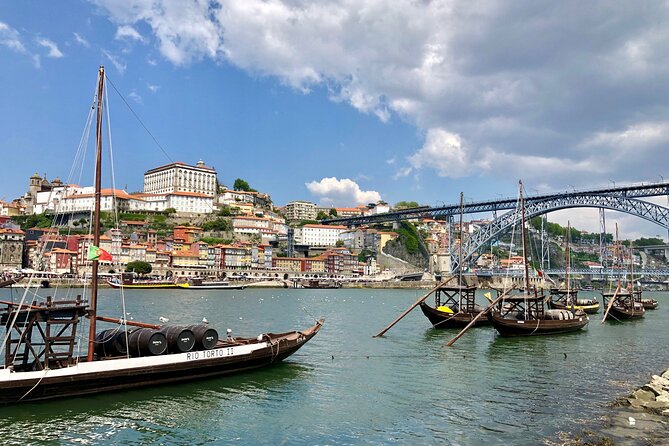
Port tasting is included, and it’s not positioned as a random add-on. It’s a short break that also teaches you how to think like a buyer. Feedback highlights that the guide explains how to appreciate port and how to check for quality and authenticity, so you don’t just drink and move on.
This matters because Porto can tempt you into easy mistakes: buying a sweet souvenir bottle without understanding what you’re actually getting. Even if you never become a port expert, the guide’s tips help you taste with intention. You start noticing whether a port feels balanced, what flavors come forward, and how the style matches the story of the drink.
The stop also includes a light snack. For a 3-hour walking tour, that’s the right kind of support. You don’t want a full meal that slows you down, and you don’t want to be starving right before you head back out toward the river.
If you’re the type who likes to learn while you do, this tasting fits nicely into the overall theme of Porto as a place where everything connects. Wine and trade connect to the city’s past, and understanding the basics helps you appreciate why port matters so much to Porto’s identity.
Price, pacing, and who this 3-hour walk suits
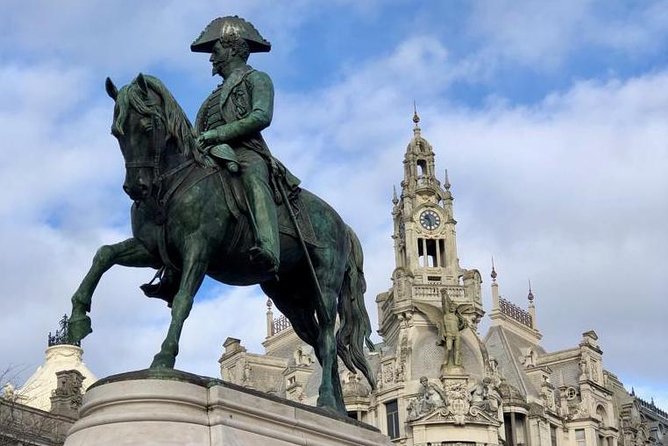
The price is $24.14 per person for about 3 hours, offered in English, and the tour runs with a maximum of 15 travelers. For most people, the value comes from the mix: major sights you’d otherwise stitch together on your own, plus structured context that makes those sights click, plus a port tasting stop.
If you’re visiting for a short time, this tour is a strong way to get your bearings fast. Porto is hilly, and your time is precious. A guided route saves you from guessing which landmarks deserve your energy and which ones you might miss if you’re trying to do too much independently.
You’ll also like the group size. With a small group, it’s easier to hear the guide at stops and ask follow-up questions, which several people praised in their feedback. You also get a steadier pace than the typical “wander and hope” tours.
Who it’s best for:
- First-time visitors who want a concentrated overview
- History-minded travelers who still want a walkable route
- Wine lovers who like learning how to taste, not just sampling
Who might hesitate:
- Anyone with trouble walking on uneven cobblestones and stairs. You can still join if you’re comfortable with hills, but you should go into it honestly expecting climbing and uneven footing.
A simple strategy: arrive ready to walk. Porto rewards you when you move slowly and look closely, and this tour gives you a framework to do that.
Should you book this Porto Walking Tour?
I think you should book it if you want Porto to make sense quickly, with a route that hits major landmarks and adds stories you can carry into the rest of your trip. The small group size, the port tasting, and the way guides like Nuno, Sid, and David are praised for humor and clear explanations all point in the same direction: this is a first-day win.
Skip it only if you want a mostly relaxed, low-effort city stroll. Porto’s streets are steep and cobbled, so this is a walking tour with real movement, not a gentle promenade.
If the weather is decent and you’re prepared for the climb, this is one of the smartest ways to start a Porto stay and leave feeling like you understand the city, not just that you saw it.
FAQ
What time does the Porto Walking Tour start?
It starts at 10:00 am.
How long is the tour?
The tour runs for about 3 hours.
What is included besides sightseeing?
The experience includes a port tasting with a single glass of port and a light snack.
Where does the tour start and end?
It starts at Rua de São Filipe de Nery, Porto and ends at Praça Ribeira, next to the Douro River.
How big is the group?
The tour has a maximum of 15 travelers.
What is the cancellation and weather approach?
There is free cancellation up to 24 hours in advance for a full refund. The tour requires good weather, and if it’s canceled due to poor weather, you’ll be offered a different date or a full refund.
Just added around Porto
- Meditation Experience at a Lovely Farm in Porto★ 5.0 · 19 reviews
- Private Portuguese Cooking and Wine Experience in Porto★ 5.0 · 30 reviews
- Douro Valley Prime Tour: Wine Tastings, Boat & Lunch from Porto★ 5.0 · 572 reviews
- Port Wine Tour | 3 Cellars | 7 Tastings | 12 Participants Maximum★ 5.0 · 443 reviews
- Private Boat Tour on the Douro River at Sunset★ 5.0 · 21 reviews
- PORTO city Walking Tour★ 5.0 · 132 reviews
- Visit to Cockburn’s Cellars★ 5.0 · 526 reviews
- Wine Tasting with Tapas Walking Tour in Porto★ 4.5 · 544 reviews
Walking Tours, compared.
Best of Lisbon Small-Group Guided Walking Tour
Read our review →
Porto Walking Tour, Lello Bookshop, River Cruise and Cable Car
Read our review →
Best of Lisbon Walking Tour: Rossio, Chiado & Alfama
Read our review →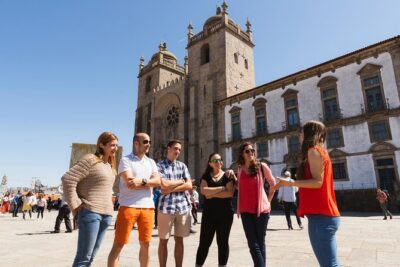
Experience Porto’s Charm: 3-Hour Guided Walking Tour
Read our review →
Enjoy a Guided Levada Walk in the Rabaçal Valley
Read our review →Browse the lists this tour appears in