
Reviewed · TUK TUK CITY TOURS
Tours in the Port DE Tuk Tuk
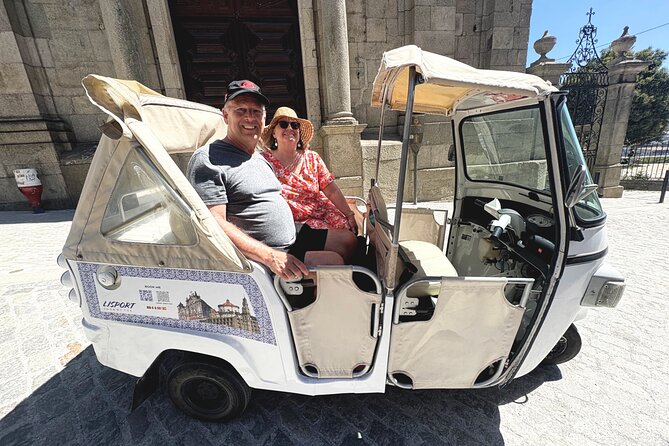
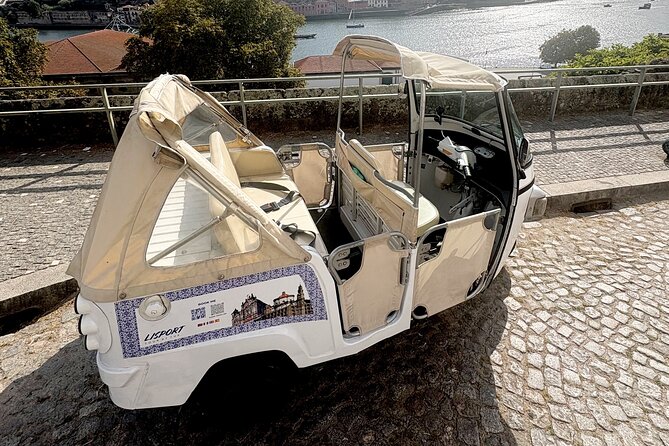
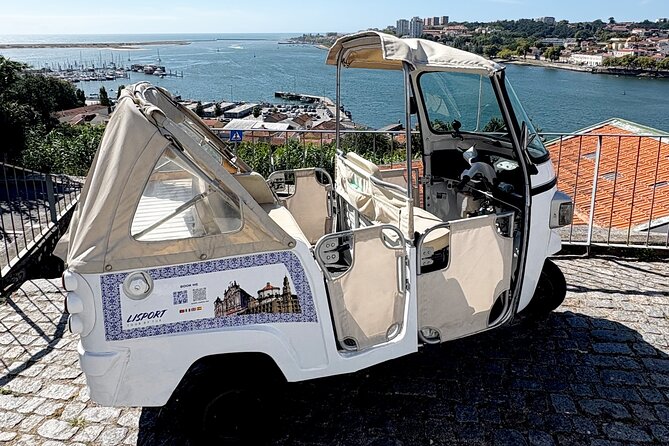
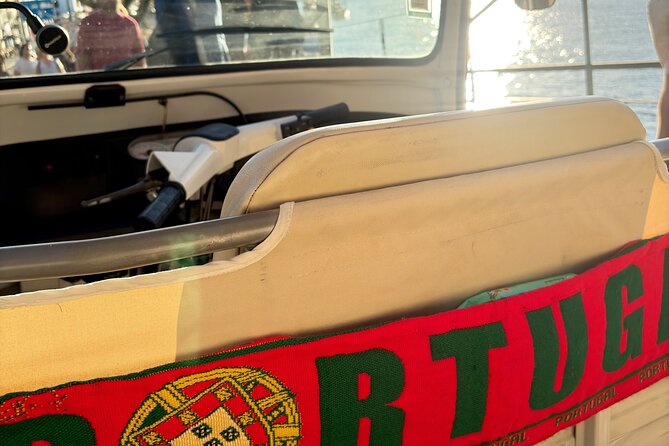
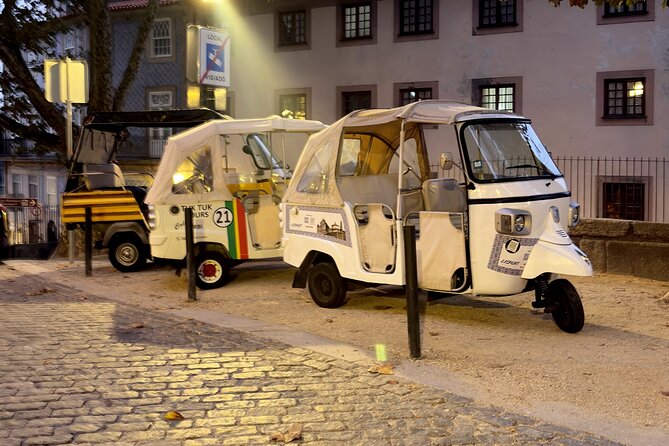
Porto looks better from a tuk tuk. This private ride squeezes a lot of big-hitter architecture into about 1 hour to 1 hour 10 minutes, right through the historic center. You also get a clear, English-guided overview of where things are, so your next days make more sense fast.
I love the tile and facade focus, especially São Bento Station and Igreja de Santo Ildefonso. I also like the calm, flexible feel, with guides such as Bruno described as willing to tailor the route and keep you from feeling rushed.
One possible drawback: with so many stops in one short window, some interiors or paid climbs may depend on timing and how long you want to linger at each viewpoint.
In This Review
- Key moments you will actually care about
- How the Porto tuk tuk route fits 70 minutes of highlights
- São Bento and Teatro São João, where tiles meet culture
- São Bento Railway Station: the tile murals you cannot miss
- Royal Theatre of São João: neoclassical with a serious interior
- Sé Cathedral and the Fernandina Wall: medieval Porto in real stone
- Porto’s Sé Cathedral: Romanesque spine with later layers
- Fernandina Wall: protection, ports, and photo-friendly remnants
- Dom Luís I Bridge: the best way to connect Porto and Gaia
- Santo Ildefonso and Rua Santa Catarina: tile facades and Porto shopping energy
- Igreja de Santo Ildefonso: about 11,000 tiles and a big photo staircase
- Rua de Santa Catarina: shopping street with classic and modern mixed in
- Avenida dos Aliados, Praça da Liberdade, and the Carmo and Carmelites cluster
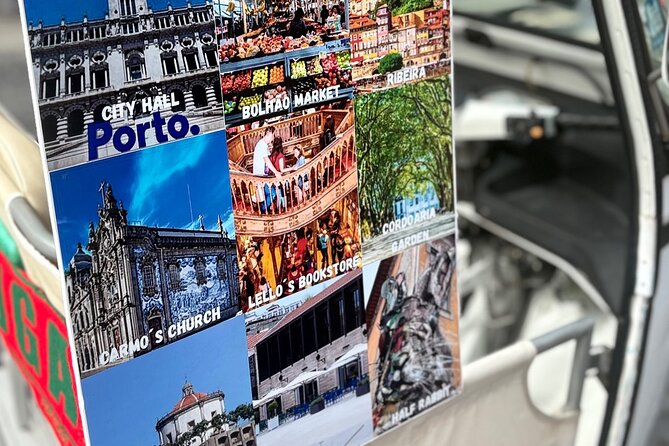
- Avenida dos Aliados and the Porto City Hall building
- Praça da Liberdade and the fountain lions
- Igreja dos Carmelitas and Igreja do Carmo: baroque side by side
- Hospital da Misericórdia, Jardim da Cordoaria, and a calmer pause in the middle of it all
- Misericórdia do Porto hospital building: neoclassical and rare in Portugal
- Jardim da Cordoaria: former rope makers turned into green pause
- Cadeia da Relação and Clérigos Tower: finish with photography and 360-degree views
- Cadeia da Relação: free photography in an old prison and courthouse
- Clérigos Tower: the 225 steps to the 360 view
- Price and value of a private Porto tuk tuk group ride
- Who should book this Porto tuk tuk tour, and who should skip it
- FAQ
- How long is the Porto tuk tuk tour?
- Is this tour private or shared?
- What language is the tour offered in?
- Do I get a ticket on my phone?
- Where does the tour start and where does it end?
- What if weather is bad?
- Can I bring a service animal?
- Is the ride suitable for most people?
- Should you book this Tuk Tuk tour in Porto?
Key moments you will actually care about
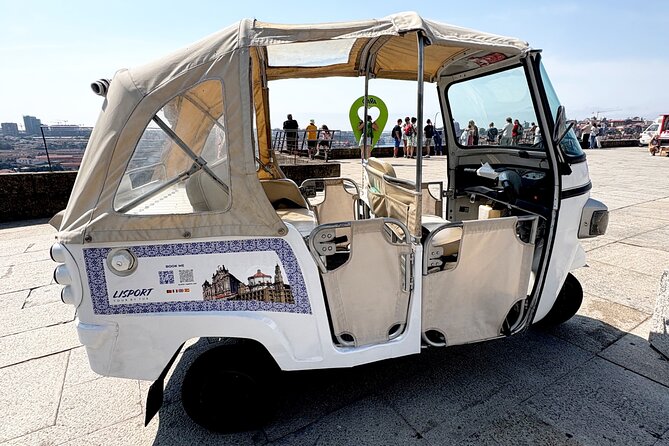
- A private tuk tuk format that keeps the route efficient without feeling like a cattle call
- São Bento’s 20,000 plus historic tiles as a must-see interior moment
- Dom Luís I Bridge photo angles across both neighborhoods and the Douro River
- Big-name tile churches like Igreja de Santo Ildefonso with about 11,000 blue-and-white tiles
- Cadeia da Relação with free entry for a photography break in a historic building
- Clérigos Tower options if you want the 360-degree view and are willing to pay
How the Porto tuk tuk route fits 70 minutes of highlights
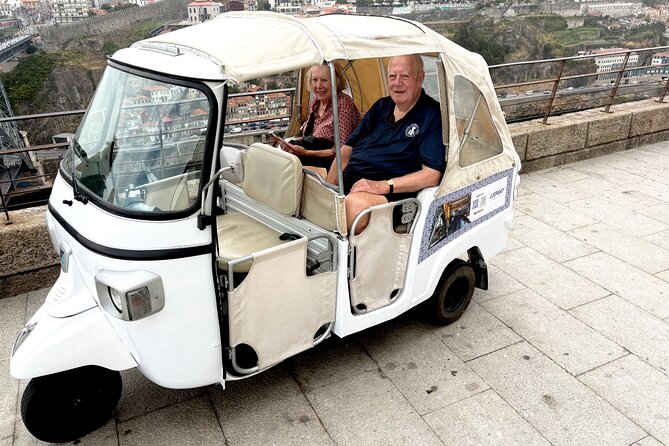
This tour is built for people who want the best of central Porto without spending your energy on logistics. You ride around in a tuk tuk with a guide in English, and you hop out for short, high-value looks at major landmarks.
The route is dense by design. In a single outing you cover grand architecture (theatre and churches), the city’s signature tiles, and the classic skyline moments, including a major bridge that connects Porto to Vila Nova de Gaia. That matters if you are visiting for a short stay, because it helps you understand the geography quickly, especially around the river and the old medieval core.
You’ll be using the same starting point for the whole loop, at Monumento ao Rei D. Pedro, Praça da Batalha 66. The tour ends back there, which is convenient when you are trying to plan dinner afterward.
More Tuk Tuk Tours in Porto
- Porto: Guided Tour by Tuk-Tuk & Optional Douro River Cruise
★ 4.5 · 5,980 reviews - Discover Porto’s Highlights on a 2-Hour Private Electric Tuk Tuk
★ 4.5 · 1,860 reviews - Porto: Guided Tuk Tuk Tour
★ 4.6 · 1,390 reviews
São Bento and Teatro São João, where tiles meet culture
You start near the historic heart, close to São Bento Station and the National Theatre of São João area. Two early stops set the tone for the entire day: tiles and performing arts.
São Bento Railway Station: the tile murals you cannot miss
Inside São Bento Station, the headline is simple: more than 20,000 historic tiles covering the station interior. The murals were painted by Jorge Colaço between 1905 and 1908, and they show scenes from Portuguese life and history, including rurality, transport, and key moments. If you like art that also tells a story, this is one of Porto’s most efficient stops.
Practical tip: plan to slow down here. Even if you only take a few steps into the main areas, the sheer detail rewards time. If you are rushing, you will miss the smaller scenes near the edges.
Royal Theatre of São João: neoclassical with a serious interior
Right near the Plaza da Batalha, the National Theatre of São João is a different kind of wow. It was inaugurated in 1798 as the Royal Theatre of São João, destroyed by a fire in 1908, and rebuilt and reopened in 1920. The style is neoclassical and Beaux-Arts, with an imposing facade featuring columns, sculptures, and inscriptions.
What makes it special is the contrast between the outside and the inside. Expect richly decorated interiors, including golden frescoes, painted ceilings, and decorated areas that reflect the theatre’s major role in Portugal’s performing arts scene. Guided tours can cover history, backstage areas, and architecture, depending on the schedule.
Possible catch: you may not have time for a full interior visit in a 1-hour loop. Even so, the exterior and the context make a good anchor for the rest of the tour.
More tuk tuk rides in Porto:
- Historic Porto by Private Electric Tuk Tuk to Top Landmarks
★ 4.5 · 735 reviews - Porto Guided Tour to the Historical Center on a Tuk Tuk
★ 4.5 · 418 reviews - Porto: Private Sightseeing Tour by Electric Tuk Tuk
★ 4.8 · 305 reviews - Oporto Tuk-Tuk Tour: Fast, Fun & Flexible – 1H to Full Day!
★ 4.7 · 280 reviews
Sé Cathedral and the Fernandina Wall: medieval Porto in real stone
Next you shift from tile and culture to medieval Porto. Two stops, the Sé Cathedral area and the Fernandina wall remnants, do the job of explaining how the city protected itself and grew.
Porto’s Sé Cathedral: Romanesque spine with later layers
The Sé Cathedral has Romanesque roots and then later Gothic and Baroque changes. It began in the 12th century, was expanded over time, and absorbed major stylistic updates in the 14th and 17th centuries, including Gothic additions like the cloister and Baroque elements such as the main altar.
This place also connects to turning points in Portuguese history. It was a key site during the Christian Reconquest and the consolidation of the Kingdom of Portugal. If you want one quick way to understand why Porto matters, this is it: religion, power, and stone architecture all in one.
Practical note: cathedral areas can be lively and sometimes closed or altered due to services. In a short tour, the guide’s timing matters.
Fernandina Wall: protection, ports, and photo-friendly remnants
The Fernandina wall sits in a more open landscape around the old city edge, descending toward the Douro. Built in the 14th century under King D. Fernando I, it replaced and enlarged older Romanesque defenses as the city grew. The wall was made of granite and served to protect the port and control commercial entrances and exits.
A huge reason this stop is worth it is that you can still see restored pieces. The tour highlights areas like the stretch next to Porto’s river zones, plus the Track between Largo do Muro dos Bacalhoeiros and Ribeira. There is also Postigo do Carvão, described as the only medieval door still existing, which is a great detail to remember when you spot the stonework.
This is also one of your best photo zones. It gives you a sense of the river relationship and the scale of the old city.
Dom Luís I Bridge: the best way to connect Porto and Gaia
If there is one must-know highlight in this route, it is Dom Luís I Bridge. It connects Porto and Vila Nova de Gaia, crossing the Douro with direct views of the Porto wine warehouses.
Built and inaugurated in 1886, it was designed by engineer Théophile Seyrig, a partner of Gustave Eiffel. That connection is worth filing away because it hints at the engineering ambition of late 19th century Europe.
Here are the details you will remember while you look at it:
- It is a double-deck bridge.
- The upper board is for the Port Metro line D and pedestrians.
- The bottom board carries cars and pedestrians.
- The central iron arc spans 172 meters and the maximum height is about 45 meters above the river.
- It has been classified as a National Monument since 1982.
Most people come for the views, and the tour route supports that. The bridge is also a strategic passage between the north shore (Porto) and the south shore (Gaia), so it functions like a shortcut to understanding where the city turns toward its waterfront economy.
Possible drawback: if it is crowded or windy, you may not want to linger as long as you would on a calmer day.
Santo Ildefonso and Rua Santa Catarina: tile facades and Porto shopping energy
You then return to the city’s center with two contrasting experiences, one highly artistic, one very everyday.
Igreja de Santo Ildefonso: about 11,000 tiles and a big photo staircase
Igreja de Santo Ildefonso is a Baroque church with proto-rococo influence, and the facade steals the show. It is covered with about 11,000 blue and white tiles. The stairway in front and the contrast between tiles and granite make it one of Porto’s most photographed corners, day or night.
If you like religious art that also reads like storytelling, this facade does that. The tiles depict scenes from the life of Santo Ildefonso and passages from the Gospel. At night, the lighting highlights the facade details, which is a practical reason to think about timing if you can choose your start time.
Practical tip: bring your patience for photos, because this is a popular street-side pause.
Rua de Santa Catarina: shopping street with classic and modern mixed in
From the church area, you move to Rua Santa Catarina, the main shopping street in central Porto. It is mostly pedestrian and connects the center toward the Marquês area.
This stop is useful because it gives you a feel for how Porto lives when you are not inside monuments. Expect a mix of international brands like Zara, Bershka, H&M, and FNAC, along with local souvenir and footwear shops. A big nearby anchor is ViaCatarina Shopping with a theme food square.
You’ll also pass Café Majestic, a Belle Époque-style icon often described as one of the most beautiful historic cafés in Portugal. Even if you do not go in, it helps to see why it is famous.
Possible drawback: this can be busy, so it is not the best spot to find quiet.
Avenida dos Aliados, Praça da Liberdade, and the Carmo and Carmelites cluster
As you work your way along the center, you get three things in a small radius: civic grandeur, university-town energy, and two baroque churches next to each other.
Avenida dos Aliados and the Porto City Hall building
Avenida dos Aliados is a major hub, and the tour includes the imposing landmark at its top, facing Praça da Liberdade. The building started in 1920 and was completed in 1957 and is neoclassical with monumental 20th century influence.
It has a central tower with a clock and sits at about 70 meters height. The granite facade includes sculptures, and the interior features marble stairs and artistic glazing. The building is the headquarters of Porto’s municipal executive, with offices and meeting rooms, plus temporary exhibitions. In special events like an Open Day, the public can explore it for free, though normal interior access can vary.
For you, this stop is about perspective: it shows how Porto’s identity blends old stone and official power.
Praça da Liberdade and the fountain lions
Next comes Praça da Liberdade, often nicknamed Plaza de los Leones because of a central fountain with four bronze-winged lions running water through their mouths.
This is one of the most emblematic areas of the city, especially with students around. It is near the Rectorate of the University of Porto and near Lello, one of the world’s famous bookstores. If you are planning future strolls, this square is a natural meet point and a good starting place for exploring nearby streets.
Igreja dos Carmelitas and Igreja do Carmo: baroque side by side
Two churches sit close together, which is great in a short tour because you get contrast without travel time:
- Igreja dos Carmelitas (built 1616 to 1628): Classical Baroque, part of a female convent. It is described as having a more sober facade, while the interior includes golden retables.
- Igreja do Carmo (built 1756 to 1768): Baroque and Rococo, tied to a male convent.
Between them is that famous very narrow passage between a house area, about 1 meter wide, which served to prevent direct contact between nuns and monks based on canonical rules.
Possible drawback: these churches can have varying access rules depending on service times, and time is tight in a 1-hour loop.
Hospital da Misericórdia, Jardim da Cordoaria, and a calmer pause in the middle of it all
The tour then slows the pace with two stops that feel more like breathing space, even though they are still tied to Porto’s story.
Misericórdia do Porto hospital building: neoclassical and rare in Portugal
The Hospital da Misericórdia area is described as founded in 1799 by Misericordia do Porto and designed by English architect John Carr in a neoclassical style. Construction took decades and was not fully completed until the 19th century.
The structure is in granite with an austere, imposing facade, and it has a U-shape layout with inner courtyards. It is considered one of the most important hospital buildings in the country in historical and architectural terms and is linked to the University Hospital Center of Porto.
This is a stop that adds depth. Many Porto tours only chase pretty facades. This one quietly reminds you that the city built serious institutions too.
Jardim da Cordoaria: former rope makers turned into green pause
Then comes Jardim da Cordoaria, near Rua do Carmo area landmarks and close to Torre dos Clérigos. It sits on the site of the former corders zone, where string manufacturers stretched and twisted ropes.
In the 19th century it was transformed into a garden, shaped by landscape architect Émile David, who was also connected to the Crystal Palace. Today it provides walking routes, centuries-old trees, banks with shade, and a quieter environment that works well as a reset between major monuments.
If you like contemporary art, there is also a sculpture stack by artist Juan Muñoz, with bronze human figures placed around the garden in mysterious positions.
Cadeia da Relação and Clérigos Tower: finish with photography and 360-degree views
Your final stretch brings two very different treats: photography in a historic prison and, if you want it, a big climb for views.
Cadeia da Relação: free photography in an old prison and courthouse
Cadeia da Relação was built in the 18th century, originally as the Port Relation Chain, functioning as a prison and courthouse. People passed through it, including Camilo Castelo Branco, who was imprisoned there in the 19th century.
It activated as a prison again in 1974, and later got rehabilitated in the 1990s to become a photography center. The institution focuses on preserving and sharing photography in Portugal, including a national and international collection, with emphasis on ancient cameras, negatives, historical portraits, and collections from Portuguese photographers.
One of the practical wins: admission is free, and you can visit the historic building, including old prison rooms with grids and cells. For a short tour, this stop adds a different texture, and it is a smart choice if you want culture that is not only stone and tiles.
Clérigos Tower: the 225 steps to the 360 view
The tour ends near the Clérigos complex, where you can choose to pay for the climb and museum. The Church of the Clergy was built between 1732 and 1750, and the tower was completed in 1763.
This is a masterpiece by Italian architect Nicolau Nasoni, a key Baroque figure in northern Portugal. The church has an oval plan, and the tower rises to about 76 meters. There are 225 steps to the top, and the reward is a panoramic view described as 360 degrees over Porto and the Douro.
Practical tip: if the day is windy, or your legs are not in climb mode, you can still enjoy the facade and nearby views without going up.
Price and value of a private Porto tuk tuk group ride
At about $42.05 per group for a tour lasting roughly 1 hour to 1 hour 10 minutes, the value is not just the ride. It is the fact that you are combining multiple high-demand stops in one organized loop, guided in English and backed by a mobile ticket.
Because it is private and only your group participates, you are not forced to match someone else’s pace. The guides associated with this operator, including names like Bruno and Hugo, are described as flexible, with a calm approach and tailoring to your interests, rather than a strict checklist.
So what could reduce value? Time. When the route includes major stops back-to-back, you may need to decide where you want extra minutes. If you want a deep interior dive at every monument, you might still need a separate visit later.
Who should book this Porto tuk tuk tour, and who should skip it
Book it if:
- You are in Porto for a short time and want a fast orientation through the most photogenic neighborhoods.
- You care about azulejos and landmark architecture, from tile stations to tile church facades.
- You like a guided route with a guide who can adjust pacing, especially when it comes to spending more time on what you personally care about.
Skip it if:
- You want long, slow museum time at each stop. This is built as a highlights loop.
- You are sensitive to weather, because the experience requires good weather and poor conditions can lead to rescheduling or a refund option.
- You hate walking short distances. Even though you ride by tuk tuk, you will still step out often for quick looks.
FAQ
How long is the Porto tuk tuk tour?
It runs about 1 hour to 1 hour 10 minutes.
Is this tour private or shared?
It is a private tour, meaning only your group participates.
What language is the tour offered in?
The tour is offered in English.
Do I get a ticket on my phone?
Yes, you receive a mobile ticket.
Where does the tour start and where does it end?
It starts at Monumento ao Rei D. Pedro, Praça da Batalha 66, 4000-101 Porto, Portugal, and ends back at the same meeting point.
What if weather is bad?
The experience requires good weather. If it is canceled due to poor weather, you will be offered a different date or a full refund.
Can I bring a service animal?
Yes, service animals are allowed.
Is the ride suitable for most people?
Most travelers can participate, and it includes a security belt.
Should you book this Tuk Tuk tour in Porto?
I think you should book it if you want a smart first taste of Porto in under two hours. You get a private tuk tuk, English guidance, and a route that hits São Bento tiles, key church facades, the Douro bridge moment, plus a unique photography stop at Cadeia da Relação. It is especially good for travelers who want to get their bearings fast and then explore the rest on their own.
If you already know Porto well and want slow, deep museum time, you might prefer standalone visits. But if your goal is an efficient, well-paced highlights loop, this is a strong choice.
Just added around Porto
- Meditation Experience at a Lovely Farm in Porto★ 5.0 · 19 reviews
- Private Portuguese Cooking and Wine Experience in Porto★ 5.0 · 30 reviews
- Douro Valley Prime Tour: Wine Tastings, Boat & Lunch from Porto★ 5.0 · 572 reviews
- Port Wine Tour | 3 Cellars | 7 Tastings | 12 Participants Maximum★ 5.0 · 443 reviews
- Private Boat Tour on the Douro River at Sunset★ 5.0 · 21 reviews
- Visit to Cockburn’s Cellars★ 5.0 · 526 reviews
- Wine Tasting with Tapas Walking Tour in Porto★ 4.5 · 544 reviews
- PORTO city Walking Tour★ 5.0 · 132 reviews
Tuk Tuk City Tours, compared.

True 4Hour Private Tuk Tuk Tour: Discover Lisbon with a Local!
Read our review →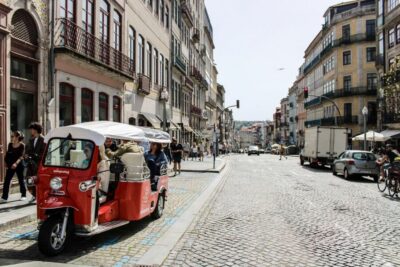
Guided Tour by Tuk-Tuk & Optional Douro River Cruise
Read our review →
Private Guided Tuk-Tuk Tour with Hotel Pickup
Read our review →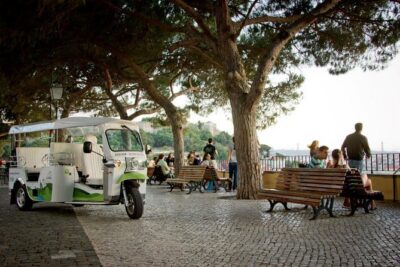
Private Lisbon Sightseeing Tuk-Tuk Tour: Alfama, Belém & More
Read our review →
Lisbon Highlights: Private Tuk Tuk Tour Adventure Sightseeing
Read our review →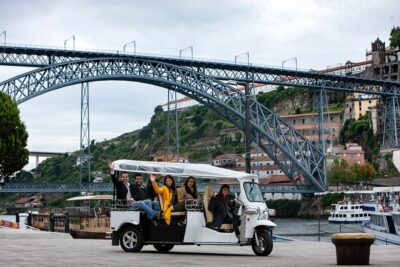
Discover Porto’s Highlights on a 2-Hour Private Electric Tuk Tuk
Read our review →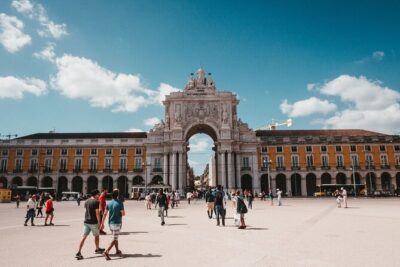
Welcome Lisbon Tour with Local Guide in Private Eco Tuk Tuk
Read our review →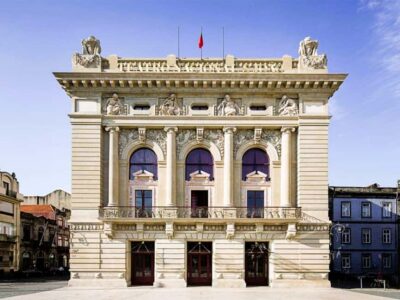
Browse the lists this tour appears in