
Reviewed · WALKING TOURS
Walking Tour – History of Tiles in Porto
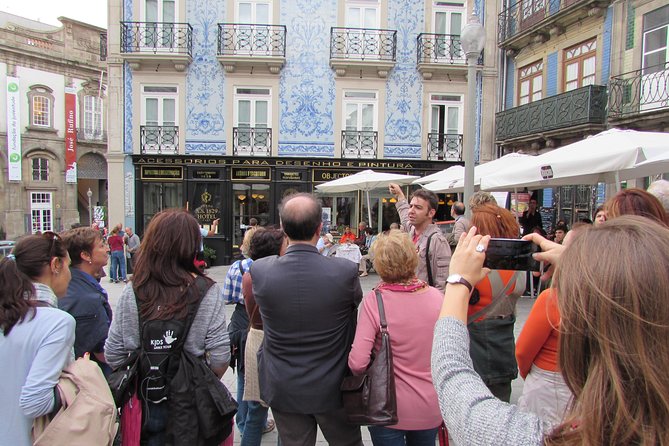
Porto’s tiles feel like street-level stories. This 2 hours 45 minutes walk trains your eye for azulejos right where they live, starting at the Fonte dos Leoes outside Igreja do Carmo. I love that the guide connects the craft to real buildings you can point at, not just pretty walls.
My second favorite part is São Bento Station, where you’ll study the Jorge Colaço tile work up close. One thing to plan for is the pace: it’s a walking tour through Porto’s historic center, so comfy shoes and an on-time arrival matter.
In This Review
- Key things to look for
- Porto’s Tile Walking Tour: how to see azulejos with smarter eyes
- Starting near Igreja do Carmo and the Fonte dos Leoes
- Stop 1: São Bento Railway Station and the Jorge Colaço mosaics
- Stop 2: Museu da Cidade do Porto and the city’s collected context
- Stop 3: Igreja do Carmo facade tiles and the church panel detail
- Tile-making techniques: what you’ll actually learn to notice on the street
- What the full 2 hours 45 minutes feels like, stop to stop
- Ending by Ribeira Square: leaving with a better Porto map in your head
- Price and value: what you get for $81.93 per person
- Who should book this tile tour in Porto
- Should you book this History of Tiles in Porto tour?
- FAQ
- How long is the walking tour?
- How much does the tour cost?
- What group size is it limited to?
- Where do we meet and where does it end?
- Is this tour offered in English, and do I get a mobile ticket?
- What’s included in the price?
- Are food and drinks included?
- Can I cancel for a full refund?
Key things to look for
- Fonte dos Leoes start: a fun launch point right outside Igreja do Carmo
- São Bento inside visit: big tile murals, including historical battle scenes
- Jorge Colaço attribution: you’ll learn which artist is behind key works at the station
- Museu da Cidade do Porto stop: a chance to see how the city frames its materials and culture
- Igreja do Carmo facade focus: the route spotlights tile panels in church architecture
- Small group up to 10: easier questions, more attention on details
Porto’s Tile Walking Tour: how to see azulejos with smarter eyes
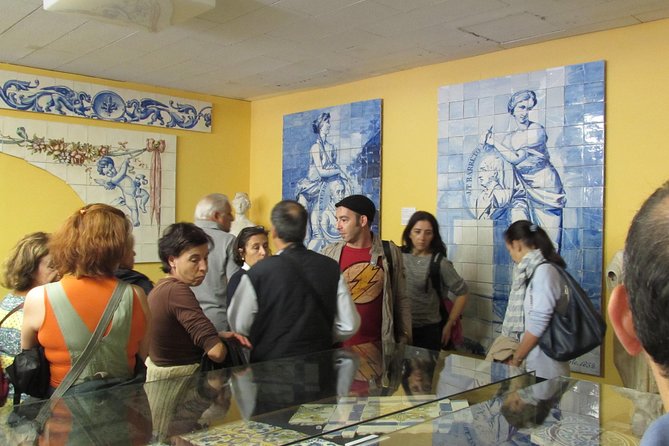
If you’ve ever walked past a pretty tiled facade and thought, Nice, then this kind of tour changes the way you look. Porto’s azulejos are everywhere in the UNESCO historic center, but most people see them as decoration. A good tile-focused walk turns them into something you can read: technique, symbolism, and why certain scenes and colors ended up on specific walls.
This tour is built for that “wait, look at that” moment. You’re not just sightseeing buildings. You’re learning how tile-making developed over time, how painters and makers used different methods, and what to notice when you spot patterns, borders, and repeating motifs. The route also keeps you moving between major landmarks and quieter corners where tiles show up on churches, homes, and shops.
The result is a practical skill. After the walk, you’ll likely start pointing out tile details on your own, even when you’re just wandering the Ribeira area. That is real value, because Porto is a city you revisit with fresh eyes.
More Walking Tours in Porto
- Porto Walking Tour, Lello Bookshop, River Cruise and Cable Car
★ 5.0 · 3,354 reviews - Experience Porto’s Charm: 3-Hour Guided Walking Tour
★ 5.0 · 2,432 reviews - Porto: 3-Hour Guided City Highlights Walking Tour
★ 4.8 · 2,050 reviews
Starting near Igreja do Carmo and the Fonte dos Leoes
Your tour begins at Igreja do Carmo on R. do Carmo (4050-164 Porto). That’s a strong meeting point because you’re already in the thick of Porto’s tiled architecture. From there, the experience starts by greeting your guide and then moving into the area around the Fonte dos Leoes (Fountain of Lions), outside the church.
This matters more than it sounds. Starting with a recognizable landmark gives you an easy visual anchor, so you can follow the route without feeling like you’re just chasing directions. And because the fountain sits right in the tile-and-church zone, it sets the tone: the walk isn’t abstract art history. It’s tiles in context.
You’ll spend the tour learning the craft side too, including different tile-making techniques and how they’ve developed over the years. Expect the guide to keep pulling you back to specific surface details, because the city’s tiles can look similar at first glance if you don’t know what you’re hunting for.
Stop 1: São Bento Railway Station and the Jorge Colaço mosaics
São Bento Station is the headline stop for a reason. Inside the station, you’ll see dazzling tiled mosaics that depict dramatic battles and historical events. These scenes have a big “how did they do that” factor, especially when you understand the medium.
On this tour, the guide specifically points out tile work made by Jorge Colaço, which gives you a name to attach to what you’re looking at. That transforms the visit from scenery into scholarship. Instead of guessing that the work is important, you learn it is tied to known artists and a wider Portuguese tile tradition.
Practical note: stations are active places. You’ll want to stay alert for your group and listen for the guide’s cues, because the best views can be easy to miss if you assume the tiles are all visible from one angle.
What I like about this stop as a design fan is the contrast. Porto’s azulejos often feel decorative from the sidewalk. Inside São Bento, they become narrative murals. You start noticing how the tile grid shapes storytelling, how scenes are broken into readable sections, and how colors are controlled to keep the images crisp.
Stop 2: Museu da Cidade do Porto and the city’s collected context
After São Bento, the walk continues to Museu da Cidade do Porto for about 15 minutes. The tour description connects this stop to the city hall material collection, so think of it as a chance to zoom out from street-level tiles and understand how Porto frames its own identity.
This stop isn’t about another massive tiled facade. It’s about context. A museum moment like this helps you connect what you’re seeing outdoors to the way a city preserves its cultural material, documents it, and decides what to show.
If you’re the type who likes to know why a thing exists, this brief museum stop does that. It gives you a mental model for how the tiled tradition fits into Porto’s bigger story, not just into postcard architecture.
One possible drawback: the time is short. If you’re hoping for a long, gallery-style museum visit, this walk probably won’t satisfy that. But as a bridge between landmarks, it works.
Other Porto plans worth comparing
- Porto: Wine Tasting with Tapas Walking Tour
★ 4.4 · 1,541 reviews - Porto: Historic City Center Walking Tour
★ 4.7 · 1,172 reviews - Porto’s #1 Walking Tour
★ 5.0 · 1,026 reviews - Porto: Delicious Food and Wine Walking Tour
★ 4.8 · 977 reviews
Stop 3: Igreja do Carmo facade tiles and the church panel detail
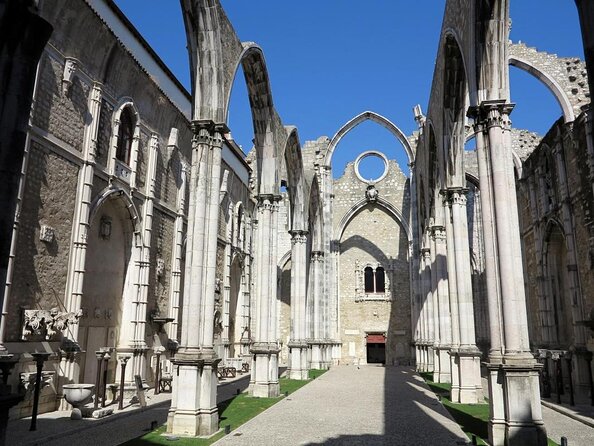
The tour also focuses on Igreja do Carmo. The stop includes a specific tile panel related to the church facade, described as the first panel covering the facade.
This is a smart choice because church tiles can be easy to overlook if you only glance at the building from a distance. When you focus on one panel, you learn to slow down and spot layers: the framing, the scenes or decorative elements, and how the tile surface sits on architectural stone or stucco.
What you get out of this stop is “close reading.” You start training your eye to notice how tile patterns guide your attention. Even if you don’t know tile-making terminology, the guide can show you what to look for based on visible details.
And starting near the church at the beginning means you’ll likely feel a sense of repetition and familiarity by the time you reach this part. That helps learning stick.
Tile-making techniques: what you’ll actually learn to notice on the street
The core promise of this walking tour is that it teaches you to appreciate the craft behind Porto’s azulejos. That means you’re not stuck with only one style or one era. You learn about different techniques used to paint and create tiles, and how methods developed over time.
Here’s why that matters for your experience in Porto. Tiles are built to last, so you can see layers of history in a single street. Once you understand basic technique differences, you start recognizing changes in color quality, line style, and how patterns repeat. You’ll also become better at spotting when tiles are imitating older looks versus when they reflect later developments.
The route also includes select churches, stores, and houses that show off Porto’s tile-making prowess. That’s a key detail because it prevents the tour from feeling like a one-stop attraction. You’re encouraged to look beyond the biggest monuments and notice tiled surfaces on everyday buildings too.
As a bonus, many guides for this kind of route weave in art and architecture context while you’re walking. In other words, you’ll get more than tile facts. You’ll get cues for interpreting the streetscape.
What the full 2 hours 45 minutes feels like, stop to stop
The tour runs for about 2 hours 45 minutes. It’s a walking format across the UNESCO-listed historic center, with the major tiles attractions front-loaded and the church detail and the museum serving as anchors.
Because the group is limited to 10 people, you’re less likely to get swallowed by a crowd. That matters when you’re trying to see small tile details. A small group also usually means you can ask questions without the guide feeling rushed.
The trade-off is time pressure. You can’t linger at every tile facade you pass. The guide will move you along to cover the most teachable spots in the time given. If your style of travel is slow and wandering, this tour is best as your “training day.” Use it to learn what to look for, then come back later under your own pace.
Ending by Ribeira Square: leaving with a better Porto map in your head
The tour concludes after about three hours beside Ribeira Square. That ending point is practical. It’s in the part of Porto where you’ll likely want to continue exploring, so your learning session flows naturally into the next leg of your day.
Ending near Ribeira also helps with memory. Once you’re back in the lively river-adjacent area, you can start spotting tiles in the background and connecting them to what you learned earlier. That’s when the tour pays off most, because you’re not just impressed for a moment, you’re able to categorize and notice.
Price and value: what you get for $81.93 per person
The price is $81.93 per person for about 2 hours 45 minutes, offered in English. For a specialized theme like Porto’s tiles, the cost makes sense because you’re paying for expert interpretation time, not just walking with a group.
Here’s where the value comes from:
- You get a professional art historian guide and a local guide, which is built into the price
- The main stops listed are free admission for the visit points: São Bento Station, Museu da Cidade do Porto, and Iglesia do Carmo
- The group size is kept small (max 10), which increases your chance of real interaction while you’re looking closely at details
What’s not included is also important for value. Food and drinks are not part of the tour price, and there’s no hotel pickup or drop-off. So you should budget for that on your own.
If you want a “tiles only” view with zero effort on your part, this is a fair deal. If you’re mainly shopping or sunbathing and don’t care about technique, it might feel like a lot. But if you love design, architecture, or art details, this is the kind of guided time that changes how you enjoy the city afterward.
Who should book this tile tour in Porto
This experience is a great fit if any of these sound like you:
- You like art and design and want a way to look more deeply
- You want a first-day Porto walk that gives you a framework for later wandering
- You enjoy UNESCO historic centers and want the story behind the visuals
- You prefer small groups so you can ask questions and see details clearly
It can work for most travelers. Children must be accompanied by an adult, and service animals are allowed. The walk is near public transportation, which can make it easier to build into your itinerary.
Should you book this History of Tiles in Porto tour?
I’d book it if you want your Porto experience to go beyond “pretty facade.” The strongest reason is simple: you come away with a skill. You learn what to notice in azulejos, you see key places like São Bento Station, and you get context tied to Porto’s architecture and cultural identity.
I would skip it only if you want a fully relaxed, slow walk with lots of free time at each stop, or if you dislike structured sightseeing. With a 2 hours 45 minutes schedule, you’ll be guided and paced, not drifting.
If tiles are one of your interests, this tour is an efficient way to get educated while you’re still in the middle of the best places to see them.
FAQ
How long is the walking tour?
It lasts about 2 hours 45 minutes.
How much does the tour cost?
The price is $81.93 per person.
What group size is it limited to?
The tour is limited to a maximum of 10 travelers.
Where do we meet and where does it end?
You meet at Igreja do Carmo, R. do Carmo, 4050-164 Porto, Portugal. The tour ends at São Bento station, Praça de Almeida Garrett, 4000-069 Porto, Portugal.
Is this tour offered in English, and do I get a mobile ticket?
Yes, it is offered in English, and it includes a mobile ticket.
What’s included in the price?
It includes a professional art historian guide and a local guide.
Are food and drinks included?
No, food and drinks are not included.
Can I cancel for a full refund?
Yes. You can cancel for a full refund up to 24 hours in advance of the experience start time, and cancellation is free.
More Historical Tours in Porto
- Douro Valley: Historical Sites, Wine Experience, Lunch & Cruise
★ 5.0 · 5,133 reviews - Porto: An Intimate Fado Show in a Historical Tavern
★ 4.8 · 2,055 reviews - Porto: Private Tour of the Historic City in a Ford T Car
★ 4.8 · 932 reviews - Porto: Historical Center Walking Tour
★ 4.8 · 898 reviews
Just added around Porto
- Meditation Experience at a Lovely Farm in Porto★ 5.0 · 19 reviews
- Private Portuguese Cooking and Wine Experience in Porto★ 5.0 · 30 reviews
- Douro Valley Prime Tour: Wine Tastings, Boat & Lunch from Porto★ 5.0 · 572 reviews
- Port Wine Tour | 3 Cellars | 7 Tastings | 12 Participants Maximum★ 5.0 · 443 reviews
- Private Boat Tour on the Douro River at Sunset★ 5.0 · 21 reviews
- Visit to Cockburn’s Cellars★ 5.0 · 526 reviews
- Wine Tasting with Tapas Walking Tour in Porto★ 4.5 · 544 reviews
- PORTO city Walking Tour★ 5.0 · 132 reviews
Walking Tours, compared.
Best of Lisbon Small-Group Guided Walking Tour
Read our review →
Porto Walking Tour, Lello Bookshop, River Cruise and Cable Car
Read our review →
Best of Lisbon Walking Tour: Rossio, Chiado & Alfama
Read our review →
Experience Porto’s Charm: 3-Hour Guided Walking Tour
Read our review →
Enjoy a Guided Levada Walk in the Rabaçal Valley
Read our review →Browse the lists this tour appears in