

Reviewed · WALKING TOURS
Half Day Historical Walking Tour about the Slave Trade in Lisbon
Lisbon has a darker side. This half-day historical walk looks directly at the slave trade, tracing how Portugal’s “Age of Discovery” story connects to human exploitation, with Rui Fernandes leading a small-group route built on real places. I like that it never stays abstract, it points you to specific neighborhoods and then explains what happened there.
I also love the way the tour handles the heavy material with care. You get clear pacing plus photos and historical documents that make the topic easier to follow, and the guide keeps answering questions. The main drawback is simple: this is emotionally weighty history, so it is not the pick-me-up kind of sightseeing.
In This Review
- Key highlights you should know before you go
- Why the Slave Trade Tour fits Lisbon’s real story
- The practical setup: time, route flow, and what you get for the money
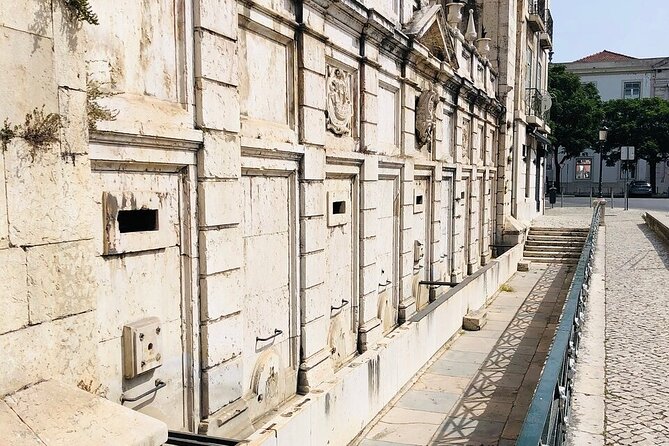
- Largo do Chafariz de Dentro: starting with context, not shock
- Alfama and slavery across civilizations: Romans, Moors, and Portuguese involvement
- Campo das Cebolas: the site of a future monument
- Praca do Comercio (Terreiro do Paco): commerce, empire, and how trade worked
- Baixa, Rossio, and Restauradores: what life could look like for enslaved captives
- Igreja de S Domingos: when religious organizations met exploitation
- Largo do Carmo and the 25th of April link: empire’s decline and its aftermath
- What makes Rui Fernandes’ delivery work on a sensitive topic
- Who should book this tour, and who might not love it
- Should you book this Lisbon slave trade walking tour?
- FAQ
- How long is the Half Day Historical Walking Tour about the Slave Trade in Lisbon?
- What is the price per person?
- Where do I meet the guide, and where does the tour end?
- What language is the tour offered in?
- How large is the group?
- What is included in the ticket price?
- What is not included?
- Do I need to print a ticket?
- Is this tour suitable for people with walking difficulties?
- Are service animals allowed?
- Can I cancel for a full refund?
Key highlights you should know before you go
- Small group size (max 8) keeps the discussion human and question-friendly
- Rui Fernandes brings serious research and will answer your questions without brushing you off
- Alfama + Baixa + religious sites show how slavery shaped everyday Lisbon, not just distant trade routes
- A future memorial focus at Campo das Cebolas gives the walk a real sense of memory and consequence
- Built-in stops and breaks make the walking manageable for most people with moderate fitness
- English mobile ticket keeps it easy to join and start on time
Why the Slave Trade Tour fits Lisbon’s real story
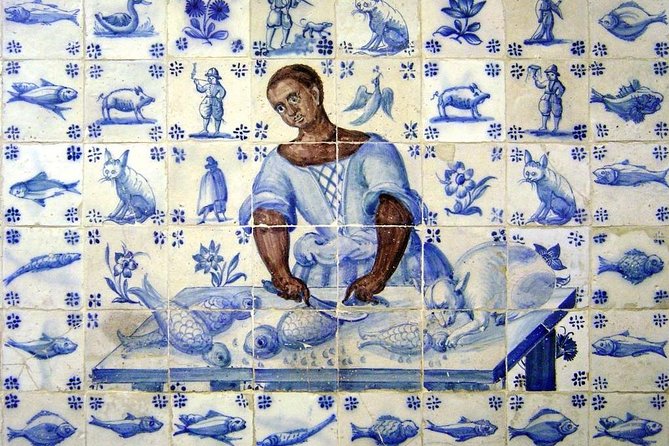
Lisbon sells postcards. This walk is about the other layer, the one that helps you read the city like a document. You will see how the “Age of Discovery” narrative connects to the Atlantic slave trade and how Africa’s impact shaped Portuguese culture and even modern history.
What makes this tour valuable is the place-first approach. Instead of treating slavery as something that happened elsewhere, you learn how it intersected with Lisbon’s neighborhoods, commerce, and religious institutions. That framing matters, because it helps you understand how systems of power get built, then defended, then normalized.
And yes, it is heavy. But it is also practical. By the time you finish, you will have a clearer map in your head for the names, the timelines, and the links to what you see around you.
More Walking Tours in Lisbon
- Lisbon: History, Stories and Lifestyle Walking Tour
★ 4.8 · 10,902 reviews - Best of Lisbon Small-Group Guided Walking Tour
★ 5.0 · 4,869 reviews - Lisbon: Food and Wine Small Group Walking Tour
★ 4.9 · 4,082 reviews
The practical setup: time, route flow, and what you get for the money
This is a 3-hour walking tour on an “easy to join” format. You get a mobile ticket, you meet at Largo do Chafariz de Dentro 30, and the tour ends at Largo do Carmo. It runs in English.
Price is listed at $39.78 per person, which is fairly reasonable for a guided historical walk that focuses on a specialized subject. You are paying for a professional guide plus local taxes, and the key sites on the route are not presented as paid admissions for you to figure out. Also, the cap of 8 travelers is a big part of the value, because the guide can actually stay in dialogue instead of rushing through talking points.
A practical consideration: you need moderate physical fitness. The walking is described as moderate in feedback, and stops are planned so you do not feel like you are sprinting city blocks nonstop. Still, it is a real walking tour, so wear comfy shoes.
You also should know what is not included. There is no food or drinks, and there is no hotel pickup. If you think you might get hungry, plan a snack or water break before or after, since this tour does not build one in.
Largo do Chafariz de Dentro: starting with context, not shock
You begin at Largo do Chafariz de Dentro, where the guide introduces the theme. This first stretch is important because it sets expectations and gives you the vocabulary to understand what you are about to see.
About 10 minutes at the start might sound short, but it helps you keep your footing mentally. The subject can feel overwhelming, especially if you only know Portugal’s discovery story in a simplified version. Getting grounded early makes later stops more meaningful.
Tip for your brain: treat this as the framing phase. Listen for the big connections the guide builds, because those same threads come back again and again at later sites.
Alfama and slavery across civilizations: Romans, Moors, and Portuguese involvement
Next you head into Alfama, Lisbon’s oldest neighborhood. This stop is roughly 30 minutes, and it is one of the most important parts of the route because it shows slavery as a recurring part of history, not a one-time event.
Here, the guide connects different eras and civilizations that settled in Portugal. You learn how groups under Roman rule and later under Moorish presence practiced slavery, and then how Portuguese involvement in the Atlantic slave trade grows during the mid-15th century.
What I appreciate about this is the way it challenges the tendency to think of slavery as a single chapter with a clean beginning. Instead, you get a long timeline, with Portugal’s role placed inside broader systems of human commodification.
Alfama also matters because you are walking in the kind of neighborhood where history is physically close. You are not only learning dates, you are learning how long shadows get cast over streets, institutions, and power.
Other Lisbon plans worth comparing
- Best of Lisbon Walking Tour: Rossio, Chiado & Alfama
★ 4.9 · 2,700 reviews - Age of Discoveries Walking Tour in Belém
★ 5.0 · 1,513 reviews - Sintra & Cascais Day Tour with Pena Palace Entry and Gardens Walk
★ 5.0 · 962 reviews - Lisbon Roots – Small group Food & Culture Walking Tour w/tastings
★ 5.0 · 910 reviews
Campo das Cebolas: the site of a future monument
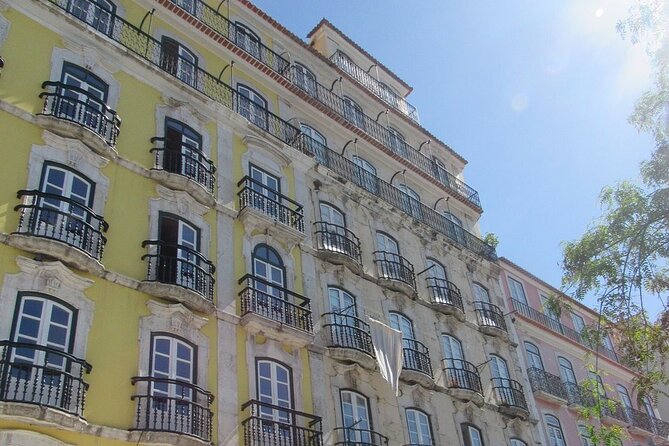
At Campo das Cebolas, you spend about 10 minutes. This is where the guide points out the location where a monument to victims of the Slave Trade will be erected in the future.
Even if the monument is not there yet, the stop is still powerful. It turns the tour from pure explanation into reflection about memory and responsibility. It also helps you understand that public history is still being negotiated.
Practical note: if you like to take photos, do it here, because the stop gives you a clear place marker for later thinking. It is also a good moment to ask questions, since short stops like this often create breathing space.
Praca do Comercio (Terreiro do Paco): commerce, empire, and how trade worked
Then you move to Praca do Comercio, also tied to the Terreiro do Paco area. This is about 15 minutes, and it zooms out toward Lisbon’s role as a commercial hub.
The key idea here is that the slave trade was part of colonial trade. You will connect how money, ports, and power systems supported the movement of people, goods, and influence. It is not just “history of slavery,” it is “history of trade systems that made slavery profitable.”
This stop can be a mental reset after Alfama. Alfama gives you the neighborhood view. Praca do Comercio gives you the economic engine. Together, they help you see how local life and global commerce feed each other.
Baixa, Rossio, and Restauradores: what life could look like for enslaved captives
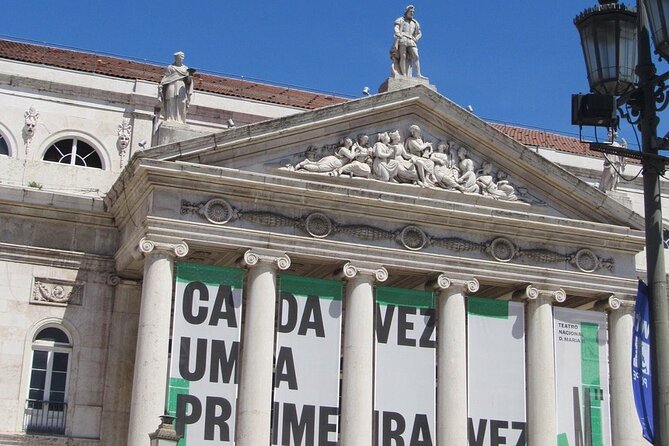
Next you cover Baixa, Rossio, and Restauradores in about 30 minutes. This part focuses on the day-to-day lives of enslaved captives in Lisbon, including people from Africa and beyond.
This “everyday life” angle is one of the most praised parts of the walk. It keeps the story grounded, because it forces you to imagine the routines around captivity, not only the sensational moments. The guide’s goal is to show how enslavement affected social life, labor, and the way institutions functioned.
If you want to make this stop land, do two things. First, listen for the connections between what the guide says and what you see in the streets around you. Second, ask questions if something feels vague. The guide’s format is built for that.
Igreja de S Domingos: when religious organizations met exploitation
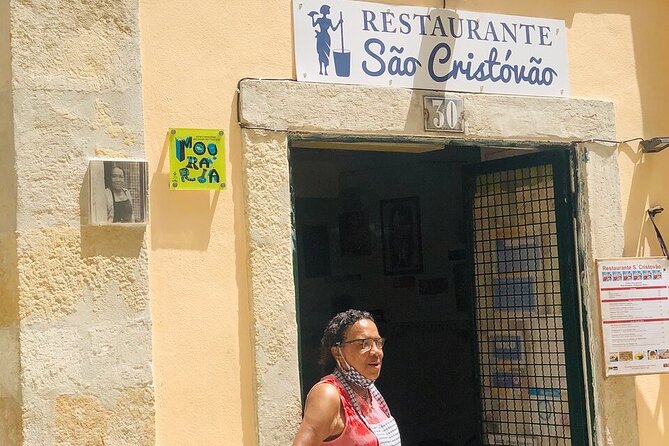
At Igreja de S Domingos, you spend about 10 minutes. This stop shifts to how Lisbon’s enslaved captives interacted with the city’s religious organizations.
This is a difficult theme, but it is also an essential one. Religious institutions were not separate from the slavery system in the way many people assume. You learn how faith and power could mix, and how religion was sometimes used within wider social control.
For many visitors, this part is where the tour becomes more than “history info.” It becomes a moral lesson about institutions and the way societies justify cruelty. The guide keeps it factual and respectful, which matters a lot on a topic like this.
Largo do Carmo and the 25th of April link: empire’s decline and its aftermath
You finish at Largo do Carmo, which takes about 15 minutes. This area is connected to the 25th of April coup and the revolution, and the guide ties that to the later demise of the Portuguese colonial empire in the mid-1970s.
This closing stop helps you connect past to present. You are not left with a dead-end story that stops at the 19th or 15th century. Instead, you get a reminder that colonial history did not vanish. Its structures, memory, and consequences carry forward.
It is a fitting ending point because the tour starts with the long timeline of slavery and ends with a political turning point tied to colonial decline. That arc can help you understand why contemporary history still matters.
What makes Rui Fernandes’ delivery work on a sensitive topic
The best thing about this tour is how the guide teaches without performing. Rui Fernandes is repeatedly described as passionate, prepared, and able to handle tough questions with care.
You will likely notice three working styles in his approach:
- He answers questions directly, even when the topic gets uncomfortable.
- He uses pictures and historical documents as visual support, which helps you follow arguments that might otherwise feel too abstract.
- He keeps a steady pace with breaks, so you stay with the story instead of falling behind.
One practical detail worth calling out: on rainy days, there is attention to comfort. In feedback, Rui is described as taking care to keep the group out of the rain as much as possible. That matters in Lisbon, where weather can change fast.
And if you are the type who likes context, you will probably appreciate how the guide connects transatlantic slavery to earlier forms of human trafficking, including links to Islamic slave trades as part of the larger system. You will also hear how religious and political justifications helped slavery persist.
Who should book this tour, and who might not love it
This tour is a strong fit if you:
- Want Lisbon history that goes beyond the postcard storyline
- Like walking tours with real discussion, not just silent headsets
- Care about how Portugal’s role shaped cultures in Lisbon and across the Atlantic
- Prefer small groups, where questions actually get time
It might be a tough match if you:
- Want a light, casual overview with minimal emotional weight
- Struggle with walking for about 3 hours on uneven streets
- Prefer topics that avoid morally heavy material
Also, if you are visiting with teenagers, there is positive feedback that two teenagers stayed focused. Still, because the subject is serious, you will want to judge your group’s readiness for the content.
Should you book this Lisbon slave trade walking tour?
If you want Lisbon in context, I think this tour is worth booking. The route covers key parts of the old town and ties them to slavery’s role in Portugal’s development, commerce, and institutions. You also get a small-group experience with a guide who answers questions and uses visual material to keep the story clear.
Book it if you are ready for an honest, place-based look at history. Skip it only if you need a carefree sightseeing afternoon or you know walking will be hard for you.
If you do book, one smart move is to come with curiosity. Bring your questions. This tour is built for them.
FAQ
How long is the Half Day Historical Walking Tour about the Slave Trade in Lisbon?
The tour lasts about 3 hours.
What is the price per person?
The price is $39.78 per person.
Where do I meet the guide, and where does the tour end?
You meet at Largo do Chafariz de Dentro 30, 1100-605 Lisboa. The tour ends at Largo do Carmo, 1200-092 Lisboa.
What language is the tour offered in?
The tour is offered in English.
How large is the group?
The tour has a maximum of 8 travelers.
What is included in the ticket price?
Included items are a professional guide and local taxes.
What is not included?
Food and drinks are not included, and there is no hotel pick up or drop-off.
Do I need to print a ticket?
No. You get a mobile ticket.
Is this tour suitable for people with walking difficulties?
It requires moderate physical fitness and is not recommended for travelers with walking difficulties.
Are service animals allowed?
Yes, service animals are allowed.
Can I cancel for a full refund?
Yes, free cancellation is available if you cancel up to 24 hours in advance for a full refund.
More Historical Tours in Lisbon
- Lisbon: Daytime or Sunset Boat Cruise with History and Wine
★ 5.0 · 1,053 reviews - Explore Lisbon by Tuk Tuk: History and Viewpoints
★ 5.0 · 840 reviews - Private Tuk Tuk Tour Through Lisbon’s Historical Streets
★ 5.0 · 734 reviews - Lisbon Sunset Sailing with Portuguese Wine and History
★ 5.0 · 668 reviews
Just added around Lisbon
- Morning Sailing Tour in Tagus River from Lisbon★ 5.0 · 68 reviews
- Private Half Day – The Majestic Pena Palace & Sintra★ 5.0 · 90 reviews
- Lisbon Private 3 hours tour★ 4.5 · 33 reviews
- PRIVATE Unforgettable Full Day Tour to Sintra from Lisbon★ 5.0 · 236 reviews
- Lisbon: Catamaran Luxury Sunset and Wine Tour★ 5.0 · 119 reviews
- Lisbon’s authentic Food and Wine tour with a Winemaker★ 5.0 · 67 reviews
- Sesimbra Wild Beach Tour from Lisbon★ 5.0 · 57 reviews
- Private Jeep Tour from Lisbon – Arrábida, Sesimbra & Beach Picnic★ 5.0 · 48 reviews
Walking Tours, compared.
Best of Lisbon Small-Group Guided Walking Tour
Read our review →
Porto Walking Tour, Lello Bookshop, River Cruise and Cable Car
Read our review →
Best of Lisbon Walking Tour: Rossio, Chiado & Alfama
Read our review →
Experience Porto’s Charm: 3-Hour Guided Walking Tour
Read our review →
Enjoy a Guided Levada Walk in the Rabaçal Valley
Read our review →Browse the lists this tour appears in