
Reviewed · WALKING TOURS
Historical Walking Tour of Lisbon
Lisbon history comes in a tight loop. This walk stitches together big squares and strong storytelling, so the city feels understandable fast, not random. One catch: you will cover hills and cobblestones, so comfy shoes matter.
I like that the pacing is built for questions and real conversation, with a small group that maxes out at 20. You also end in the upper downtown near Carmo, which makes it easy to keep exploring after the tour. If you are not into history and architecture, you may find some stops a bit heavy.
In This Review
- Key highlights you should not miss
- Lisbon on foot: why these exact stops work
- Rossio Square and Praça da Figueira: the start of Lisbon’s story in 45 minutes
- Rua Augusta walk: Enlightenment ideas on Lisbon’s main artery
- Praça do Comércio and Terreiro do Paço: where discovery met rebuilding
- Chiado: cafés, bookshops, and poets with real street-level context
- Largo do Carmo and Convento do Carmo: the quake that left a mark
- Elevador de Santa Justa: viewpoint reset and local tips for the rest of your trip
- Price and what you truly get for $3.62
- Walking pace, hills, and what to pack so the tour stays enjoyable
- Who should book this Lisbon tour (and who might skip it)
- Should you book this Historical Walking Tour of Lisbon?
- FAQ
- How long is the Historical Walking Tour of Lisbon?
- Where do I meet, and where does the tour end?
- What is the price per person?
- Is a mobile ticket included?
- Is it offered in English?
- What if the weather is poor or I need to cancel?
Key highlights you should not miss
- Rossio Square origins: you start at Praça Dom Pedro IV and learn about Lisbon’s earliest inhabitants, plus the square’s floorwork.
- 1755 earthquake context at every turn: you connect damage, power struggles, and the rebuild story across multiple stops.
- Rua Augusta and Enlightenment architecture: you walk Lisbon’s main artery while seeing how 18th-century ideas shaped the buildings.
- Terreiro do Paço as the “front door” of the city: ships, the Age of Discovery, and post-1755 rebuilding all get explained.
- Chiado includes a chance at the oldest bookstore in the world: you get culture, cafés, bookshops, and literary references.
- Finish with Santa Justa views and stay tips: the elevator viewpoint helps you orient fast, then the guide shares what to eat and where to go next.
Lisbon on foot: why these exact stops work
This tour is designed like a guided timeline you can walk. Instead of bouncing between random sights, you move through a chain of central places that Lisbon uses as stages for its identity. Squares show political power. Streets show city planning. Churches and convents show survival. And viewpoints help you understand how the hills, river access, and neighborhoods connect.
The other thing I appreciate is the human scale. You are not sitting for hours. You are moving, stopping, listening, then moving again. That keeps attention up, and it makes the history stick because you can see the setting while someone explains it.
Your group stays small, up to 20 people. That matters because it is easier for the guide to check in on pace and hearing, and it makes questions feel normal rather than rushed. You are also getting “hand-picked suggestions” for what to do next, so the tour can act as your first-day plan.
More Walking Tours in Lisbon
- Lisbon: History, Stories and Lifestyle Walking Tour
★ 4.8 · 10,902 reviews - Best of Lisbon Small-Group Guided Walking Tour
★ 5.0 · 4,869 reviews - Lisbon: Food and Wine Small Group Walking Tour
★ 4.9 · 4,082 reviews
Rossio Square and Praça da Figueira: the start of Lisbon’s story in 45 minutes
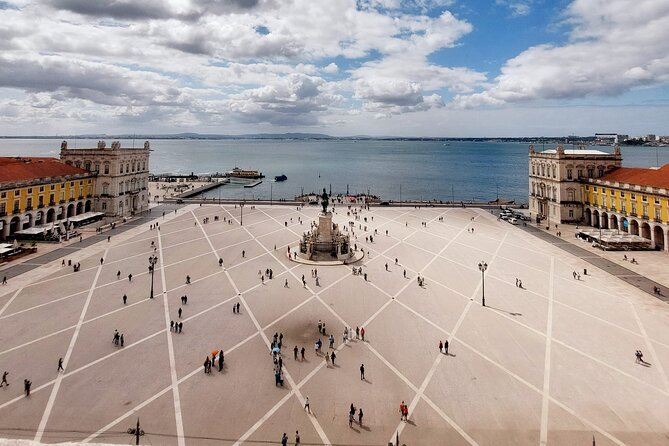
Stop 1 is Praça Dom Pedro IV, also called Rossio Square. You begin right in the thick of the city center, learning about the first inhabitants who established in the area 3,000 years ago. You will also notice the intricate floorwork, which is a nice reminder that Lisbon’s “old” is not only buildings, it is also design and public space.
Stop 2 is Praça da Figueira, the Fig Tree Square. This stop is short, but it packs emotional weight. You learn about the largest public hospital in the area that was destroyed in the 1755 earthquake. Then you zoom out into politics, hearing about battles over the crown between Portugal and its neighbors.
What makes these two stops a good opener is the contrast. Rossio gives you depth, then Praça da Figueira brings drama and loss. Together, they set up the big theme you keep seeing later: Lisbon keeps rebuilding, and power struggles shape what rises again.
Time tip: these are each about 15 minutes, so if you want photos of the ground details, linger by a few seconds and then rejoin quickly. The walk keeps a steady flow.
Rua Augusta walk: Enlightenment ideas on Lisbon’s main artery
After the squares, you walk downtown through Rua Augusta, Lisbon’s main street. This is where the tour shifts from “what happened” to “how Lisbon looks because of what happened.”
You learn how the Age of Enlightenment influenced its architecture. In plain terms, that means you are looking at buildings shaped by a specific period’s ideas about order, public space, and city design. Rua Augusta is a strong place to learn this because it is a major artery you will likely pass again later. Once you understand the logic behind the look, the street becomes more than a corridor to get from one attraction to another.
This section is also where the cobblestones show up more. One tip from past participants is to bring walking shoes, because sidewalks here can be uneven. If your feet get cranky early, this is the part to pace yourself.
Praça do Comércio and Terreiro do Paço: where discovery met rebuilding
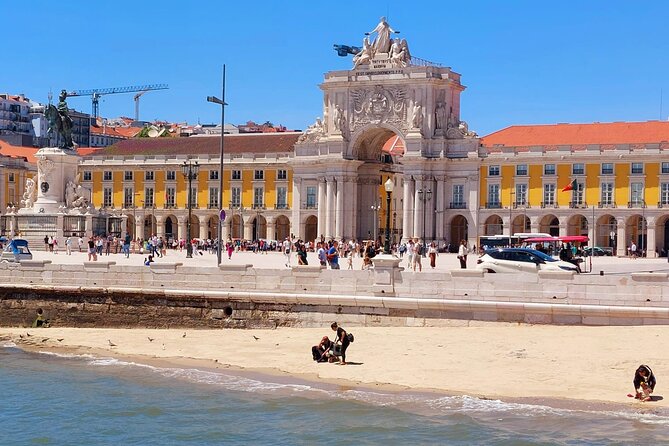
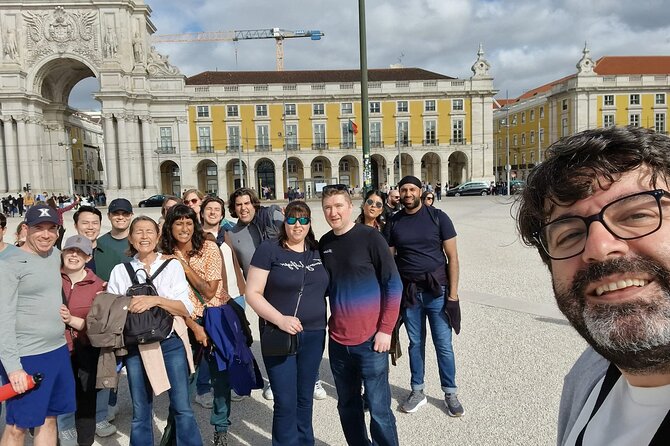
Stop 3 is Praça do Comércio, also tied to Terreiro do Paço. This is Lisbon’s main square and, according to the tour, it has served as the entry point to the city for millennia. Standing here makes it easier to imagine ships arriving, people gathering, and officials conducting business.
The guide focuses on the Age of Discovery, then the 1755 earthquake, then the city’s rebuild efforts and the heroes involved. The value for you is context. Instead of treating the earthquake as a single tragedy you heard about once, you see how it changed Lisbon’s future decisions and public identity.
This stop is about 30 minutes, so it is the longest “listening stop” on the route. If you want to ask questions, this is a good time. The group is settled, and the setting supports slower conversation.
Photo tip: this square rewards wide shots. If you only take tight portraits, you miss how the square connects to the broader city layout.
Other Lisbon plans worth comparing
- Best of Lisbon Walking Tour: Rossio, Chiado & Alfama
★ 4.9 · 2,700 reviews - Age of Discoveries Walking Tour in Belém
★ 5.0 · 1,513 reviews - Sintra & Cascais Day Tour with Pena Palace Entry and Gardens Walk
★ 5.0 · 962 reviews - Lisbon Roots – Small group Food & Culture Walking Tour w/tastings
★ 5.0 · 910 reviews
Chiado: cafés, bookshops, and poets with real street-level context
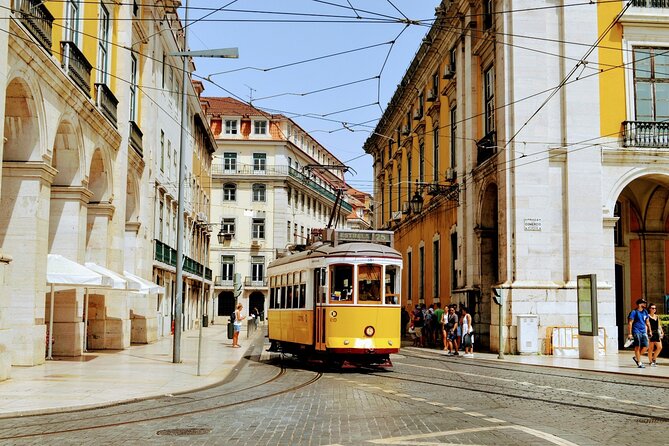
Stop 4 is Chiado, Lisbon’s art district. Expect a lively mix of cafés, theaters, and bookshops. You also get literary context, with stories tied to poets and writers that the guide connects to the neighborhoods you are walking through.
One of the highlights built into this stop is the chance to visit the oldest bookshop in the world. Even if you do not go in, you will likely notice how this kind of place anchors a neighborhood. It is not only commerce. It is a signal that culture and writing have long been part of local life.
This stop is about 20 minutes, which is enough to understand what Chiado represents without turning it into a shopping hour. Past guides on this route, like people named Logan, Bruno, and Kiara, are often praised for keeping the pace comfortable and sharing extra context that helps you recognize what you later see on your own.
Possible drawback: Chiado can be tempting to linger in. Since the tour continues, keep your eyes on the time. If you want a longer bookshop visit, plan to go back after the tour ends.
Largo do Carmo and Convento do Carmo: the quake that left a mark
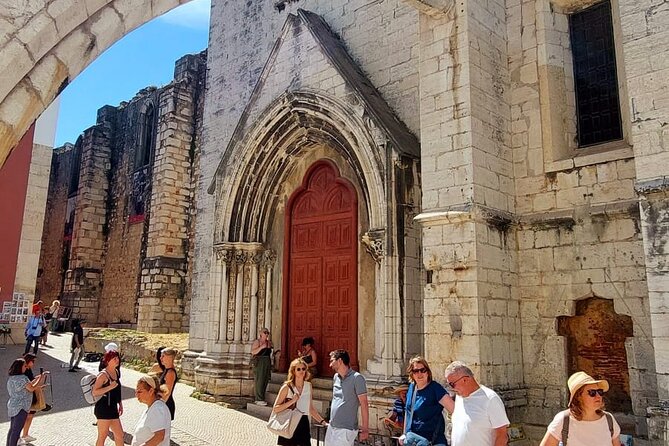
Stop 5 is Largo do Carmo, centered on Convento do Carmo. The tour frames it as the second oldest building in the city, and it is associated with how it barely resisted the devastation of the 1755 earthquake. That wording matters, because the building becomes evidence, not just a background landmark.
You also get connected history beyond earthquakes. The guide talks about Convento do Carmo as a place for emblematic social events in the country’s history, including the 1974 Carnation Revolution. Past participants even describe the way the guide tells this story as memorable, with the revolution presented as a cool, defining coup.
This stop runs about 30 minutes, so it is another good one for questions. If you are the type who likes to understand why one monument survives while others do not, you will enjoy this section.
The practical note: you may feel the hilliness here depending on the exact path the guide takes that day. If you are walking with someone who tires easily, this is a place to slow down and take breathers between explanations.
Elevador de Santa Justa: viewpoint reset and local tips for the rest of your trip
Stop 6 is the Elevador de Santa Justa. This is your “reset button” stop, with a birds-eye view of Lisbon’s downtown. Views are not just nice here. They help you orient. Once you see the layers from above, the city’s hills and streets make more sense.
The guide also uses this moment to share local tips for your stay, including food ideas and viewpoint suggestions. That is a big part of why this tour is worth doing early. You leave with a short list of what to try and where to go next, so you spend less time guessing.
Time for this part is about 15 minutes, so do not expect a long photo session. Grab your shots, look around, then listen for the practical advice. Even if you plan to come back later, the “first pass” viewpoint often helps you pick the right routes.
Price and what you truly get for $3.62
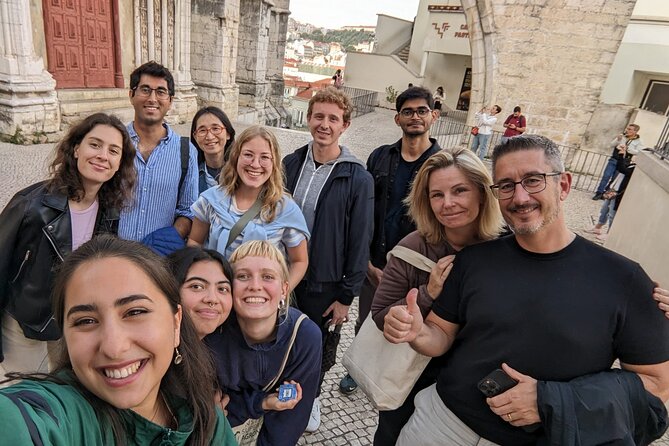
At $3.62 per person for about 2 hours 45 minutes, this is priced in a way that feels almost too good to be true. The reason it can still make sense is that you are not paying for museum entries at each stop. The tour data indicates free admission for the listed sights, and the value is in the guided interpretation.
What you are really buying is someone translating Lisbon for you as you walk. That translation is where the money goes: how the square designs relate to power, how 1755 connects to later rebuilding choices, and how Enlightenment ideas show up in architecture. Past participants consistently praised guides for storytelling, friendliness, and answering questions. Names that came up include Logan, Nuno, Bruno, Kiara, Constanza, Andre, Antonio, Maria, and Tomás.
The small group size also supports value. With up to 20 people, the guide can keep the conversation going and adjust pace for the crowd. One past note even mentioned a guide using extra care with uphill roads for a mixed-age group, which tells you the human factor matters on this route.
One more value point: the guide provides hand-picked suggestions. You can treat this as your first-day planning session and your history primer in one shot.
Walking pace, hills, and what to pack so the tour stays enjoyable
This is a walking tour with real city pavement. The most common practical advice from past participants is simple: wear comfy shoes. Sidewalks can be cobblestoned and uneven. If your feet are sensitive, you will notice it more here than in a flatter old town.
Bring a water bottle. Lisbon weather can shift, and you will feel it during the walk. Sunscreen is also smart. Even in a moderate forecast, standing in exposed squares and walking between them adds up.
If you are traveling with anyone who has limited mobility, note that the route includes central Lisbon terrain and finishes uphill in the upper downtown area near Carmo. The tour says most people can participate, but that does not mean it is a stroll for everyone. Plan for breaks if you need them, and choose a day with good weather.
Finally, have your phone ready for the mobile ticket. You will be showing it at the start.
Who should book this Lisbon tour (and who might skip it)
I think this is a strong match if you want a first look at Lisbon that is both practical and story-driven. It is especially good for people who like to understand why buildings look the way they do and who enjoy history that connects to visible places.
It also works well for group travel because the maximum group size stays manageable and the guide encourages questions. If you like a lively chat with a friendly guide, this tour has that energy built in.
I would skip it or consider another option if you do not care about historical context. Several participants basically said the same thing in different ways: if you want scenery without a lot of background, this route leans more toward explaining than drifting.
Should you book this Historical Walking Tour of Lisbon?
Book it if you want a smart, central introduction to Lisbon in one morning-to-late-afternoon style window, with stops that explain Lisbon’s layers, especially around 1755 and the city’s rebuild. The guide-led storytelling is the main reason to choose it, and the price makes the guided interpretation easy to justify.
I would hold off if you hate uphill walking or you want a purely casual, photo-only experience. Also pick a day with good weather, because the tour is designed for outdoor walking.
If you want a route that helps you orient fast, gives you stay tips, and ends near more exploration, this is a great first booking to make.
FAQ
How long is the Historical Walking Tour of Lisbon?
It runs about 2 hours 45 minutes.
Where do I meet, and where does the tour end?
You start at Rossio Square, Praça do Rossio, 1100-200 Lisboa, Portugal. The tour ends in the upper part of downtown at Carmo Archaeological Museum, Largo do Carmo, 1200-092 Lisboa, Portugal.
What is the price per person?
The price is $3.62 per person.
Is a mobile ticket included?
Yes, the tour uses a mobile ticket.
Is it offered in English?
Yes, it is offered in English.
What if the weather is poor or I need to cancel?
The experience requires good weather. If it is canceled due to poor weather, you are offered a different date or a full refund. You also get free cancellation up to 24 hours in advance for a full refund.
More Historical Tours in Lisbon
- Lisbon: Daytime or Sunset Boat Cruise with History and Wine
★ 5.0 · 1,053 reviews - Explore Lisbon by Tuk Tuk: History and Viewpoints
★ 5.0 · 840 reviews - Private Tuk Tuk Tour Through Lisbon’s Historical Streets
★ 5.0 · 734 reviews - Lisbon Sunset Sailing with Portuguese Wine and History
★ 5.0 · 668 reviews
Just added around Lisbon
- Morning Sailing Tour in Tagus River from Lisbon★ 5.0 · 68 reviews
- Private Half Day – The Majestic Pena Palace & Sintra★ 5.0 · 90 reviews
- Lisbon Private 3 hours tour★ 4.5 · 33 reviews
- PRIVATE Unforgettable Full Day Tour to Sintra from Lisbon★ 5.0 · 236 reviews
- Lisbon: Catamaran Luxury Sunset and Wine Tour★ 5.0 · 119 reviews
- Lisbon’s authentic Food and Wine tour with a Winemaker★ 5.0 · 67 reviews
- Sesimbra Wild Beach Tour from Lisbon★ 5.0 · 57 reviews
- Private Jeep Tour from Lisbon – Arrábida, Sesimbra & Beach Picnic★ 5.0 · 48 reviews
Walking Tours, compared.
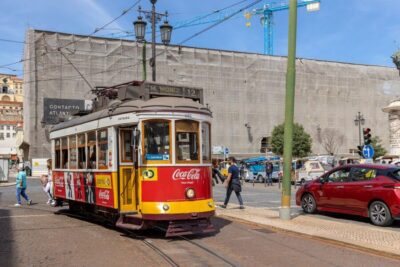

Best of Lisbon Small-Group Guided Walking Tour
Read our review →
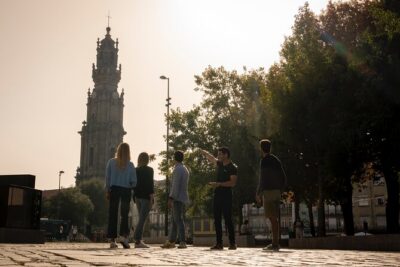
Porto Walking Tour, Lello Bookshop, River Cruise and Cable Car
Read our review →
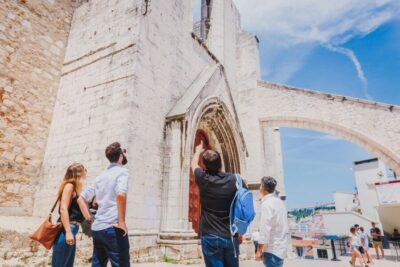
Best of Lisbon Walking Tour: Rossio, Chiado & Alfama
Read our review →
Experience Porto’s Charm: 3-Hour Guided Walking Tour
Read our review →
Enjoy a Guided Levada Walk in the Rabaçal Valley
Read our review →Browse the lists this tour appears in