
Reviewed · WALKING TOURS
Lisbon: 3-Hour The Slave Trade – An Historical Walking Tour
Lisbon has an uncomfortable origin story. On this 3-hour historical walking tour, I like how Rui Fernandes turns familiar Lisbon streets into a guided explanation of how the Portuguese Atlantic slave trade took shape in the early 1400s under Prince Henry the Navigator. It is the kind of context you wish most city tours would quietly add.
Two things make it especially good value for your time. First, the small-group setup (capped at 6) keeps it interactive, not lecture-y. Second, the walking rhythm is built for real people, with many portions kept to flatter routes and a relaxed pace, plus an included coffee and WC break to recharge mid-tour.
One drawback to consider is the topic is heavy. You are talking about slavery, forced separation, and the long political and economic consequences that lasted for centuries, so keep your emotional bandwidth in mind.
In This Review
- Key highlights worth planning around
- How Lisbon Landmarks Explain the Portuguese Slave Trade
- Largo do Chafariz de Dentro to Alfama: What the Walk Actually Feels Like
- Prince Henry the Navigator and the Birth of the Atlantic System
- Street Corners, Churches, and the Everyday Reality of Enslavement
- Brazil, Ports, and the Economics Behind Human Cargo
- Abolition in Portugal and the Long Shadow in Africa
- Learning With Rui Fernandes: Why the Q and A Matters
- Price and Value: Is $35 for 3 Hours Worth It?
- Who This Tour Suits Best (and Who Might Want a Different Plan)
- Should You Book This Lisbon Slave Trade Walking Tour?
- FAQ
- How long is the Lisbon The Slave Trade historical walking tour?
- How much does the tour cost?
- Where do we meet the guide?
- What group size should I expect?
- Is the tour available in English?
- What is included in the price?
- What should I bring, and are pets allowed?
- What is the cancellation policy?
Key highlights worth planning around

- Rui Fernandes, a licensed local guide, leads the walk in English with a history, political science, and economics framing
- Prince Henry the Navigator to the Atlantic trade, explained through Lisbon’s streets, churches, and public squares
- A small cap of 6 participants, which keeps the Q and A real and easy
- Back streets plus main avenues, so you see how the story sits in both old neighborhoods and prominent landmarks
- One included coffee and WC break, timed into the experience so you stay sharp
- Mostly gentle walking, with minimal inclines mentioned by past guests
How Lisbon Landmarks Explain the Portuguese Slave Trade
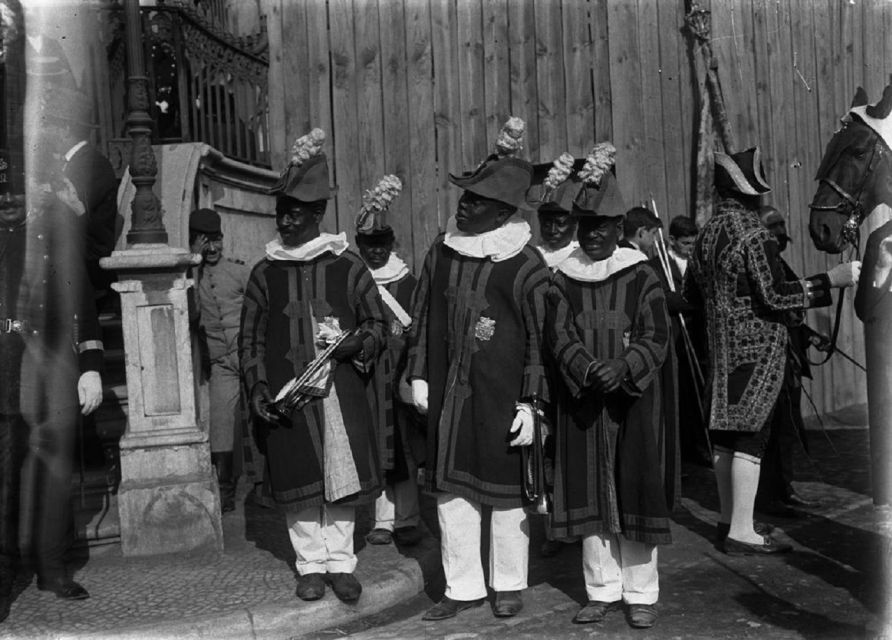
Lisbon can feel like a postcard city, sunlit facades and wide views. This tour forces a different reading of the same scenes, connecting monuments, churches, and squares to the Portuguese role in Atlantic slavery.
What I find valuable is that the tour does not treat the slave trade as a vague background topic. It connects big events to the physical city you are standing in. So when you look at a building feature or a street name, you have a story attached to it, instead of just guessing.
The tour also tackles the timeline in a way that makes cause and effect click. You start with the early 15th century, when Portugal began what is now referred to as the Atlantic slave trade. Then you work forward through how that system fed wealth, policy, and expansion across oceans.
And because slavery was not only about ships and auctions, you also get the human scale. The tour discusses day-to-day realities for enslaved people in historical Lisbon, not just the headlines.
More Walking Tours in Lisbon
- Lisbon: History, Stories and Lifestyle Walking Tour
★ 4.8 · 10,902 reviews - Best of Lisbon Small-Group Guided Walking Tour
★ 5.0 · 4,869 reviews - Lisbon: Food and Wine Small Group Walking Tour
★ 4.9 · 4,082 reviews
Largo do Chafariz de Dentro to Alfama: What the Walk Actually Feels Like
You meet at Largo do Chafariz de Dentro, a clear, central starting point you can orient around. The route moves through back streets and main avenues, so you do get variety in the scenery, not just one long straight line.
From the way guests describe it, the walking is set up to be manageable. One helpful detail is that many sections are kept close to flat areas or places with minimal inclines, which matters if you have limited mobility or you just want to conserve energy for thinking.
You should still wear comfortable shoes. Lisbon cobblestones are Lisbon cobblestones, and the tour is designed to keep you walking long enough that footwear becomes part of the experience.
The pace is also a big deal. Past guests note a relaxed tempo, with time for shade on hot days. That means the content lands, instead of sliding past you while you are focused on breathing.
Prince Henry the Navigator and the Birth of the Atlantic System

The tour’s backbone is the origin story. In the first half of the 15th century, Portugal under Prince Henry the Navigator began expanding maritime routes that became tightly connected to Atlantic slavery.
You are not given a dry lecture. You get a structured explanation of how Portugal went from exploration and trade ambition to a system that shipped Africans across the Atlantic into slavery. The tour includes the moral and human stakes, while still explaining the political and economic machinery that sustained the trade.
This matters because Lisbon’s story is not just “Portugal did something bad.” It is “Portugal built parts of the system that made large-scale slavery profitable and durable.” The guide walks that line carefully, so you understand the structure of the trade without losing the reality of what it meant for people.
The tour also gives you a key number and time span to hold onto: between 12 to 14 million Africans were sold into slavery and taken across the ocean, and the crime against humanity lasted for four centuries. Whether you already knew the scale or not, that framing helps Lisbon stop being just beautiful architecture.
Street Corners, Churches, and the Everyday Reality of Enslavement
One of the most interesting parts of this walk is that it shows how slavery could show up in ordinary spaces. You move through streets, monuments, churches, and public squares that connect directly to this history, so the story sits on the ground with you.
Instead of focusing only on ports or distant events, the guide covers how enslaved people lived in historical Lisbon. That day-to-day focus is what makes the tour feel different from more general “Portuguese discovery” tours, where the human cost often gets reduced to one paragraph.
You also get ideas about how the slave trade relates to the birth and growth of institutions in Iberia and how those institutions carried influence forward. In practice, this means you hear connections between what you see in Lisbon today and the historical systems that helped shape it.
Past guests also say the guide uses pictures or visual references to contextualize points. That helps, especially with a topic this complex. If you are the type who remembers visuals better than dates, that approach is a win.
Other Lisbon plans worth comparing
- Best of Lisbon Walking Tour: Rossio, Chiado & Alfama
★ 4.9 · 2,700 reviews - Age of Discoveries Walking Tour in Belém
★ 5.0 · 1,513 reviews - Sintra & Cascais Day Tour with Pena Palace Entry and Gardens Walk
★ 5.0 · 962 reviews - Lisbon Roots – Small group Food & Culture Walking Tour w/tastings
★ 5.0 · 910 reviews
Brazil, Ports, and the Economics Behind Human Cargo
Portugal’s connection to slavery is often told as a European story. This tour brings it back to the global trade network that made it work, with Brazil as a major piece.
Brazil matters because demand drove the system. The guide explains why the Atlantic trade kept expanding and how Portuguese development was intertwined with human trafficking and forced labor. This is where the economics lens pays off.
You start seeing why Lisbon could look prosperous while the underlying story was so brutal. The wealth that built ships, commerce, and power did not appear out of nowhere, and the tour is blunt about that link.
What I like is that the guide ties these points to the present. You do not just leave with dates. You leave with a way to interpret Lisbon’s grandeur and growth as part of a longer history of exploitation.
Abolition in Portugal and the Long Shadow in Africa
The tour does not end with the origin. It moves into later chapters, including the abolition of trade in Portugal and the broader transition away from Atlantic slaving.
You also hear about Portuguese colonies in Africa and the struggle for liberation by African nationalists. That part is crucial, because it shifts the story from a one-directional tragedy to a history that includes resistance and political struggle.
This is not just about what happened centuries ago. The tour frames how these events echoed through time, shaping societies and leaving legacies that still matter. In a city tour context, that gives you a more honest understanding of why the topic is still discussed today.
Learning With Rui Fernandes: Why the Q and A Matters
The guide is a licensed local professional, and Rui Fernandes is the name you will hear most. Guests repeatedly mention that he is patient with questions and clears up confusion without rushing you.
That interactive style is not a small detail. With a subject this sensitive, you want time to ask what you genuinely want to understand. If you come with curiosity about politics, economics, or family history, the tour gives room for that.
Inclusive handling also comes up in past feedback. People mention that Rui creates a respectful atmosphere, including when the topic connects to personal or family experiences. That matters because this is not a “casual history” stop.
If you like tours where you can ask why things happened, and you do not feel shut down, you will likely appreciate this format. The tour is designed around guided discussion, not silent head-nodding.
Price and Value: Is $35 for 3 Hours Worth It?
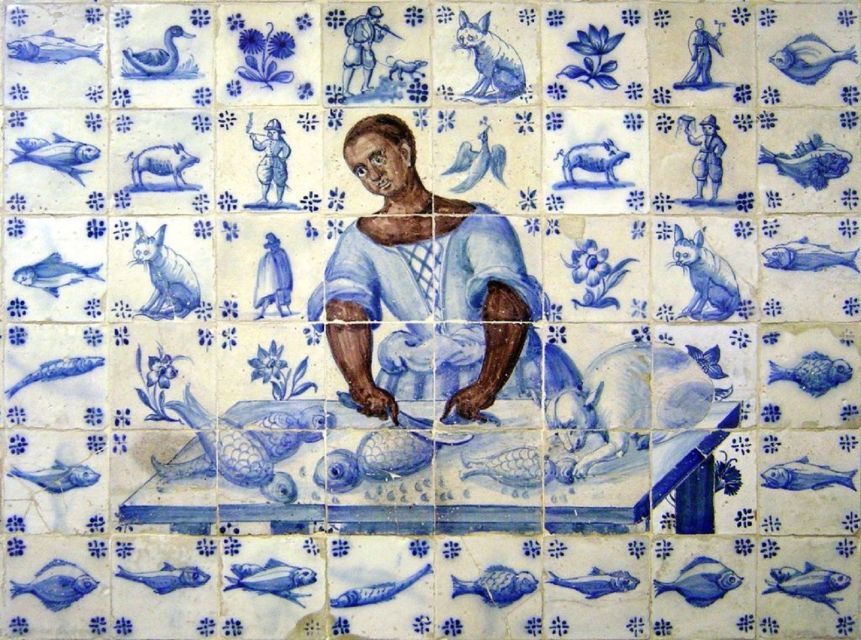
At $35 per person for about 3 hours, this is priced like a standard walking tour, but the content is not standard.
You are paying for three layers that usually cost extra elsewhere: a specialist local guide, a focused theme that mass tourism rarely covers, and a route that connects theory to Lisbon’s real buildings. The included coffee and WC break also reduces the “when do we stop?” problem that you often deal with on independent walks.
The small-group cap at 6 participants is another reason the value feels fair. With fewer people, you get more time for your own questions and fewer awkward pauses. In practical terms, you leave feeling like you got a real explanation, not a generic summary.
Finally, if you care about connecting Lisbon’s culture to its full history, this tour saves you effort. You can spend hours bouncing between museums and still not get the same through-line that ties Prince Henry the Navigator to Atlantic slavery and then to later abolition and resistance.
Who This Tour Suits Best (and Who Might Want a Different Plan)
This is a strong match for you if you want Lisbon’s history with context. If you care about international affairs, colonial history, or how economics drives policy, the guide’s background in history, political science, and economics will likely click with you.
It also suits you if you enjoy walking tours, but you prefer them calm and interactive rather than rushed. The pace and the minimal-incline feel described by past guests make it a reasonable choice for many ages and comfort levels, as long as you wear good shoes.
It may be less ideal if you want only light, scenic highlights. This tour centers slavery and its legacy. Even when presented thoughtfully, it will pull on serious themes.
And if you have tight time limits, you should treat these three hours as content time. You will not want to mentally multitask while you are learning how Lisbon landmarks connect to the Atlantic slave trade.
Should You Book This Lisbon Slave Trade Walking Tour?
Book it if you want to understand Lisbon in a more truthful way. You are not just learning facts, you are learning how the city’s visible structures connect to a long chain of decisions, profits, and human suffering.
I would especially recommend it if you appreciate guided explanation and respectful Q and A. With Rui Fernandes leading and the group kept small, you are set up to ask questions and actually get answers, not just hear a monologue.
Skip it only if you know you cannot handle heavy subject matter right now, or if you are looking for a purely scenic “greatest hits” city walk. Lisbon has plenty of beauty, but this tour forces the full story to the front.
FAQ
How long is the Lisbon The Slave Trade historical walking tour?
The tour lasts 3 hours.
How much does the tour cost?
The price is $35 per person.
Where do we meet the guide?
Meet your guide at Largo do Chafariz de Dentro.
What group size should I expect?
This is a small group capped at a maximum of 6 participants.
Is the tour available in English?
Yes, the tour is conducted in English.
What is included in the price?
The tour includes a live tour guide, and it includes one coffee and one WC break.
What should I bring, and are pets allowed?
Bring comfortable shoes. Pets are not allowed.
What is the cancellation policy?
There is free cancellation up to 24 hours in advance for a full refund.
More Historical Tours in Lisbon
- Lisbon: Daytime or Sunset Boat Cruise with History and Wine
★ 5.0 · 1,053 reviews - Explore Lisbon by Tuk Tuk: History and Viewpoints
★ 5.0 · 840 reviews - Private Tuk Tuk Tour Through Lisbon’s Historical Streets
★ 5.0 · 734 reviews - Lisbon Sunset Sailing with Portuguese Wine and History
★ 5.0 · 668 reviews
Just added around Lisbon
- Tomar: Knight’s Templar Castle and Convent of Christ Tour★ 4.9 · 84 reviews
- Tour Bohemian de Tuk Tuk: Bertrand, Miradouros e Estrela★ 5.0 · 24 reviews
- From Lisbon: Fátima, Nazaré and Sintra Guided Tour★ 4.7 · 155 reviews
- From Lisbon: Tomar, Batalha, Alcobaça, & Óbidos Templar Tour★ 4.9 · 47 reviews
- From Lisbon: Sintra Pena Palace Cascais 8-People Group Tour★ 4.9 · 93 reviews
- The Real Lisbon Street Art Private Guided Tour by Minivan★ 4.7 · 49 reviews
- Lisbon: The Jewish Sephardic Walking Tour★ 4.9 · 22 reviews
- From Lisbon: Tomar, Christ Convent & Almourol Castle Tour★ 5.0 · 64 reviews
Walking Tours, compared.

Best of Lisbon Small-Group Guided Walking Tour
Read our review →

Porto Walking Tour, Lello Bookshop, River Cruise and Cable Car
Read our review →
Best of Lisbon Walking Tour: Rossio, Chiado & Alfama
Read our review →
Experience Porto’s Charm: 3-Hour Guided Walking Tour
Read our review →
Enjoy a Guided Levada Walk in the Rabaçal Valley
Read our review →Browse the lists this tour appears in