
Reviewed · WALKING TOURS
Lisbon Highlights Guided Walking Tour
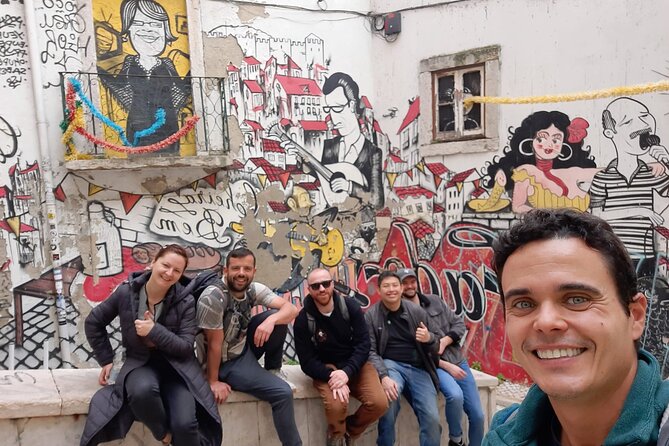
Lisbon feels like a story you can walk through, fast. I like how the guides turn landmarks into real scenes, with stops that explain big moments like the 1755 earthquake and the city’s later rebuilding. I also like the practical pace, you get plenty of photo opportunities, and the tour ends at a famous viewpoint in the center of everything. One thing to plan for, this is a solid walking route with hills, so comfy shoes matter.
At about 2 hours 30 minutes, this is a great value tour for a first visit, especially because it includes the professional guide and all fees and taxes in the ticket price. The group stays small, capped at 20, and you get a mobile ticket plus English guidance. The start is at Praça do Comércio and the walk finishes at Praça Luís de Camões, right by the monument, so you can keep exploring right after.
In This Review
- Key highlights at a glance
- Entering Central Lisbon: Why This 2.5-Hour Walk Works
- Praça do Comércio Start: The City’s Big Reset in One Place
- Arco da Augusta and Augusta Street: A City Celebrates Itself
- Santa Justa Elevator: A Signature View with a Connection to Eiffel
- Rossio Square and São Pedro de Alcântara Area: Monarchy, Cobblestones, and a Church With a Story
- Rua Augusta to Chiado: Ginjinha, Moorish Influence, and a Few Stops You Might Skip Alone
- Avenida da Liberdade: Lisbon’s Champs-Elysees Moment
- Rossio Station and Architecture Clues You Can Spot Later
- Carmo Square and the Unfinished Church: A Marker of Political Change
- Chiado Walk, Café A Brasileira, and Camões Square for Writers and Poets
- Ending at Miradouro São Pedro de Alcântara: Your Best Photo Angle
- Price and Value: Is $21.72 Really a Good Deal?
- Who Should Book This Lisbon Highlights Walking Tour
- Should You Book This Lisbon Highlights Guided Walk?
- FAQ
- Where does the tour start and end?
- How long is the Lisbon Highlights Guided Walking Tour?
- What language is the tour offered in?
- What is included in the ticket price?
- Is the tour group size limited?
- Is the tour mostly outdoors, and does it require good weather?
- Can I bring a service animal?
- What is the main cancellation window?
Key highlights at a glance
- Small-group feel with a maximum of 20 travelers, so questions stay easy
- Real-world Lisbon context, from the 1755 disaster to the end of Portugal’s monarchy
- Photo-friendly finish at Miradouro São Pedro de Alcântara, right in central Lisbon
- Easy, central route that strings together top sights across downtown
- Stops are mostly outside, so you can enjoy the streets between stories
Entering Central Lisbon: Why This 2.5-Hour Walk Works
If you want Lisbon to make sense quickly, a guided walking tour beats wandering with a map. This one is built for orientation. You cover the classic core of downtown, and you learn what shaped it, not just what you should photograph.
The first win is the flow. You start in the grand riverside square, then move step-by-step through arches, streets, viewpoints, and squares. It helps your brain stitch neighborhoods together so later, when you return on your own, you already know where you are and why things are the way they look.
The second win is how the guide stories connect the dots. You do not just hear names, you hear what happened and what changed. That is the difference between seeing Lisbon and understanding Lisbon.
And yes, there is some uphill and uneven pavement. You do not need to be an athlete, but you should be comfortable walking for about 2.5 hours in an active city.
More Walking Tours in Lisbon
- Lisbon: History, Stories and Lifestyle Walking Tour
★ 4.8 · 10,902 reviews - Best of Lisbon Small-Group Guided Walking Tour
★ 5.0 · 4,869 reviews - Lisbon: Food and Wine Small Group Walking Tour
★ 4.9 · 4,082 reviews
Praça do Comércio Start: The City’s Big Reset in One Place
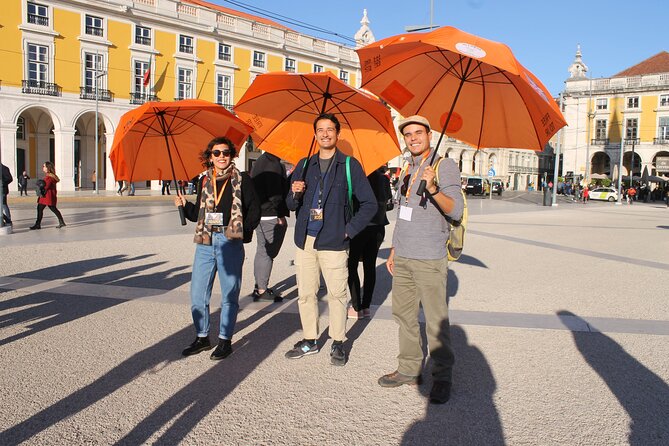
You begin at Praça do Comércio, Lisbon’s biggest square, right by the center of the old city. Even if you only spend a minute looking around, you can feel why this is such a fitting starting point. It is open, grand, and designed for people moving through the city.
The guide’s main story here is the Great Earthquake of 1755, described as destroying about 80 percent of the city. That number matters because it explains why Lisbon’s center looks the way it does today. When the city had to be rebuilt so dramatically, old patterns were interrupted and new planning took over.
Practical tip: use this first stop to settle your footing and get oriented. After the square, you will be walking into tighter city streets and denser sights, so a calm start helps.
Arco da Augusta and Augusta Street: A City Celebrates Itself
From there, you head toward the Arco do Triunfo and the Augusta Street Arch. This is one of those monuments that is easy to recognize and harder to interpret. The guide gives you the meaning behind it and what it represents for the city.
Then the walk naturally continues along Rua Augusta, the key street in this area. You learn why this part of town was built as a grid, which is a big clue to what came after the earthquake rebuilding. Lisbon is not only old stone and winding lanes. Some of it is planned, structured, and intentionally easier to navigate.
One smart way to use this segment: pause, look down the street lines, and notice how the grid keeps sightlines open. Later in the trip, when you hit more irregular streets, this grid section gives you a contrast that makes the city feel more legible.
Santa Justa Elevator: A Signature View with a Connection to Eiffel
Next up is Elevador de Santa Justa, the famous elevator landmark in Lisbon and described as the only elevator of its kind in Portugal. You get a short stop that still gives you the core idea: this structure is part engineering, part city icon.
The guide also covers the connection to the Eiffel Tour. Even if you are not an architecture fanatic, that link helps you place the elevator in a broader European design story.
Practical note: Santa Justa is a photo magnet. If you want a clean shot, take your time at the start of this stop before the crowd thickens. Also, watch your step, because sidewalks near major landmarks often feel busy and slightly chaotic.
Other Lisbon plans worth comparing
- Best of Lisbon Walking Tour: Rossio, Chiado & Alfama
★ 4.9 · 2,700 reviews - Age of Discoveries Walking Tour in Belém
★ 5.0 · 1,513 reviews - Sintra & Cascais Day Tour with Pena Palace Entry and Gardens Walk
★ 5.0 · 962 reviews - Lisbon Roots – Small group Food & Culture Walking Tour w/tastings
★ 5.0 · 910 reviews
Rossio Square and São Pedro de Alcântara Area: Monarchy, Cobblestones, and a Church With a Story
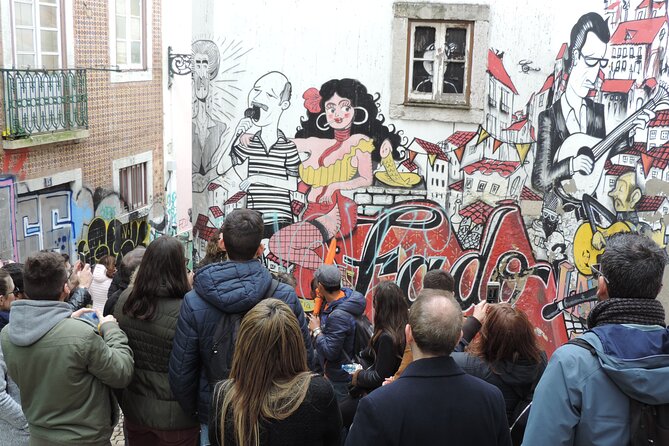
You then reach Praca Dom Pedro IV, also known as Rossio Square, one of Lisbon’s oldest squares, dating back to the 13th century. Rossio is one of those places where you can feel the city’s rhythm. It is a natural hub for people watching, and the architecture around it gives you a sense of how long this area has stayed important.
The guide adds two high-value angles here. First, you learn about the end of Portugal’s monarchy. That’s not just political context, it helps you understand why Lisbon’s squares feel tied to public identity. Second, you learn about Portuguese stones, meaning the distinctive cobblestone feel underfoot and the practical reality that Lisbon’s streets are built for pedestrian life.
Then the walk takes you to Igreja de São Domingos. This church gets attention for being one of the most unique churches in the world. The guide also shares a sad episode in Lisbon’s history connected to it. You do not need to know every historical detail to feel the point. It gives the church an emotional weight, not just a visual one.
Practical tip: churches can be quiet, but streets around them can be loud. If you want a moment to listen and look, step slightly off the main flow so you can focus on the guide’s explanation and the facade details.
Rua Augusta to Chiado: Ginjinha, Moorish Influence, and a Few Stops You Might Skip Alone
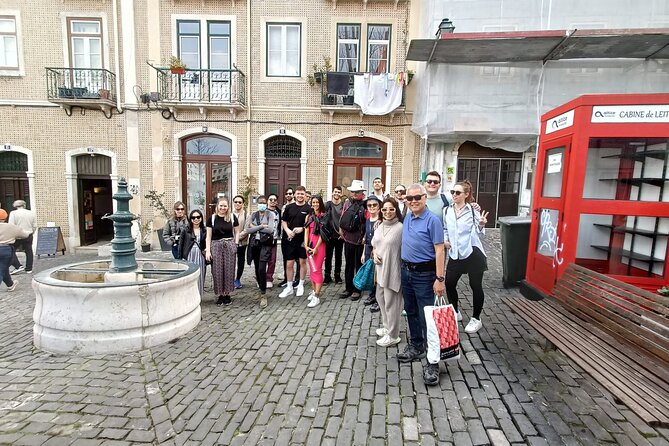
As the tour moves through the center, you hit the kind of stops that make a walking tour more than a checklist. One is A Ginjinha, the ginjinha stop tied to Lisbon’s most famous liquor. The guide explains why this shop became an institution in the city. Even if you do not plan to drink, you will learn what to order and how locals talk about it.
Then you see Casa do Alentejo, a striking building that the guide uses to explain moorish influence in Portugal’s history. This is one of those moments where Lisbon’s layers become obvious. You are not only looking at Portuguese Catholic city life. You are also seeing how earlier cultures left marks on style and building traditions.
This part of the walk also helps you understand the city’s “in-between” spaces. When you plan your own time later, you will know which small streets are worth slowing down for and which streets are just connectors.
Avenida da Liberdade: Lisbon’s Champs-Elysees Moment
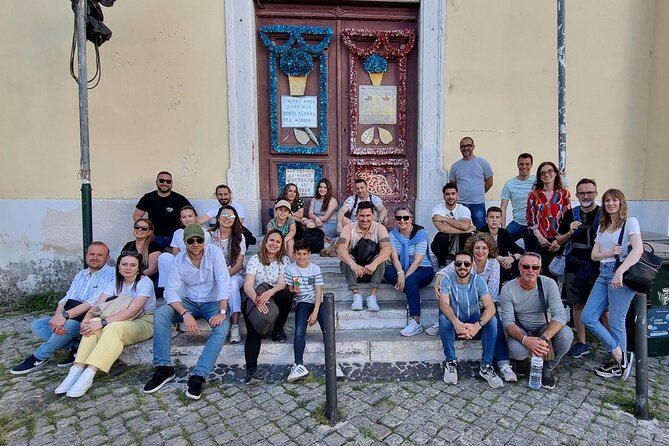
Next comes Avenida da Liberdade, Lisbon’s answer to the grand boulevard vibe, often compared to the Champs-Elysees idea. The guide covers when it was built, which gives you a different Lisbon timeline. This is not medieval Lisbon, not earthquake rebuilding only. It is modern Lisbon energy and a planned urban statement.
Even if you only pass through briefly, this stop gives your eyes relief. Wide avenues break up the tighter streets and stair-like lanes you see elsewhere in the center. You also get a clear sense of where shopping and big-city life runs in Lisbon.
Rossio Station and Architecture Clues You Can Spot Later
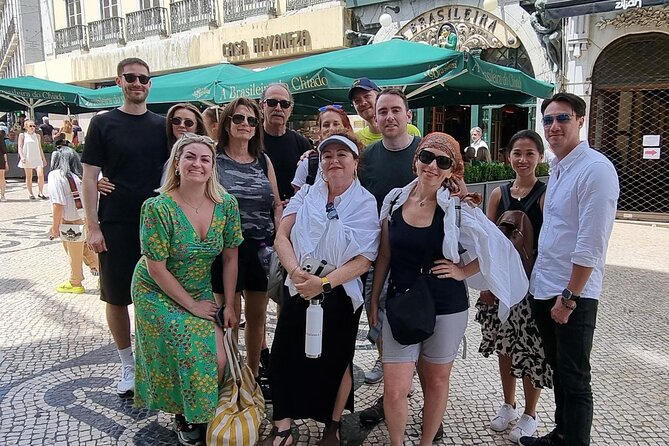
A quick stop at Estação do Rossio follows, with the guide explaining the station’s history and why its architecture stands out, including a style described as something just found in Portugal. The key value here is not memorizing design terms. It is learning how to recognize Portuguese rail architecture as its own style, not a generic European pattern.
If you like finding details on your own later, this is a great moment to train your eye. After this, you will spot station cues more easily when you walk around or take the train.
Carmo Square and the Unfinished Church: A Marker of Political Change
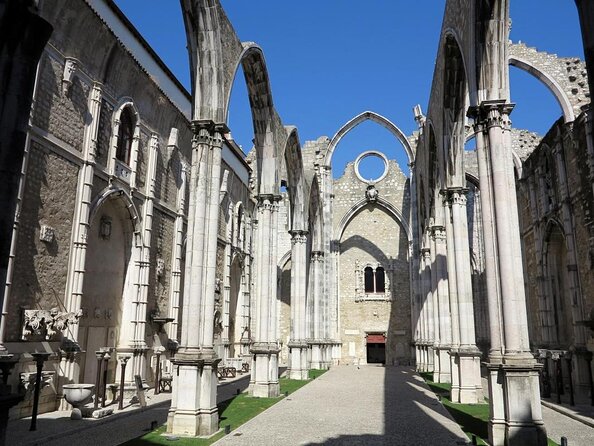
As you reach the Chiado area, you spend time around Carmo Square and the reason the church there is unfinished. The guide ties this visual into larger story lines about dictatorship and the revolution that ended it.
This stop is useful because it gives political history a physical presence. Lisbon’s streets are full of monuments, but not every monument tells you the whole context at first glance. Here, the guide connects the unfinished structure to what came before and what changed.
Practical tip: even if you do not go inside anywhere, the exterior views and square placement can still give you the “why” behind the building. That is exactly what you want from a walking tour stop.
Chiado Walk, Café A Brasileira, and Camões Square for Writers and Poets
You continue around Chiado, picking up small cultural anchors that make Lisbon feel lived-in. You see fancy shops in the area and stop by Café A Brasileira, explained as a famous meeting point for writers and poets in the 20th century.
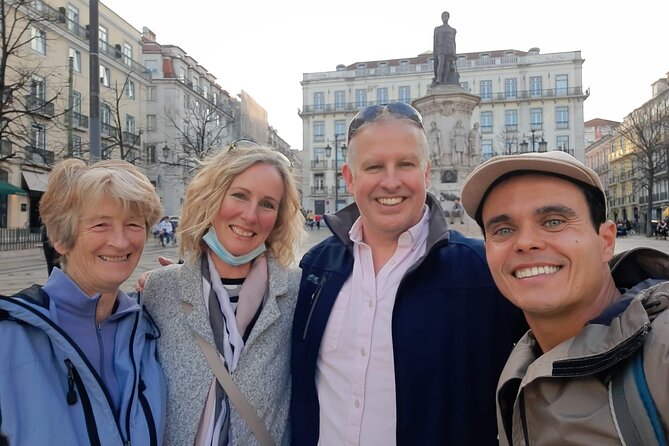
Then you reach Praca Luis de Camões. The guide frames it as one of the key meeting points, and you learn about Luis de Camões as Portugal’s important poet. This is the kind of cultural context that makes Lisbon more than monuments. It helps you understand why the city’s social life keeps circling around specific squares and cafés.
If you want to plan your next day, this section is where you build a short list of places you might return to, because the names stick. You will also be more confident when you walk into cafés later, since you will know what they are famous for.
Ending at Miradouro São Pedro de Alcântara: Your Best Photo Angle
The tour finishes at Miradouro São Pedro de Alcântara. This is a viewpoint, and the guide frames it as one of the nicest views of the city from here. Ending with a view is the smart choice, because it gives you a payoff after hours of street-level stories.
Use this moment to do two things. First, look back and trace the route in your mind. You will feel the city’s layout click. Second, take photos slowly, not just fast. The view is part of the tour, and you will enjoy it more if you give yourself time to breathe.
Price and Value: Is $21.72 Really a Good Deal?
At $21.72 per person for about 2 hours 30 minutes, this is priced as an efficient, budget-friendly introduction to central Lisbon. The important value piece is what you actually get for that price: a professional guide and all fees and taxes included.
You are not paying for entry tickets at every stop, because the stops described are free to visit in the tour flow. That means your money mostly goes into the human part of the experience, the stories and the pacing.
If you are a first-time visitor, paying for guidance can save you hours of confusion. The guide’s job is to connect the earthquake rebuilding, the monarchy shift, church stories, and modern boulevard planning into a coherent sense of place. That connection is what you cannot easily buy on your own in the same time window.
The only real drawback with a tour like this is that it is not a slow, sit-and-stay kind of day. You get a lot of stops, and the pace is designed to keep the day flowing.
Who Should Book This Lisbon Highlights Walking Tour
This is a strong fit if you want:
- A first-day orientation to central Lisbon
- A guided route with major landmarks in a short timeframe
- Clear stories about how events reshaped the city, including the 1755 earthquake
- A finish at a major viewpoint so you can jump into photos fast
It may be less ideal if you want a long, unhurried experience where you linger at each stop for ages. Also, if hills and walking time are a struggle for you, you should think carefully and consider a slower plan.
Should You Book This Lisbon Highlights Guided Walk?
I think you should book this if you want to understand Lisbon quickly and get your bearings without wasting time. The price is fair, the route covers a lot of the center, and the payoff is strong because you end at a viewpoint after you have learned what you are seeing.
If you can handle a couple hours of walking and you like stories tied to real places, this tour is a smart use of your first day in town. It turns a city of landmarks into a city of meaning, and it gives you a practical starting point for the rest of your Lisbon trip.
FAQ
Where does the tour start and end?
The tour starts at Praça do Comércio, 574, 1100-148 Lisboa, Portugal, and it ends at Praça Luís de Camões, Largo Luís de Camões, 1200-243 Lisboa, Portugal, next to the monument.
How long is the Lisbon Highlights Guided Walking Tour?
It runs for about 2 hours 30 minutes.
What language is the tour offered in?
The tour is offered in English.
What is included in the ticket price?
The tour includes a professional guide and all fees and taxes.
Is the tour group size limited?
Yes. The tour has a maximum of 20 travelers.
Is the tour mostly outdoors, and does it require good weather?
It requires good weather, and the tour is designed as a walking experience through central Lisbon.
Can I bring a service animal?
Service animals are allowed.
What is the main cancellation window?
You can cancel for a full refund up to 24 hours in advance of the experience start time.
Just added around Lisbon
- Morning Sailing Tour in Tagus River from Lisbon★ 5.0 · 68 reviews
- Private Half Day – The Majestic Pena Palace & Sintra★ 5.0 · 90 reviews
- Lisbon Private 3 hours tour★ 4.5 · 33 reviews
- PRIVATE Unforgettable Full Day Tour to Sintra from Lisbon★ 5.0 · 236 reviews
- Lisbon: Catamaran Luxury Sunset and Wine Tour★ 5.0 · 119 reviews
- Lisbon’s authentic Food and Wine tour with a Winemaker★ 5.0 · 67 reviews
- Sesimbra Wild Beach Tour from Lisbon★ 5.0 · 57 reviews
- Private Jeep Tour from Lisbon – Arrábida, Sesimbra & Beach Picnic★ 5.0 · 48 reviews
Walking Tours, compared.

Best of Lisbon Small-Group Guided Walking Tour
Read our review →
Porto Walking Tour, Lello Bookshop, River Cruise and Cable Car
Read our review →
Best of Lisbon Walking Tour: Rossio, Chiado & Alfama
Read our review →
Experience Porto’s Charm: 3-Hour Guided Walking Tour
Read our review →
Enjoy a Guided Levada Walk in the Rabaçal Valley
Read our review →Browse the lists this tour appears in