
Reviewed · WALKING TOURS
Lisbon: Iconic Landmarks Walking Tour
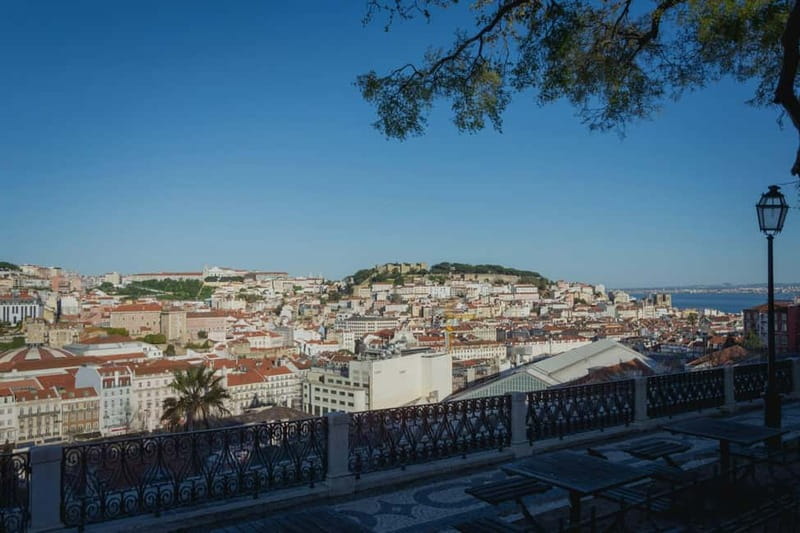
Lisbon’s street stories come fast. This 2-hour walk links Praça do Comércio and the Carmo Convent ruins to the events that shaped Portugal, from maritime expansion to the 1755 earthquake. I also love the built-in photo and view moments, especially the stop at Miradouro de Sao Pedro de Alcantara and the viewpoint near Santa Justa.
Here is one thing to think about: it is a walking tour and it is not suitable for wheelchair users, so you will want to plan for steady time on foot and a short visit at each stop. Also, with only 2 hours total, you get smart highlights, not long lingering.
In This Review
- Key Things to Know Before You Go
- Starting at Praça do Comércio, You Learn Lisbon’s “Why”
- Bairro Alto and Miradouro de Sao Pedro de Alcantara, Lisbon from Street Level
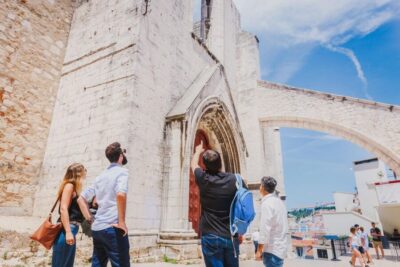
- Carmo Convent Ruins, the 1755 Earthquake You Can See
- Santa Justa Lift Photo Stop, Rooftops and Perspective in One Quick Moment
- Baixa Pombalina and the Rebuilt City You Can Walk Through
- Carnation Revolution and the Salazar Years, Democracy as a Street-Level Story
- The Return to Commerce Square, with a New Lens
- Price and Value for a 2-Hour Lisbon Orientation
- Who This Walking Tour Is Best For (and Who Should Skip It)
- The Guide Experience, What You Can Expect from Real People
- Should You Book This Lisbon Iconic Landmarks Walking Tour?
- FAQ
- How long is the Lisbon walking tour?
- Where does the tour start?
- What languages is the tour available in?
- What is included in the tour price?
- Are food and drinks included?
- Are ticketed attractions included?
- What should I bring?
- Is the tour wheelchair accessible?
- Is there free cancellation or a pay-later option?
Key Things to Know Before You Go
- Starts at Praça do Comércio, so you begin with a big-picture sense of Lisbon and the river
- Carmo Convent ruins give you a visible reminder of the 1755 earthquake
- Miradouro de Sao Pedro de Alcantara is scheduled as a photo stop, not a random detour
- Santa Justa Lift area adds a classic Lisbon rooftop view, even if you skip paid entry
- Baixa Pombalina walk shows how Lisbon rebuilt with bold, ordered architecture
- A clear historical storyline, including the Salazar years and the Carnation Revolution of 1974
Starting at Praça do Comércio, You Learn Lisbon’s “Why”
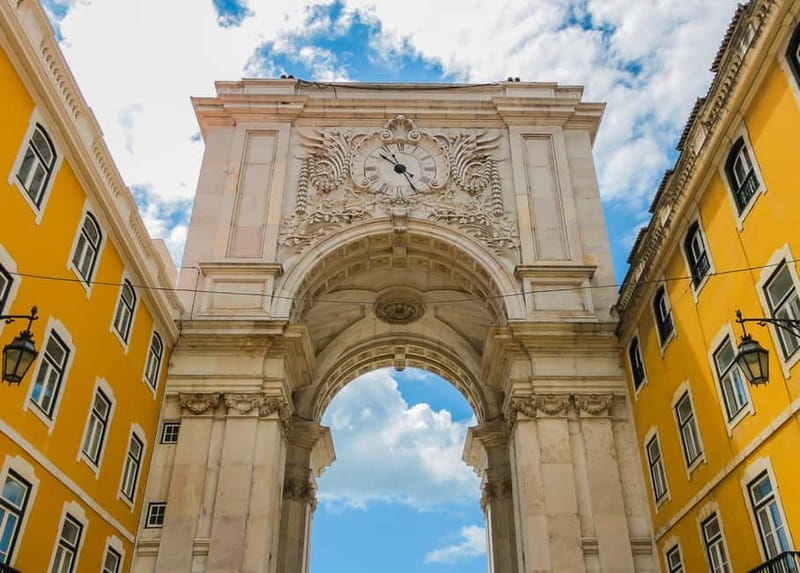
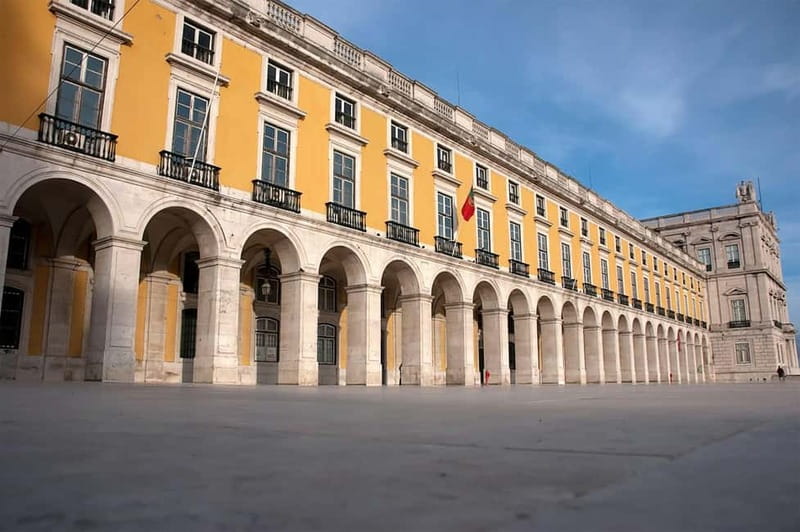
The tour begins where Lisbon looks most like Lisbon, at the grand riverside square of Praça do Comércio. The meeting point is at the statue in the square, so you have an easy visual target, even if it is your first day in town.
What I like about starting here is that it sets context fast. You get the square’s role as a hub for merchants and travelers, then your guide ties that idea to bigger events like the Age of Discovery. In other words, you are not just seeing buildings, you are getting the reason those buildings and streets matter.
This is also a practical starting move. The square gives you open space for quick orientation, and you can settle into the pace before the walking sections begin. If you arrive with comfortable shoes and a ready camera, you will feel instantly “caught up” on the city.
More Walking Tours in Lisbon
- Lisbon: History, Stories and Lifestyle Walking Tour
★ 4.8 · 10,902 reviews - Best of Lisbon Small-Group Guided Walking Tour
★ 5.0 · 4,869 reviews - Lisbon: Food and Wine Small Group Walking Tour
★ 4.9 · 4,082 reviews
Bairro Alto and Miradouro de Sao Pedro de Alcantara, Lisbon from Street Level
After the square, the route moves into Bairro Alto, a historic district known for charm and tradition. You spend about 20 minutes walking here, and the point is not to speed through. The guide uses these streets to connect Lisbon’s seafaring era to the people who lived near the action, including sailors and explorers who set out on daring voyages.
This part works well if you enjoy stories that feel human. Bairro Alto is the kind of place where you can imagine daily life alongside world events, then your guide nudges that imagination in the right direction.
Next comes Miradouro de Sao Pedro de Alcantara, scheduled as a 20-minute photo stop. This is one of those stops that turns your bearings into a souvenir. From up here you can start seeing how neighborhoods stack and how the river fits into the whole layout. Even if your photos are hit or miss, the mental map sticks.
One small consideration: photo stops are time-boxed. If you love lingering, you will want to plan a longer follow-up on your own right after the tour.
Carmo Convent Ruins, the 1755 Earthquake You Can See
Then the tour hits its emotional center at the Carmo Convent ruins. You get a guided portion here for about 20 minutes, and the focus is the earthquake story, the 1755 disaster that still shapes Lisbon’s identity.
What makes this stop valuable is that the message is physical. Instead of treating the earthquake like a date in a textbook, the ruins let you register it as something people lived through, then rebuilt around. The guide’s job is to connect what you are seeing to what it meant for the city’s survival and resilience.
You will also feel a shift in tone compared with the viewpoint and the shopping-street energy. This is calmer, more reflective time, and it helps the later political story land. The ruins become a bridge between disaster and democracy, because Lisbon’s 20th-century path includes its own hard lessons and turning points.
Santa Justa Lift Photo Stop, Rooftops and Perspective in One Quick Moment

After Carmo, you get to the area of the Santa Justa Lift for a photo stop. Expect about 20 minutes here, which is enough time to frame the rooftops and get a few angles without turning the tour into a ticket line.
I like these short viewpoint moments because they break up the walking and keep the tour fun. You are not stuck only with narration. You get to look outward, then the guide can bring you back to specific stories as you move.
Also, this is a nice rhythm for first-time Lisbon. If you want to see more from above later, you will already know where the city’s “layers” are. If you do not, at least you leave with a clear visual sense of scale.
Other Lisbon plans worth comparing
- Best of Lisbon Walking Tour: Rossio, Chiado & Alfama
★ 4.9 · 2,700 reviews - Age of Discoveries Walking Tour in Belém
★ 5.0 · 1,513 reviews - Sintra & Cascais Day Tour with Pena Palace Entry and Gardens Walk
★ 5.0 · 962 reviews - Lisbon Roots – Small group Food & Culture Walking Tour w/tastings
★ 5.0 · 910 reviews
Baixa Pombalina and the Rebuilt City You Can Walk Through
From the lift area, the tour heads into Baixa de Lisboa, walking for about 20 minutes. This is where Lisbon’s earthquake aftermath becomes architecture you can stroll past.
The guide connects Baixa Pombalina to the rebuilding after the disaster, showing how Lisbon rose again with grand, ordered design. Even if you are not a hardcore architecture person, this part makes sense because you are moving through the consequence, not just hearing the theory.
Practically, this segment is good for settling your stride. After viewpoints and ruins, you get a more steady walking section through elegant streets. It is the kind of walk where you can keep looking ahead without constantly stopping.
And you are not just sightseeing. Your guide keeps the narrative threaded through the city’s transformations, so Baixa feels like a response to history rather than a pretty backdrop.
Carnation Revolution and the Salazar Years, Democracy as a Street-Level Story
A major reason this tour works as an introduction is the political storyline. As you move through Lisbon, the guide also explains life under the Salazar dictatorship, then how the peaceful Carnation Revolution of 1974 restored Portugal’s democracy.
This might sound like a lot to fit into two hours, but it comes across as a thread rather than a lecture. The earlier stops cover discovery and disaster, then the later parts help you understand the 20th-century shift. By the time you reach the second view over the square area, you can see Lisbon as a city that keeps changing direction, sometimes through violence, often through resolve.
I also appreciate that the tour pairs heavy themes with manageable time. You get guided context while standing in real places, and you still finish with energy to continue exploring on your own.
The Return to Commerce Square, with a New Lens
At the end, you circle back to Commerce Square for a photo stop. This final look matters because you can compare your first impression with what you learned on the route.
When you start at Praça do Comércio, it feels like a destination. When you finish, it feels like a starting point you finally understand, because you now know how Lisbon turned its location, trade, and crises into a city with layers of meaning.
If you have time afterward, I suggest staying in the square area for a bit. The guide’s insider tips on where to eat, drink, and explore are meant to carry you beyond the walk, and this is when those tips become most useful.
Price and Value for a 2-Hour Lisbon Orientation
The price is listed at about $4.72 per person for a 2-hour guided walk. That is unusually low for a structured route with an expert guide and specific stops tied to major moments in Portuguese history.
What makes it feel like good value is the pacing. You cover multiple districts and viewpoints in a short window, and the tour includes insider tips for next steps like where to eat and drink. You are paying for guidance that helps you connect landmarks to stories, not just for movement from A to B.
The other value play here is that it is rain or shine. Weather can wreck a short day of sightseeing, but having a planned route means you are not improvising from scratch.
If you are on a tight schedule, this is the kind of tour that gives you confidence fast. If you have a longer trip, it still works because it gives you a strong foundation for deeper self-guided exploring later.
Who This Walking Tour Is Best For (and Who Should Skip It)
I think this tour is a great fit if you want:
- A first-time Lisbon orientation with major landmarks in just 2 hours
- A clear storyline that includes the Age of Discovery, the 1755 earthquake, the Salazar years, and the Carnation Revolution of 1974
- Planned photo stops that help you learn the city’s layout
It is less ideal if:
- You need wheelchair accessibility, since it is not suitable for wheelchair users
- You hate walking tours where most stops are timed, because you will not have hours to study each site
Also consider the language. The tour is available in Spanish and English. If you prefer Portuguese, you might want to arrange a different option.
The Guide Experience, What You Can Expect from Real People
The tour is led by a local guide who speaks English (and the tour itself is listed as Spanish or English). The experience is reported as friendly and clear, with guides like Natalia, Nuno, and Antonio specifically praised for explaining the key points without rushing.
One especially useful detail: some guides build in time to try local drinks and help you find food afterward. That matters because history is great, but you also want your day to end well. If you show up with questions, you will likely leave with practical suggestions, not just facts.
Should You Book This Lisbon Iconic Landmarks Walking Tour?
Yes, I would book it if you want an efficient, story-driven introduction to central Lisbon. It does a lot in 2 hours: Praça do Comércio for context, Bairro Alto for street-level imagination, Carmo for the earthquake reminder, Baixa Pombalina for rebuilding, and a political arc that reaches the Carnation Revolution of 1974.
Skip it if you need long stays at sites, or if accessibility needs make a standard walking route hard. In most cases, though, this is a smart buy for first timers who want Lisbon to make sense quickly, not after day three.
FAQ
How long is the Lisbon walking tour?
The tour lasts 2 hours.
Where does the tour start?
The meeting point is at the statue at Praça do Comércio.
What languages is the tour available in?
The live guide runs in Spanish and English.
What is included in the tour price?
You get an expert local guide and insider tips on where to eat, drink, and explore in Lisbon.
Are food and drinks included?
No. Food and drinks are not included, though they are optional.
Are ticketed attractions included?
Entrance to paid attractions is not included. If you want to visit paid sights, it is optional after the tour.
What should I bring?
Bring comfortable shoes for walking.
Is the tour wheelchair accessible?
No, the tour is not suitable for wheelchair users.
Is there free cancellation or a pay-later option?
Yes. You can cancel up to 24 hours in advance for a full refund. You can also reserve now and pay later.
Just added around Lisbon
- Tomar: Knight’s Templar Castle and Convent of Christ Tour★ 4.9 · 84 reviews
- Tour Bohemian de Tuk Tuk: Bertrand, Miradouros e Estrela★ 5.0 · 24 reviews
- From Lisbon: Fátima, Nazaré and Sintra Guided Tour★ 4.7 · 155 reviews
- From Lisbon: Tomar, Batalha, Alcobaça, & Óbidos Templar Tour★ 4.9 · 47 reviews
- The Real Lisbon Street Art Private Guided Tour by Minivan★ 4.7 · 49 reviews
- From Lisbon: Sintra Pena Palace Cascais 8-People Group Tour★ 4.9 · 93 reviews
- Lisbon: The Jewish Sephardic Walking Tour★ 4.9 · 22 reviews
- From Lisbon: Tomar, Christ Convent & Almourol Castle Tour★ 5.0 · 64 reviews
Walking Tours, compared.

Best of Lisbon Small-Group Guided Walking Tour
Read our review →
Porto Walking Tour, Lello Bookshop, River Cruise and Cable Car
Read our review →
Best of Lisbon Walking Tour: Rossio, Chiado & Alfama
Read our review →
Experience Porto’s Charm: 3-Hour Guided Walking Tour
Read our review →
Enjoy a Guided Levada Walk in the Rabaçal Valley
Read our review →Browse the lists this tour appears in