
Reviewed · WALKING TOURS
Lisbon: Jewish Quarter Guided Walking Tour
One street can change your whole picture of Lisbon. This guided walk connects medieval Jewish life with later chapters like forced conversions, the 1506 Pessah tragedy, and 1940s refugee routes, all while showing the city’s real viewpoints. I especially like the way the route ties key locations together, and I love that the guide, Amber, blends Jewish stories into the wider Portuguese story instead of treating them as separate topics. The main catch is simple: it is mostly uphill, with lots of stairs in Alfama.
With a small group limited to 10, you get room to ask questions and take short breaks when the hills hit. You will be on your feet for two hours, wearing comfortable shoes and carrying water, because there is no food stop included. If you have mobility limits, back issues, or you are traveling with young kids, this tour may be a poor fit since it is not designed around accessibility needs.
In This Review
- Key highlights you should care about
- Why This Lisbon Jewish Quarter Walk Feels Different
- Praça do Comércio: where the story starts (and why it matters)
- Judiaria Street and the viewpoint rhythm of Alfama
- S. Jorge Castle Hill: medieval memory and the logic of the city
- Baixa and forced conversions: the painful political layer
- Rossio Square and the 1506 Pessah massacre
- Alfama’s stairs and break-smart pacing
- WWII refugees in the 1940s, and Lisbon’s Atlantic connections
- Price and logistics: is $58 for 2 hours a good deal?
- Who Should Book This (and who should skip it)
- Should you book this Lisbon Jewish Quarter guided walk?
- FAQ
- How long is the Lisbon Jewish Quarter guided walking tour?
- Where does the tour start?
- How do I find the guide at the meeting point?
- Is food included?
- What language is the tour in?
- Is the tour suitable for people who have mobility issues?
- What should I bring with me?
- What is the group size?
- Is there a cancellation option?
Key highlights you should care about
- Praça do Comércio to Alfama: the route moves from river-side Lisbon into the steep maze of the old Jewish quarter areas.
- Exodus-linked storytelling: the guide starts with the idea of exile at Praça do Comércio, then follows the consequences through time.
- Rossio and the 1506 Pessah massacre: a heavy moment placed in the public heart of the city.
- Baixa forced conversions: you get the political and social pressure behind the changes, not just names and dates.
- Alfama stairs, paced breaks: the walk is physically real, but the guide builds in rest points.
- Modern layer included: WWII-era refugee passages in the 1940s connect the Lisbon story to the wider diaspora.
Why This Lisbon Jewish Quarter Walk Feels Different
This is not a checklist tour. It is a guided story-walk through Lisbon’s old districts where Jewish presence shaped street life, culture, and later survival. You start in the more open riverfront space at Praça do Comércio, then work your way toward Castle Hill, Alfama, and the squares where public events unfolded.
What makes it work is how the guide links Jewish history to Portuguese history. In practice, that means you hear how policies and power affected communities, and you also get cultural connections, including references to science and gastronomy as part of the legacy. If you want Lisbon that goes past postcard viewpoints, this kind of tour helps you connect the dots fast.
More Walking Tours in Lisbon
- Lisbon: History, Stories and Lifestyle Walking Tour
★ 4.8 · 10,902 reviews - Best of Lisbon Small-Group Guided Walking Tour
★ 5.0 · 4,869 reviews - Lisbon: Food and Wine Small Group Walking Tour
★ 4.9 · 4,082 reviews
Praça do Comércio: where the story starts (and why it matters)
The tour kicks off at Praça do Comércio, Lisbon’s grand meeting point near the Tagus. From there, the guide ties the square to the concept of the Exodus, setting an exile theme early. That matters because it frames the rest of the walk as more than local folklore. You start thinking about leaving, returning, forced movement, and what it does to identity.
This is also a smart way to begin for two reasons. First, the open space helps you orient before you tackle Alfama’s tight lanes. Second, it gives you contrast. You can literally feel how Lisbon shifts from broad civic space to dense neighborhood streets as the tour climbs.
Judiaria Street and the viewpoint rhythm of Alfama
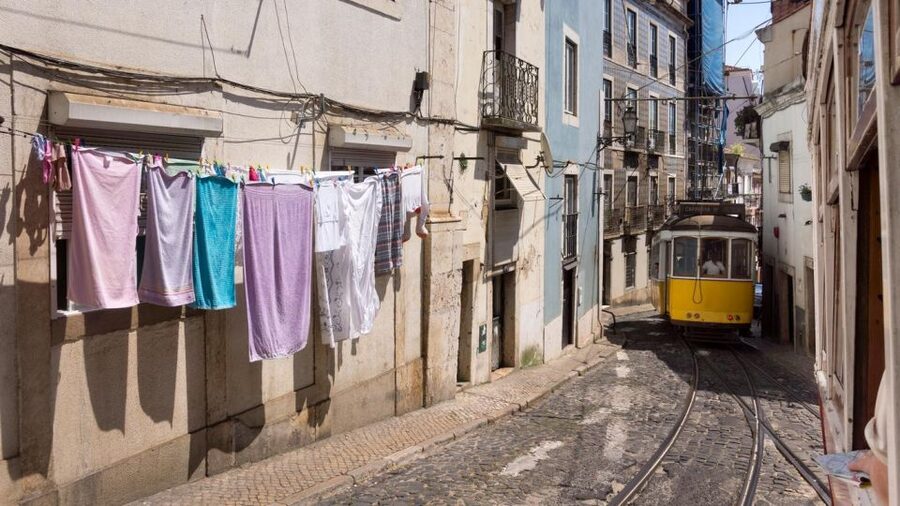
After Praça do Comércio, the route moves through the old areas tied to the Judiaria, including streets associated with the Jewish quarter. You will hear how medieval segregation shaped everyday geography, meaning where people lived and how the city organized itself around power.
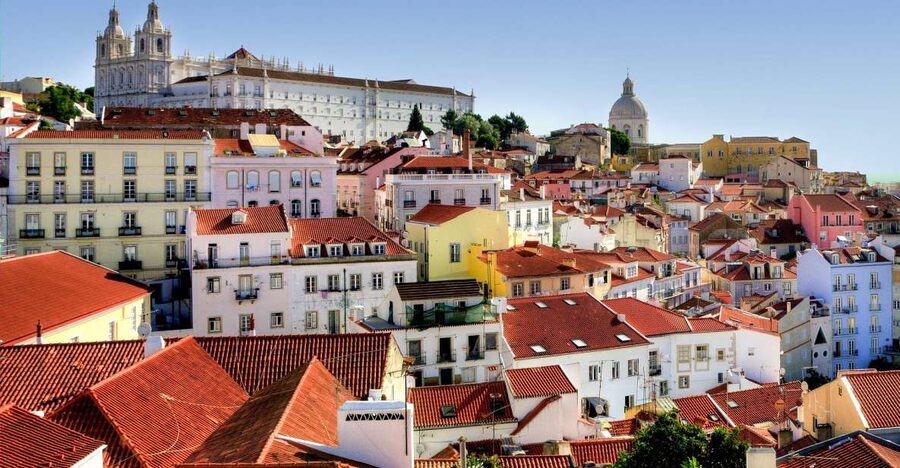
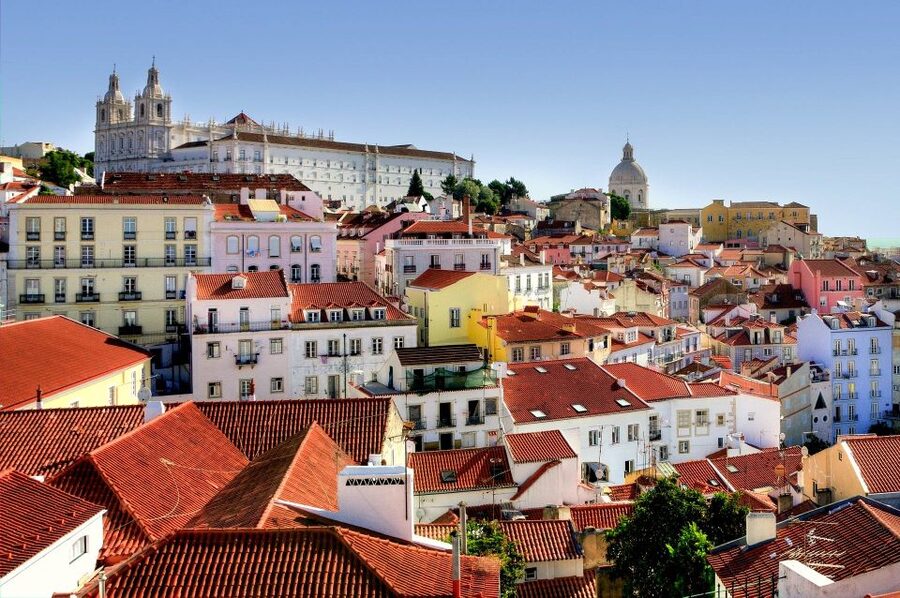
Then the tour swings toward viewpoints, including Portas do Sol. This is one of those stops that works even if you know Lisbon well. When you look down over the tiled roofs, you understand how easy it is for steep neighborhoods to feel hidden. It also makes the historic segregation concept feel less abstract. Lines on a map become real neighborhood boundaries.
If you like photo stops, plan on taking your time here. The view is the reward for the climb you have not done yet.
S. Jorge Castle Hill: medieval memory and the logic of the city
Heading toward S. Jorge Castle and the Castle Hill area, you are not just sightseeing. You are walking through the “why” behind the city’s structure. Lisbon’s hilltop control points made defense and authority visible. That becomes part of how you understand medieval segregation: where groups could be placed, monitored, or separated.
The guide’s approach here, based on what people highlight consistently, is to keep the history human. You learn about community presence and how Lisbon changed over time, including the tensions that pushed people into different categories. You also get the sense that Lisbon’s topography is not a background detail. It is part of the story.
Practical note: expect more uphill work. Even if you are fit, Castle Hill and its connections to Alfama are where the tour starts asking for stamina.
Other Lisbon plans worth comparing
- Best of Lisbon Walking Tour: Rossio, Chiado & Alfama
★ 4.9 · 2,700 reviews - Age of Discoveries Walking Tour in Belém
★ 5.0 · 1,513 reviews - Sintra & Cascais Day Tour with Pena Palace Entry and Gardens Walk
★ 5.0 · 962 reviews - Lisbon Roots – Small group Food & Culture Walking Tour w/tastings
★ 5.0 · 910 reviews
Baixa and forced conversions: the painful political layer
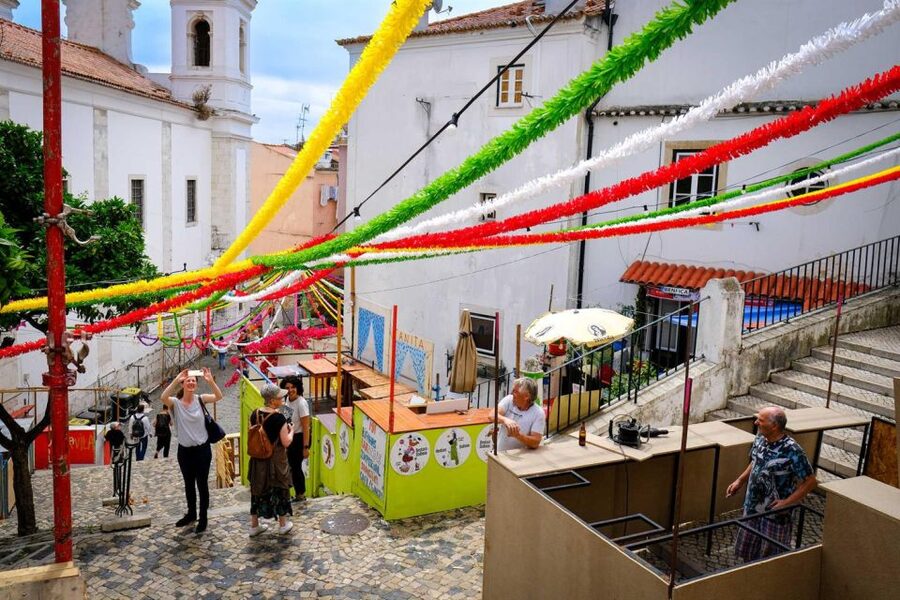
Once you reach the Baixa side of the story, the tone can turn heavier. This part focuses on forced conversions and the social pressure behind them. It is one thing to hear about “conversions” as a historical term. It is another to have it placed in Lisbon’s civic district, where laws and public life intersect.
This is where the guide’s mixing of Portuguese and Jewish history really earns its keep. You are not just learning what happened. You are learning how it worked, meaning how governance, religion, and public order shaped private life.
You will likely notice that this segment is not framed as gossip or scandal. It is treated as policy and consequence. That is what helps the story land.
Rossio Square and the 1506 Pessah massacre
Rossio is a key public square in Lisbon, which is why it is such a powerful stop. The tour specifically includes the 1506 Pessah massacre, placing a tragedy in a place people would naturally see as everyday civic space.
That contrast is the point. Lisbon is not just a city of ruins and quiet corners. It is also a city where major events played out in the open. When you pair Rossio’s visibility with the guide’s storytelling, you feel the risk of public life during times of religious tension.
If you prefer history that explains how fear spreads and how communities are targeted, this is one of the most important moments on the walk.
Alfama’s stairs and break-smart pacing
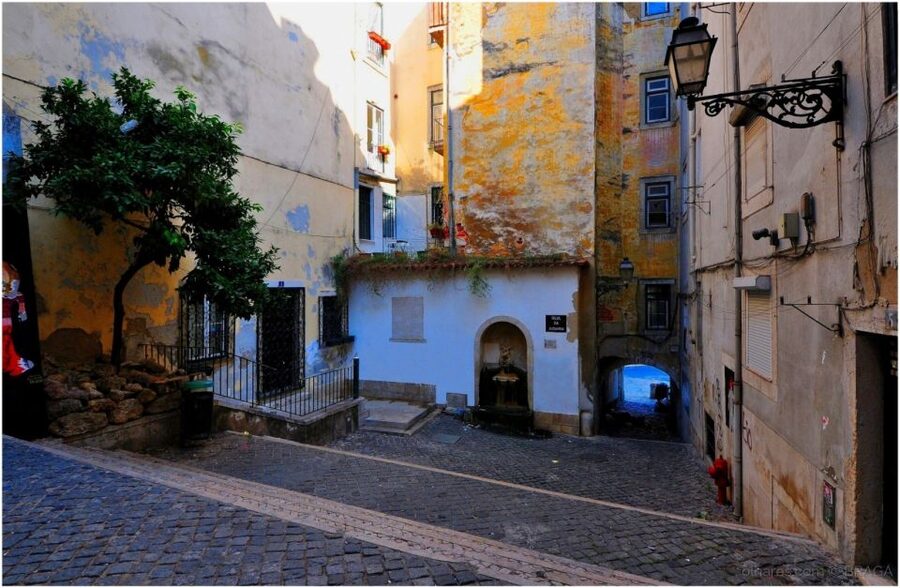
Alfama is where the tour becomes physically real. The walk includes stairs through Alfama quarter lanes, and the route is mainly uphill. This is not a gentle stroll. It is a guided march through centuries, in a neighborhood that still has the narrow, steep design that shaped daily movement.
The good news is the guide’s pacing. People consistently note that Amber offers breaks when needed and keeps the group moving without rushing. That is exactly what you want in a tour like this, because the goal is understanding, not just finishing.
Bring comfortable shoes and water. Wear clothes that you can walk in for two hours. If you are deciding whether to go, be honest about your hills. This tour is not built for low fitness, recent surgery, or mobility limitations.
WWII refugees in the 1940s, and Lisbon’s Atlantic connections
This tour does not stop at medieval Lisbon. It covers the contemporary layer of Jewish presence, including IIWW refugees passing through in the 1940s. That modern chapter helps you connect Lisbon’s story to the larger movements of people across Europe and toward the Atlantic.
You will also hear about the world diaspora that spread from Lisbon across the Atlantic. Even without specific family names or one-person stories spelled out, the concept matters. It helps you understand why Lisbon can feel like a crossroads rather than a dead-end chapter in history.
This is also where the tour’s “science and gastronomy” references fit in. The legacy is not only buildings and streets. It is also skills, food culture, and how traditions travel.
Price and logistics: is $58 for 2 hours a good deal?
At $58 per person for a 2-hour guided walk with a small group limited to 10, this is priced like a specialist history experience, not a general city tour. The value comes from three things you do not easily get on your own: a guided narrative that connects multiple districts, access to viewpoints and streets you may not pick out quickly, and the chance to ask questions in a tighter group.
Food is not included, so think of this as a history block you pair with a nearby meal plan. The lack of a food stop can actually be a plus, because it keeps the tour focused and prevents you from losing time to restaurant logistics.
For value, ask yourself what you want: if you enjoy walking but you also want context and connections, this is a solid buy. If you prefer long sit-down museum time, you might feel this is more active than you want.
Who Should Book This (and who should skip it)
This tour is a good match if you want Lisbon’s Jewish Quarter story through Alfama, Baixa, and key squares with a guide who connects the Jewish timeline to Portuguese history. It is also ideal for adults and teens who are comfortable reading a city through geography, not just through facts.
I would skip it if you have mobility impairments, back problems, low fitness, or if you are traveling with children under 10. The stated route includes a lot of climbing and stairs in Alfama. Also, if you are over 70 or have recent surgeries, this one can feel like too much.
Should you book this Lisbon Jewish Quarter guided walk?
If you want a focused, two-hour route that connects medieval segregation, forced conversions, the 1506 Pessah massacre at Rossio, and even the 1940s refugee layer in a single story, you should book it. The small group size and guide style matter here, especially if you like asking questions and getting answers that connect Jewish and Portuguese threads.
But if your body needs flat ground, or if stairs are a deal breaker, choose a different Lisbon experience. This one is about steep streets and real movement, and that is part of the authenticity.
FAQ
How long is the Lisbon Jewish Quarter guided walking tour?
It lasts 2 hours.
Where does the tour start?
The tour starts at Praça do Comércio.
How do I find the guide at the meeting point?
Look for your guide with a dark red umbrella and or a sign. The instructions say to contact the number linked to your voucher via WhatsApp or iMessages to confirm.
Is food included?
No, food and drinks are not included.
What language is the tour in?
The tour is in English.
Is the tour suitable for people who have mobility issues?
It is not suitable for people with mobility impairments or for those with back problems, recent surgeries, or low level of fitness. The walk is mainly uphill and includes stairs in Alfama.
What should I bring with me?
Bring comfortable shoes and water, plus comfortable clothes for walking.
What is the group size?
It is a small group limited to 10 participants.
Is there a cancellation option?
The activity lists free cancellation, with cancellation possible up to 24 hours in advance for a full refund.
Just added around Lisbon
- Tour Bohemian de Tuk Tuk: Bertrand, Miradouros e Estrela★ 5.0 · 24 reviews
- Tomar: Knight’s Templar Castle and Convent of Christ Tour★ 4.9 · 84 reviews
- From Lisbon: Fátima, Nazaré and Sintra Guided Tour★ 4.7 · 155 reviews
- From Lisbon: Tomar, Batalha, Alcobaça, & Óbidos Templar Tour★ 4.9 · 47 reviews
- From Lisbon: Sintra Pena Palace Cascais 8-People Group Tour★ 4.9 · 93 reviews
- The Real Lisbon Street Art Private Guided Tour by Minivan★ 4.7 · 49 reviews
- Lisbon: The Jewish Sephardic Walking Tour★ 4.9 · 22 reviews
- From Lisbon: Tomar, Christ Convent & Almourol Castle Tour★ 5.0 · 64 reviews
Walking Tours, compared.
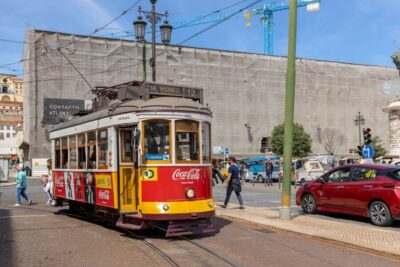
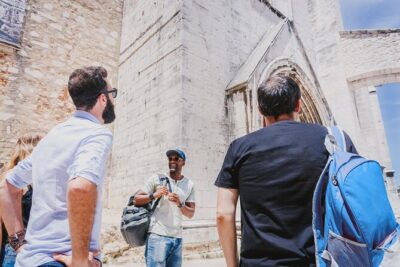
Best of Lisbon Small-Group Guided Walking Tour
Read our review →
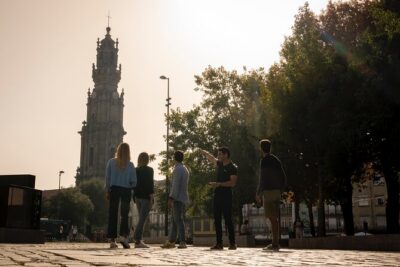
Porto Walking Tour, Lello Bookshop, River Cruise and Cable Car
Read our review →
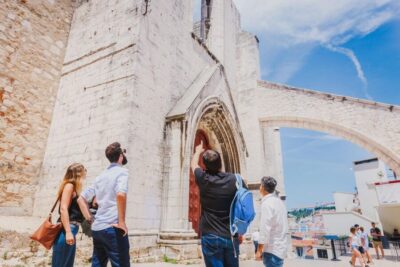
Best of Lisbon Walking Tour: Rossio, Chiado & Alfama
Read our review →
Experience Porto’s Charm: 3-Hour Guided Walking Tour
Read our review →
Enjoy a Guided Levada Walk in the Rabaçal Valley
Read our review →Browse the lists this tour appears in