
Reviewed · WALKING TOURS
Lisbon – Small Group Walking Tour
Lisbon clicks fast when you walk it with a guide. This 3-hour small-group route lines up Baroque art, hilltop viewpoints, and classic Baixa squares so you get context without feeling stuck in a museum. I especially like the way the stops jump between standout landmarks and the everyday streets between them, plus the max 8-person group size makes the experience feel personal. Guides such as Rui Fernandez and Andre are repeatedly praised for clear pacing and answering questions without rushing you.
The one thing to keep in mind is physical effort. You’ll be doing a real walk on uneven historic streets, and the tour requires moderate fitness. If you hate hills, pack comfortable shoes and plan on taking breaks when your guide offers them.
In This Review
- Key highlights worth your time
- A 3-hour Lisbon walk that helps everything else click
- Small group size and guide style, including Rui Fernandez and Andre
- Meeting at Church of Saint Roch, then finishing at Praça do Comércio
- Stop 1: Igreja de São Roque, Baroque art you learn how to see
- Stops around Bairro Alto, Bica, and Cais do Sodré: street Lisbon with context
- Trindade, the quirky Lisbon connection
- Largo do Carmo and the Gothic ruins tied to 1755
- Santa Justa Elevator: the view that sells the city
- Chiado shopping streets, old businesses, and a stop for the world’s oldest bookstore
- Largo de São Domingos and Igreja de São Domingos: memory, faith, and space
- Walking down the main pedestrian streets to the big square finale
- Price and value: $39.78 for three hours of smart routing
- Who this Lisbon walking tour is best for
- Should you book this Lisbon small group walking tour?
- FAQ
- How much does the Lisbon Small Group Walking Tour cost?
- What is the duration of the tour?
- How many people are in the group?
- Where do I meet, and where does the tour end?
- What language is the tour offered in, and do I get a ticket on my phone?
- Are food and drinks included?
- What fitness level is needed?
- What happens if weather is poor?
Key highlights worth your time
- Max 8 people, real conversation pace: You’re not shouting over a crowd, so details stick.
- Igreja de São Roque kickoff: Start with one of Lisbon’s finest Baroque church interiors and learn how to look.
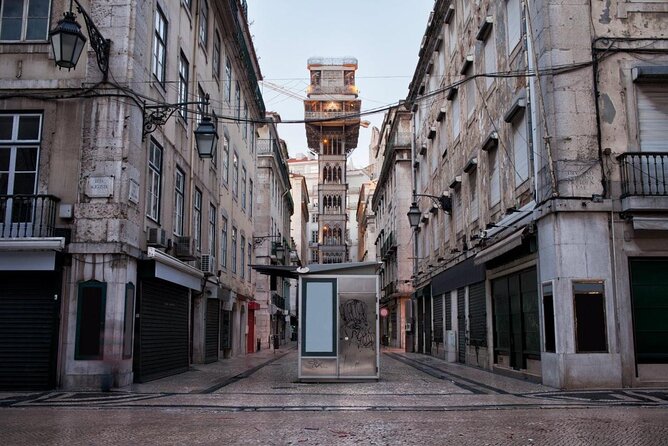
- Santa Justa Elevator photo moment: Get a birds-eye view that gives the city scale fast.
- Street-level history in Bairro Alto and Bica: Old Lisbon feels lived in, not staged.
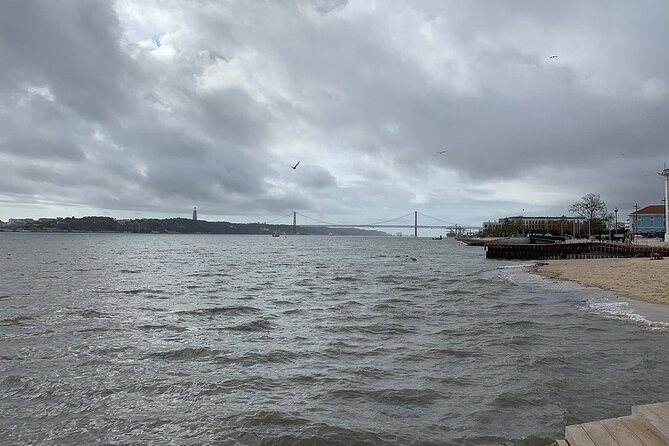
- Baixa squares finale at Praça do Comércio: You end where Lisbon opens up to the Tagus.
- World’s oldest bookstore stop: A fun culture check that fits right into the walking flow.
A 3-hour Lisbon walk that helps everything else click
If Lisbon is your first stop in Portugal, this kind of short walking tour can do a lot of work for you. In three hours you’re led through the center so you learn what each neighborhood is for, and how to connect the dots later on your own. You’ll start with churches and iconic architecture, but you’ll also spend time on streets that show how Lisbon actually moves, from viewpoints to pedestrian downtown lanes.
I like that the route is built around recognizable Lisbon moments. Igreja de São Roque gives you an art-and-architecture primer right away. Then the walk keeps shifting gears, from Bairro Alto and Bica’s character-filled streets to the history-rich squares in Baixa. That mix helps you understand Lisbon beyond postcards.
One more plus: you get a local guide and tour escort, and the tour is offered in English. Even if you’re not a history fanatic, this is the best way to pick up “why this matters” facts that you can use when you’re deciding what to visit next.
More Walking Tours in Lisbon
- Lisbon: History, Stories and Lifestyle Walking Tour
★ 4.8 · 10,902 reviews - Best of Lisbon Small-Group Guided Walking Tour
★ 5.0 · 4,869 reviews - Lisbon: Food and Wine Small Group Walking Tour
★ 4.9 · 4,082 reviews
Small group size and guide style, including Rui Fernandez and Andre
A lot of Lisbon tours feel crowded. Here, the group caps at 8 travelers, which changes the tone. You can hear the guide, ask questions, and actually notice small details like artwork placement, facade clues, or why a square is shaped the way it is.
From the guide names that show up again and again, Rui Fernandez and Andre are strong examples of what you can expect in this format: calm explanations, good pacing, and a sense of humor that helps the walking feel lighter. Andriy is also mentioned for timing and for knowing when to add detail and when to keep things flowing. Alex appears in other Portuguese itinerary comments, but the common thread is the same, guides who keep you comfortable and moving.
Practical side effect for you: fewer people means the group can naturally slow down near viewpoints or inside churches without losing the whole schedule. That matters in Lisbon, where a short stop can take longer than you expect once you’re looking up at stonework.
Meeting at Church of Saint Roch, then finishing at Praça do Comércio
This tour starts at Church of Saint Roch (Largo Trindade Coelho) and ends at Praça do Comércio. That start-to-finish alignment is smart because Praça do Comércio sits at the heart of Baixa and opens your final view toward the river area.
If you’re planning the rest of your day, I’d treat this as a morning or early afternoon anchor. You’ll walk through central Lisbon, learn how the neighborhoods connect, then you can head out afterward with clearer plans. Ending at Praça do Comércio is also useful because it’s an easy area to regroup, grab a coffee later, and orient yourself for museums or tram rides.
One tip that really helps: if you’re wearing shoes that feel great on day one but start to complain by hour two, switch them out now. This route is doable, but Lisbon cobblestones and stairs do not negotiate.
Stop 1: Igreja de São Roque, Baroque art you learn how to see
You begin with Igreja de São Roque, one of the most impressive churches in Lisbon. The key value here is not just that it’s beautiful. It’s that your guide gives you a framework for what you’re looking at, so the interior turns into a story instead of random decoration.
It’s also a strong “attention setter” for the tour. When you start with Baroque art, you train your eye for details like dramatic ornament, rich design choices, and the way religious art was made to move people. The itinerary lists admission as free, and that matters because it keeps your costs predictable.
A drawback to flag: if you’re not into churches, this might feel like a lot at the start. Still, even if you’re a casual art observer, it’s the fastest way to understand Lisbon’s Catholic artistic influence and the local style you’ll see echoed in other places on your walk.
Other Lisbon plans worth comparing
- Best of Lisbon Walking Tour: Rossio, Chiado & Alfama
★ 4.9 · 2,700 reviews - Age of Discoveries Walking Tour in Belém
★ 5.0 · 1,513 reviews - Sintra & Cascais Day Tour with Pena Palace Entry and Gardens Walk
★ 5.0 · 962 reviews - Lisbon Roots – Small group Food & Culture Walking Tour w/tastings
★ 5.0 · 910 reviews
Stops around Bairro Alto, Bica, and Cais do Sodré: street Lisbon with context
Next you head into the Bairro Alto, Bica, and Cais do Sodré area. This is where Lisbon shifts from landmark mode into daily-life mode. Your guide helps you navigate the streets and understand why this part of town feels old and a bit eccentric, even when it’s full of modern visitors.
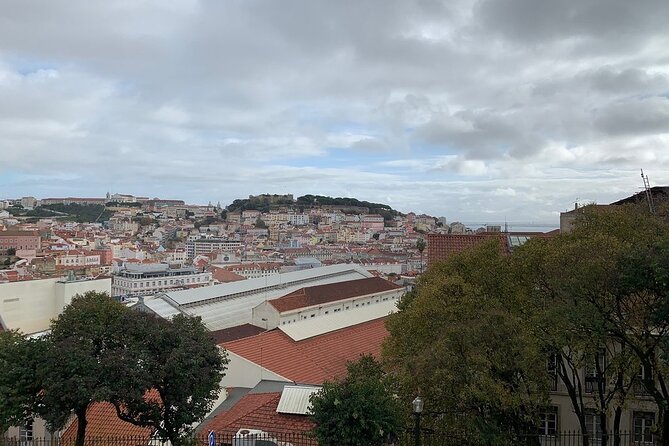
Why this matters for you: Lisbon’s neighborhoods are built on topography. Streets twist, viewpoints appear, and the city’s layout makes certain views natural. A guided walk helps you avoid that frustrating feeling of being in the wrong place at the wrong angle.
You also get the payoff of photographing architecture with direction. Guides tend to point out which facades look best from certain corners, and which streets give you depth in the frame. Even if you only take a few photos, learning where to stand makes the difference.
Trindade, the quirky Lisbon connection
Trindade is short on time but big on fun facts. This stop focuses on a peculiar restaurant and connects it to Catholic worship themes, beer, and Freemasonry. The point isn’t to turn you into a scholar. It’s to show how Lisbon’s identity gets mixed into everyday culture.
If you like learning the weird side of cities, this kind of stop is perfect. It’s also a nice break from purely architectural sightseeing. In a few minutes, you get a story that makes Lisbon feel human and slightly offbeat.
The tradeoff: if you prefer straightforward monuments only, this might feel too “story shop” and not enough “see a building.” I’d still keep an open mind because it adds variety to a walk that could otherwise become church after church after church.
Largo do Carmo and the Gothic ruins tied to 1755
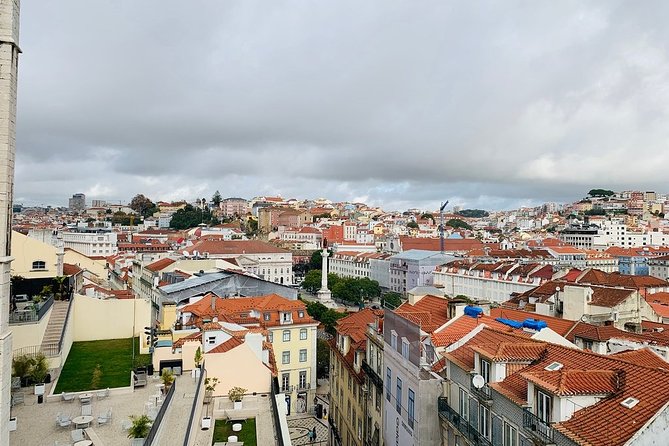
At Largo do Carmo, you visit a square where the Gothic ruins of the Carmelite Convent are a reminder of the 1755 earthquake. This stop does a great job of showing how Lisbon’s history isn’t trapped in books. It’s physically built into streets and ruins you can stand in.
This is one of those moments where a guide helps you translate what you’re seeing. Instead of just looking at weathered stone, you understand why ruins like this survived, what they symbolize, and how Lisbon rebuilt itself around the scars of disaster.
A practical note: ruins areas can be exposed. If you’re walking in colder or wet months, bring a layer you can manage while still moving. If it’s hot, plan for shade, and let your guide know if you need an extra pause.
Santa Justa Elevator: the view that sells the city
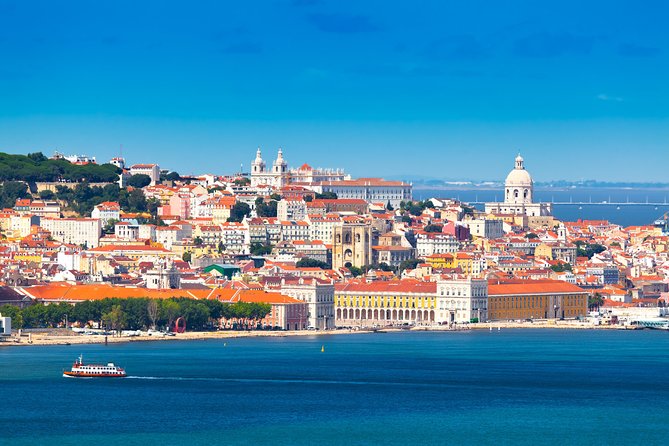
Next is Elevador de Santa Justa. Your stop includes time to visit and get a birds-eye view over Lisbon and toward the River Tagus. Even if you’ve seen photos online, a live viewpoint changes your understanding of distances and the city’s dramatic hills.
This is also one of the best “memory anchors” on the walk. After Santa Justa, the neighborhoods you already passed start making more sense. You can connect the dots between church areas, downtown blocks, and where the river sits relative to the city center.
The biggest consideration here is timing and movement. Elevator areas can draw crowds, so keep an eye on what your guide is doing and don’t lag for photos that can wait. The view is worth it, but you’ll have better photos if you follow the group to the best angles first.
Chiado shopping streets, old businesses, and a stop for the world’s oldest bookstore
You then shift into Chiado, where the tour focuses on the largest concentration of traditional stores and businesses. This is a good moment for real texture. Chiado isn’t only pretty, it’s functional, like Lisbon’s downtown heartbeat in motion.
Your itinerary also includes a stop for the world’s oldest bookstore. Even if you don’t buy anything, it’s a fun cultural punctuation mark. It adds a “Lisbon is about ideas too” feeling to a tour that began with religious art and ruins.
Right after that, you have time to admire a late 19th century train station noted for Neo-Manueline architecture. That style is visually distinctive, and the station is a useful example of how Lisbon’s design language evolved. If you’re the type who likes architecture but gets tired of long explanations, your guide should keep this part efficient and story-driven.
Largo de São Domingos and Igreja de São Domingos: memory, faith, and space
You continue to Largo de São Domingos, where you learn about the Jewish Massacre of 1506 connected to religious persecution, along with a memorial honoring victims. This isn’t a long stop, but it’s meaningful. A good guide helps keep it respectful and clear, not vague or sensational.
Then you visit Igreja de S Domingos, described as one of Lisbon’s unique places of worship. This is another interior moment, so the value is in how you’re guided to notice the important elements inside.
For you, the practical benefit is emotional grounding. After the lighter street storytelling in the middle of the tour, this part gives weight. It also helps you see Lisbon as a layered place, where social history and architecture are inseparable.
The one caution: if you’re sensitive to religious persecution topics, consider whether you want short exposure. This is handled as a brief, guided stop, but it does cover real tragedy.
Walking down the main pedestrian streets to the big square finale
Between the churches and the ending, you’ll also stroll along a main pedestrian street in downtown. The tour time here is meant for moving through the atmosphere, seeing coffee shops and older businesses near the Santa Justa Elevator, and absorbing how Lisbon’s central blocks feel on foot.
If you’ve ever tried to walk Lisbon on your own and ended up crisscrossing the wrong streets, this is where a guided route helps. It keeps you in the right corridor. You’ll also have guided context that makes the squares feel less random.
Then the tour lands in the biggest finish zone: Praca do Comercio (Terreiro do Paco). This stop is tied to Portuguese historical figures such as the Marquis of Pombal, and the regicide of 1908. Even if you only catch part of those stories, your guide gives you enough to make the square’s importance click.
The finale continues at Praca Dom Pedro IV, another Baixa Pombalina showcase. Expect key landmarks in the area, including the Queen Mary National Theater and Opera house, and local businesses like Tabacaria Mónaco. It’s an effective end because you finish in a place where you can keep exploring without needing extra transportation.
Price and value: $39.78 for three hours of smart routing
At $39.78 per person for about 3 hours, this tour sits in the “high value” category for Lisbon. Here’s why: you’re paying for two things that are hard to replicate alone.
First, the guide handles the sequencing. Lisbon’s center is dense, and your time evaporates fast when you’re unsure where to go next. Second, you get guided interpretation at multiple stops, including interiors like Igreja de São Roque and Igreja de S Domingos, plus a viewpoint at Santa Justa and context in multiple squares.
Entry costs for the listed sights are shown as free in the stop descriptions, and the tour includes taxes, fees, local guide, and a tour escort/host. That means your budget is less likely to get hit by surprise add-ons.
What you should still plan for: food and drinks are not included. Lisbon runs on pastries and coffee breaks, and this tour may give you a chance to stop informally, but I’d bring money for whatever you want to eat and drink.
Who this Lisbon walking tour is best for
This tour fits you if:
- You want a first-pass orientation to central Lisbon.
- You enjoy architecture, churches, and squares, plus some quirky local stories.
- You prefer a small-group format with room for questions.
- You want a plan that ends in a major square where continuing on is easy.
It may not be ideal if:
- You hate walking on old streets and stairs, even with a moderate fitness level.
- You only care about one type of attraction, like views only or beaches only.
- You need long, unstructured downtime, because it is a packed route of multiple stops over 3 hours.
Should you book this Lisbon small group walking tour?
I’d book it if you want Lisbon to feel understandable fast. The route hits the right mix of iconic sights and street-level neighborhoods, and the small-group size keeps the guide’s explanations from turning into background noise. Ending at Praça do Comércio is a smart payoff, because you leave with a clear sense of where you are and what to do next.
Skip it only if you’re not interested in church interiors, historical square context, and a focused walking schedule. If that stuff is your pace, this is a good way to start Lisbon on the right foot, with just enough depth to make the rest of your trip feel easier.
FAQ
How much does the Lisbon Small Group Walking Tour cost?
The price is $39.78 per person.
What is the duration of the tour?
The tour lasts about 3 hours.
How many people are in the group?
This is a small group tour with a maximum of 8 travelers.
Where do I meet, and where does the tour end?
You meet at Church of Saint Roch (Largo Trindade Coelho, 1200-470 Lisboa, Portugal) and the tour ends at Praça do Comércio (1100-148 Lisboa, Portugal).
What language is the tour offered in, and do I get a ticket on my phone?
The tour is offered in English, and you receive a mobile ticket.
Are food and drinks included?
No. Food and drinks are not included.
What fitness level is needed?
You should have moderate physical fitness. The walk is on city streets and you should be prepared for some uneven walking.
What happens if weather is poor?
This experience requires good weather. If it’s canceled due to poor weather, you’ll be offered a different date or a full refund.
Just added around Lisbon
- Morning Sailing Tour in Tagus River from Lisbon★ 5.0 · 68 reviews
- Private Half Day – The Majestic Pena Palace & Sintra★ 5.0 · 90 reviews
- Lisbon Private 3 hours tour★ 4.5 · 33 reviews
- PRIVATE Unforgettable Full Day Tour to Sintra from Lisbon★ 5.0 · 236 reviews
- Lisbon: Catamaran Luxury Sunset and Wine Tour★ 5.0 · 119 reviews
- Lisbon’s authentic Food and Wine tour with a Winemaker★ 5.0 · 67 reviews
- Sesimbra Wild Beach Tour from Lisbon★ 5.0 · 57 reviews
- Private Jeep Tour from Lisbon – Arrábida, Sesimbra & Beach Picnic★ 5.0 · 48 reviews
Walking Tours, compared.
Best of Lisbon Small-Group Guided Walking Tour
Read our review →
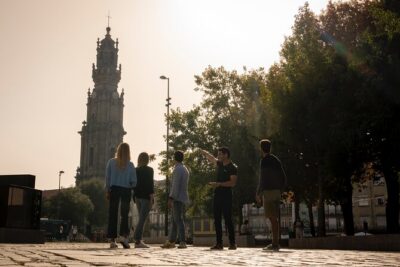
Porto Walking Tour, Lello Bookshop, River Cruise and Cable Car
Read our review →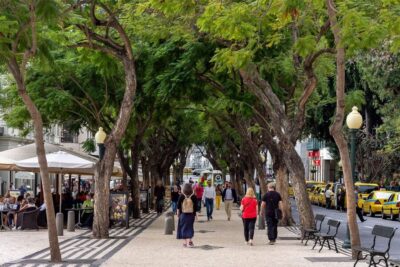
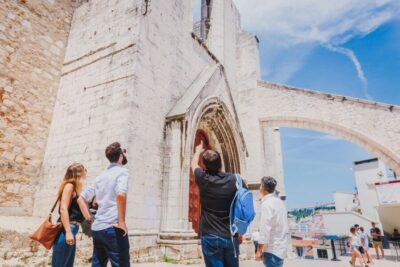
Best of Lisbon Walking Tour: Rossio, Chiado & Alfama
Read our review →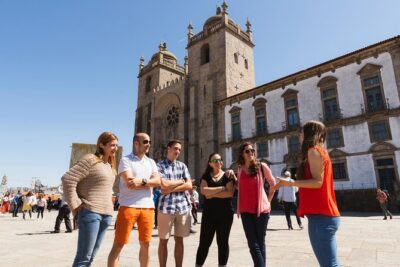
Experience Porto’s Charm: 3-Hour Guided Walking Tour
Read our review →
Enjoy a Guided Levada Walk in the Rabaçal Valley
Read our review →Browse the lists this tour appears in