
Reviewed · ALFAMA & OLD TOWN WALKS
Small-Group Alfama Walking Tour
Lisbon’s Alfama tells its story in steep steps. I loved the viewpoints from Miradouro da Graça and the way your guide ties each stop to Lisbon’s real-life past and present. The other big win is the small group size, so questions do not get lost. One possible drawback, the route has steps and hills, and it is not for people who struggle with walking.
You start at Miradouro da Graça and end at Praça do Comércio near the water. The tour runs in English, uses a mobile ticket, and stays focused on neighborhood texture, not check-the-box sightseeing.
In This Review
- Key Things I’d Bet You’ll Notice
- Why Alfama, and Why This 3-Hour Walk Hits the Sweet Spot
- Meeting at Miradouro da Graça, and How the Walking Really Feels
- Viewpoints First: Miradouro da Graça and Miradouro Nosso Senhora do Monte
- Igreja & Convento da Graça: One of Lisbon’s Older Religious Centers
- Charming Alfama Streets, Buganvilia Terraces, and a Side of Activism
- Igreja de São Vicente de Fora: Patron-Saint Focus With Deep Local Meaning
- Feira da Ladra (Thieves Market): When Market Day Becomes the Lesson
- National Pantheon: Exterior Views Without the Extra Time
- Alfama Neighborhood Life: The Half Hour That Makes It Real
- Miradouro de Santo Estêvão: Another View, Another Angle
- Igreja de São Miguel: Surviving the 1755 Earthquake
- Lisbon Cathedral and Church of St. Anthony: Paying Attention Inside and Out
- Ending at Praça do Comércio: A Big-City Reset After Alfama
- Price and Value: Why $39.50 Feels Fair Here
- What to Do With This Info: Tips That Actually Help
- Who This Tour Fits Best, and Who Should Skip It
- Should You Book This Alfama Walking Tour?
- FAQ
- How long is the Small-Group Alfama Walking Tour?
- How much does the tour cost?
- What language is the tour offered in?
- How big is the group?
- Where do we meet, and where does the tour end?
- Is food and drinks included?
- Are entrance fees included for the stops?
- Is the tour suitable for people with walking difficulty?
- Can I cancel for a full refund?
Key Things I’d Bet You’ll Notice
- Miradouro da Graça first, so you get your bearings fast before the alleys
- Miradouro Nosso Senhora do Monte viewpoints vibe, plus the smaller Santo Estevão outlook
- Feira da Ladra (Thieves Market) on Tuesdays and Saturdays for authentic market energy
- Old churches and convents with context, including Lisbon’s patron saint
- Alfama street life, fado connections, and everyday Lisbon in about 3 hours
- A group capped at 8, which makes the tour feel personal, not rushed
Why Alfama, and Why This 3-Hour Walk Hits the Sweet Spot
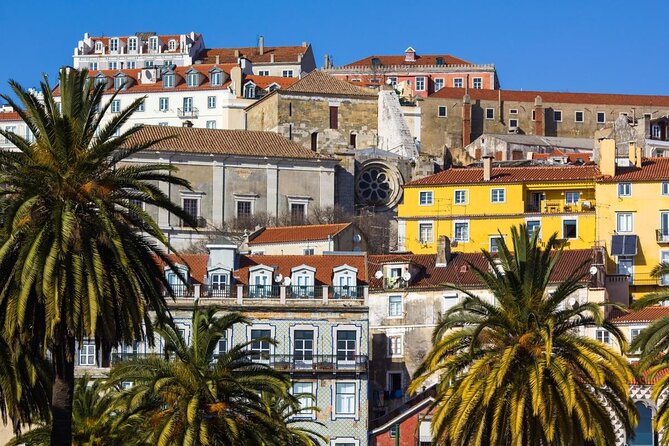
Alfama is the Lisbon you picture when someone says Portugal, but it is also the Lisbon that keeps going, day after day. This tour works because it does not try to cover every monument. Instead, you get a guided walk through viewpoints, churches, and narrow streets where history is not locked behind ropes.
At the start, you’re positioned for perspective. Then you move into smaller lanes where you can see balconies, flowers, and ordinary life. That flow matters. It turns “I’m in Alfama” into “I understand Alfama.”
And at $39.50 for about 3 hours, it is priced like a solid local guide experience, not a gimmick. You’re paying for someone to explain what you’re looking at, in English, with a small group.
More Walking Tours in Lisbon
- Lisbon: History, Stories and Lifestyle Walking Tour
★ 4.8 · 10,902 reviews - Best of Lisbon Small-Group Guided Walking Tour
★ 5.0 · 4,869 reviews - Lisbon: Food and Wine Small Group Walking Tour
★ 4.9 · 4,082 reviews
Meeting at Miradouro da Graça, and How the Walking Really Feels
You meet at Miradouro da Graça (Calçada da Graça, in Lisbon). It’s a great place to start because you immediately get a high-level view of the city. It also sets expectations for the walking: Lisbon is hilly, and getting to the meeting point can be a workout.
After that, the walk trend is downhill and sideways through Alfama streets, but do not assume it is flat. You’ll hit stairs and uneven sidewalks. If you know hills and steps slow you down, plan for extra time before the tour or consider skipping this one. The tour is not recommended for travelers with difficulty walking.
Good shoes are the quiet hero here. Even if the route is manageable, you’ll be glad you brought grip.
Viewpoints First: Miradouro da Graça and Miradouro Nosso Senhora do Monte
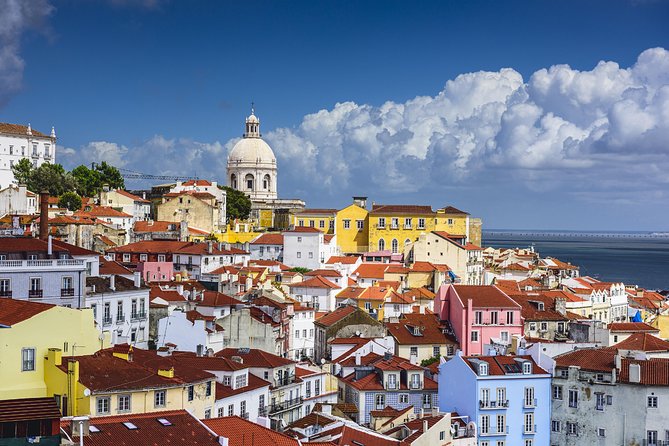
The tour kicks off at Miradouro da Graça (Sophia de Mello Breyner Andresen). From here, Lisbon opens up behind you. Your guide points out landmarks like the Castle of Saint George, the historic area of Mouraria, and the Tagus River. This matters because the next couple hours are a maze of streets. Once you have a mental map, the neighborhood clicks.
The highlights also call out Miradouro Nosso Senhora do Monte. Expect that same “look down and understand” feeling, with another chance to watch the city from above before you head back into the streets. Even if photos are your thing, give yourself a minute to actually look, not just frame.
I like these first stops because they change your pace. You stop walking like a tourist rushing through and start walking like someone oriented in the place.
Igreja & Convento da Graça: One of Lisbon’s Older Religious Centers
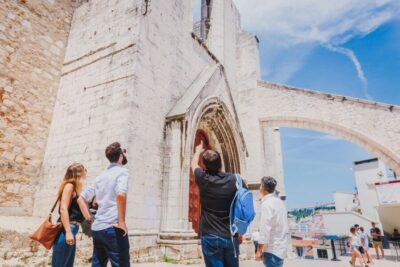
Right after the first views, you visit Igreja & Convento da Graca. This stop is short, but it gives you a real anchor for the neighborhood. You admire one of Lisbon’s oldest churches and convents, which were home to the Augustinian monks until 1834.
Why this is worth your time: churches in Alfama are not just architecture. They are community markers. Your guide uses this moment to set up how Lisbon’s culture and institutions evolved over time, so later streets make more sense.
This is a good spot to ask a question. If you’re the kind of person who likes “why does this matter,” your guide has room to answer without turning the tour into a lecture.
More old-town walks in Lisbon:
- Alfama Tour in Lisbon Old Town
★ 5.0 · 4,936 reviews - Private Lisbon Sightseeing Tuk-Tuk Tour: Alfama, Belém & More
★ 5.0 · 4,277 reviews - Lisbon: Hills, Alfama, and Mouraria Tour by Electric Bike
★ 4.8 · 3,438 reviews - Best of Lisbon Walking Tour: Rossio, Chiado & Alfama
★ 4.9 · 2,700 reviews
Charming Alfama Streets, Buganvilia Terraces, and a Side of Activism
Then you move into the smaller lanes, where Alfama does what it does best. You walk past a particularly charming little street with houses that have large terraces, often decorated with buganvilia and other flowers. That’s the visual payoff. It looks like a postcard, but it also feels lived-in.
Next comes something you might not expect on a “pretty street” tour. You learn about the history of trade union activism in Lisbon. This is the kind of detail that makes a neighborhood feel human. It also reminds you that Alfama has always been more than scenery. It has been a place where people organized, argued, worked, and built community.
If you like tours that connect art and architecture to real social history, this part is one of the reasons the tour earns such high ratings.
Igreja de São Vicente de Fora: Patron-Saint Focus With Deep Local Meaning
At Igreja de Sao Vicente de Fora, you learn about the historical significance of the church dedicated to Lisbon’s patron saint. This is a short stop, but it is not random. A guide who knows the neighborhood can connect a religious site to Lisbon’s identity, and that’s the point here.
Also, churches like this often sit in the middle of everyday neighborhoods. You’re not just viewing a monument. You’re seeing how faith and city life share the same small blocks.
Feira da Ladra (Thieves Market): When Market Day Becomes the Lesson
On Tuesdays and Saturdays, you visit Feira da Ladra, one of Lisbon’s oldest flea markets. You get a slice of the market’s atmosphere, and it’s the kind of place where you can actually browse without feeling like you’re in a tourist trap museum.
The tour gives you time here (about 15 minutes). That is enough to walk the lanes, spot interesting items, and maybe pick up a small local treasure. It is not enough to turn it into a full shopping expedition, so it works best if you think of it as a sensory stop, not a bargain hunt.
One practical note from the spirit of this tour: if you hate crowds of any kind, or you just want photos and churches, market days may feel like a detour. On the other hand, Alfama without its market energy is like Lisbon with the sound turned off.
National Pantheon: Exterior Views Without the Extra Time
You get an exterior look at the National Pantheon, a mausoleum to some of Portugal’s greatest men and women. The key detail is that admission is marked as not included here, and your visit is an exterior stop.
This is a smart pacing choice. You can appreciate the scale and importance without eating up the tour time inside. If you’re the type who wants to go deeper, you’ll likely plan that separately on your own.
Alfama Neighborhood Life: The Half Hour That Makes It Real
The tour spends about 30 minutes getting acquainted with the Alfama neighborhood and the everyday life of its inhabitants. This is not just “look at buildings.” Your guide points out how the neighborhood functions, where people gather, and how history shows up in daily routines.
This is the point where the small-group format pays off. With fewer people, it feels easier to stop, listen, and keep asking questions without feeling like you’re holding up a herd.
From the guides I’ve seen run tours like this, the best ones keep the pace humane. They let you absorb a street corner, then move on when you’re ready, not when a clock demands it.
Miradouro de Santo Estêvão: Another View, Another Angle
Next up is Miradouro de Santo Estevao. Expect a quick viewpoint moment (around 5 minutes), with a focus on Alfama’s tiny streets and the way the neighborhood stacks upward.
Short stops like this are not filler. They are how you get “spatial understanding” in a compact tour. You see a different slice of the city, then move on with better context.
Your guide also connects this area to fado, including an exterior look at a building tied to the music tradition. Even if you do not know fado yet, you’ll leave with enough context to recognize the cultural thread when you hear it later.
Igreja de São Miguel: Surviving the 1755 Earthquake
One of the most compelling stops is Igreja de Sao Miguel, visited from the outside. This is one of the churches that survived the earthquake of 1755.
That one fact changes how you look. You stop treating the building like decoration and start seeing it as evidence that Lisbon has endured. A good guide will connect this to Lisbon’s rebuilding and how the city’s physical story mirrors its cultural story.
Even on a fast-paced walk, this kind of context makes the architecture feel heavier, in a good way.
Lisbon Cathedral and Church of St. Anthony: Paying Attention Inside and Out
You finish with two church-related stops that round out the narrative.
First is Lisbon Cathedral. The tour includes a detailed interior tour, but admission is marked as not included. So plan for possible entry costs if you want to go inside.
Then comes Church of St. Anthony, visited at about 15 minutes. You learn that this church was built on the site where Saint Anthony was born. Like the other religious stops, it adds meaning to the streets around it, showing how Lisbon’s sacred history is woven into neighborhood geography.
If you’re the kind of traveler who likes to compare what you see with what you learn, these final stops are the strongest payoff per minute.
Ending at Praça do Comércio: A Big-City Reset After Alfama
The tour ends at Praça do Comércio. This is a wide open square by the water, and it feels like a reset button after tight Alfama lanes. You get a final sense of scale, and it’s easy to continue your day from there.
If you want a simple plan after the tour, this is the part where you can transition to a waterfront stroll or just use the square as a landmark for meeting up with friends.
Price and Value: Why $39.50 Feels Fair Here
At $39.50 for about 3 hours, you are paying for several things that matter in Lisbon:
- A local guide who explains what you are seeing
- A small group capped at 8, so you get time and attention
- Stops that are largely free admission, plus guided time at the ones that cost more
Most admissions are listed as free for the stops you walk through. That helps keep the total out-of-pocket cost reasonable. The ones marked not included are the places where entry might cost you extra, like National Pantheon (exterior only) and Lisbon Cathedral (interior tour).
Add in that the tour is offered in English, uses a mobile ticket, and includes local taxes and a tour escort or host. You are not just buying steps on a map. You’re buying guidance that gives structure to a confusing neighborhood.
What to Do With This Info: Tips That Actually Help
- Bring comfortable shoes. Alfama is doable for many people, but the steps are real.
- If you get there by foot, expect that the meeting point is uphill. If you’re not up for that, use a taxi for the ride to the start.
- On market day, keep shopping expectations modest. You’ll have time to browse, not to shop for hours.
- If your guide sends a message with their photo and directions beforehand, read it. It makes meeting up painless.
- Ask questions. The best tours here are the ones where you turn the walk into a conversation.
Also, a small nod to guide quality: names like Andriy/Andrey and Rui Fernandes show up in past groups, and the common theme is strong English, solid context, and time to look around without rushing.
Who This Tour Fits Best, and Who Should Skip It
This tour is ideal if you:
- Want to see Alfama without getting lost in it
- Like history that connects to daily life, not just dates and plaques
- Prefer small group attention and clear explanations
- Enjoy churches, viewpoints, and neighborhood streets in one compact block of time
Skip it, or rethink it, if:
- Walking with steps is difficult for you. The route is not recommended for that.
- You want a fully flat, stroller-friendly experience. This is not that kind of tour.
For everyone else, it’s a smart way to spend an afternoon. You’ll come away with both photos and understanding.
Should You Book This Alfama Walking Tour?
I’d book it if you want the best version of Alfama in about 3 hours, with a guide who makes the area click. The value feels strong because many stops are free, the group size stays small, and you get the key viewpoints and churches without turning it into a long endurance event.
I would not book it if hills and steps are a deal breaker, or if you only want major paid attractions. This is a neighborhood-first tour. The payoff is understanding, not checklist completion.
If you’re going on a Tuesday or Saturday and you like markets, this is an especially good day to go, because Feira da Ladra adds real street energy.
FAQ
How long is the Small-Group Alfama Walking Tour?
The tour lasts about 3 hours.
How much does the tour cost?
The price is $39.50 per person.
What language is the tour offered in?
The tour is offered in English.
How big is the group?
The tour has a maximum of 8 travelers.
Where do we meet, and where does the tour end?
You start at Miradouro da Graça (Calçada da Graça, 1100-265 Lisboa) and end at Praça do Comércio (1100-148).
Is food and drinks included?
No. Food and drinks are not included.
Are entrance fees included for the stops?
Many stops list admission as free, but admission is not included for the National Pantheon (exterior visit) and for Lisbon Cathedral (interior tour).
Is the tour suitable for people with walking difficulty?
It is not recommended for travelers with difficulty walking.
Can I cancel for a full refund?
Yes. You can cancel up to 24 hours in advance for a full refund.
Just added around Lisbon
- Morning Sailing Tour in Tagus River from Lisbon★ 5.0 · 68 reviews
- Private Half Day – The Majestic Pena Palace & Sintra★ 5.0 · 90 reviews
- Lisbon Private 3 hours tour★ 4.5 · 33 reviews
- PRIVATE Unforgettable Full Day Tour to Sintra from Lisbon★ 5.0 · 236 reviews
- Lisbon: Catamaran Luxury Sunset and Wine Tour★ 5.0 · 119 reviews
- Lisbon’s authentic Food and Wine tour with a Winemaker★ 5.0 · 67 reviews
- Sesimbra Wild Beach Tour from Lisbon★ 5.0 · 57 reviews
- Private Jeep Tour from Lisbon – Arrábida, Sesimbra & Beach Picnic★ 5.0 · 48 reviews
Alfama & Old Town Walks, compared.
Private Lisbon Sightseeing Tuk-Tuk Tour: Alfama, Belém & More
Read our review →
Hills, Alfama, and Mouraria Tour by Electric Bike
Read our review →
Best of Lisbon Walking Tour: Rossio, Chiado & Alfama
Read our review →
Lisbon Small-Group Food Tour with 18 Tastings in Alfama District
Read our review →
Lisbon E-Bike Tour Commerce Square, Mouraria and Alfama
Read our review →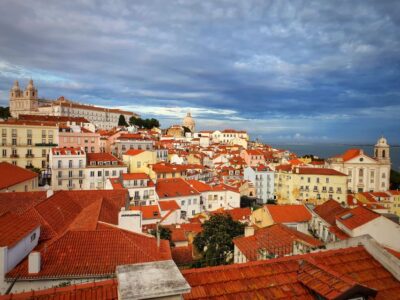
Old Town TukTuk Tour and Scenic Viewpoints in Alfama
Read our review →Browse the lists this tour appears in